Explainers for UPSC
One concept at a time, written for Prelims and Mains, with why it is in the news now.
-
PolityPrelimsGS2
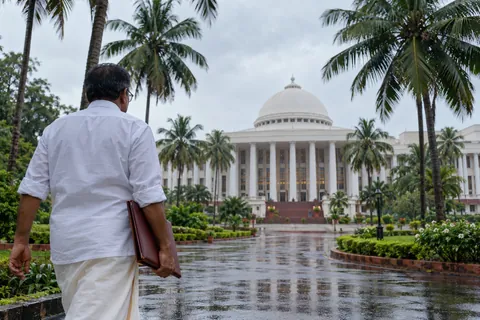
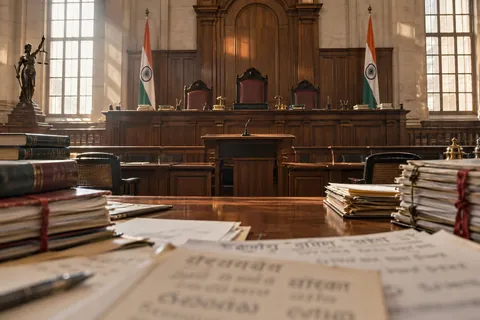
State Legislative Councils: Articles 168-172 and the graduates' and teachers' seats
Why in news: Bihar votes on 23 October 2026 for four graduates' and four teachers' seats; several colleges have alleged ineligible names on the Patna Teachers' roll.
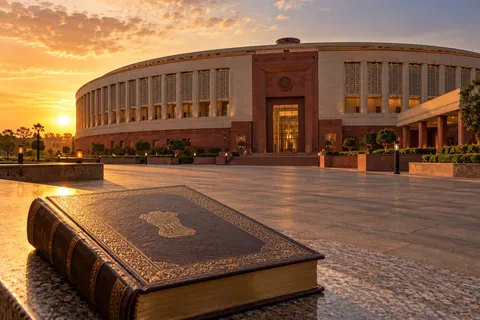
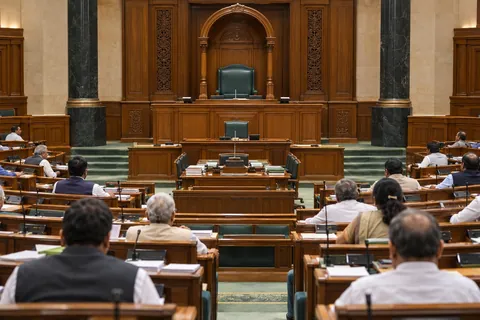
A State Legislative Council is an optional, permanent upper House that Parliament creates or abolishes under Article 169 at the Assembly's request. Article 171 caps it at one-third of the Assembly, never below 40, with about one-twelfth each elected by graduates and teachers. Bihar votes in four graduates' and four teachers' constituencies on 23 October 2026.
Read the story -
EnvironmentPrelimsGS3
Whales and dolphins in Indian waters: legal protection, IUCN status and strandings
Why in news: A science feature on 22 October 2026 traced whale strandings on Gujarat's coast and argued that few are now systematically recorded.
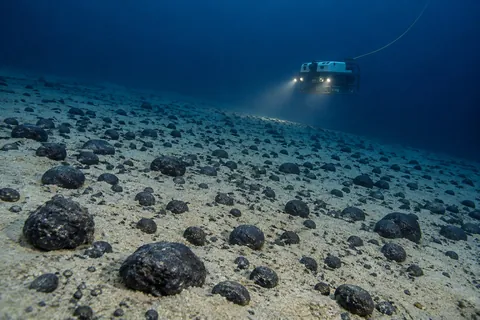
Cetaceans, the whales, dolphins and porpoises, number 30 to 35 species in the waters of the Indian subcontinent. Under the Wild Life (Protection) Act, 1972, as amended in 2022, 30 named species are in Schedule I and every other cetacean is in Schedule II. A 22 October 2026 feature traced decades of whale strandings on Gujarat's coast.
Read the story -
PolityGS2GS1
The Aligarh Movement, AMU and the Article 30 minority test
Why in news: On 17 October 2026, AMU marked Sir Syed Day, the 209th birth anniversary of its founder, Sir Syed Ahmad Khan.
The Aligarh Movement was Sir Syed Ahmad Khan's post-1857 drive to bring English education and modern science to Indian Muslims. Its college became Aligarh Muslim University in 1920, and in 2024 a seven-judge Supreme Court bench laid down a new Article 30 test for minority institutions. AMU marked his 209th birth anniversary on 17 October 2026.
Read the story -
EnvironmentPrelimsGS2
Environmental clearance by States: SEIAA, SEAC and the EIA Notification, 2006
Why in news: Madhya Pradesh's SEIAA chairman wrote to the Chief Secretary in October 2026 seeking action over 237 'deemed' clearances he says bypassed the authority.
Under the Environment Impact Assessment (EIA) Notification, 2006, issued under the Environment (Protection) Act, 1986, Category A projects need prior environmental clearance from the Ministry of Environment, Forest and Climate Change, and Category B projects from a State Level Environment Impact Assessment Authority (SEIAA). Madhya Pradesh's SEIAA chairman has questioned 237 clearances issued as 'deemed' permissions.
Read the story -
Sci-TechGS2GS3
Software vulnerabilities: CVE, CVSS, coordinated disclosure and CERT-In's role
Why in news: PHP fixed two critical remote-code-execution flaws on 21 October 2026; CERT-In's Vulnerability Note CIVN-2026-0510 the same day urged all PHP users to update.
A software vulnerability is a flaw an attacker can exploit. Publicly disclosed ones are named by Common Vulnerabilities and Exposures (CVE) IDs, rated 0-10 under the Common Vulnerability Scoring System (CVSS) and, ideally, fixed through coordinated disclosure. On 21 October 2026, CERT-In's Vulnerability Note CIVN-2026-0510 rated two newly fixed PHP flaws critical.
Read the story -
NationalGS3
Drug trafficking law in India: NDPS Act, PIT-NDPS, NCB and NCORD
Why in news: On 21 October 2026, Police Commemoration Day, the Home Minister restated the Home Ministry's target of freeing India from drugs by 31 December 2029.
The Narcotic Drugs and Psychotropic Substances Act, 1985 grades drug offences by quantity, with 10 to 20 years' rigorous imprisonment for a commercial quantity; the PIT-NDPS Act, 1988 allows preventive detention of traffickers. The Narcotics Control Bureau and a four-tier NCORD coordinate enforcement. A 2026-2029 roadmap underpins the Home Ministry's target of a drug-free India by 31 December 2029.
Read the story -
World & IRPrelimsGS2
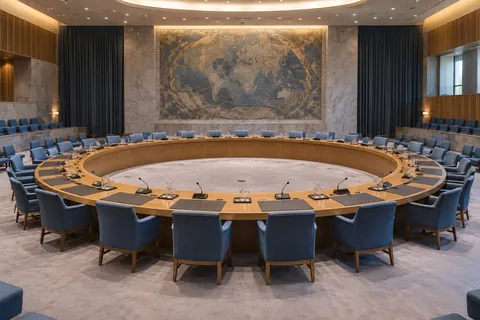
Choosing the UN Secretary-General: Article 97, UNSC veto and straw polls
Why in news: The Security Council's sixth straw poll for the next Secretary-General, on 16 October 2026, was the race's first with colour-coded ballots.
Under Article 97 of the UN Charter, the UN General Assembly appoints the Secretary-General on the UN Security Council's recommendation, which any of its five permanent members can veto. The Council narrows the field through informal straw polls. On 16 October 2026 it held the sixth poll of the race to succeed António Guterres, the first with colour-coded ballots.
Read the story -
PolityPrelimsGS2
UN Convention against Torture, and why India has not ratified it
Why in news: A US superseding indictment unsealed on 8 October 2026 charges Venezuela's former President Nicolas Maduro with conspiring to commit torture under 18 U.S.C. 2340A.
The UN Convention against Torture (1984) bars torture without exception, forbids sending anyone to likely torture and obliges parties to criminalise it. India signed it on 14 October 1997 but has not ratified it. A US indictment unsealed on 8 October 2026 charges Venezuela's former President Nicolas Maduro with torture conspiracy under the 1994 US law implementing it.
Read the story -
Sci-TechPrelimsGS3
NavIC: why India's navigation constellation cannot give a standalone position
Why in news: A Department of Space reply in the Lok Sabha on 29 July 2026 said NavIC cannot give standalone positioning while only three satellites provide navigation.
NavIC, formerly the Indian Regional Navigation Satellite System (IRNSS), is ISRO's regional navigation system: seven satellites, three geostationary and four inclined geosynchronous, covering India and 1,500 km beyond. A receiver needs four working satellites to fix a position. On 29 July 2026 the Department of Space told the Lok Sabha that only three now provide navigation services.
Read the story -
World & IRGS3GS2
International Energy Agency: membership, 90-day oil stocks and India's status
The International Energy Agency (IEA), founded in 1974 after the 1973-74 oil crisis, requires each member to hold oil stocks equal to 90 days of net imports and coordinates emergency releases. India is an Association country, not a member. The IEA's sixth and largest collective action, agreed in March 2026, answered oil-market disruption from the Middle East conflict.
Read the story -
EconomyPrelimsGS3
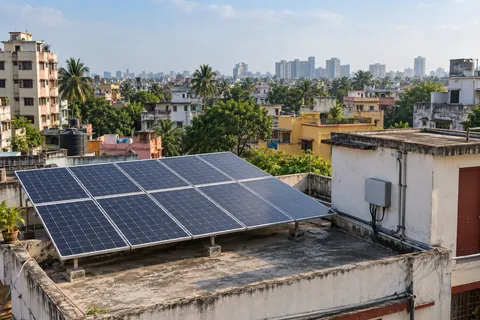
PM Surya Ghar: Muft Bijli Yojana and the rooftop solar subsidy
Why in news: Scheme data as of 15 October 2026 show West Bengal's rooftop installations up nearly seven-fold since May 2026, to 10,146.
PM Surya Ghar: Muft Bijli Yojana, approved by the Union Cabinet on 29 February 2024 with Rs 75,021 crore, subsidises rooftop solar for one crore homes, with up to 300 free units a month. The Ministry of New and Renewable Energy runs it till March 2027. West Bengal's installations have risen nearly seven-fold since May 2026.
Read the story -
NationalPrelimsGS3
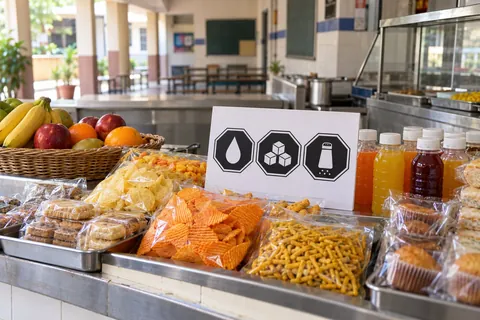
HFSS foods: FSSAI's draft limits and front-of-pack warning labels
Why in news: FSSAI published draft HFSS limits for school food on 7 August 2026, and its Supreme Court affidavits since August propose front-of-pack warnings.
Foods high in fat, sugar and salt (HFSS) are processed foods whose nutrient content crosses limits a regulator fixes. The Food Safety and Standards Authority of India (FSSAI) restricts their sale to children on school campuses. It has now proposed numeric limits for school food and, before the Supreme Court, front-of-pack warnings.
Read the story -
DefencePrelimsGS3
HTT-40 basic trainer and the IAF's pilot-training pipeline
Why in news: On 21 October 2026 officials said HAL had handed over the first three HTT-40s to the IAF, the first delivered in Bengaluru on 18 September.
The Hindustan Turbo Trainer-40 (HTT-40) is a tandem-seat, fully aerobatic turboprop basic trainer built by Hindustan Aeronautics Limited (HAL) for the first stage of Indian Air Force (IAF) pilot training. It is in the news as deliveries have begun, though officials say full training operations may take up to two years to begin.
Read the story -
Sci-TechGS3GS2
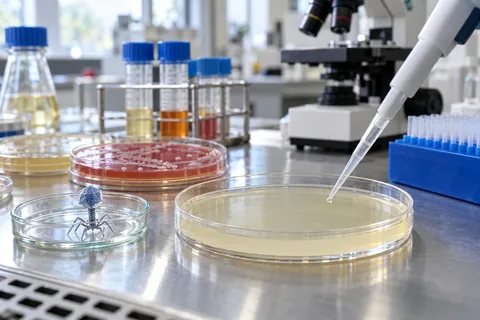
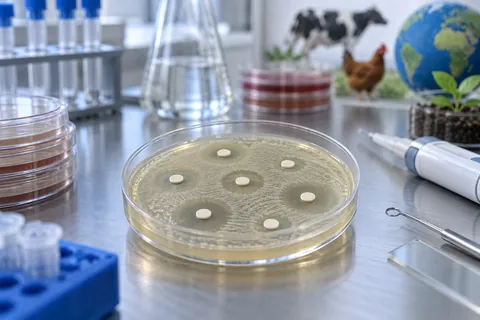
Phage therapy: bacteriophages against drug-resistant bacteria
Phage therapy treats bacterial infections with bacteriophages, viruses that infect bacteria alone and burst them from inside. Because each phage recognises only matching surface receptors, cocktails of several phages are used against drug-resistant strains. A bioRxiv preprint reports that the genome models Evo 1 and Evo 2 designed 16 viable phages killing Escherichia coli.
Read the story -
PolityPrelimsGS2
CSEAM: POCSO and IT Act offences, court rulings and NCPCR's powers
Why in news: On 15 October 2026 the Supreme Court ordered a National Hash & URL List Database and takedown guidelines to remove CSEAM from platforms.
Child sexual exploitative and abuse material (CSEAM), the Supreme Court's preferred term for child pornography, is any sexual depiction of an abused or exploited child. Indian law punishes making, storing and sharing it, and platforms that fail to remove it lose legal immunity. On 15 October 2026 the Court ordered a national hash and URL database to take it down.
Read the story -
EconomyGS3GS2
RoDTEP and RoSCTL: refunding the taxes hidden in India's exports
Why in news: Both schemes run to 31 December 2026 after extensions in September-October 2026; a news report of 21 October 2026 says two panels are reviewing them.
RoDTEP and RoSCTL refund exporters the central, state and local levies that GST and Duty Drawback leave inside export prices, such as VAT on transport fuel, mandi tax and electricity duty. The rebate, a percentage of FOB value, comes as a transferable e-scrip. Both run to 31 December 2026; a news report says two panels are reviewing them.
Read the story -
EconomyGS3GS1
DAY-NRLM: how rural women's self-help groups are organised, financed, marketed
Why in news: A PIB backgrounder of 21 October 2026 set out the National SARAS Mela at Vijayawada, 13-31 October, the first held outside Delhi-NCR.
The Deendayal Antyodaya Yojana-National Rural Livelihoods Mission (DAY-NRLM) is the Ministry of Rural Development's centrally sponsored scheme that organises poor rural women into self-help groups, federates them, links them to bank credit and helps them sell. It is in the news as Vijayawada hosts the first National SARAS Mela outside Delhi-NCR, from 13 to 31 October 2026.
Read the story -
EconomyGS3Prelims
Maternity benefit law: 2017 amendment and Code on Social Security, 2020
Why in news: An IZA working paper of August 2026, reported on 21 October 2026, finds covered manufacturing firms employed fewer women after the 2017 amendment.
The Maternity Benefit (Amendment) Act, 2017 raised paid maternity leave from 12 to 26 weeks, gave adopting and commissioning mothers 12 weeks and required creches at establishments with 50 or more employees; employers pay. Chapter VI of the Code on Social Security, 2020 now carries these rules. A new working paper links that change to fewer women in factory jobs.
Read the story -
PolityGS2Prelims
State Election Commissions and the bar on courts in local polls
Why in news: The Supreme Court's order of 21 October 2026 on nominations for urban local body elections in Andhra Pradesh, after the High Court refused an extension.
A State Election Commission, set up under Articles 243K and 243ZA, conducts every panchayat and municipal election, and Articles 243-O and 243ZG let such polls be questioned only through an election petition. On 21 October 2026 the Supreme Court asked the Andhra Pradesh State Election Commission to defer its final candidate list for urban local body polls.
Read the story -
EnvironmentPrelimsGS2
Sewage treatment under Namami Gange: technologies, Hybrid Annuity Model, septage
Why in news: PIB's backgrounder "Transforming Wastewater Treatment" of 21 October 2026 reviews the sewage technologies and contract models used under Namami Gange.
The Namami Gange Programme, run by the National Mission for Clean Ganga, treats Ganga basin sewage in large centralised plants, small decentralised units and septage plants, picking each technology to suit the site. Private operators are paid partly on construction and partly on performance over 15 years under the Hybrid Annuity Model. PIB reviewed these methods on 21 October 2026.
Read the story -
PolityPrelimsGS2
Section 175(4) BNSS: the safeguard before probing a public servant
Why in news: On 21 October 2026, the Supreme Court observed that Section 175(4) BNSS expands public servants' safeguards beyond old Section 156(3) CrPC.
Section 175(4) of the Bharatiya Nagarik Suraksha Sanhita, 2023 lets a magistrate order investigation of a complaint against a public servant over official duties subject to a report from the officer's superior and the public servant's own version. On 21 October 2026, the Supreme Court observed that it widens safeguards compared with Section 156(3) of the CrPC.
Read the story -
EconomyGS3Prelims
Urban co-operative banks: RBI's Section 35A directions and DICGC cover
Why in news: RBI announced on 21 October 2026 that Puducherry Co-operative Urban Bank is under Section 35A directions for six months, with withdrawals capped at ₹5,000.
Urban co-operative banks answer to two authorities: the Registrar of Co-operative Societies and the Reserve Bank of India. RBI can freeze a weak bank's lending, deposits and payments through directions under Section 35A of the Banking Regulation Act, 1949, while DICGC insures each depositor up to ₹5 lakh. Puducherry Co-operative Urban Bank came under such directions on 21 October 2026.
Read the story -
EnvironmentPrelimsGS3
Great Nicobar Island project: the port, the clearances and the Shompen
Why in news: The Supreme Court left the Forest Rights Act PILs to the Calcutta High Court (5 Oct 2026); the Centre opposed a tribal council's impleadment plea.
The Great Nicobar Island project plans a transshipment port at Galathea Bay, a greenfield international airport, a township and a gas-solar power plant on India's southernmost island, home to the Shompen. On 5 October 2026 the Supreme Court left challenges under the Forest Rights Act, 2006 to the Calcutta High Court.
Read the story -
EconomyGS3Prelims
Monetary Policy Committee: members, voting, minutes and policy stance
Why in news: On 21 October 2026 the RBI released minutes of the MPC's 5-7 October meeting, which raised the repo rate to 5.50%.
The Monetary Policy Committee (MPC), set up under Section 45ZB of the Reserve Bank of India Act, 1934, is a six-member body that sets the repo rate needed to meet the inflation target. Each member votes and gives written reasons. Minutes of its 5-7 October 2026 meeting, out on 21 October, showed a unanimous hike but a split on stance.
Read the story -
Sci-TechGS2GS3
Digital certificates and PKI: Certifying Authorities and the CCA
Why in news: On 17 October 2026 a researcher reported the compromise of eight eMudhra intermediate CA keys; Chrome and Firefox blocked the certificates that day.
Under the Information Technology Act, 2000, licensed Certifying Authorities issue Digital Signature Certificates binding a person to a public key, while the Controller of Certifying Authorities licenses them and certifies their own keys through the Root Certifying Authority of India. Browser makers have blocked eight eMudhra intermediate certificates whose private keys were weakly generated.
Read the story -
EnvironmentPrelimsGS3
Sustainable Aviation Fuel and ICAO's CORSIA: India's preparation for 2027
Why in news: CORSIA's mandatory phase begins on 1 January 2027, the year of India's indicative 1% SAF blending target for international flights.
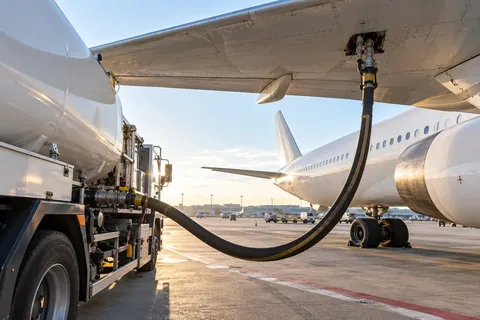
Sustainable Aviation Fuel (SAF) is a renewable jet fuel made from crops, biogenic residues and wastes that blends with Aviation Turbine Fuel (ATF) and cuts greenhouse gas emissions. Under CORSIA, airlines on international routes offset emissions above a baseline, and using eligible SAF lowers that bill. CORSIA's mandatory phase begins on 1 January 2027.
Read the story -
EconomyGS3GS2
NaBFID: India's development financial institution for infrastructure
Why in news: NaBFID raised USD 750 million through its debut 10-year US dollar bond, listed at GIFT IFSC, its release of 1 October 2026 said.
The National Bank for Financing Infrastructure and Development (NaBFID) is India's development financial institution for infrastructure, created by the National Bank for Financing Infrastructure and Development Act, 2021 to lend long-term and deepen infrastructure bond markets. The RBI regulates it as an All India Financial Institution. Its debut USD 750 million, 10-year dollar bond was announced on 1 October 2026.
Read the story -
EnvironmentPrelimsGS3
Forest clearance under the Van (Sanrakshan Evam Samvardhan) Adhiniyam, 1980
Why in news: NHPC's proposal to divert 3,278 hectares of Arunachal forest for the 1,720 MW Kamala project is listed before the Advisory Committee on 23 October 2026.
The Van (Sanrakshan Evam Samvardhan) Adhiniyam, 1980 bars States from using forest land for non-forest purposes without the Centre's prior approval, given in two stages: in-principle and final. The user agency funds compensatory afforestation. The Advisory Committee is to appraise NHPC's proposal to divert 3,278 hectares in Arunachal Pradesh for the Kamala hydel project on 23 October 2026.
Read the story -
EnvironmentGS4Prelims
Regulating animal experiments: Prevention of Cruelty to Animals Act and CCSEA
Why in news: The Centre's draft laboratory-animal rules (G.S.R. 864(E), 6 October 2026) drew a call for withdrawal from PETA India on 19 October 2026.
Chapter IV of the Prevention of Cruelty to Animals Act, 1960 allows experiments on animals that advance knowledge to save life or fight disease, under the Committee for Control and Supervision of Experiments on Animals (CCSEA), which registers laboratories and makes binding rules. Draft rules published on 6 October 2026 propose grading experiments by the pain they cause.
Read the story -
Sci-TechPrelimsGS3
Neutron stars, pulsars and X-ray binaries
Why in news: On 21 October 2026, PIB announced a Raman Research Institute study indicating that the X-ray pulsar Centaurus X-3 feeds through an accretion disk.
A neutron star is the collapsed core of a massive star, about 20 km across yet holding roughly the Sun's mass. Spinning with strong magnetic fields, it can beam radiation as a pulsar and, beside a companion star, power an X-ray binary. A Raman Research Institute study indicates that the pulsar Centaurus X-3 feeds through an accretion disk.
Read the story -
EnvironmentPrelimsGS2
Section 5, Environment (Protection) Act, 1986: Delhi's calendar curbs and GRAP
Why in news: Delhi's calendar curbs, notified on 23 June 2026 under section 5, take effect on 1 November 2026; the Chief Minister announced them on 20 October.
Two legal tracks govern Delhi's winter pollution curbs. Directions under section 5 of the Environment (Protection) Act, 1986 apply by date, every 1 November to 28 February. The Commission for Air Quality Management's Graded Response Action Plan (GRAP) adds curbs only as the Air Quality Index (AQI) worsens. Delhi's dated curbs take effect on 1 November 2026.
Read the story -
World & IRGS4GS3
Lethal autonomous weapons systems and meaningful human control
Why in news: On 20 October 2026, UNIDIR's Director warned at UN Headquarters that AI is on track to crowd out human decision-making in warfare.
Lethal autonomous weapons systems (LAWS) select and strike targets without further human input once activated, and no agreed definition of them exists. States discuss them in a Group of Governmental Experts under the Convention on Certain Conventional Weapons (CCW). UNIDIR's Director warned on 20 October 2026 that military AI is crowding out human decision-making.
Read the story -
EconomyGS3Prelims
PM Internship Scheme: the 2024 design and the 2026 revamp
Why in news: By October 2026, over 30,000 candidates had joined the third PMIS pilot round that followed the March 2026 revamp.
The Prime Minister Internship Scheme (PMIS), run by the Ministry of Corporate Affairs, places young people in paid internships with large companies and aims at one crore opportunities over five years. A March 2026 revamp raised the monthly stipend from Rs 5,000 to Rs 9,000, and over 30,000 candidates have since joined its third pilot round.
Read the story -
EconomyPrelimsGS3
UDAN and Modified UDAN: the Regional Connectivity Scheme
Why in news: A PIB backgrounder of 20 October 2026 marked UDAN's ten years and set out the Modified UDAN Scheme, formally launched on 4 July 2026.
UDAN (Ude Desh ka Aam Nagrik), the Ministry of Civil Aviation's Regional Connectivity Scheme, pays airlines Viability Gap Funding and caps fares so they fly unserved and underserved routes. Launched on 21 October 2016 under the National Civil Aviation Policy 2016, it turns ten this month; its next phase, Modified UDAN, carries Rs 28,840 crore for 2026-27 to 2035-36.
Read the story -
EnvironmentPrelimsGS3
IUCN Red List categories and India's national bird assessment
Why in news: Officials said India's national Red List assessment of 1,211 bird species is underway, with 107 species preliminarily assessed as of 19 October 2026.
The IUCN Red List sorts species into nine categories, from Least Concern to Extinct, by testing extinction risk against five criteria on decline, range and numbers. India has begun applying the same framework to its 1,211 regularly occurring bird species; by officials' account, preliminary assessments of 107 were complete by 19 October 2026.
Read the story -
EconomyGS3Prelims
RBI's liquidity framework: the LAF corridor, SDF, MSF and VRR auctions
Why in news: On 19 October 2026 the RBI injected about ₹1 lakh crore through a 7-day variable rate repo auction and announced another for 21 October.
The Reserve Bank of India steers bank liquidity through the Liquidity Adjustment Facility (LAF): a corridor with the Standing Deposit Facility (SDF) rate as floor, the Marginal Standing Facility (MSF) rate as ceiling and the policy repo rate between, plus variable rate repo auctions. On 19 October 2026 it injected about ₹1 lakh crore through one.
Read the story -
EconomyGS3Prelims
The pulses buffer and the Price Stabilisation Fund
Why in news: As reported on 20 October 2026, States have sought tur and chana from the Centre's pulses buffer, with retail tur dal up 17.2% year-on-year.
The Price Stabilisation Fund (PSF), set up in 2014-15 and run by the Department of Consumer Affairs, holds a dynamic buffer of tur, urad, moong, masur and chana, released in calibrated amounts to steady retail prices. States are now seeking tur and chana from it as prices rise, and the Centre wants the buffer kept for market intervention.
Read the story -
NationalGS3GS2
VB-G RAM G Act, 2025: the rural job guarantee that replaced MGNREGA
Why in news: The Ministry of Rural Development notified a Schedule of 375 permissible works on 6 October 2026; the Opposition criticised the Act on 20 October 2026.
The Viksit Bharat-Guarantee for Rozgar and Ajeevika Mission (Gramin) Act, 2025, which replaced MGNREGA, guarantees every rural household whose adults volunteer for unskilled manual work 125 days of wage employment a year. The Centre and States share its cost. On 6 October 2026, the Ministry of Rural Development notified the list of works it permits.
Read the story -
NationalGS2GS3
Indian Cyber Crime Coordination Centre (I4C) and the cybercrime-response chain
Why in news: I4C's National Cybercrime Threat Analytics Unit flagged, on 19 October 2026, deepfake Facebook and Instagram ads of the Prime Minister, Finance Minister and chief ministers.
The Home Ministry's Indian Cyber Crime Coordination Centre (I4C) coordinates India's response to cybercrime: complaints through the National Cyber Crime Reporting Portal and helpline 1930, fund freezes through CFCFRMS, and takedown notices through the Sahyog portal. On 19 October 2026, it warned that deepfake ads impersonating the Prime Minister and chief ministers promote fake welfare schemes.
Read the story -
EconomyGS2GS1
Goa's iron-ore mining: Shah Commission, Goa Foundation rulings and MMDR auctions
Why in news: On 12 October 2026, the Bombay High Court quashed the Enforcement Directorate's money-laundering case against a mining group after its predicate FIR was quashed.
Goa's iron-ore leases, once Portuguese concessions in perpetuity, became mining leases under a 1987 Act. The Supreme Court held in 2014 that they had expired in 2007, and in 2018 quashed their second renewals; fresh leases are auctioned under the MMDR Act. On 12 October 2026, the Bombay High Court at Goa quashed a money-laundering case against a mining group.
Read the story -
EconomyGS3GS2
Terror financing: UAPA Section 51A, the UN 1267 list and FATF
Why in news: The RBI's circular of 19 October 2026 conveyed UN amendments to three entries on the ISIL (Da'esh) and Al-Qaida Sanctions List, including the TTP's.
Section 51A of the Unlawful Activities (Prevention) Act, 1967 lets the Centre freeze funds, block payments and stop the travel of terrorists named by the UN Security Council. The Financial Action Task Force judges how well India does this. On 19 October 2026 the RBI told banks of amendments to three entries on the UN's ISIL (Da'esh) and Al-Qaida list.
Read the story -
PolityPrelimsGS2
Accessibility and assistive products under the RPwD Act, 2016
Why in news: Draft Rights of Persons with Disabilities (Amendment) Rules, 2026, reported on 4 October 2026, propose standards for assistive products and invite objections within 30 days.
Section 40 of the Rights of Persons with Disabilities Act, 2016 obliges the Centre to frame binding accessibility standards, carried in Rule 15 of the 2017 Rules. In Rajive Raturi (November 2024) the Supreme Court held Rule 15(1) ultra vires for offering only guidelines. Draft amendment rules now propose standards, repair and grievance redress for assistive products.
Read the story -
EnvironmentGS3Prelims
Disaster and climate risk insurance: parametric cover in India
Why in news: A June 2026 CETEx policy brief urged India to scale up parametric insurance, after early-stage talks on a nationwide scheme were reported in October 2025.
Parametric insurance pays a pre-agreed sum once a measured index, such as rainfall or temperature, crosses a set trigger, without surveying each loss. India applies it in weather-index crop cover and Nagaland's State-wide rainfall policy, and the XV Finance Commission proposed wider risk pools. A June 2026 policy brief urged scaling it up nationally.
Read the story -
EnvironmentPrelimsGS1
Heatwaves in India: IMD criteria, Heat Action Plans and SDRF relief
Why in news: On 4 August 2026 the Home Ministry told the Lok Sabha that heatwaves and lightning are now notified calamities under SDRF/NDRF guidelines for 2026-31.
The India Meteorological Department (IMD) declares a heatwave when a plains station of 40°C or more runs 4.5°C above normal, or touches 45°C, at two stations of a sub-division on two consecutive days. States respond through Heat Action Plans under NDMA guidelines. For 2026-31, heatwaves are a notified calamity for SDRF and NDRF relief.
Read the story -
PolityGS2Prelims
Article 20: ex post facto laws, double jeopardy and self-incrimination
Why in news: A Jammu & Kashmir and Ladakh High Court ruling reported on 20 October 2026 held preventive CrPC section 107 and 117 proceedings outside Article 20(2).
Article 20 of the Constitution shields every person in criminal law: no conviction or heavier penalty under a law made after the act, no second prosecution and punishment, and no compelled testimony against oneself. A High Court of Jammu & Kashmir and Ladakh ruling, reported on 20 October 2026, held that preventive peace-bond proceedings do not bar a later prosecution.
Read the story -
World & IRPrelimsGS2
Abyei: the area Sudan and South Sudan both claim, and UNISFA
Why in news: A Sudanese army drone strike on Abyei's Amiet market on 19 October 2026 killed 53 people, Abyei's local authorities said on 20 October.
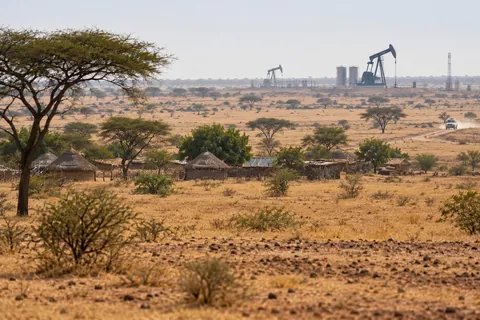
Abyei is an oil-producing area on the Sudan-South Sudan line that both countries claim. The 2005 Comprehensive Peace Agreement promised its residents a vote on which side to join, but its final status is unsettled; a UN force with an Indian battalion guards it. Abyei's authorities blame a 19 October 2026 drone strike on its Amiet market on Sudan's army.
Read the story -
Sci-TechPrelimsGS2
Leptospirosis: the rat-borne bacterial disease that rises with monsoon floods
Why in news: Kerala's health department reported two leptospirosis deaths and nine new cases on 29 June 2026, days after the Health Ministry's pre-monsoon advisory of 23 June.
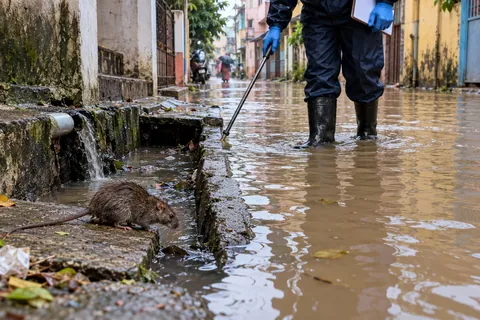
Leptospirosis is a zoonotic bacterial disease caused by Leptospira, caught when cuts or mucous membranes touch water or soil fouled by the urine of rats, cattle or pigs. Its severe form, Weil's disease, damages the liver and kidneys. Cases climb every monsoon, and a Health Ministry advisory of 23 June 2026 asked States to prepare outbreak plans.
Read the story -
World & IRPrelimsGS2
MINUSCA: how the Security Council mandates, caps and renews a mission
Why in news: On 20 October 2026 MINUSCA's head urged the Security Council, before its mid-November renewal vote, to keep adequate force levels.
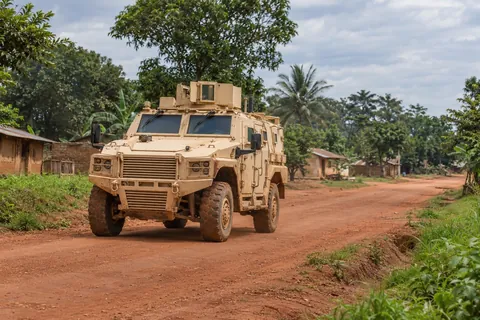
MINUSCA, the United Nations Multidimensional Integrated Stabilization Mission in the Central African Republic, was set up by Security Council resolution 2149 (2014) to protect civilians first. Resolution 2800 (2025) renewed it until 15 November 2026 with up to 14,046 military personnel. On 20 October 2026 its head warned the Council against an early drawdown as Sudan's war spills over.
Read the story -
PolityPrelimsGS2
Trial in absentia: section 356 of the BNSS, 2023
Why in news: On 19 October 2026, Delhi's Lieutenant Governor, reviewing the Directorate of Prosecution, sought the use of trial in absentia in eligible cases.
Section 356 of the Bharatiya Nagarik Suraksha Sanhita, 2023 directs a court to try and judge an absconding proclaimed offender as if he were present, once 90 days have passed since charges were framed and notice steps are complete. A State-paid advocate defends him if unrepresented. Delhi's Lieutenant Governor urged its use in eligible cases on 19 October 2026.
Read the story -
PolityGS2Prelims
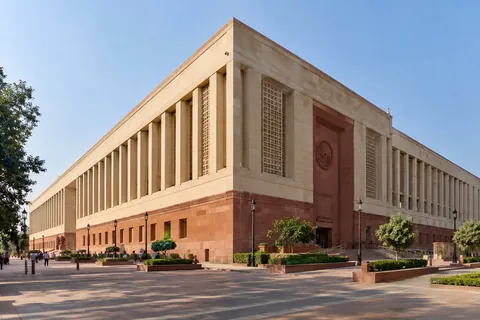
Summoning, adjournment, prorogation and dissolution of Parliament: Article 85
Why in news: In letters of 16 and 19 October 2026, the Opposition and the government differed over Parliament staying unprorogued since its 13 August adjournment sine die.
Article 85 of the Constitution lets the President summon each House of Parliament, prorogue either House and dissolve the Lok Sabha, with no more than six months between sessions. Adjournment pauses sittings; prorogation ends a session. Both Houses were adjourned sine die on 13 August 2026, and no prorogation had been notified by 19 October 2026.
Read the story -
NationalGS2GS3
Suspension of Operations (SoO) in Manipur: ground rules, ceasefires, peace accords
Why in news: On 19 October 2026 suspected armed militants killed three firewood collectors in Manipur, police said; reports said the SoO pact had not been renewed.
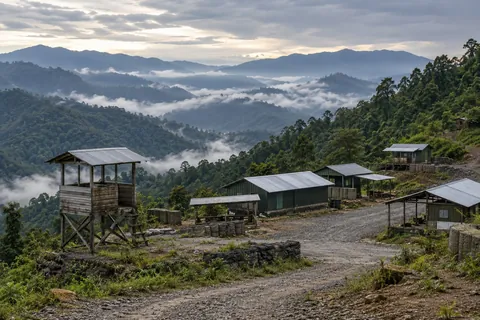
In Manipur, a Suspension of Operations (SoO) agreement is a tripartite truce: the Union, the State and armed groups suspend operations while cadres stay in designated camps under ground rules. The pact with the KNO and UPF was valid until 3 September 2026; reports said it was not renewed. On 19 October 2026, suspected militants killed three firewood collectors there.
Read the story -
PolityGS1GS2
Kambala, jallikattu and the Prevention of Cruelty to Animals Act, 1960
Why in news: Kambala, coastal Karnataka's buffalo race, was held at Mysuru Dasara for the first time on 18-19 October 2026, organised by the district administration.
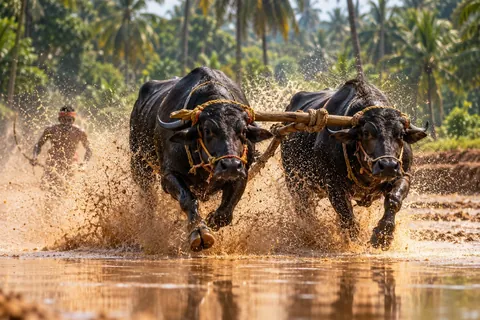
The Prevention of Cruelty to Animals Act, 1960 punishes inflicting unnecessary pain on animals. In 2014 the Supreme Court ruled that jallikattu and bullock-cart races breach it; Tamil Nadu, Maharashtra and Karnataka amended the Act in 2017, and a Constitution Bench upheld those amendments in 2023. Kambala, Karnataka's buffalo race, made its Mysuru Dasara debut on 18 October 2026.
Read the story -
PolityGS2Prelims
Article 371 special provisions, the Sixth Schedule and Ladakh's proposed Article 371-K
Why in news: The Home Ministry presented a draft Article 371-K for a directly elected Ladakh body on 15 October 2026; Ladakh's two bodies rejected it in principle.
Articles 371 to 371J of the Constitution, each written in by a constitutional amendment, give twelve named States tailored safeguards: regional development boards, duties for the Governor and shields for customary law and land. The Sixth Schedule instead creates law-making tribal councils in four north-eastern States. A Home Ministry draft of 15 October 2026 proposes an Article 371-K for Ladakh.
Read the story -
PolityGS2GS1
Pregnancy termination after 24 weeks: MTP Act, Medical Boards, Article 21
Why in news: On 15 October 2026, the Delhi High Court used Article 226 to let a 16-year-old survivor end a pregnancy of about 31 weeks.
The Medical Termination of Pregnancy Act, 1971, amended in 2021, permits abortion up to 20 weeks, and to 24 weeks for rape survivors, minors and other listed groups. Beyond 24 weeks, a Medical Board may allow it for substantial foetal abnormality. On 15 October 2026, the Delhi High Court let a 16-year-old survivor end a pregnancy of about 31 weeks.
Read the story -
EconomyGS3Prelims
Financial inclusion schemes: PMJDY, PMJJBY, PMSBY and APY
Why in news: On 19 October 2026 the Department of Financial Services announced a saturation campaign of bank camps from 21 October to 31 December 2026.
Four Union schemes form the base of India's financial inclusion: Jan Dhan (2014) gives every unbanked adult a basic bank account, PMJJBY and PMSBY offer low-premium life and accident cover, and the Atal Pension Yojana guarantees a pension from 60. Banks will hold camps nationwide from 21 October to enrol people in all four.
Read the story -
EconomyGS3Prelims
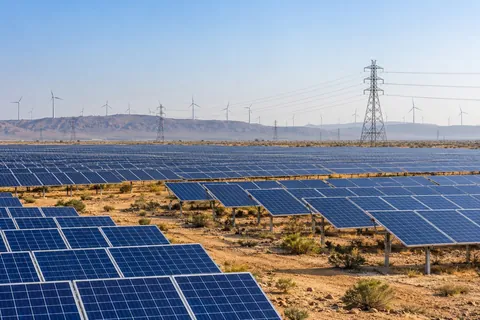
Agrivoltaics (AgriPV): farming and solar power on the same land
Why in news: On 19 October 2026 the MNRE Secretary said the ministry plans a central sector scheme for AgriPV, its design still undecided.
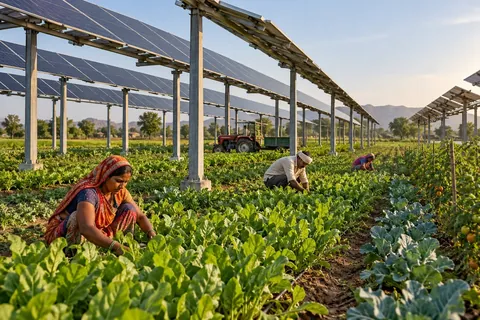
Agrivoltaics, or AgriPV, mounts solar panels on structures about four metres high so that farming continues beneath them, letting one plot yield both crops and electricity. The Ministry of New and Renewable Energy plans a central sector scheme to cover AgriPV's 25-30% higher cost, its Secretary said on 19 October 2026.
Read the story -
PolityGS2Prelims
Adultery and armed forces law after Joseph Shine (2018)
Why in news: Reported on 19 October 2026: an Army Major has challenged, before the Armed Forces Tribunal, a notice proposing his administrative termination over alleged affairs.
In Joseph Shine v. Union of India (2018), the Supreme Court struck down Section 497 of the Indian Penal Code, ending adultery as a crime. In January 2023 a five-judge Bench clarified that the ruling does not touch the Army, Navy and Air Force Acts. An Army Major now faces a notice proposing administrative termination over alleged extramarital affairs.
Read the story -
MiscellanyGS1Prelims
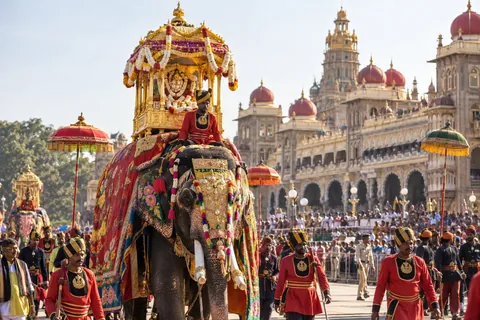
International Kullu Dussehra and Himachal's devta tradition
Why in news: The International Kullu Dussehra Committee has invited 347 deities to this week's festival, up from 332 in 2025, reported on 19 October 2026.
International Kullu Dussehra, Himachal Pradesh's week-long deity festival, begins on Vijayadashami, the day Dussehra ends elsewhere. Village devtas travel in palanquins to Kullu's Dhalpur ground to honour Lord Raghunath, the valley's presiding deity since Raja Jagat Singh's 17th-century reign. The festival committee has invited 347 deities this year, up from 332 in 2025.
Read the story -
EconomyPrelimsGS3
WINDS: the weather-station network behind crop insurance
Why in news: A July 2026 Rajya Sabha reply put WINDS installations at 892 stations and gauges; PIB's 29 August 2026 PMFBY backgrounder set out its role.
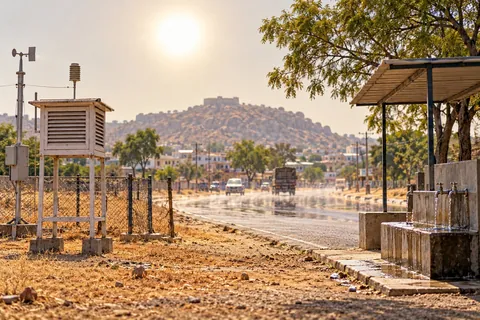
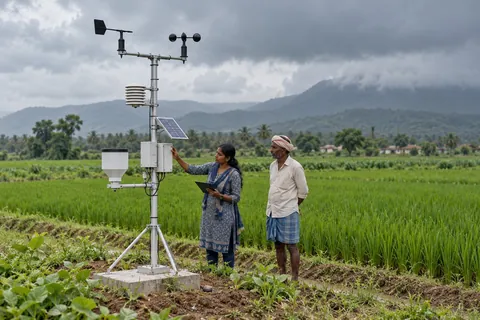
The Weather Information Network and Data System (WINDS), launched by the Union Agriculture Ministry in July 2023, sets up Automatic Weather Stations at block level and Automatic Rain Gauges at gram panchayat level. Their hyperlocal data feed crop-insurance claims under PMFBY. A July 2026 Rajya Sabha reply put installations at 892 stations and gauges.
Read the story -
EnvironmentPrelimsGS2
Noise Pollution Rules, 2000: India's ambient noise limits and who enforces them
Why in news: The NHRC sought an action taken report within two weeks from the Maharashtra Pollution Control Board on Pune's Ganeshotsav noise (reported 2 September 2026).
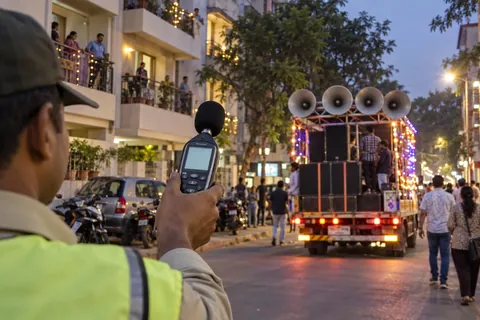
The Noise Pollution (Regulation and Control) Rules, 2000, made under the Environment (Protection) Act, 1986, set day and night noise limits for industrial, commercial and residential areas and silence zones, and bar loudspeakers outside closed premises from 10 pm to 6 am. Pune's festival noise revived them when the NHRC sought a State pollution board's report.
Read the story -
EconomyGS3Prelims
Special Rupee Vostro Accounts: how India settles trade in rupees
Why in news: At the IMF-World Bank Annual Meetings in Bangkok in October 2026, the Finance Minister backed rupee settlement for trading partners facing hard currency shortages.
A Special Rupee Vostro Account (SRVA) is a rupee account that an Indian bank opens for a foreign bank, so that exports and imports are invoiced, paid and settled in Indian rupees under a Reserve Bank of India framework of July 2022. In October 2026 the Finance Minister said India wants such settlement to help partners short of hard currency.
Read the story -
EnvironmentPrelimsGS3
Sloth bear: the ant-eating bear of the Indian subcontinent
Why in news: An October 2026 species note reports sloth bears in Telangana's Amrabad Tiger Reserve eating shield-tailed snakes this monsoon, possibly a first record.
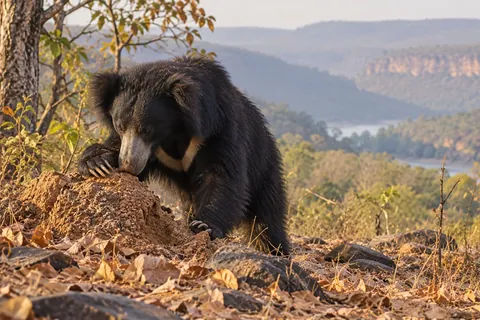
The sloth bear (Melursus ursinus) is a shaggy, mostly nocturnal bear found only on the Indian subcontinent, living chiefly on termites, ants and fruit. It is Vulnerable on the IUCN Red List and in Schedule I of the Wild Life (Protection) Act, 1972. Scat studies in Telangana's Amrabad Tiger Reserve this monsoon found shield-tailed snakes in its diet.
Read the story -
EnvironmentPrelimsGS3
India's non-fossil power targets: 500 GW, 50% and 60%, and what counts
Why in news: On 19 October 2026, newsonair revisited India's non-fossil capacity crossing 300 GW, a milestone MNRE announced on 9 August 2026.
Non-fossil power capacity is installed electricity capacity that burns no fossil fuel: solar, wind, large and small hydro, bio-power and nuclear. India targets 500 GW by 2030 and about 60% of total capacity by 2035. It stood at 300.50 GW, over 54% of capacity, as on 31 July 2026, per the Ministry of New and Renewable Energy.
Read the story -
PolityGS2Prelims
Content takedown: Rule 3(1)(d) intimations, safe harbour and section 69A blocking
Why in news: Amendments in force from 20 February 2026 cut the IT Rules' removal deadline after a valid intimation from 36 hours to three hours.
Indian law offers two ways to remove unlawful online content. Under section 69A of the Information Technology Act, 2000, the Centre blocks access, normally after committee review. Under Rule 3(1)(d) of the IT Rules, 2021, platforms with section 79 safe harbour must act on court orders or senior officers' reasoned intimations. Since February 2026, removal is due within three hours.
Read the story -
World & IRPrelimsGS2
Organisation of Islamic Cooperation (OIC): organs, members and India
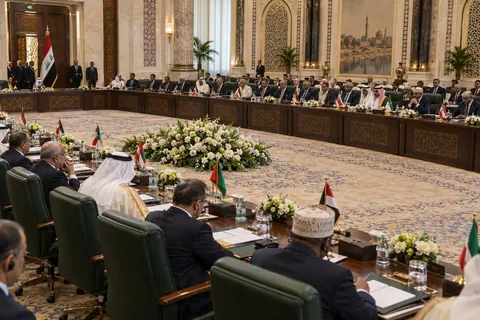
Why in news: On 19 October 2026 the MEA rejected anti-India references in resolutions of the OIC's 52nd Council of Foreign Ministers in Baghdad, saying Pakistan orchestrated them.
The Organisation of Islamic Cooperation (OIC), set up after a 1969 summit in Rabat, is a 57-member intergovernmental body with its General Secretariat in Jeddah. India is neither a member nor an observer. On 19 October 2026, the Ministry of External Affairs rejected anti-India references adopted at the OIC Council of Foreign Ministers in Baghdad.
Read the story -
PolityGS3GS2
NITI Aayog: the 2015 resolution, its councils and cooperative federalism
Why in news: An All India Radio report of 19 October 2026 described NITI Aayog's Governing Council, State Support Mission and Aspirational Districts Programme.
NITI Aayog (National Institution for Transforming India) is the Union Government's policy think tank, constituted by a Cabinet resolution that took effect on 1 January 2015 and replaced the Planning Commission. The Prime Minister chairs it, and it works with States through its Governing Council and programmes. An All India Radio series revisited this model on 19 October 2026.
Read the story -
PolityGS2GS3
PRAGATI: how the Prime Minister's ICT platform reviews projects, schemes and grievances
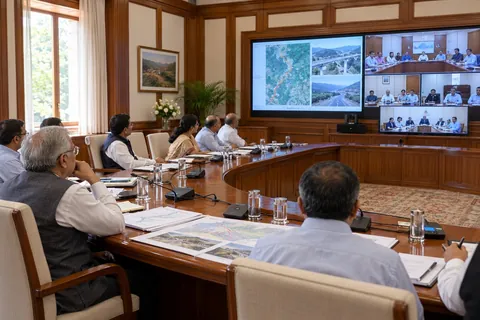
Why in news: All India Radio reported on 19 October 2026 that the Prime Minister has chaired 53 PRAGATI meetings so far.
PRAGATI (Pro-Active Governance and Timely Implementation) is an ICT-enabled platform, launched on 25 March 2015, on which the Prime Minister reviews delayed projects, government schemes and public grievances with Union Secretaries and State Chief Secretaries over video-conference. All India Radio reported on 19 October 2026 that it has sped up stalled infrastructure projects.
Read the story -
EconomyGS3Prelims
Customer liability in unauthorised electronic banking: RBI's zero-liability rules
Why in news: In an order reported on 19 October 2026, the Kerala High Court held an SBI customer who promptly reported an OTP fraud had zero liability.
Under the Reserve Bank of India's 6 July 2017 circular, a customer bears no loss from an unauthorised electronic transaction caused by the bank's fault, or by a third-party breach reported within three working days. In an order reported on 19 October 2026, the Kerala High Court applied the 2017 rule against State Bank of India.
Read the story -
EnvironmentPrelimsGS3
Eco-sensitive zones: the law, the 2011 guidelines and Supreme Court rules
Why in news: An Environment Ministry affidavit to the NGT, dated 5 October 2026, says Similipal's 2019 draft eco-sensitive zone is still unnotified for want of Odisha's information.
Eco-sensitive zones are buffers around national parks and wildlife sanctuaries that the Union Environment Ministry notifies under the Environment (Protection) Act, 1986, to regulate mining, industry and building. Their width is fixed for each protected area, and mining within one kilometre is barred. The ministry's NGT affidavit, dated 5 October 2026, says Similipal's 2019 draft zone remains unnotified.
Read the story -
NationalGS3GS2
River boat safety: Inland Vessels Act 2021, NDMA guidelines, district duties
Why in news: A boat carrying children capsized in the Ganga near Raghopur in Bihar's Vaishali district on 13 October 2026, killing 13.
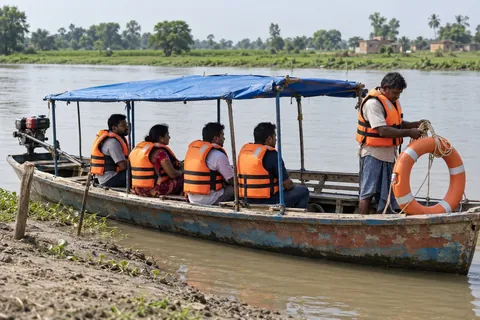
The Inland Vessels Act, 2021 gives motorised river vessels one national system of survey and registration, while hand-powered country boats are left to State enrolment under its Chapter XVII. NDMA's 2017 boat-safety guidelines ask States and districts to enforce capacity limits and safety gear. A boat capsize in Bihar's Vaishali district killed 13 children on 13 October 2026.
Read the story -
PolityPrelimsGS2
Rule 93: who may inspect election records, and the 2024 amendment
Why in news: On 14 October 2026 the Supreme Court pulled up the ECI for failing to trace the 2023 counting video of Karnataka's Sringeri seat.
Rule 93 of the Conduct of Elections Rules, 1961 keeps ballot papers and other sealed election packets shut except on a court's order, and opens other papers to public inspection. A December 2024 amendment limited that to papers the rules specify, excluding CCTV and webcast footage. The Supreme Court on 14 October 2026 questioned a missing counting video.
Read the story -
EnvironmentPrelimsGS2
Coastal Regulation Zone clearance for port dredging and the National Green Tribunal
Why in news: On 26 September 2026 the NGT's Western Zone Bench stayed the clearances for Mormugao Port's channel deepening until its next hearing, set for 2 November.
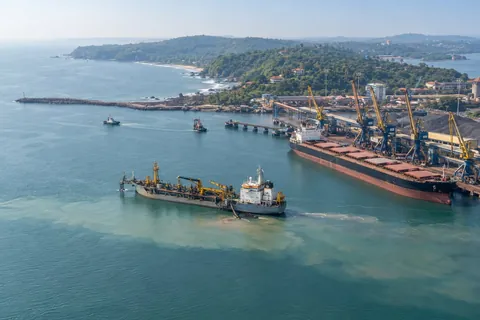
The Coastal Regulation Zone (CRZ) Notification, 2019, made under the Environment (Protection) Act, 1986, divides India's coast and sea up to 12 nautical miles into zones and fixes who clears projects in each. Most port works in CRZ-I and CRZ-IV need the Union environment ministry's clearance. The National Green Tribunal has now stayed such clearances for Mormugao Port's channel deepening.
Read the story -
PolityPrelimsGS2
Parliamentary privilege: Articles 105 and 194, contempt and Committee of Privileges
Why in news: On 15 October 2026 the Public Accounts Committee decided to give the Speaker notice of a privilege motion against Chief Secretaries who skipped its meeting.
Parliamentary privilege is the set of rights and immunities that each House of Parliament or a State Legislature, and its members and committees, hold under Articles 105 and 194 of the Constitution. A House may punish breach or contempt, even by outsiders. Parliament's Public Accounts Committee has decided to seek privilege action against State Chief Secretaries who skipped its meeting.
Read the story -
EnvironmentPrelimsGS3
Adaptation finance: the Global Goal on Adaptation and the Adaptation Fund
Why in news: India's Permanent Mission to the UN sought predictable adaptation finance at a UN General Assembly event ahead of COP31, reported on 17 October 2026.
Adaptation finance is money that helps countries cope with climate impacts they cannot avoid. Article 7 of the Paris Agreement set a global goal on adaptation, and the Adaptation Fund and the Green Climate Fund channel support to developing countries. Ahead of COP31, India called for predictable adaptation finance and said its first national adaptation plan is being finalised.
Read the story -
EconomyGS3GS2
Legal metrology: the OIML, its CIML and the Legal Metrology Act, 2009
Why in news: India will host the 61st CIML meeting for the first time, in New Delhi from 26 to 28 October 2026 (PIB, 19 October 2026).
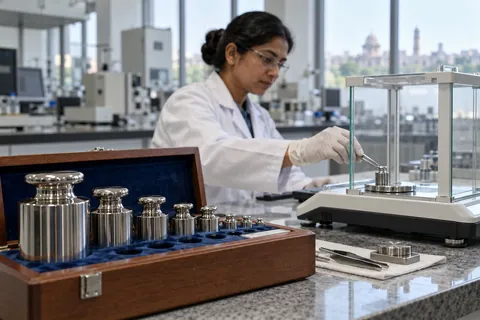
Legal metrology sets binding rules for units, measuring instruments and methods so that weighments in trade are accurate. Worldwide, the OIML, a treaty body set up in 1955, frames model rules through its decision-making CIML; in India, the Legal Metrology Act, 2009 applies them. India will host the 61st CIML meeting, its first, in New Delhi.
Read the story -
NationalGS2Prelims
Fire safety governance: State subject, National Building Code, Model Fire Bill
Why in news: The Home Ministry has asked the MCD to plan a fire and structural audit of every Delhi house, with a report due by end-October 2026.
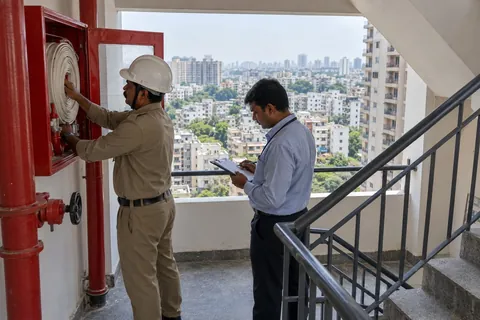
Fire service is a State subject and a municipal function in the Twelfth Schedule under Article 243W. The Centre steers it through the National Building Code, binding only through State bye-laws, a 2019 Model Fire Bill and a 2023 modernisation scheme. The Home Ministry has now asked Delhi's civic body to plan a fire and structural audit of every home.
Read the story -
World & IRPrelimsGS2
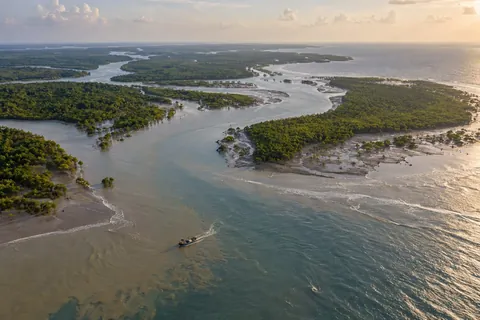
India-Bangladesh maritime boundary under UNCLOS: the 2014 award and grey area
The India-Bangladesh maritime boundary was fixed by a five-member tribunal under Annex VII of the United Nations Convention on the Law of the Sea in an award of 7 July 2014. It divided the territorial sea, exclusive economic zone and continental shelf, leaving a grey area where seabed and water rights differ. Maritime experts urged cooperation there in November 2025.
Read the story -
PolityGS3GS2
Jan Vishwas Acts: decriminalising minor offences in Central laws
Why in news: An All India Radio feature on 17 October 2026 presented the Jan Vishwas Act as an instance of the Government's service and good-governance agenda.
The Jan Vishwas Acts amend dozens of Central laws together, replacing imprisonment and criminal fines for minor, procedural lapses with civil penalties, warnings and officer-led adjudication. The 2023 Act covered 183 provisions in 42 Acts; the 2026 Act, per PIB, 784 provisions in 79 Acts. An All India Radio feature on 17 October 2026 revisited the reform.
Read the story -
EconomyGS2GS3
Off-budget borrowing by States and Article 293
Why in news: On 15 October 2026, a Keralam expert committee's report tabled in the Assembly proposed ending KIIFB's independent market borrowing.
Off-budget borrowing is debt raised by a State-controlled body outside the budget but repaid from State revenue. It sidesteps Article 293, under which a State owing the Centre needs Union consent to borrow, the basis of its annual ceiling. A Keralam expert committee report tabled on 15 October 2026 proposes ending KIIFB's independent market borrowing.
Read the story -
EnvironmentPrelims
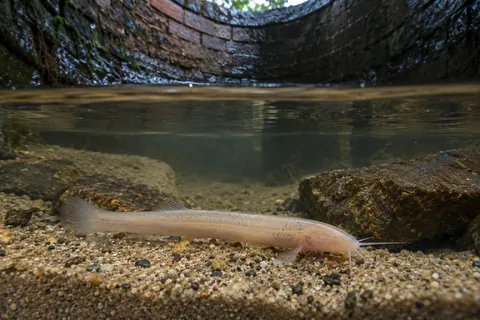
Subterranean fishes of India: from Kerala's aquifers to Assam's wells
Why in news: A 19 October 2026 report profiled two blind fishes described this year from wells in Assam's Goalpara district: Gitchak nakana and Rakthamichthys anchi.
Subterranean fishes live in permanent darkness in caves or groundwater aquifers, often eyeless and without pigment. India has 21 known species, mainly in Kerala's lateritic aquifers and Meghalaya's limestone caves, a 2026 study counts. Two blind species from wells in Assam's Goalpara district, a loach and a swamp eel, now show alluvial aquifers host them too.
Read the story -
EnvironmentGS4Prelims
Sand mining in India: minor-mineral law, guidelines and the NGT
Why in news: An NGT-appointed joint committee's report on the Sindh river, reported on 19 October 2026, found Madhya Pradesh's sand-mining task force ineffective.
Ordinary sand is a minor mineral under the Mines and Minerals (Development and Regulation) Act, 1957, so each State makes its own rules for leasing it and curbing illegal mining. Environmental clearance and Environment Ministry guidelines of 2016 and 2020 limit where and how much is dug. An NGT-appointed committee has now faulted Madhya Pradesh's enforcement on the Sindh river.
Read the story -
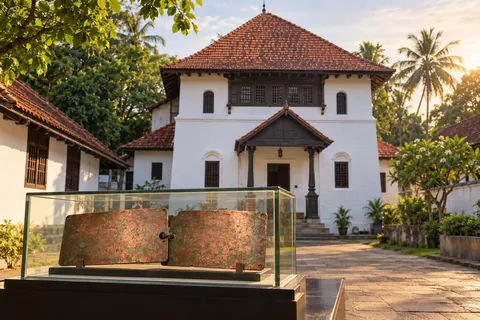
MiscellanyGS1Prelims
Pattanam and Muziris: India's ancient port trade with Rome
Pattanam, a village on the Periyar delta in Kerala's Ernakulam district, holds an early historic port settlement that excavations since 2007 link to Muziris, the Chera port known from Sangam poems and Greco-Roman texts for its pepper trade. Whether Pattanam was Muziris itself is still debated, and its digs have faced ASI licence disputes since 2015.
Read the story -
Sci-TechGS3
Open-weight vs open-source AI: what is released, and India's approach
Why in news: Meta and NVIDIA released open-weight models on 15 October 2026 and Reflection AI released Beam's weights on 16 October; Mistral AI announced Timestral.
An open-weight AI model lets anyone download its trained parameters, or weights, but may keep training code and data private and limit use by licence. The Open Source Initiative's 2024 definition asks for weights, complete code and detailed data information. Meta, NVIDIA and Reflection AI released open-weight models on 15-16 October 2026.
Read the story -
Sci-TechPrelimsGS3
Chandrasekhar limit: why white dwarfs stop at 1.4 solar masses
Why in news: An IISc simulation study in The Astrophysical Journal Letters, released on 9 October 2026, found a magnetised white dwarf could reach about 2.4 solar masses.
The Chandrasekhar limit is the largest mass, about 1.4 times the Sun's, that a non-rotating, non-magnetised white dwarf can keep up against gravity. A heavier stellar core collapses further, or explodes as a Type Ia supernova. An Indian Institute of Science study now shows strong magnetic fields could let some white dwarfs reach about 2.4 solar masses.
Read the story -
PolityGS2Prelims
Article 371C: Manipur's hill councils outside the Sixth Schedule
Why in news: Clashes hit Manipur's Kamjong, Ukhrul and Kangpokpi hill districts on 9-10 October 2026; the Hill Areas Committee had met on 18 September.
Manipur's hill areas lie outside the Sixth Schedule: under Article 371C, the Assembly's Hill Areas Committee examines Bills and plans for them, and six district councils under a 1971 Act handle local services but cannot legislate. The committee met on 18 September 2026 after a prolonged gap; clashes hit Kamjong, Ukhrul and Kangpokpi hill districts on 9-10 October.
Read the story -
EconomyGS3Prelims
Foreign portfolio investors and index tiers: how passive money moves
Why in news: MSCI proposed on 16 October 2026 to reclassify Indonesia from Emerging to Standalone status, citing opaque ownership and suspected coordinated trading.
Foreign portfolio investors (FPIs) buy Indian shares and bonds after registering under the SEBI (Foreign Portfolio Investors) Regulations, 2019; SEBI puts their 2025-26 net outflow at Rs 1,52,692 crore, the largest on record. Passive funds follow indices that sort markets into tiers. MSCI proposed on 16 October 2026 to move Indonesia from Emerging to Standalone status.
Read the story -
World & IRPrelimsGS3
EU's Russian-crude fuel ban and the oil price cap
Why in news: CREA's September 2026 analysis, reported on 18 October 2026, found six of seven Russian-crude-linked fuel cargoes unloaded at EU ports came from Jamnagar.
Article 3ma of EU Regulation 833/2014 has barred, since 21 January 2026, imports of petroleum products refined in third countries from Russian crude, while a dynamic price cap limits Western shipping of Russian oil. CREA's September 2026 analysis found six of seven flagged fuel cargoes unloaded at EU ports came from Jamnagar in Gujarat.
Read the story -
Sci-TechGS3Prelims
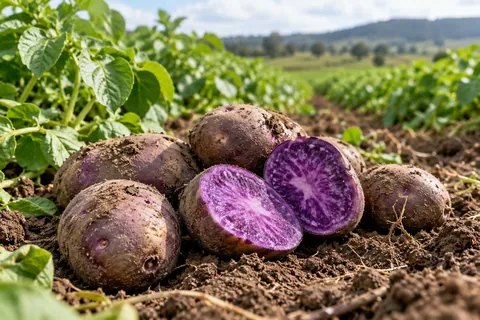
Biofortification and hidden hunger: ICAR-CPRI's coloured potatoes
Why in news: A PIB backgrounder on 18 October 2026 presented ICAR-CPRI's Kufri Jamunia, a purple-fleshed potato released in 2024, as a biofortified answer to hidden hunger.
Biofortification raises the vitamin and mineral content of a crop through plant breeding, so everyday staples counter hidden hunger, a lack of micronutrients despite enough calories. Unlike fortification, nothing is added during processing. A PIB backgrounder of 18 October 2026 presented ICAR-CPRI's purple-fleshed Kufri Jamunia, released in 2024, as an example.
Read the story -
EconomyPrelimsGS3
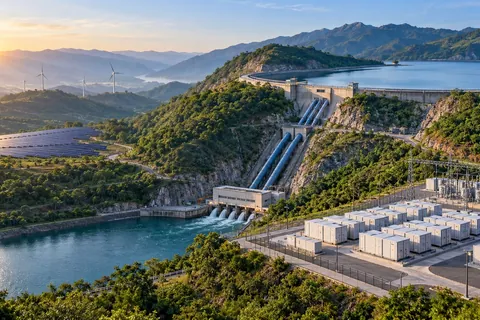
Energy storage in India: pumped storage and battery systems
Why in news: NTPC Renewable Energy Ltd invited bids in October 2026 for up to 2,000 MW/12,000 MWh of pumped storage.
Energy storage banks surplus solar and wind power for later use. Pumped storage projects pump water uphill and release it through turbines; battery energy storage systems hold power in cells. India backs batteries with Viability Gap Funding and a manufacturing incentive. NTPC Renewable Energy sought bids in October 2026 for up to 2,000 MW of pumped storage.
Read the story -
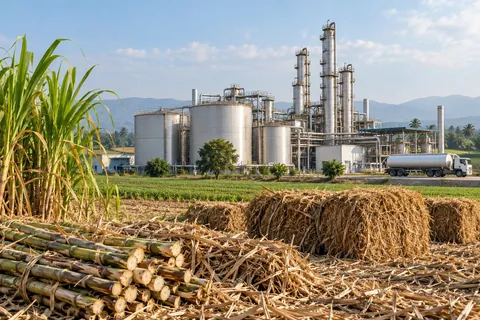
EnvironmentPrelimsGS3
National Policy on Biofuels: ethanol blending, 2G, CBG and SAF
Biofuels are fuels made from biomass such as sugarcane, grain, crop residue and waste. India's National Policy on Biofuels, 2018, notified by the Ministry of Petroleum and Natural Gas and amended in 2022, advanced the 20% ethanol-in-petrol target to ESY 2025-26. The ministry's July 2026 Q&A answered concerns over E20 mileage and the lack of pure petrol at pumps.
Read the story -
World & IRPrelimsGS3
India's connectivity corridors: Chabahar, INSTC, Kaladan and the Trilateral Highway
Why in news: The US conditional sanctions waiver for Chabahar ended on 26 April 2026; on 4 August the MEA said India is in contact with all partners.
India's connectivity corridors are routes India builds or backs abroad to reach markets past geographic chokepoints: Chabahar Port in Iran and the International North-South Transport Corridor to the west, and the Kaladan project and the Trilateral Highway through Myanmar to the east. The US conditional sanctions waiver for Chabahar ended on 26 April 2026.
Read the story -
EconomyGS3GS2
Financial Services Institutions Bureau (FSIB): how bank and insurer heads are chosen
Why in news: On 16 October 2026 the Centre reconstituted the FSIB, nominating a part-time chairperson and six part-time members for three years.
The Financial Services Institutions Bureau (FSIB) recommends whole-time directors and non-executive chairpersons for public sector banks, financial institutions and public sector insurers; the Appointments Committee of the Cabinet takes the final decision. A Ministry of Finance resolution set it up on 1 July 2022 to succeed the Banks Board Bureau. The Centre reconstituted it on 16 October 2026.
Read the story -
PolityGS2Prelims
Common High Court for Jammu and Kashmir and Ladakh, and its benches
Why in news: On 18 October 2026 the Ladakh Bench of the High Court of Jammu and Kashmir and Ladakh was inaugurated at Leh.
A common High Court serves more than one State or Union territory. Section 75 of the Jammu and Kashmir Reorganisation Act, 2019 made the High Court of Jammu and Kashmir common to the Union territories of Jammu and Kashmir and Ladakh. Under a President's Article 240 regulation, its Ladakh Bench opened at Leh on 18 October 2026.
Read the story -
EnvironmentPrelimsGS2
Nagoya Protocol and India's access and benefit-sharing law
Why in news: On 17 October 2026 the NBA reported sharing benefit money with 29 State boards and one UT council, before CBD COP17 in Yerevan.
The Nagoya Protocol, a supplementary treaty to the Convention on Biological Diversity, requires users of genetic resources to obtain prior informed consent and share benefits on mutually agreed terms. India applies it through the Biological Diversity Act, 2002, in three tiers: the National Biodiversity Authority, State boards and local committees. The NBA announced a benefit-sharing release on 17 October 2026.
Read the story -
PolityGS2Prelims
Human trafficking law: Article 23, ITPA, BNS Section 143 and AHTUs
Why in news: Reported on 18 October 2026: the Supreme Court directed all States and UTs to notify Anti-Human Trafficking Units as police stations.
Article 23 of the Constitution prohibits traffic in human beings and forced labour. The Immoral Traffic (Prevention) Act, 1956 targets trafficking for commercial sexual exploitation, while Section 143 of the Bharatiya Nyaya Sanhita, 2023 defines trafficking by action, means and purpose. The Supreme Court has now directed States and UTs to notify Anti-Human Trafficking Units as police stations.
Read the story -
Sci-TechPrelimsGS3
Martian analogue sites and hydrous sulphates: reading Mars's watery past
Why in news: On 16 October 2026, the Ministry of Science & Technology reported University of Kerala finds of melanterite and gypsum in Tamil Nadu and Chile.
A Martian analogue site is a place on Earth whose rocks, chemistry and climate resemble Mars, so scientists can study there how Martian minerals formed. Hydrous sulphates such as gypsum and melanterite lock water into their crystals and record past water–rock contact. On 16 October 2026 the Ministry of Science & Technology reported such finds in Tamil Nadu and Chile.
Read the story -
Sci-TechPrelimsGS3
Satellite mega-constellations, unintended radiation and radio astronomy
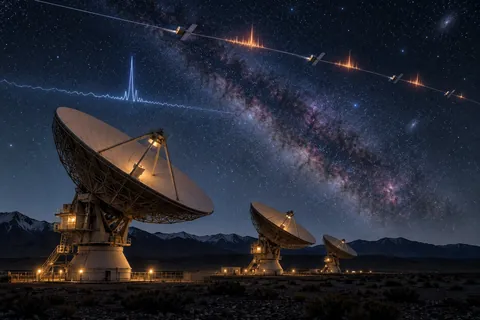
Radio telescopes record cosmic signals so faint that human-made radio signals can outshine them, and low-Earth-orbit constellations now disturb them in three ways: intended emission, unwanted emission and unintended radiation from on-board electronics. A CSIRO study, SNIFFLES-I, published in June 2026, logged 2,345 such detections from three constellations, some inside bands protected for radio astronomy.
Read the story -
EnvironmentPrelimsGS3
Compliance carbon markets: the Open Coalition and Paris Agreement Article 6
Why in news: On 14 September 2026 in Wuhan, China, the Open Coalition on Compliance Carbon Markets adopted its work plan and admitted six new members.
A compliance carbon market is one where a government, by law, prices emitters' greenhouse gases, through an emissions trading system or a carbon tax. The Open Coalition on Compliance Carbon Markets, chaired by Brazil with China and the European Union as co-chairs, links such countries. It adopted its first work plan in Wuhan, China, on 14 September 2026.
Read the story -
Sci-TechGS3
Solar cell technologies and India's solar manufacturing chain
Why in news: On 16 October 2026 China proposed adding 12 solar-manufacturing technologies to its export-control catalogue; public consultation runs until 15 November.
Solar photovoltaic manufacturing runs in four stages: polysilicon is refined, grown into ingots and sliced into wafers, made into cells and assembled into modules. The Ministry of New and Renewable Energy lists approved modules in ALMM List-I and cells in List-II. China's 16 October 2026 draft would curb exports of key cell and polysilicon technologies.
Read the story -
NationalPrelimsGS2
Patient safety in Indian hospitals: the national framework and safety cells
Why in news: On 8 October 2026, the National Medical Commission required medical colleges to form Patient Safety Committees/Cells and advised them to name nodal officers.
Patient safety means keeping avoidable harm from health care to a minimum. The Health Ministry's National Patient Safety Implementation Framework set goals for 2018-2025, and the National Patient Safety Secretariat at the Directorate General of Health Services works across eleven domains. On 8 October 2026, the National Medical Commission required every medical college to form a Patient Safety Committee/Cell.
Read the story -
NationalPrelimsGS2
Mumps and the UIP: why India gives MR, not MMR
Why in news: A report of 18 October 2026 says Keralam's mumps outbreak, running since late 2023, has renewed demands to add MMR to the UIP.
Mumps is a contagious viral infection that swells the salivary glands and can cause deafness, meningitis and orchitis. India's Universal Immunization Programme gives the MR vaccine against measles and rubella but not mumps, which the MMR vaccine adds. A mumps outbreak in Keralam since late 2023 has renewed demands to switch to MMR.
Read the story -
Sci-TechPrelimsGS3
LOX-methane rocket engines and ISRO's LME1100
Why in news: ISRO ignited the full-scale gas generator of its LME1100 LOX-methane engine for the first time on 9 October 2026.
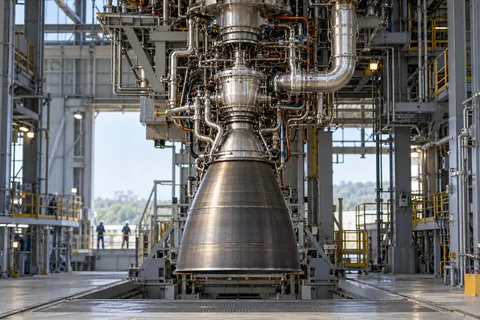
A LOX-methane engine burns liquid oxygen with liquid methane, the pair ISRO has chosen as main propulsion for its Next Generation Launch Vehicle. It differs from the hydrogen-fuelled cryogenic CE-20 and the kerosene-fuelled semi-cryogenic SE2000. ISRO ignited the full-scale gas generator of its 1,100 kN LME1100 engine for the first time on 9 October 2026.
Read the story -
EnvironmentPrelimsGS1
Thwaites Glacier, grounding zones and marine ice-sheet instability
Why in news: A Nature Communications study published online on 12 October 2026 projects up to 30 ± 6 mm of sea-level rise from Thwaites by 2100.
Thwaites Glacier in West Antarctica, about 120 km wide, holds ice equal to 65 cm of global sea level and is retreating as warm ocean water melts it from below. A Nature Communications study published on 12 October 2026 projects it could add up to 30 ± 6 mm to global sea level by 2100, about double earlier projections.
Read the story -
NationalGS1Prelims
UNESCO's Intangible Cultural Heritage lists and India's 16 elements
UNESCO's 2003 Convention for the Safeguarding of the Intangible Cultural Heritage protects living traditions through a Representative List, an Urgent Safeguarding List and a Register of Good Safeguarding Practices. India has 16 inscribed elements, all on the Representative List, the latest being Deepavali in December 2025. Durga Puja in Kolkata, celebrated in September or October, joined in 2021.
Read the story -
World & IRPrelimsGS3
Chennai–Vladivostok Eastern Maritime Corridor: India–Russia sea route
Why in news: An 8 October 2026 analysis argued the corridor could bring Russian oil to Bay of Bengal ports as Hormuz and Red Sea risks grow.
The Chennai–Vladivostok Eastern Maritime Corridor is a sea link between India's east coast and Russia's Far East, taken up under a 2019 Memorandum of Intent. The Ports Minister put it at 5,647 nautical miles in January 2024. Hormuz and Red Sea disruption has put it in focus as a possible route for Russian oil to Bay of Bengal ports.
Read the story -
EnvironmentPrelimsGS2
Plastic Waste Management Rules, 2016: single-use ban, EPR and disposal
Why in news: On 23 March 2026 the Environment Minister told the Lok Sabha that 20.7 million tonnes of plastic packaging waste had been recycled under EPR.
The Plastic Waste Management Rules, 2016, under the Environment (Protection) Act, 1986, set who collects, registers and processes plastic waste. Amendments banned identified single-use items from 1 July 2022 and set recycling targets for producers. On 23 March 2026 the Environment Minister told the Lok Sabha that 20.7 million tonnes of packaging waste had been recycled under EPR.
Read the story -
World & IRPrelimsGS2
The Quad: origin, summits and the four-nation Indo-Pacific agenda
Why in news: On 17 October 2026, reports said Quad members are exploring a leaders' summit on the margins of the 16-18 November ASEAN meetings in Manila.
The Quad is a diplomatic partnership of India, Australia, Japan and the United States for a free and open Indo-Pacific. It grew out of joint relief after the December 2004 Indian Ocean tsunami and became a leaders' format in 2021. Its members are now exploring a delayed leaders' summit beside the ASEAN Summit in Manila in November.
Read the story -
PolityGS2Prelims
The triple test for OBC reservation in local bodies
Why in news: On 14 October 2026 the Allahabad High Court ordered Uttar Pradesh's panchayat polls within three months while a dedicated OBC commission's inquiry continues.
The triple test is the Supreme Court's three-part condition for reserving panchayat and municipal seats for Other Backward Classes: a dedicated commission's empirical inquiry, a quota fixed local body-wise on its recommendations, and total SC, ST and OBC reservation within 50%. It is back in focus as Uttar Pradesh must complete panchayat polls within three months.
Read the story -
PolityGS2
Delimitation of constituencies: Articles 82, 170 and the 2026 freeze
Why in news: On 16 October 2026 the Congress President asked the Prime Minister for an all-party meeting before any new delimitation proposal is finalised.
Delimitation redraws Lok Sabha and Assembly constituencies and reallocates seats after a Census, under Articles 82 and 170 of the Constitution. Each State's share of seats stays frozen on the 1971 Census until the first Census after 2026. An amendment Bill to end the freeze failed in April, the Congress President says; he now seeks all-party talks.
Read the story -
Sci-TechGS3
Space sector reform: IN-SPACe, NSIL and the Indian Space Policy 2023
Why in news: On 17 October 2026 the Minister of State for Space projected India's space economy, about USD 9 billion, at USD 40-45 billion in 7-8 years.
India's space sector reform, begun in 2020, lets private firms build launch vehicles, satellites and ground stations. The Indian Space Policy 2023 makes IN-SPACe the authoriser, ISRO a research agency and NSIL the commercial arm, and 2024 rules allow up to 100% FDI. On 17 October 2026 the space minister projected the sector at USD 40-45 billion in 7-8 years.
Read the story -
EconomyGS3GS2
WTO Agreement on Agriculture: subsidy boxes, de minimis and the peace clause
The WTO Agreement on Agriculture sorts farm subsidies into boxes: trade-distorting amber support is capped, for most developing countries at 10% of production value, while blue and green box support is not. A 2013 Bali peace clause, made open-ended in 2014, shields grain stocks bought at fixed prices. India sought priority for public stockholding at MC14 in March 2026.
Read the story -
World & IRPrelimsGS2
Sudan's civil war on the map: SAF, RSF and seven neighbours
Why in news: The UN Security Council met on Sudan on 16 October 2026 as drone strikes killed civilians and famine risk spread across Darfur and Kordofan.
Sudan has been at war since April 2023, when fighting broke out between the Sudanese Armed Forces (SAF) and the paramilitary Rapid Support Forces (RSF). The army holds much of the centre and east; the RSF holds Darfur and areas in the south. The UN Security Council met on 16 October 2026 as drones and hunger spread.
Read the story -
EnvironmentGS3GS2
Groundwater in India: assessment, regulation and the Atal Bhujal Yojana
Why in news: On 8 October 2026, SANDRP said tests at Ambad, Nashik, found hexavalent chromium in groundwater over 1,000 times the BIS drinking-water limit.
Groundwater stress in India is measured each year by the Central Ground Water Board and the States. Their 2025 assessment, reported by the Ministry of Jal Shakti, put the national stage of extraction at 60.63%, with 730 of 6,762 units over-exploited. Quality is a second worry: an NGO reported toxic chromium in Nashik's groundwater on 8 October 2026.
Read the story -
EconomyGS2GS3
Patents in India: Section 3(d), compulsory licences and TRIPS
Why in news: On 16 October 2026 the Ayush Ministry cited a CGPDTM report counting 4,077 Ayush patent applications and 711 grants between FY 2014-15 and FY 2025-26.
The Patents Act, 1970 gives a 20-year monopoly only to new, inventive and industrially applicable inventions. Section 3(d) refuses patents on new forms of known substances without enhanced efficacy, and sections 84 to 92 allow compulsory licences. The law is in focus after an official report counted 4,077 Ayush patent applications filed since 2014-15.
Read the story -
PolityPrelimsGS2
Digital Personal Data Protection Act, 2023 and the DPDP Rules, 2025
Why in news: Rule 4 of the DPDP Rules, 2025, on registering Consent Managers, comes into force in November 2026, one year after the Rules' Gazette publication.
The Digital Personal Data Protection Act, 2023 governs how organisations, called Data Fiduciaries, collect and use people's digital personal data, mainly on consent, enforced by a Data Protection Board of India. Its Rules, published in the Gazette on 13 November 2025, phase in duties over eighteen months; the rule on registering Consent Managers takes effect in November 2026.
Read the story -
EnvironmentPrelimsGS1
Glacial lake outburst floods (GLOFs) and India's early-warning push
Why in news: Uttarakhand announced a pilot GLOF warning system at Vasundhara Tal on 13 October 2026; Himachal reported one at Ghepan Gath on 16 October.
A glacial lake outburst flood (GLOF) is the sudden release of water from a lake held behind a glacier or loose moraine, sending water and debris rushing downstream. NDMA has listed 195 potentially high-risk Himalayan lakes. In October 2026, Uttarakhand and Himachal Pradesh reported early-warning systems at Vasundhara Tal and Ghepan Gath lakes.
Read the story -
EnvironmentPrelimsGS1
Monsoon low-pressure systems: lows, depressions and deep depressions
Why in news: IMD's 2026 southwest monsoon review (30 September 2026) counted 14 low-pressure systems and 77 system-days against a normal 57.
Monsoon low-pressure systems are lows, depressions and deep depressions, graded by the India Meteorological Department by wind speed at sea and closed isobars over land. Many form over the north Bay of Bengal and move west-northwest along the monsoon trough, bringing heavy rain. IMD counted 14 such systems in the 2026 southwest monsoon, against a normal 13.
Read the story -
World & IRPrelimsGS3
Arctic shipping routes: the Northern Sea Route and the Northwest Passage
Why in news: South Korea's PanStar Acro returned to Busan on 11 October 2026 after a 50-day round-trip trial voyage to Europe through the Northern Sea Route.
Arctic shipping routes are summer sea lanes across the Arctic Ocean: the Northern Sea Route along Russia's Arctic coast, the Northwest Passage through the Canadian Arctic Archipelago and a future route over the North Pole. South Korea's container ship PanStar Acro returned to Busan on 11 October 2026 from a round-trip trial through the Northern Sea Route.
Read the story -
NationalPrelimsGS2
Crowd disasters and NDMA's guide on managing mass gatherings
Why in news: A stampede at the Chorbagan Sarbojanin Durga Puja pandal in north Kolkata on 17 October 2026 killed at least 19 people, per PTI.
Crowd disasters such as stampedes are man-made and preventable, says the National Disaster Management Authority's 2014 guide, which sorts their causes into six groups and puts the first duty on organisers and district administrations. A crush at a Durga Puja pandal exit in north Kolkata on 17 October 2026 killed at least 19 people, per PTI.
Read the story -
NationalPrelimsGS2
Aircraft accident investigation in India: the AAIB and its rules
Why in news: In mid-October 2026 the AAIB made public its final report on the 14 September 2023 Learjet 45XR crash at Mumbai airport.
The Aircraft Accident Investigation Bureau (AAIB), an attached office of the Ministry of Civil Aviation set up in 2012, investigates air accidents under ICAO Annex 13 and the Aircraft (Investigation of Accidents and Incidents) Rules, 2025, to prevent repeats, not to fix blame. Its final report on the September 2023 Learjet crash at Mumbai puts the system in focus.
Read the story -
PolityGS2Prelims
Talaq and the law: Shayara Bano and the 2019 Act
Why in news: On 16 October 2026 the Supreme Court sought the Centre's response to a plea for guidelines on all forms of talaq.
Instant triple talaq (talaq-e-biddat) was set aside 3:2 by the Supreme Court in Shayara Bano v Union of India (2017). The Muslim Women (Protection of Rights on Marriage) Act, 2019 makes it void, illegal and punishable with up to three years' jail. On 16 October 2026 the Court issued notice on a plea for guidelines on all forms of talaq.
Read the story -
EnvironmentPrelimsGS3
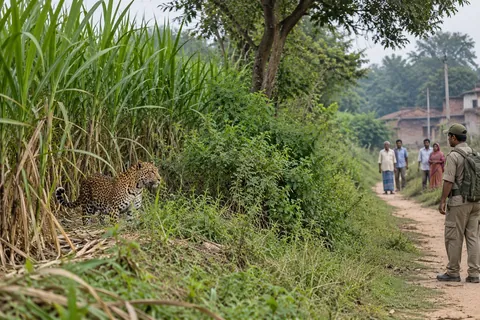
Human-leopard conflict in India and how it is managed
Why in news: Leopards killed several people in sugarcane fields of Bijnor and Moradabad, western Uttar Pradesh, in August 2026, despite repeated capture operations.
Human-leopard conflict is the harm leopards and people do each other where forests, farms and villages meet. The leopard is a Schedule I animal under the Wild Life (Protection) Act, 1972, and MoEFCC's 2023 guidelines stress prevention, not just capture. Fatal attacks in western Uttar Pradesh's sugarcane belt in August 2026 have brought it back.
Read the story -
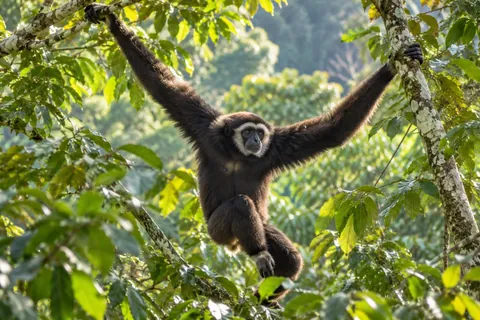
EnvironmentPrelimsGS3
Western hoolock gibbon and the Hollongapar Gibbon Sanctuary
The western hoolock gibbon (Hoolock hoolock) is India's only ape, an Endangered tree-dweller of the Northeast that seldom touches the ground. In Assam's Hollongapar Gibbon Sanctuary a railway line splits its forest, so canopy bridges are built to let family groups cross. Rope bridges over the line, whose first gibbon crossing was reported in May 2026, are in the news.
Read the story -
World & IRGS2
H-1B visa programme: cap, wage-weighted selection and the USD 100,000 payment
Why in news: On 9 October 2026, India's Ministry of External Affairs called the US Vice-President's 8 October description of H-1B workers as 'indentured servants' deeply offensive.
H-1B lets US employers hire foreign graduates in specialty occupations under a statutory cap of 65,000 a year, plus 20,000 for US master's holders. DHS now weights selection by wage. A 2025 proclamation, whose guidance a court vacated in June 2026, ties certain new petitions to USD 100,000. India's MEA rebutted US remarks on H-1B workers on 9 October 2026.
Read the story -
Sci-TechGS2GS3
EU AI Act's transparency rules and India's synthetic content labels
Why in news: On 5 October 2026 OpenAI said it would add an invisible watermark to ChatGPT and Codex text in the EU to meet Article 50.
The European Union's Artificial Intelligence Act, Regulation (EU) 2024/1689, sorts AI systems into four risk tiers, from banned practices to minimal risk. Its Article 50, applicable since 2 August 2026, makes generative AI providers mark output as machine-detectable and deployers disclose deepfakes. India's amended IT Rules require labels on synthetic audio-visual content. OpenAI's EU text watermark brings the rules up.
Read the story -
NationalGS1Prelims
Cochin Jews of Kerala: Malabari, Paradesi and the Anjuvannam copper plates
Why in news: On 12 October 2026, an arson attempt close to the Kadavumbhagam Synagogue in Kochi's Ernakulam Market turned attention to Kerala's dwindling Jewish community.
The Cochin Jews are Kerala's historic Jewish community: Malabari Jews, settled since early times, and Paradesi Jews, who came from Europe and West Asia in the 15th and 16th centuries. Copper plates of around 1000 CE granted their leader Joseph Rabban the Anjuvannam settlement. An attempted arson near Ernakulam's Kadavumbhagam Synagogue on 12 October 2026 has revived interest.
Read the story -
PolityPrelimsGS2
Symbols Order paragraph 15: how the ECI settles party splits
Why in news: Officials said on 16 October the ECI will hear rival All India Trinamool Congress factions on 30 October, after a 17 September interim order.
Paragraph 15 of the Election Symbols (Reservation and Allotment) Order, 1968 lets the Election Commission of India decide which rival group of a recognised party is that party, and so who keeps its reserved symbol. The Order fixes no test. The Commission will hear rival All India Trinamool Congress factions on 30 October 2026.
Read the story -
EconomyGS3Prelims
Household Consumption Expenditure Survey: how MPCE values free welfare items
Why in news: Two NSO officers' paper in Sarvekshana's September 2026 issue, posted on 13 October 2026, used HCES 2022-23 data to value in-kind transfers.
The Household Consumption Expenditure Survey (HCES) of the National Statistics Office measures Monthly Per Capita Consumption Expenditure (MPCE), the chief gauge of living standards. Since 2022-23 it publishes two MPCE series, without and with the value of food and goods received free through welfare schemes. A Sarvekshana paper posted on 13 October 2026 uses that gap to trace in-kind transfers.
Read the story -
EconomyGS3
Windfall tax: India's fortnightly levy on petrol, diesel and ATF exports
Why in news: From 16 October 2026, petrol exports pay Rs 2.5 a litre (from Rs 0.5) and diesel Rs 8.5 (from Rs 16); ATF stays Rs 10.5.
India's windfall tax is a Special Additional Excise Duty and Road and Infrastructure Cess on exports of petrol, diesel and ATF, reset every fortnight by the Finance Ministry. First levied in July 2022 and withdrawn in December 2024, it returned for exports in March 2026. From 16 October, petrol exports pay Rs 2.5 a litre, diesel Rs 8.5.
Read the story -
PolityGS2Prelims
Constitutional tort: State compensation for violating Article 21
Why in news: On 16 October 2026, a Supreme Court bench remarked it could award constitutional tort compensation if curbs over a Delhi protest proved unlawful.
Constitutional tort is the public-law remedy by which the Supreme Court (Article 32) or a High Court (Article 226) makes the State compensate a person whose fundamental right, chiefly Article 21, its officers violated. Sovereign immunity is no defence. On 16 October 2026, a Supreme Court bench remarked it could invoke this jurisdiction if Delhi protest curbs unlawfully hurt traders.
Read the story -
EconomyPrelimsGS3
Bilateral Investment Treaties and India's 2015 Model BIT
Why in news: A revamped Model BIT was reported on 25 September 2026 to have been sent to the Union Cabinet for approval.
Under a Bilateral Investment Treaty (BIT), two countries promise each other's investors protections that an international tribunal can enforce. India's 2015 Model BIT keeps tax disputes out and sends investors to domestic courts first. In September 2026, government sources said a revamped Model had been sent to the Union Cabinet for approval.
Read the story -
EconomyGS3GS2
Foreign banks in India: branch mode or wholly owned subsidiary
Why in news: On 16 October 2026 the RBI sanctioned, under section 44A, the amalgamation of Emirates NBD's Indian branches into RBL Bank from 1 December 2026.
Foreign banks may operate in India through the parent's own branches or through a wholly owned subsidiary incorporated in India, never both, under a framework the RBI first issued in 2013. The subsidiary gets near national treatment in opening branches. On 16 October 2026 the RBI sanctioned the merger of Emirates NBD's Indian branches into RBL Bank.
Read the story -
PolityGS4GS2
Public Examinations (Prevention of Unfair Means) Act, 2024 and its Rules
Why in news: On 13 October 2026, High-Powered Task Force chair Nandan Nilekani suggested last-minute papers from a large question bank, a suggestion, not a decision.
The Public Examinations (Prevention of Unfair Means) Act, 2024 punishes paper leaks and rigging in Central recruitment and entrance tests, including those of the UPSC, SSC, Railway Recruitment Boards, IBPS and the National Testing Agency. A 2026 amendment raised its penalties. On 13 October 2026, the exam-reform task force chair suggested last-minute papers from a question bank.
Read the story -
EconomyPrelimsGS3
Connectivity infrastructure in Jammu and Kashmir: rail, roads and air
Why in news: PIB's explainer of 17 October 2026, Connecting Kashmir: Building the Infrastructure for Growth, reviewed the region's rail, road, air and cargo links.
Jammu and Kashmir's connectivity rests on the 272-km Udhampur-Srinagar-Baramulla Rail Link, the Sonamarg (Z-Morh) road tunnel with the Zojila Tunnel being built towards Ladakh, Srinagar's expanding airport and UDAN airports planned at Udhampur and Kishtwar. Freight terminals carry the region's produce outward. A PIB explainer of 17 October 2026 reviewed how these links now work as one network.
Read the story -
PolityPrelimsGS2
National Medical Commission: the NMC Act, 2019 and its four boards
Why in news: An NMC public notice of 15 October 2026 allowed eligible MBBS students admitted from 2019-20 a fifth First Professional examination attempt.
The National Medical Commission (NMC), set up under the National Medical Commission Act, 2019, regulates medical education and doctors through four autonomous boards and replaced the Medical Council of India in September 2020. On 15 October 2026 it gave eligible MBBS students admitted from 2019-20 one extra attempt at the First Professional examination.
Read the story -
EconomyGS3Prelims
Minimum wages and the floor wage under the Code on Wages
Why in news: The Labour Bureau's orders of 30 September 2026 revised the Variable Dearness Allowance in central-sphere minimum wages from 1 October 2026.
Under the Code on Wages, 2019, every employee has a statutory right to a minimum wage, fixed by the Centre or a State by skill category and area, and never below a national floor wage set under Section 9. The Labour Bureau's orders of 30 September 2026 raised the Variable Dearness Allowance in central-sphere rates from 1 October 2026.
Read the story -
World & IRPrelimsGS3
Unilateral and secondary sanctions: CAATSA, the 2026 US Act, UN sanctions
Why in news: A US-Russia deal of 9 October 2026 lets Russian diesel into world markets; a US waiver for India under its 2026 Act is undecided.
Unilateral sanctions are penalties one country imposes under its own law; secondary sanctions extend them to foreign firms dealing with the target, unlike UN Security Council sanctions, which bind all members. In the news: a US deal lets Russian diesel reach world markets while a 2026 US Act allows tariffs up to 100% on big buyers of Russian oil.
Read the story -
NationalPrelimsGS2
NIRF, NAAC binary accreditation and the Viksit Bharat Shiksha Adhishthan Bill
Why in news: On 6 October 2026 the 2026 NIRF rankings were reported delayed as a large number of flagged retracted papers are scrutinised.
The National Institutional Ranking Framework (NIRF), launched by the Ministry of Education in 2015, ranks higher education institutions on five weighted parameters, while NAAC accredits them. Since 2025 NIRF deducts marks for retracted papers. The 2026 rankings, usually out by September, are delayed as a large number of flagged retractions are scrutinised.
Read the story -
EnvironmentPrelimsGS1
Coral reefs, bleaching and the IUCN Red List status of corals
Why in news: On 15 October 2026, Nature published the IUCN SSC Coral Specialist Group's reassessment: 44% of assessed reef-building coral species are threatened.
Coral reefs are built by colonies of tiny animals called polyps that lay down calcium carbonate and live with algae called zooxanthellae; heat-stressed corals expel the algae and bleach. An IUCN Species Survival Commission reassessment, published in Nature on 15 October 2026, classed 340 of 774 assessed reef-building coral species, or 44%, as threatened.
Read the story -
EnvironmentPrelimsGS3
Convention on Biological Diversity and the Kunming-Montreal framework
Why in news: CBD COP17 meets in Yerevan, Armenia, from 19 to 30 October 2026; the UN Secretary-General addressed its Leaders' Summit on 16 October.
The Convention on Biological Diversity, opened for signature at the 1992 Rio Earth Summit, pursues conservation, sustainable use and fair sharing of benefits from genetic resources. Its Kunming-Montreal Global Biodiversity Framework of 2022 sets four goals for 2050 and 23 targets for 2030. The treaty's seventeenth Conference of the Parties meets in Yerevan, Armenia, from 19 to 30 October 2026.
Read the story -
World & IRPrelimsGS2
Shanghai Cooperation Organisation: members, councils and India's place
Why in news: Defence Minister Rajnath Singh is to lead India at the SCO Council of Heads of Government in Dushanbe on 19-20 October 2026.
The Shanghai Cooperation Organisation (SCO) is a ten-member Eurasian grouping founded in Shanghai on 15 June 2001, with a Secretariat in Beijing and an anti-terror body in Tashkent. India joined as a full member in 2017. Defence Minister Rajnath Singh is to represent India at its Council of Heads of Government in Dushanbe on 19-20 October 2026.
Read the story -
PolityGS2Prelims
Chief Election Commissioner: appointment, removal and Section 16 immunity
Why in news: On 13 October 2026 the Supreme Court issued notice to the Centre and the Election Commission on ADR's plea against Section 16.
Under a 2023 Act, the President names the Chief Election Commissioner and other Election Commissioners on the recommendation of a Selection Committee: the Prime Minister, the Leader of Opposition and a Cabinet Minister. Section 16 shields serving and former commissioners from civil and criminal proceedings for official acts. The Supreme Court has sought replies on a challenge to it.
Read the story -
EnvironmentPrelimsGS2
IUCN Red List of Ecosystems: categories and criteria of collapse risk
Why in news: On 8 October 2026 Keralam launched a two-year Red List assessment of its ecosystems, funded by the Kerala State Biodiversity Board and run by KFRI.
The IUCN Red List of Ecosystems is a global standard that rates whole ecosystems, not species, by their risk of collapse, using five criteria and eight categories from Least Concern to Collapsed. On 8 October 2026 Keralam launched a two-year assessment of its ecosystems across all 14 districts under this framework, run by the Kerala Forest Research Institute.
Read the story -
DefencePrelimsGS2
Indian Ocean maritime security: IFC-IOR, IPMDA and MAHASAGAR
India's Indian Ocean security rests on shared maritime domain awareness: the Navy-hosted Information Fusion Centre – Indian Ocean Region (IFC-IOR) at Gurugram, set up in 2018, pools data on shipping with partner nations under the SAGAR and MAHASAGAR visions. In May 2026, Quad foreign ministers welcomed India running IPMDA's Indian Ocean programme through IFC-IOR.
Read the story -
EconomyGS3Prelims
National Food Security Act, 2013: entitlements, PMGKAY, ONORC and fortification
Why in news: The FAO marked World Food Day on 16 October 2026 under the theme 'Innovate today. Nourish tomorrow.'
The National Food Security Act, 2013 gives up to 75% of rural and 50% of urban Indians a legal right to grain: 35 kg a month per Antyodaya household and 5 kg per person for priority households, free since 2023 under the Pradhan Mantri Garib Kalyan Anna Yojana. The FAO marked World Food Day on 16 October 2026.
Read the story -
PolityGS2GS3
Finance Commission under Article 280 and the 16th Finance Commission's award
The Finance Commission, set up by the President under Article 280 at least every five years, recommends how Union taxes are split with the States and shared among them. The 16th Finance Commission kept the States' share at 41% for 2026-31, a recommendation the Union accepted on 1 February 2026, and added contribution to GDP to the sharing formula.
Read the story -
PolityGS2Prelims
Transgender rights in India: NALSA, the 2019 Act and its 2026 amendment
The Supreme Court's NALSA judgment of 2014 recognised transgender persons as a third gender with a right to self-identify, and the Transgender Persons (Protection of Rights) Act, 2019 put it into law. A 2026 amendment, in force since 25 May 2026, narrowed the definition and dropped self-perceived identity; challenges to it await the Supreme Court.
Read the story -
PolityPrelimsGS2
Speaker and Deputy Speaker of the Lok Sabha: Articles 93-97
Why in news: PRS's review of the Monsoon Session, 20 July to 13 August 2026, notes the Lok Sabha still has no Deputy Speaker.
The Speaker and Deputy Speaker are the Lok Sabha's presiding officers, chosen by the House from among its members under Article 93 and removable by a resolution passed by a majority of all its then members after 14 days' notice. PRS Legislative Research's Monsoon Session 2026 review records over seven years without a Deputy Speaker.
Read the story -
EconomyGS3GS2
Digital rupee (e₹) and UPI: central bank money versus a payment rail
Why in news: The Reserve Bank of India updated its digital rupee FAQs as on 1 October 2026, setting out how e₹ differs from UPI.
The digital rupee (e₹) is India's Central Bank Digital Currency (CBDC): a digital form of the rupee note, issued by the Reserve Bank of India, held in a wallet and accepted as legal tender. The Unified Payments Interface (UPI) is a payment system that moves money between bank accounts. RBI's FAQs, updated on 1 October 2026, set out this difference.
Read the story -
NationalGS2Prelims
Disaster Management Act, 2005 and its 2025 amendment
Why in news: On 1 August 2026 the Union Home Minister approved advance release of ₹2,117.85 crore from the Central share of SDRF to flood-affected States.
The Disaster Management Act, 2005 builds India's disaster governance in tiers: the NDMA under the Prime Minister, State authorities under Chief Ministers and district authorities under Collectors, backed by a response force and dedicated funds. Its 2025 amendment made the NCMC and HLC statutory. On 1 August 2026, ₹2,117.85 crore of SDRF advances was approved for flood-hit States.
Read the story -
PolityGS2Prelims
Enemy property: the Enemy Property Act, 1968 and its Custodian
Why in news: On 15 October 2026, West Bengal's Chief Minister said the Centre would make the State government custodian of enemy properties in the State.
Enemy property is property left in India by people who took the nationality of a country that fought India, Pakistan or China. A Custodian under the Union Home Ministry holds and sells it under the Enemy Property Act, 1968. On 15 October 2026, West Bengal's Chief Minister said the State would become its custodian there.
Read the story -
Sci-TechPrelimsGS2
Large language models and the IndiaAI Mission
A large language model is generative AI trained on vast text to predict the next token, which lets it write and answer but also invent facts. The IndiaAI Mission, approved on 7 March 2024 with ₹10,371.92 crore, funds compute and home-grown foundation models; MeitY reported its progress to the Lok Sabha on 5 August 2026.
Read the story -
EnvironmentPrelimsGS3
Carbon capture, utilisation and storage (CCUS) and direct air capture
Carbon Capture, Utilisation and Storage (CCUS) traps carbon dioxide at a factory or power plant, then reuses it or locks it deep underground; direct air capture takes the gas from open air instead. The Union Budget 2026-27 proposed ₹20,000 crore over five years for CCUS in five industries, aligned with a December 2025 DST roadmap.
Read the story -
Sci-TechPrelimsGS3
Gaganyaan: orbital module, test sequence and crew safety systems
Why in news: On 16 October 2026 ISRO said it completed Crew Module-Service Module separation tests at VSSC, Thiruvananthapuram, ahead of the uncrewed G1 mission.
Gaganyaan is ISRO's human spaceflight programme, which aims to carry three crew to a 400 km orbit for three days and land them in Indian sea waters. Its Orbital Module joins a habitable Crew Module to a Service Module. On 16 October 2026, ISRO said it had completed tests at VSSC of how the two separate before re-entry.
Read the story -
EconomyGS3
Government securities and bond yields: why prices and yields move opposite
Why in news: India's benchmark 10-year government bond yield rose to 7.40% on 12 October 2026 after the RBI's liquidity-withdrawal measures announced on 9 October.
Government bonds, or G-Secs, are how the Centre and the States borrow from investors; the yield is the return a buyer earns, and it climbs when the bond's market price drops. India's benchmark 10-year yield rose 10 basis points to 7.40% on 12 October 2026, after the RBI took steps to withdraw surplus liquidity from banks.
Read the story -
EconomyGS3GS2
Non-tariff barriers: SPS and TBT measures and India's trade remedies
Why in news: On 16 October 2026 the Finance Minister said China's non-tariff barriers, citing phytosanitary measures, are the biggest hurdle in India-China trade.
Non-tariff barriers restrict trade through rules instead of duties: food-safety and plant-health (SPS) checks and technical standards (TBT), both disciplined by WTO agreements. Trade remedies, namely anti-dumping, countervailing and safeguard duties, investigated in India by the DGTR, answer unfair or surging imports. On 16 October 2026 the Finance Minister called non-tariff barriers the biggest hurdle in India-China trade.
Read the story -
DefencePrelimsGS3
Hypersonic missiles: glide vehicles, scramjet cruise missiles and India's tests
Why in news: South Korea flight-tested its first indigenously developed hypersonic glide vehicle on 8 October 2026, five days after a North Korean hypersonic missile test.
A hypersonic weapon flies at Mach 5 or faster and can manoeuvre in flight. A glide vehicle is boosted by a rocket and then glides; a cruise missile is driven by an air-breathing scramjet. India's DRDO is building a scramjet cruise missile. South Korea's first indigenous glide vehicle test on 8 October 2026 revived the subject.
Read the story -
EnvironmentPrelimsGS1
The 4.2 ka arid event and Holocene monsoon change
Why in news: On 16 October 2026, PIB reported a BSIP study reconstructing 4,600 years of monsoon history from Karela Lake in the Central Ganga Plain.
The 4.2 ka event was an abrupt weakening of the Indian Summer Monsoon about 4,200 years ago, now the marker for the base of the Meghalayan Stage of the Holocene. A Birbal Sahni Institute of Palaeosciences study of Karela Lake near Lucknow, released by PIB on 16 October 2026, traced it and later monsoon swings across 4,600 years.
Read the story -
NationalGS3GS2
Global Hunger Index: publishers, indicators and method
Why in news: The 2026 Global Hunger Index, released in October 2026, scores India at 24.1, in the 'serious' band, per its publishers.
The Global Hunger Index is an annual, peer-reviewed report that scores hunger in countries on a 100-point scale from four indicators: undernourishment, child stunting, child wasting and child mortality. Its 2026 edition, released in October 2026, puts India's score at 24.1, in the 'serious' band, per its publishers.
Read the story -
World & IRPrelimsGS2
UN Human Rights Council: membership, elections and the UPR
Why in news: On 13 October 2026 the UN General Assembly elected 15 Council members, all on uncontested slates, for terms from 1 January 2027.
The UN Human Rights Council, created by General Assembly resolution 60/251 in 2006, is a 47-member Geneva-based body that promotes and protects human rights and reviews every UN Member State through the Universal Periodic Review. On 13 October 2026, the General Assembly elected 15 members, all unopposed, for 2027-2029.
Read the story -
EconomyPrelimsGS3
Inland waterways: National Waterways, IWAI and safe river navigation
Why in news: A PIB backgrounder of 16 October 2026 described IWAI's surveys, depth monitoring and digital navigation tools and the Brahmaputra's planned riverine lighthouses.
The National Waterways Act, 2016 declares 111 National Waterways, which the Inland Waterways Authority of India (IWAI) keeps navigable through hydrographic surveys, dredging, navigation aids and digital depth data. A PIB backgrounder of 16 October 2026 set out this system, including India's first riverine lighthouses planned on the Brahmaputra.
Read the story -
World & IRPrelimsGS2
Electing the UN Security Council's non-permanent members
Why in news: Tajikistan's Foreign Minister told the UN General Assembly on 26 September 2026 that it seeks the 2028-29 seat India is contesting.
The UN General Assembly elects the Security Council's ten non-permanent members, five each year, for two-year terms by a two-thirds majority under Articles 18 and 23 of the UN Charter; a retiring member cannot seek immediate re-election. India, an eight-time member, faces Tajikistan for the Asia-Pacific seat for 2028-29 in a June 2027 ballot.
Read the story -
PolityGS2Prelims
PMLA bail: Section 45 twin conditions and Article 21
Why in news: On 14 October 2026 the Supreme Court held that Section 45's twin conditions cannot override Article 21, reiterating its 2024 Manish Sisodia ruling.
Section 45 of the Prevention of Money-laundering Act, 2002 (PMLA) allows bail only after the Public Prosecutor is heard and, if bail is opposed, the court finds reasonable grounds that the accused is not guilty and is unlikely to offend on bail. On 14 October 2026 the Supreme Court reiterated that these twin conditions cannot override Article 21.
Read the story -
EconomyGS3GS1
Critical minerals, rare earths and the National Critical Mineral Mission
Why in news: On 16 October 2026 the World Bank announced a goal to quintuple its critical-minerals business in five years: USD 19 billion over FY2026-30, per Reuters.
Critical minerals are minerals of high economic importance whose supply is at risk; the Ministry of Mines listed 30 for India in June 2023, rare earth elements among them. The MMDR Amendment Act, 2023 lets the Centre auction them. On 16 October 2026 World Bank President Ajay Banga set a goal to quintuple the Bank's critical-minerals business within five years.
Read the story -
Sci-TechPrelimsGS3
Antimicrobial resistance: drivers, One Health and India's NAP-AMR
Why in news: The Lancet Commission on 21st Century Global Threats to Health, launched in Berlin on 11 October 2026, lists AMR among 17 catastrophic threats.
Antimicrobial resistance (AMR) arises when bacteria, viruses, fungi and parasites stop responding to medicines meant to kill them, driven mainly by misuse and overuse of antimicrobials. WHO's GLASS report of October 2025 found one in six lab-confirmed bacterial infections resistant in 2023. A Lancet Commission launched in October 2026 lists AMR among 17 catastrophic health threats.
Read the story -
EnvironmentPrelimsGS3
Green hydrogen, the National Green Hydrogen Mission and green steel
Why in news: Union Minister Pralhad Joshi launched MNRE's Green Hydrogen Certification Portal of India on 17 June 2026.
Green hydrogen is hydrogen made by splitting water with renewable electricity, or from biomass, emitting at most 2 kg CO2 equivalent per kg. The National Green Hydrogen Mission, run by the Ministry of New and Renewable Energy, backs its use in steel and other hard-to-abate industries. Steel pilots and a June 2026 certification portal keep it in the news.
Read the story -
PolityGS2Prelims
Uniform Civil Code: Article 44, Goa, Uttarakhand and the Law Commission
Why in news: Maharashtra's Uniform Civil Code Committee launched its website and a 37-question public consultation on 15 October 2026.
A Uniform Civil Code is one set of civil laws on marriage, divorce, succession and related matters for all citizens, whatever their religion. Article 44, a Directive Principle, asks the State to endeavour to secure it. Maharashtra's Uniform Civil Code Committee opened a 37-question public consultation on 15 October 2026, with suggestions due by 15 November.
Read the story -
Sci-TechPrelimsGS3
Thorium and India's three-stage nuclear power programme
Why in news: On 15 October 2026, US firm Clean Core Thorium Energy said its thorium-based ANEEL fuel cracked less than uranium oxide in US laboratory tests.
India's three-stage nuclear power programme moves from natural-uranium heavy water reactors to plutonium-fuelled fast breeders and finally to thorium reactors, because India has little uranium but vast thorium. The Kalpakkam fast breeder reached first criticality on 6 April 2026. A US firm now says its thorium fuel outperformed uranium oxide in laboratory tests.
Read the story -
EnvironmentPrelimsGS2
Musk deer in India: protection and conservation breeding
Why in news: A Central Zoo Authority inventory of September 2026, reported on 14 October 2026, lists only two captive musk deer, both male.
India has four musk deer species, all in Schedule I of the Wild Life (Protection) Act, 1972, and its musk deer populations are in CITES Appendix I; males are killed for their musk. The Central Zoo Authority's inventory as of September 2026, disclosed under RTI, lists only two captive musk deer in recognised zoos, both male.
Read the story -
World & IRPrelimsGS3
Strait of Hormuz, maritime chokepoints and transit passage under UNCLOS
Why in news: The Singapore-flagged GFS Pride sank after being struck in the strait on 13 October 2026; Iran's Guard says a mine, Singapore a projectile.
The Strait of Hormuz, between Iran and Oman's Musandam governorate, links the Persian Gulf with the Gulf of Oman and carried about a fifth of world oil consumption in 2024. UNCLOS gives all ships a right of transit passage through it that cannot be suspended. Ships hit there on 10-14 October 2026 have again tested that right.
Read the story -
NationalGS2
Foreign university campuses in India: UGC Regulations, 2023 and GIFT IFSC
Why in news: On 15 October 2026, the University of Liverpool opened its Bengaluru campus, following a May 2025 Letter of Intent under the UGC's 2023 Regulations.
Foreign universities can open Indian campuses by two routes: the UGC Regulations, 2023, open to institutions in the global top 500, and the International Financial Services Centres Authority's 2022 regulations for GIFT City, Gujarat. The University of Liverpool opened its Bengaluru campus under the UGC route on 15 October 2026, with nearly 300 students.
Read the story -
NationalPrelimsGS2
Measles and rubella: the MR vaccine and India's elimination goal
Measles and rubella are contagious airborne viral diseases prevented by the combined measles-rubella (MR) vaccine, given free in two doses at 9-12 and 16-24 months under the Universal Immunization Programme. India's target is to eliminate both by 2026, the goal of the National Zero Measles-Rubella Elimination Campaign launched in April 2025.
Read the story -
EconomyGS3GS2
Domestic natural gas pricing: APM formula and deepwater ceiling
Why in news: On 30 September 2026, PPAC set the deepwater and HP-HT gas ceiling at $9.89/MMBtu for October 2026-March 2027, and October's APM cap at $7.
India prices gas from the old fields of ONGC and Oil India under the Administered Price Mechanism: 10% of the Indian Crude Basket, within a floor and ceiling. Deepwater, ultra-deepwater and HP-HT gas has pricing freedom up to a separate ceiling. PPAC has set that ceiling at $9.89/MMBtu for October 2026-March 2027, with APM gas capped at $7 for October.
Read the story -
NationalGS1Prelims
Rock art in India: petroglyphs, rock paintings and their protection
Why in news: On 15 October 2026 the Prime Minister inaugurated India's first Petroglyph Conservation Park in Leh, one of five Ladakh projects, PIB said.
Rock art is imagery made on natural rock, chiefly painted onto it (pictographs) or carved, pecked or engraved into it (petroglyphs). NCERT dates India's earliest rock paintings to the Upper Palaeolithic; Bhimbetka in Madhya Pradesh is a World Heritage Site. On 15 October 2026 the Prime Minister inaugurated what the Government calls India's first Petroglyph Conservation Park, in Leh.
Read the story -
DefencePrelimsGS2
Theatre commands and jointness in India's armed forces
Why in news: A Department of Military Affairs letter to a Rajya Sabha MP, reported on 15 October 2026, outlines integrated logistics for the planned theatre commands.
A theatre command places the Army, Navy and Air Force units of one region or function under a single commander, while each Service keeps raising, training and sustaining its forces. India's planned integrated theatre commands still await a government decision. A Department of Military Affairs letter, reported on 15 October 2026, says joint logistics are being built for them.
Read the story -
PolityGS3GS2
Public Accounts Committee, Parliament's financial committees and the CAG
Why in news: The PAC took evidence on 15 October 2026 on a CAG audit of Scheduled Caste scholarships and sought privilege action against six absent chief secretaries.
Parliament scrutinises spending through three financial committees: the Public Accounts Committee (PAC), the Estimates Committee and the Committee on Public Undertakings. The Comptroller and Auditor General (CAG) audits the accounts the PAC examines. On 15 October 2026 the PAC sought privilege action against six chief secretaries who skipped its hearing on a CAG audit of Scheduled Caste scholarships.
Read the story -
EnvironmentPrelimsGS3
The Ramsar Convention and India's wetlands
Why in news: On 15 October 2026 the Union Environment Minister announced Sukhna Wetland and Sauj Jheel as India's newest Ramsar sites, taking the national tally to 103.
The Ramsar Convention, adopted in Iran in 1971 and in force for India since 1 February 1982, commits its Parties to list Wetlands of International Importance, use all wetlands wisely and cooperate across borders. On 15 October 2026 the Environment Minister announced Sukhna Wetland (Chandigarh) and Sauj Jheel (Uttar Pradesh) as new sites, taking India's tally to 103.
Read the story -
DefencePrelimsGS3
India's military space: GSAT-7 satellites, Defence Space Agency, Mission Shakti
Why in news: On 15 October 2026 the Ministry of Defence signed a Rs 2,563 crore contract with NewSpace India Limited for the Air Force's GSAT-7C satellite.
India's military space capability rests on the GSAT-7 series of dedicated communication satellites for the Navy, Army and Air Force, the Defence Space Agency raised in 2018-19, and DRDO's 2019 anti-satellite test, Mission Shakti. On 15 October 2026 the Ministry of Defence signed a Rs 2,563 crore contract with NewSpace India Limited for the Air Force's GSAT-7C.
Read the story -
PolityGS2Prelims
Scheduled Caste, Scheduled Tribe and backward-class status after religious conversion
Why in news: On 15 October 2026 the Supreme Court upheld the quashing of a Tamil Nadu government order of 9 March 2024 on converts' BC (Muslim) status.
Scheduled Caste status rests on the Constitution (Scheduled Castes) Order, 1950, made under Article 341, whose paragraph 3 admits only Hindus, Sikhs and Buddhists. The Scheduled Tribes Order has no religion clause, and backward classes are notified as communities. On 15 October 2026 the Supreme Court held that conversion alone confers no notified Backward Class Muslim status.
Read the story -
EnvironmentPrelimsGS2
Lead poisoning: sources, health effects and WHO's response
Why in news: On 15 October 2026 WHO urged faster action on lead exposure, ahead of International Lead Poisoning Prevention Week from 18 October.
Lead poisoning is harm from a toxic metal taken in from paint, cookware, cosmetics, spices, informal recycling and industry; no level of exposure is known to be safe. On 15 October 2026 the World Health Organization urged countries to speed up prevention, ahead of International Lead Poisoning Prevention Week beginning 18 October.
Read the story -
Sci-TechGS2GS3
Medical device software and AI: how India regulates them
India regulates software meant for a medical purpose as a medical device: a 2020 notification under the Drugs and Cosmetics Act, 1940 brought every device, software included, under the Medical Devices Rules, 2017. These Rules sort devices into four risk classes, A to D, that decide who licenses them. CDSCO's July 2026 guidance explains how software fits this scheme.
Read the story -
World & IRPrelimsGS3
Teesta river and India-Bangladesh water sharing
The Teesta rises in north Sikkim, crosses West Bengal and joins the Brahmaputra in Bangladesh. India and Bangladesh agreed a draft interim deal on sharing its lean-season water in January 2011, but it remains unsigned. Bangladesh's May 2026 request for China's support in restoring the river, near the Siliguri Corridor, keeps the issue live.
Read the story -
World & IRPrelimsGS2
Line of Actual Control: how India and China manage an undefined line
Why in news: On 13 October 2026 the Ministry of External Affairs rejected China's objection to India's standard names for 28 places in Ladakh.
The Line of Actual Control (LAC) is the line India and China have pledged to respect, pending a settlement of their boundary question, though the two have never jointly delineated it. Agreements of 1993, 1996, 2005, 2012 and 2013 govern troops along it. It is in the news after China objected to India's standard names for 28 places in Ladakh.
Read the story -
PolityPrelims
Criminal trespass and house-trespass under the Bharatiya Nyaya Sanhita
Why in news: Protesters who climbed Jantar Mantar's locked gates on 13 October 2026, a day after its de-notification as a protest site, face house-trespass charges.
Criminal trespass under section 329 of the Bharatiya Nyaya Sanhita, 2023 (BNS) is entering or staying on property in another's possession to commit an offence or to intimidate, insult or annoy the occupier; entry alone is a civil wrong. House-trespass charges against protesters at a de-notified Delhi protest site have brought it into the news.
Read the story -
EconomyGS3Prelims
SCOMET: India's export-control list for dual-use items
Why in news: On 15 October 2026 the Commerce Minister launched the National Strategic Trade Command Centre, whose SCOMET dashboard tracks pending export applications.
SCOMET (Special Chemicals, Organisms, Materials, Equipment and Technologies) is India's control list for exporting dual-use, nuclear and military items, including software and technology. The Directorate General of Foreign Trade notifies it, and a listed item needs an export authorisation. On 15 October 2026 the Commerce Ministry launched a trade command centre that tracks pending SCOMET applications.
Read the story -
Sci-TechGS3Prelims
Genome-edited crops: SDN categories and India's biosafety rules
Why in news: On 15 October 2026 ICAR said its two genome-edited rice varieties will feature at ESTIC 2026, 27-29 October, Bharat Mandapam.
Genome editing uses site-directed nucleases such as CRISPR-Cas to change a plant's own DNA at a chosen spot. India exempts SDN-1 and SDN-2 plants free of foreign DNA from the GM approval rules, while SDN-3 plants are regulated like GM crops. Two ICAR rice varieties made this way go on show at a national science conclave opening on 27 October.
Read the story -
EconomyGS3Prelims
Rules of origin and India's DFTP Scheme for LDCs
Why in news: On 15 October 2026, trade sources told Reuters that Niger-declared soybeans bound for India were diverted as customs tightened origin checks.
Rules of origin decide which country a product comes from, so that only a beneficiary's own goods get a trade preference. India's Duty Free Tariff Preference Scheme gives Least Developed Countries duty-free access subject to such rules. Customs is now holding soybean cargoes declared as from Niger, suspecting Nigerian beans relabelled to escape duty.
Read the story -
Sci-TechPrelimsGS2
Protecting critical information infrastructure: IT Act Sections 70, 70A and 70B
Why in news: Hackers altered refrigeration controls at hundreds of French supermarkets, spoiling food and causing fires, Al Jazeera reported on 13 October 2026.
Critical information infrastructure, under the Information Technology Act, 2000, is a computer resource whose loss would cripple national security, among other things. Section 70 lets governments notify such systems as protected; NCIIPC guards them and CERT-In responds to incidents. A cyberattack on refrigeration controls at hundreds of French supermarkets was reported on 13 October 2026.
Read the story -
PolityGS2Prelims
Overseas Citizen of India cardholders: who qualifies, what rights, what limits
Why in news: In October 2026 the FRRO told actor Imran Khan, a US citizen and OCI cardholder, to leave India by 28 October after a Mumbai protest.
An Overseas Citizen of India (OCI) cardholder is a foreign national registered under Section 7A of the Citizenship Act, 1955, mostly people of Indian origin and foreign spouses of Indians. The card gives a lifelong multiple-entry visa but no vote or public office. A Leave India Notice to a US-citizen actor has put its limits in the news.
Read the story -
EconomyGS3Prelims
How India measures GDP: the 2022-23 base year revision
Why in news: On 15 October 2026, the IMF's Asia and Pacific Department director called India's GDP base revision a welcome development consistent with IMF advice.
India's GDP is compiled by the National Statistics Office under MoSPI, which on 27 February 2026 moved the national accounts base year from 2011-12 to 2022-23, adding double deflation, Supply and Use Tables and new data such as GST and annual household surveys. On 15 October 2026, an IMF director called the revision consistent with IMF advice.
Read the story -
NationalPrelimsGS2
Drug demand reduction: NAPDDR and Nasha Mukt Bharat Abhiyaan
Why in news: On 15 October 2026, PIB released a case study of an Odisha man who recovered from alcohol dependence at a NAPDDR-supported centre in Dhenkanal.
The National Action Plan for Drug Demand Reduction, run by the Ministry of Social Justice and Empowerment since 2018, funds prevention, counselling, treatment and rehabilitation for people dependent on drugs and alcohol. Its campaign, the Nasha Mukt Bharat Abhiyaan, began on 15 August 2020 and now covers every district. A PIB case study on 15 October 2026 traced a recovery.
Read the story -
EconomyGS3Prelims
Keynesian versus classical economics and the case for stabilisation policy
Why in news: On 12 October 2026, Robert E. Hall and Michael Woodford were announced as Economics Nobel laureates, for the microeconomic foundations of macroeconomic stabilisation.
Classical economists held that flexible wages and prices return an economy to full employment on their own. John Maynard Keynes argued in 1936 that total demand can stay too low, so governments should spend more in slumps and restrain demand in booms. The 2026 Economics Nobel, announced on 12 October for New Keynesian stabilisation models, revived the debate.
Read the story -
Sci-TechGS2GS3
Caller identification and CNAP: India's defences against spam and fraud calls
Why in news: On 13 October 2026, DoT told all access-service operators to present callers' names on 4G and higher networks from 1 November 2026.
Caller identification tells a called user who is calling. Calling Line Identification Presentation (CLIP) shows only the number; Calling Name Presentation (CNAP) adds the caller's name from operator records. TRAI's TCCCPR, 2018 polices spam, and DoT's Sanchar Saathi tools target fraud. DoT has now ordered CNAP on 4G and higher networks from 1 November 2026.
Read the story -
EconomyGS3Prelims
PPV&FR Act, 2001: plant breeders' rights and farmers' seed rights
Why in news: Cheruvayal Raman, the Wayanad rice conserver who received the Plant Genome Saviour Farmer Recognition (2013) and Padma Shri (2023), died on 14 October 2026.
The Protection of Plant Varieties and Farmers' Rights Act, 2001 is India's sui generis law under the TRIPS Agreement. It gives breeders exclusive rights over registered varieties, lets farmers save, share and sell unbranded seed, and rewards conservers from the National Gene Fund. Cheruvayal Raman, a Wayanad rice conserver honoured under it in 2013, died on 14 October 2026.
Read the story -
EconomyGS3Prelims
India's trade deficit with China and its trade-defence toolkit
Why in news: On 14 October 2026, China's General Administration of Customs put India's January-September 2026 deficit with China at USD 105.93 billion.
India imports more from China than it sells there, chiefly electronics, machinery and organic chemicals; the gap was USD 112.15 billion in 2025-26, per Commerce Ministry data. India's tools include DGTR trade remedies, Quality Control Orders, Press Note 3 screening and PLI. On 14 October 2026, China's customs data put the January-September 2026 deficit at USD 105.93 billion.
Read the story -
NationalGS2GS3
Cell broadcast and civil defence: how India warns its public
Why in news: The Indian Express reported on 15 October 2026 that C-DOT is trialling a prototype sounding air raid sirens by cell broadcast, from Jaisalmer to Mumbai.
Cell broadcast sends one geo-targeted alert to every phone in an area within seconds, without phone numbers, apps or internet. Developed by C-DOT and linked to NDMA's CAP-based SACHET, it was launched nationwide on 2 May 2026. A C-DOT prototype using it to sound civil defence sirens was field-tested in Mumbai on 8 October 2026, a press report says.
Read the story -
PolityGS3Prelims
Forest Rights Act, 2006: who qualifies, which rights, how claims work
Why in news: A Rural Development Ministry RTI reply of 6 October 2026 shows no order on extra workdays for FRA title holders under VB-G RAM G.
The Forest Rights Act, 2006 recognises the land, forest-produce and community rights of forest-dwelling Scheduled Tribes and other traditional forest dwellers, through claims the Gram Sabha starts. On 6 October 2026, the Rural Development Ministry said in an RTI reply that no order yet gives FRA title holders extra days of work under the new VB-G RAM G Act.
Read the story -
EnvironmentPrelimsGS1
Jeypore ground gecko and the Eastern Ghats' bauxite hills
Why in news: The Hindu reported on 14 October 2026 that a bauxite mining project on the Balda hills of Odisha's Koraput district threatens the gecko.
The Jeypore ground gecko (Cyrtodactylus jeyporensis) is a nocturnal gecko found only in high Eastern Ghats forests of southern Odisha and northern Andhra Pradesh. It is Endangered on the IUCN Red List, in CITES Appendix II and in Schedule I of the Wild Life (Protection) Act, 1972. A Koraput bauxite project threatens it, The Hindu reported on 14 October 2026.
Read the story -
EconomyGS3GS1
Women's work and the PLFS: LFPR, WPR and usual status
Why in news: A PIB backgrounder on 15 October 2026 reviewed women's work and enterprise, citing PLFS data on rising female participation.
The Periodic Labour Force Survey (PLFS) of MoSPI measures work through the Labour Force Participation Rate, Worker Population Ratio and unemployment rate, using a 365-day usual status and a seven-day Current Weekly Status. A PIB backgrounder of 15 October 2026 cites female LFPR rising from 23.3% (2017-18) to 40.0% (2025), though MoSPI says 2025 estimates may not be strictly comparable.
Read the story -
PolityGS2Prelims
Arrest safeguards: Article 22, the BNSS arrest sections and the written-grounds rule
Why in news: On 21 September 2026 the Supreme Court, in Jaskaran Jeet Singh Deol, barred re-arrest after a written-grounds breach without a magistrate's order.
Article 22 of the Constitution entitles an arrested person to be told the grounds, to consult a lawyer of choice and to see a magistrate within 24 hours; the Bharatiya Nagarik Suraksha Sanhita, 2023 sets police arrest duties. On 21 September 2026 the Supreme Court held written grounds binding and put re-arrest after a breach under a magistrate.
Read the story -
EconomyGS3
Disinvestment and strategic sale: how India sells public sector stakes
Why in news: On 14 October 2026 the CCEA approved selling 60.72% of IDBI Bank to a Fairfax unit for Rs 52,878 crore.
Disinvestment is the sale of the Centre's shares in public sector enterprises, either a minority stake or a strategic sale that also transfers management control. DIPAM, a Finance Ministry department, runs it under the New PSE Policy of 2021. On 14 October 2026 the CCEA approved selling 60.72% of IDBI Bank to a Fairfax unit.
Read the story -
PolityGS2GS1
Protecting tribal languages: constitutional safeguards, SPPEL and Adi Vaani
Why in news: The Ministry of Tribal Affairs held the first meeting of its Working Group on Tribal Languages on 15 October 2026, discussing a proposed roadmap.
India protects tribal and endangered languages through Article 29's right to conserve a distinct language, Article 350A's mother-tongue teaching at the primary stage and Article 350B's Special Officer for linguistic minorities, backed by the Education Ministry's SPPEL and the Tribal Affairs Ministry's Adi Vaani. The Ministry's new Working Group on Tribal Languages first met on 15 October 2026.
Read the story -
PolityPrelimsGS2
Rail accident compensation: no-fault liability, Claims Tribunal and travel insurance
Why in news: A Supreme Court order of 6 October 2026 directs that counter tickets be insured in the same manner as online tickets from 27 October 2026.
Sections 124 and 124A of the Railways Act, 1989 make the railway administration compensate passengers killed or injured in train accidents and untoward incidents, fault or no fault; the Railway Claims Tribunal decides claims. Optional insurance covers only e-tickets. A Supreme Court order of 6 October 2026 directs that counter tickets be insured in the same manner from 27 October.
Read the story -
EconomyGS3Prelims
RBI forex swaps: buy/sell, sell/buy and the 2026 FCNR(B) window
Why in news: Despite about USD 143.6 billion of swap-facility inflows, the rupee neared 97 a dollar; the RBI curbed rupee derivatives on 10 October 2026.
A foreign-exchange swap is a spot currency deal tied to its reversal on a fixed later date. In a buy/sell swap the Reserve Bank of India (RBI) takes in dollars and releases rupees; a sell/buy swap drains rupees. Under the RBI's 2026 swap facility, banks reported USD 1,43,596 million of forex inflows by 18 September 2026, the RBI said.
Read the story -
Sci-TechGS3
Topological qubits and Majorana zero modes, with India's National Quantum Mission
Why in news: On 22 September 2026, Microsoft said it had opened its Majorana 2 topological-qubit chip to independent testing by the US agency DARPA.
A topological qubit is meant to store quantum information in pairs of Majorana zero modes at the ends of superconducting nanowires, shielding it from local noise. India's National Quantum Mission backs research on topological materials but targets other qubit types. Microsoft says its Majorana 2 chip, opened to DARPA testing in September 2026, uses such qubits; none is independently confirmed.
Read the story -
EconomyGS3GS2
Alternative Investment Funds and SEBI's accredited-investor framework
Why in news: SEBI's board approved wider accreditation on 24 September 2026; on 14 October a SEBI whole-time member said its circular would come soon.
An Alternative Investment Fund (AIF) is a privately pooled fund registered with SEBI, mainly as Category I, II or III; it normally takes at least Rs 1 crore from each investor. Accredited investors are exempt from that floor. SEBI's board approved on 24 September 2026 adding a Rs 5 crore securities-market exposure test for individuals, yet to be notified.
Read the story -
EconomyGS3Prelims
How India measures domestic tourism: DTES and Tourism Satellite Account
Why in news: MoSPI released the Domestic Tourism Expenditure Survey 2025-26 (NSS 80th round, July 2025-June 2026) on 23 September 2026, the first since 2014-15.
India measures domestic tourism from two sides. The National Statistics Office's Domestic Tourism Expenditure Survey asks households about overnight and same-day trips and their cost; the Ministry of Tourism's Tourism Satellite Account matches that spending with national accounts to estimate tourism's share of GDP and jobs. MoSPI released the 2025-26 survey's results on 23 September 2026.
Read the story -
EnvironmentPrelimsGS3
Nationally Determined Contributions under the Paris Agreement
Why in news: The Global Climate and Health Alliance released its 2026 Healthy NDC Scorecard on 14 October 2026, rating how 117 national climate plans address health.
A Nationally Determined Contribution (NDC) is the climate plan each Party to the Paris Agreement prepares and communicates under Article 4, setting its own emission targets and renewing them every five years with higher ambition. A civil-society scorecard released on 14 October 2026, ahead of COP31, assessed how 117 national plans address health.
Read the story -
EnvironmentPrelimsGS3
The Kigali Amendment to the Montreal Protocol and the HFC phase-down
Why in news: The Kigali Amendment, adopted on 15 October 2016, marked its tenth anniversary on 15 October 2026, with 175 parties by early October.
The Kigali Amendment to the Montreal Protocol, adopted in Rwanda in 2016 and in force since January 2019, sets binding schedules to phase down hydrofluorocarbons (HFCs), refrigerants that spare the ozone layer but trap heat strongly. India, which ratified it in 2021, must freeze HFC use in 2028. The amendment turned ten on 15 October 2026.
Read the story -
EconomyGS3Prelims
ASUSE: how MoSPI measures India's unincorporated non-farm enterprises
Why in news: MoSPI's report of September 2026 gave ASUSE 2025's first district-level estimates, the NSO's first from a nationwide enterprise survey.
The Annual Survey of Unincorporated Sector Enterprises (ASUSE), run by the National Statistics Office under MoSPI, measures establishments outside company and LLP law in manufacturing, trade and other services, excluding farming and construction. Its 2025 round, released in March and May 2026, made districts the sampling strata, opening the way to district-level estimates.
Read the story -
EconomyGS3GS2
Next-generation GST process reforms: registration, returns, refunds and exports
Why in news: PIB's explainer and FAQ of 9 October 2026 set out the 57th GST Council's recommended process reforms, including omitting IGST section 13(3)(a).
GST process reforms change how a taxpayer registers, files returns, claims refunds and fixes the place of supply, leaving tax rates aside. The 57th GST Council meeting in October 2026 recommended auto-accepted registration changes, system-driven refunds, a GSTR-3B correction mechanism and omitting section 13(3)(a) of the IGST Act, 2017 for exported services.
Read the story -
NationalGS2GS1
High-Level Committee on Demographic Changes: mandate and method
Why in news: On 14 October 2026 the committee's chairman launched demography.mha.gov.in, a portal seeking inputs from governments, institutions and citizens.
The High-Level Committee on Demographic Changes is a Ministry of Home Affairs panel, constituted on 26 May 2026 under retired Supreme Court judge Prakash Prabhakar Naolekar, to study the nature, causes and consequences of demographic change and recommend measures. On 14 October 2026 it opened a portal inviting governments, organisations and citizens to send inputs.
Read the story -
World & IRPrelimsGS2
UNIFIL: the UN peacekeeping force in south Lebanon
Why in news: On 14 October 2026, UN peace-operations chief Jean-Pierre Lacroix visited Lebanon as UNIFIL's mandate nears its final end on 31 December 2026.
The United Nations Interim Force in Lebanon (UNIFIL) is a UN peacekeeping mission the Security Council set up in March 1978 to keep the peace in south Lebanon along the Israeli frontier. Resolution 1701 of 2006 enlarged its tasks. The UN's peace-operations chief visited Lebanon on 14 October 2026 as its final mandate nears its 31 December 2026 end.
Read the story -
World & IRGS2
Ganga Water Treaty, 1996: sharing at Farakka and renewal
Why in news: On 9 October 2026 the MEA said river matters run through the Joint Rivers Commission, a day after Dhaka sought a new or revised treaty.
The Ganga Water Treaty of 12 December 1996 shares the river's flow at Farakka Barrage between India and Bangladesh in ten-day periods from 1 January to 31 May, assuring each 35,000 cusecs in turns during the driest weeks. Renewable only by mutual consent, it expires in December 2026, and no renewal had been signed by 14 October 2026.
Read the story -
EnvironmentPrelimsGS3
State of the World's Forests: FAO's flagship report on restoration
Why in news: FAO launched The State of the World's Forests 2026, on forest and landscape restoration, on 28 September 2026 at COFO 28 in Rome.
The State of the World's Forests (SOFO) is the Food and Agriculture Organization's flagship forest report, issued every two years with one theme per edition. Its 2026 edition, launched in Rome on 28 September at the Committee on Forestry, counts 1.56 billion hectares of degraded land and sets out four pathways to scale up forest and landscape restoration.
Read the story -
EconomyGS3
Fair and Remunerative Price of cane and Minimum Selling Price of sugar
Why in news: On 14 October 2026 the Centre constituted a committee under Prof. Ramesh Chand to examine cane farmers' returns and the sugar Minimum Selling Price.
The Fair and Remunerative Price (FRP) is the floor price sugar mills must pay farmers for cane, fixed by the Centre on the advice of the Commission for Agricultural Costs and Prices. The ex-mill Minimum Selling Price (MSP) is the floor below which mills may not sell sugar. A committee constituted on 14 October 2026 will examine both.
Read the story -
EconomyGS3Prelims
UPI's merchant discount rate: zero MDR and the 2026 framework
Why in news: On 13 October 2026, NPCI's UPI and Services Steering Committee deferred MDR on select UPI merchant payments to immediately after Diwali, date unannounced.
The merchant discount rate (MDR) is what a merchant pays its bank to accept a digital payment. Zero MDR on UPI dates from January 2020, under section 10A of the Payment and Settlement Systems Act, 2007. On 13 October 2026, NPCI said MDR on select UPI merchant payments would start immediately after Diwali, on a date to be notified.
Read the story -
PolityGS2GS1
Three-language formula: CABE 1956 to NEP 2020 and CBSE's R1-R2-R3
Why in news: On 28 September 2026, the Supreme Court directed that Class 6 CBSE students may be granted the third-language exemption already given to Class 7.
The three-language formula sets the languages Indian schoolchildren study. Devised by the Central Advisory Board of Education in 1956 and adopted by the National Policy on Education 1968, it was loosened by NEP 2020: no language imposed on any State; two of three native to India. On 28 September 2026, the Supreme Court extended CBSE's third-language relief to Class 6.
Read the story -
NationalPrelimsGS2
Tele-MANAS: the National Tele Mental Health Programme (14416)
Why in news: On 9 October 2026, before World Mental Health Day, the Health Ministry said Tele-MANAS had received 47,75,644 calls through 53 cells in 36 States/UTs.
Tele-MANAS (Tele Mental Health Assistance and Networking Across States) is the Union Health Ministry's free, round-the-clock mental health helpline on 14416, launched on 10 October 2022. Counsellors in State cells answer first and refer callers onward to specialists, district services or e-Sanjeevani. The Ministry said on 9 October 2026 that it had received 47,75,644 calls since launch.
Read the story -
EconomyGS3GS2
Biopharma SHAKTI: India's plan for biologics and clinical trial sites
Why in news: On 14 October 2026, NIPER Raebareli and AstraZeneca India signed an MoU to build trained staff and inspection-ready clinical trial sites in 25 locations.
Biopharma SHAKTI is a ₹10,000-crore, five-year strategy announced in the Union Budget 2026-27 to make India a manufacturing hub for biologics and biosimilars. The Department of Pharmaceuticals is its nodal department, and it plans over 1,000 accredited clinical trial sites. On 14 October 2026, NIPER Raebareli signed an MoU to ready 25 such sites.
Read the story -
EconomyGS3
BHAVYA: India's scheme for plug-and-play industrial parks
Why in news: PIB published a backgrounder on BHAVYA's design and progress on 14 October 2026.
Bharat Audyogik Vikas Yojna (BHAVYA) is a Central Sector Scheme of the Ministry of Commerce and Industry to build 100 plug-and-play industrial parks with ₹33,660 crore over FY2026-27 to FY2031-32. States and private developers are partners, and parks are chosen by competition. A PIB backgrounder of 14 October 2026 set out its design.
Read the story -
EconomyGS3Prelims
DAY-NULM and DJAY-S: India's urban livelihoods mission
Why in news: At least five States wrote to the Centre between July and September 2026 seeking funds to sustain urban self-help groups.
The Deendayal Antyodaya Yojana-National Urban Livelihoods Mission (DAY-NULM), a Ministry of Housing and Urban Affairs scheme, mobilised poor urban women into self-help groups and offered skills, subsidised credit, homeless shelters and street-vendor support until 30 September 2024. Its pilot successor, DJAY-S, targets six vulnerable occupational groups. States are now seeking Central funds to keep the groups running.
Read the story -
EconomyGS3Prelims
Producer Price Index and the revised Wholesale Price Index, base 2022-23
Why in news: The Office of the Economic Adviser released September 2026 WPI, Output PPI and trial Input PPI figures on 14 October 2026.
The Producer Price Index (PPI) measures prices from the producer's side: the Output PPI tracks what producers receive, the Input PPI what they pay for inputs. The Office of the Economic Adviser launched them in June 2026, with base 2022-23, beside a revised Wholesale Price Index (WPI). Their September 2026 figures came out on 14 October 2026.
Read the story -
EconomyGS3GS4
Corporate Social Responsibility under section 135 of the Companies Act, 2013
Why in news: The Indian Institute of Corporate Affairs concluded the Third National Conference and Exhibition on CSR (NCCSR 2026) in New Delhi on 10 October 2026.
Section 135 of the Companies Act, 2013 requires companies above set net worth, turnover or profit thresholds to spend at least 2% of their average net profits of the three preceding years on Schedule VII activities, and fixes where unspent money goes. IICA's Third National Conference on CSR closed in New Delhi on 10 October 2026.
Read the story -
EconomyGS3GS1
Coir, the Coir Board and the Coir Vikas Yojana
Why in news: On 14 October 2026 the Ministry of MSME issued a backgrounder on the coir sector, putting FY 2025-26 coir exports at Rs 6,614.40 crore.
Coir, the fibre of coconut husk, ends up as rope, matting and road fabric. The Coir Board, a statutory body under the Ministry of MSME, steers the industry, and the Ministry's Coir Vikas Yojana funds its technology, training and markets. A ministry backgrounder of 14 October 2026 put FY 2025-26 exports at Rs 6,614.40 crore.
Read the story -
PolityPrelimsGS2
Section 7 of the Aadhaar Act: Aadhaar as a condition for subsidies
Section 7 of the Aadhaar Act, 2016 lets the Centre or a State make Aadhaar a condition for a subsidy, benefit or service paid from the Consolidated Fund, while offering other identification to anyone without a number. The Supreme Court upheld it in 2018. Delhi has now invoked it to require Aadhaar for its electricity subsidy.
Read the story -
PolityGS2Prelims
Free legal aid under Article 39A: NALSA, Lok Adalats and undertrial bail
Article 39A of the Constitution directs the State to provide free legal aid. The Legal Services Authorities Act, 1987 delivers it through the National Legal Services Authority (NALSA) and its State, district and taluk bodies. The Union Home Ministry has asked States to use section 479 of the Bharatiya Nagarik Suraksha Sanhita, 2023 to bail eligible undertrials continuously.
Read the story -
Sci-TechGS3GS2
BHASHINI: the National Language Translation Mission
Why in news: On 13 October 2026, MeitY said BHASHINI's Shrutlekh gave live English-Spanish translation at NCGG's Mussoorie programme for foreign civil servants.
BHASHINI (BHASHa INterface for India) is the AI language platform of the National Language Translation Mission, run by the Ministry of Electronics and Information Technology, offering speech and text tools in Indian languages. In October 2026, its Shrutlekh tool gave live English-Spanish translation at a National Centre for Good Governance programme for foreign civil servants in Mussoorie.
Read the story -
EnvironmentPrelimsGS3
PFAS 'forever chemicals' and the Stockholm Convention: where India stands
Why in news: On 15 September 2026, Japan withdrew its notification of non-acceptance of the PFHxS listing, the UN depositary record shows.
PFAS, or per- and polyfluoroalkyl substances, are fluorinated chemicals that barely break down. The Stockholm Convention on Persistent Organic Pollutants restricts PFOS and lists PFOA, PFHxS and long-chain PFCAs for elimination. The UN depositary record shows no Indian acceptance of these four listings. Japan withdrew its non-acceptance of the PFHxS listing on 15 September 2026.
Read the story -
EconomyGS2GS3
Satellite spectrum: administrative assignment under the Telecommunications Act, 2023
Why in news: On 8 October 2026, the Ministry of Communications said security assessment of all three satellite licensees was under way, before any may seek spectrum.
Under the Telecommunications Act, 2023, spectrum is auctioned by default, but satellite services listed in its First Schedule, such as GMPCS, VSAT and DTH, get spectrum through an administrative process, with pricing proposed in TRAI's recommendations of 9 May 2025. On 8 October 2026, the Ministry of Communications said three satellite licensees must clear security assessment before seeking spectrum.
Read the story -
PolityGS2Prelims
Section 8(1)(j) of the RTI Act and its DPDP amendment
Why in news: On 7 August 2026 the Supreme Court gave the Centre two weeks to reply to petitions challenging the DPDP Act's rewrite of RTI Section 8(1)(j).
Section 8(1)(j) of the Right to Information Act, 2005 lets authorities withhold personal information. It once covered only information unrelated to public activity or interest, or whose disclosure unwarrantedly invaded privacy. Section 44(3) of the Digital Personal Data Protection Act, 2023 cut it to "information which relates to personal information". Petitions against the change await a Supreme Court larger Bench.
Read the story -
PolityGS2Prelims
Tenth Schedule: the anti-defection law and resignation of legislators
Why in news: On 13 October 2026, the Madras High Court held that accepting MLAs' resignations does not end disqualification petitions pending against them under the Tenth Schedule.
The Tenth Schedule, added by the 52nd Amendment in 1985, disqualifies a legislator who voluntarily leaves the party or defies its whip, and makes the Speaker or Chairman the judge. Resignation under Articles 101(3)(b) and 190(3)(b) is a separate route. On 13 October 2026, the Madras High Court held that accepting resignations does not end pending disqualification petitions.
Read the story -
PolityPrelimsGS2
Mission Karmayogi and the iGOT Karmayogi platform
Why in news: On 13 October 2026, the Ministry of Tribal Affairs and Karmayogi Bharat signed an MoU to train Adi Karmayogi Volunteers on iGOT Karmayogi.
Mission Karmayogi, the National Programme for Civil Services Capacity Building approved by the Union Cabinet in September 2020, trains public servants for their roles through the iGOT Karmayogi online platform, run by the not-for-profit company Karmayogi Bharat. On 13 October 2026, the Ministry of Tribal Affairs signed an MoU extending the platform to Adi Karmayogi Volunteers.
Read the story -
EconomyGS3Prelims
TReDS and delayed payments to MSMEs
Why in news: A CII-ISB study of MSMEs, reported on 13 October 2026, urged wider use of TReDS against delayed customer payments.
The Trade Receivables Discounting System (TReDS) is an RBI-authorised platform where banks and NBFCs bid to discount MSMEs' invoices owed by large buyers, paying the seller early and without recourse. Since a 30 June 2026 notification, CPSEs must settle MSME invoices through it. A CII-ISB study has urged wider TReDS use against delayed payments.
Read the story -
EconomyGS3GS1
Offshore mineral blocks and the International Seabed Authority
Why in news: On 13 October 2026 the Ministry of Mines held an outreach for bidders on two Andaman Sea blocks of polymetallic nodules and crusts.
India regulates seabed mining in its territorial waters, continental shelf and exclusive economic zone through the Offshore Areas Mineral (Development and Regulation) Act, 2002, which since 2023 grants private entities rights only by auction. Beyond national jurisdiction, the International Seabed Authority licenses exploration. The Ministry of Mines is now seeking bidders for two Andaman Sea nodule blocks.
Read the story -
EnvironmentPrelimsGS3
Project Cheetah: India's intercontinental cheetah reintroduction
Why in news: An eight-month-old cub of Namibian cheetah Aasha was found dead at Kuno National Park, reported on 13 October 2026.
Project Cheetah, launched on 17 September 2022 and implemented by the National Tiger Conservation Authority, reintroduces African cheetahs from Namibia, South Africa and Botswana to Kuno National Park and Gandhi Sagar Wildlife Sanctuary in Madhya Pradesh. A cub's death at Kuno, reported on 13 October 2026, brings the programme back into the news.
Read the story -
NationalPrelimsGS2
National Viral Hepatitis Control Programme and the 2030 elimination goal
The National Viral Hepatitis Control Programme, launched on 28 July 2018 under the National Health Mission, offers free screening, diagnosis and drugs for hepatitis B and C. It aims at countrywide elimination of hepatitis C by 2030, in line with SDG 3.3. India has reaffirmed its goal of ending hepatitis B and C as public health threats by 2030.
Read the story -
EnvironmentGS3Prelims
Paddy stubble burning: the CRM scheme, CAQM and residue management
Why in news: On 13 October 2026, the Union Agriculture and Environment Ministers jointly reviewed States' stubble management for the ongoing paddy harvest.
Paddy stubble burning is the setting alight of crop residue to clear fields quickly for rabi sowing in Punjab, Haryana and Uttar Pradesh. The Agriculture Ministry's Central Sector Scheme on Crop Residue Management subsidises straw machines, and the Commission for Air Quality Management issues binding directions. On 13 October 2026, the Union Agriculture and Environment Ministers reviewed States' preparedness.
Read the story -
NationalGS1GS3
National Culture Fund: funding heritage conservation through CSR
Why in news: HAL, the National Culture Fund and the ASI signed an agreement on 13 October 2026 for Rs 23.60 crore of heritage works.
The National Culture Fund, a Ministry of Culture trust set up in 1996, lets companies, PSUs and individuals pay for conserving monuments and cultural traditions as partners of the government, with a 100% tax deduction on donations. Hindustan Aeronautics Limited has now approved Rs 23.60 crore in principle through it for works at Hampi, the Taj Mahal and Bekal Fort.
Read the story -
Sci-TechPrelimsGS3
Facial recognition technology: how it works and India's privacy law
Why in news: A social media post of 11 October 2026 suggested makeup could dodge facial recognition cameras; a 13 October explainer tested that claim against research.
Facial recognition technology (FRT) is an artificial intelligence system that detects a face, converts its features into a numerical template and matches it against stored images, either to verify one person or to identify someone among many. India uses it in Digi Yatra airport boarding and in policing. Whether makeup can fool it was debated in October 2026.
Read the story -
NationalPrelimsGS2
India's TB elimination drive: NTEP, TB Mukt Bharat and BPaLM
Why in news: PIB's explainer 'Towards a TB-Free India' of 13 October 2026 reviewed NTEP's progress as the JOSH youth awareness campaign began in 55 districts.
The National Tuberculosis Elimination Programme (NTEP) of the Health Ministry aims to end tuberculosis in India before the global 2030 target, through early detection, free treatment, prevention and patient support such as Ni-kshay Poshan Yojana cash aid. A PIB explainer of 13 October 2026 reviewed its progress, citing WHO's figure of a 21% fall in TB incidence over 2015-2024.
Read the story -
EnvironmentPrelimsGS2
Industrial pollution control under Namami Gange: GPIs, CETPs and charters
Why in news: On 13 October 2026 the Ministry of Jal Shakti reported Ganga-basin GPI compliance at 86% in 2025, up from 39% in 2017.
Under the Namami Gange Programme, Grossly Polluting Industries in the Ganga basin face yearly third-party inspection since 2017 with CPCB support, sector-specific charters for five polluting sectors, and checks on Common Effluent Treatment Plants serving industrial clusters. The Jal Shakti Ministry said on 13 October 2026 that Ganga-basin GPI compliance rose from 39% in 2017 to 86% in 2025.
Read the story -
EconomyGS3
National Land Monetisation Corporation: selling surplus public land
Why in news: On 13 October 2026, the Finance Ministry said NLMC's first end-to-end e-auction, of RINL land in Visakhapatnam, sold 150 plots for ₹366.33 crore.
The National Land Monetisation Corporation (NLMC), a wholly owned Government of India company under the Department of Public Enterprises, Ministry of Finance, monetises surplus land and buildings of Central Public Sector Enterprises (CPSEs) and other government agencies. On 13 October 2026, the Finance Ministry said NLMC's first end-to-end e-auction, of RINL land in Visakhapatnam, sold 150 plots.
Read the story -
EnvironmentPrelimsGS3
Ectotherms and climate change: temperature-dependent sex determination
Why in news: A Science Advances study of 2 September 2026 found heat-driven sex reversal could push Hungary's agile frog populations towards extinction sooner.
Ectotherms, cold-blooded animals such as fish, amphibians, reptiles and insects, take their body temperature from their surroundings. In many reptiles, nest temperature decides an embryo's sex, and in some frogs heat can override chromosomes to cause sex reversal. A Science Advances study of Hungary's agile frogs, published on 2 September 2026, links heat-driven sex reversal to extinction risk.
Read the story -
NationalPrelimsGS1
Caring for India's elderly: the Maintenance Act, NPHCE and AVYAY
Why in news: The National Institute of Social Defence scheduled a five-day geriatric-care course for about 50 frontline workers in Diu from 9 October 2026.
The Maintenance and Welfare of Parents and Senior Citizens Act, 2007 obliges children and heirs to maintain parents, enforced through Maintenance Tribunals. Health care runs through the Health Ministry's NPHCE; old age homes and assistive devices through the Social Justice Ministry's Atal Vayo Abhyuday Yojana. The National Institute of Social Defence scheduled geriatric-care training in Diu from 9 October.
Read the story -
NationalGS2Prelims
Interlinking of rivers: National Perspective Plan, NWDA and Godavari-Cauvery link
Why in news: On 8 October 2026, Andhra Pradesh's Chief Minister urged the Prime Minister to prioritise the Godavari-Cauvery link; Tamil Nadu wrote in August.
Interlinking of rivers moves water from surplus basins to deficit basins through dams and link canals. Under the National Perspective Plan, the National Water Development Agency has identified 30 links, 16 Peninsular and 14 Himalayan; Ken-Betwa is the first taken up. On 8 October 2026, Andhra Pradesh's Chief Minister urged the Prime Minister to prioritise the Godavari-Cauvery link.
Read the story -
PolityGS2Prelims
Article 348: the language of the Supreme Court and High Courts
Article 348 makes English the language of all proceedings in the Supreme Court and every High Court until Parliament provides otherwise. A Governor, with the President's previous consent, may allow Hindi or the State's official language in a High Court's proceedings, as in Rajasthan, Uttar Pradesh, Madhya Pradesh and Bihar. The Supreme Court also publishes AI-translated judgments in Indian languages.
Read the story -
NationalGS2Prelims
Animal Birth Control Rules, 2023: managing street dogs and rabies
The Animal Birth Control Rules, 2023, framed under the Prevention of Cruelty to Animals Act, 1960, make local bodies sterilise street dogs, vaccinate them against rabies and return them to their area instead of relocating them. Organisations recognised by the Animal Welfare Board of India do the work.
Read the story -
World & IRPrelimsGS3
Siang Upper Multipurpose Project and China's Yarlung Tsangpo dam
Why in news: In October 2026, protests in Upper Siang district against the project's pre-feasibility report surveys escalated.
The Brahmaputra rises in Tibet as the Yarlung Tsangpo, on whose lower reaches China has announced a mega dam, and enters Arunachal Pradesh as the Siang. On the Siang, India proposes the Siang Upper Multipurpose Project, estimated at 11,000 MW or more. Its pre-feasibility surveys face sustained protests from Adi communities in Upper Siang district.
Read the story -
EnvironmentGS3Prelims
GM crop regulation in India: GEAC and the Rules, 1989
Why in news: An industry-backed field study, reported on 8 October 2026, put unapproved herbicide-tolerant Bt cotton on 24-30% of India's cotton area in Kharif 2025-26.
GM crops in India are regulated under the Rules, 1989, framed under the Environment (Protection) Act, 1986. The Genetic Engineering Appraisal Committee (GEAC) of the Environment Ministry must clear any environmental release; State committees police illegal planting. Bt cotton remains the only GM crop approved for commercial cultivation. An industry-backed study of unapproved herbicide-tolerant Bt cotton put enforcement in focus.
Read the story -
EconomyPrelimsGS3
PM-WANI: how India's public Wi-Fi framework works
PM-WANI, the Prime Minister's Wi-Fi Access Network Interface approved by the Union Cabinet in December 2020, lets local Public Data Offices sell broadband through Wi-Fi hotspots without a licence fee or registration. Aggregators, app providers and a Central Registry kept by C-DoT complete the system. In 2026, the Department of Telecommunications reportedly added QR-based laptop login and standard hotspot names.
Read the story -
EnvironmentPrelimsGS3
Invasive alien species in India: how they are listed and managed
Why in news: On 21 March 2026, the National Biodiversity Authority set up an Expert Committee on Invasive Alien Species on the National Green Tribunal's direction.
Invasive alien species are plants, animals or microbes that people move beyond their natural range and that establish, spread and harm native biodiversity. A 2023 IPBES assessment found them a major factor in 60% of recorded global extinctions. In March 2026, India's National Biodiversity Authority set up an expert committee to prepare a national list.
Read the story -
PolityGS2Prelims
The Governor: appointment, tenure and powers (Articles 153-163)
Why in news: On 12 October 2026, the President appointed Governors in six States, ending a dual charge under which one Governor also held Tamil Nadu.
The Governor is the constitutional head of a State, appointed by the President under Article 155 and holding office during the President's pleasure under Article 156, for a five-year term. Under Article 163, the Governor acts on the aid and advice of the Council of Ministers, except in discretionary matters. On 12 October 2026, Governors were appointed in six States.
Read the story -
PolityPrelimsGS2
Electoral rolls and the Special Intensive Revision (RP Act, 1950)
Why in news: On 12 October 2026, the Election Commission published Punjab's final electoral rolls for all 117 Assembly constituencies after the Special Intensive Revision.
An electoral roll is the list of voters for a constituency, prepared under the Representation of the People Act, 1950 under the Election Commission's control. Section 21 provides for revising it, and section 21(3) lets the Commission order a special revision at any time. On 12 October 2026, Punjab's final roll after the Special Intensive Revision was published.
Read the story -
EnvironmentPrelimsGS1
Northeast monsoon: Tamil Nadu's October-December rainy season
Why in news: On 12 October 2026, DD News reported a weather observer's forecast that the northeast monsoon may set in around 15 October.
The northeast monsoon is the October-December rainy season of south Peninsular India, which begins when winds turn northeasterly after the southwest monsoon withdraws. It covers five IMD subdivisions and gives Tamil Nadu about 48% of its yearly rain, per IMD Chennai. A weather observer expects onset around 15 October; IMD has not declared it.
Read the story -
PolityPrelimsGS2
Juvenile Justice Act, 2015: Boards, committees and the 16-18 rule
Why in news: The Supreme Court's Juvenile Justice Committee and UNICEF held a national consultation on ten years of the Act on 10-11 October 2026.
The Juvenile Justice (Care and Protection of Children) Act, 2015 governs children under 18 who are accused of offences or need care. Juvenile Justice Boards hear the first group and Child Welfare Committees the second. A Supreme Court consultation on 10-11 October 2026 reviewed its ten years and flagged pending cases and understaffed Boards.
Read the story -
NationalGS3GS2
Drug price control in India: DPCO 2013, NLEM and NPPA
Why in news: On 12 October 2026, the Centre told the Supreme Court of a 30% trade-margin cap on non-scheduled cancer drugs; the Court asked why not others.
India controls medicine prices through the Drugs (Prices Control) Order, 2013, made under the Essential Commodities Act, 1955. The National Pharmaceutical Pricing Authority fixes ceiling prices for the National List of Essential Medicines and limits yearly price rises on others. On 12 October 2026, the Supreme Court questioned why the Centre's proposed 30% trade-margin cap covers only cancer drugs.
Read the story -
EnvironmentGS2Prelims
Firecracker regulation: green crackers, PESO licensing and Arjun Gopal
Why in news: On 12 October 2026, a Supreme Court Bench hearing Delhi-NCR's air pollution case said it was not inclined to impose a blanket firecracker ban.
India regulates firecrackers on three tracks: PESO licenses them under the Explosives Act, 1884; CSIR-NEERI certifies green crackers, which it says cut emissions by about 30%; and the Supreme Court's Arjun Gopal judgment of 2018 allows only improved and green crackers, at fixed hours. On 12 October 2026, the Court heard the Delhi-NCR firecracker question again.
Read the story -
EconomyGS3Prelims
Consumer Price Index and the RBI's flexible inflation target
Why in news: Official data released on 12 October 2026 put September CPI inflation at 5.5%, the highest since October 2024, with food and beverages at 7.4%.
The Consumer Price Index (CPI), compiled by the National Statistics Office under the Ministry of Statistics and Programme Implementation, measures retail price change for rural, urban and combined India, on base 2024=100 since February 2026. The RBI targets 4% CPI inflation within a 2-6% band. Official data released on 12 October 2026 put September inflation at 5.5%.
Read the story -
Sci-TechPrelimsGS3
Lithium-ion power banks in flight: thermal runaway and dangerous-goods rules
Why in news: A passenger's power bank caught fire on IndiGo flight 6E 6115 from Delhi to Chennai on 11 October 2026, and the flight diverted to Hyderabad.
A lithium-ion power bank can fail through thermal runaway, a self-feeding build-up of heat that can end in fire or explosion. Air-safety rules treat such batteries as dangerous goods: in India they travel only in cabin baggage, out of overhead bins and unused in flight. A power bank fire diverted a Delhi-Chennai IndiGo flight to Hyderabad on 11 October 2026.
Read the story -
PolityGS2Prelims
Naming and renaming airports: State proposal, Union Cabinet decision
Why in news: On 9 October 2026, the Uttar Pradesh Cabinet approved a proposal to rename Noida International Airport at Jewar.
An airport in India is named or renamed by the Union Cabinet, on the State Government's recommendation backed by a State Legislative Assembly resolution. The procedure is a policy the Civil Aviation Ministry stated in Parliament. The Uttar Pradesh Cabinet has now proposed renaming Noida International Airport, Jewar.
Read the story -
EconomyGS3Prelims
Special Mention Accounts and Non-Performing Assets: RBI's 90-day rule
Why in news: Reported on 12 October 2026: industry body FISME proposed that the SME Growth Fund, approved on 6 October, also aid SMA-2 and NPA borrowers.
Special Mention Accounts (SMA) are the Reserve Bank of India's early-warning classes for a loan in default: SMA-0 up to 30 days overdue, SMA-1 up to 60 and SMA-2 up to 90. After 90 days it becomes a Non-Performing Asset (NPA). Reported on 12 October 2026: industry body FISME wants the SME Growth Fund to aid SMA-2 and NPA borrowers.
Read the story -
PolityGS2Prelims
Right to water under Article 21: the courts and the Constitution
Why in news: The NHRC held a national conference, 'Water as the Elixir of Life', on the right to water on its 33rd Foundation Day, 12 October 2026.
No Article names a right to water; the Supreme Court read it into the right to life under Article 21. Subhash Kumar (1991) covered pollution-free water, and A.P. Pollution Control Board II (2000) a State duty to supply clean drinking water. The NHRC's 33rd Foundation Day conference on 12 October 2026 took up the right to water.
Read the story -
EconomyGS3Prelims
India's free trade agreement network: CEPA, ECTA, TEPA and CETA
Why in news: An October 2026 Bloomberg Economics report estimated that India's FTAs, with EU and New Zealand pacts, could add about $140 billion to GDP by 2035.
A free trade agreement cuts customs duties on most trade between partners; India's newer pacts, styled CEPA, ECTA, TEPA or CETA, also cover services, investment and mobility of professionals. Partners include the UAE, Australia, EFTA, the UK, Oman and New Zealand. A Bloomberg Economics report estimates these FTAs could add about $140 billion to India's GDP by 2035.
Read the story -
PolityGS2GS3
Cauvery water sharing: the 2018 judgment, CWMA and distress-year cuts
Why in news: On 12 October 2026 the Supreme Court heard Tamil Nadu's application on Karnataka's release backlog at Billigundulu and reserved its order.
Cauvery water is shared under the Tribunal's 2007 award as modified by the Supreme Court on 16 February 2018: Karnataka 284.75 TMC, Tamil Nadu 404.25 TMC, Kerala 30 TMC, Puducherry 7 TMC. The Cauvery Water Management Authority enforces it, cutting shares proportionately in a distress year. On 12 October 2026 the Court reserved orders on Tamil Nadu's backlog plea.
Read the story -
PolityPrelimsGS2
National Human Rights Commission under the Protection of Human Rights Act, 1993
Why in news: The NHRC marked its 33rd Foundation Day on 12 October 2026 in New Delhi with a national conference on the right to water.
The National Human Rights Commission (NHRC) is a statutory body set up under the Protection of Human Rights Act, 1993 to inquire into human rights violations. A former Chief Justice of India or Supreme Court judge chairs it, and the President appoints its members on a Prime Minister-led committee's advice. It marked its 33rd Foundation Day on 12 October 2026.
Read the story -
EnvironmentGS3Prelims
India's Carbon Credit Trading Scheme and the Carbon Border Adjustment Mechanism
Why in news: On 12 October 2026 India's Power Secretary met the European Commission's Director-General for Taxation and Customs Union on India's carbon market and CBAM.
India's Carbon Credit Trading Scheme, specified under the Energy Conservation Act, 2001 as amended in 2022, prices greenhouse gas emissions through tradable Carbon Credit Certificates, with the Bureau of Energy Efficiency as Administrator. The EU's Carbon Border Adjustment Mechanism charges importers for carbon embedded in goods. India's Power Secretary discussed both with the European Commission on 12 October 2026.
Read the story -
World & IRPrelimsGS2
BIMSTEC: members, Charter and the security pillar
Why in news: The Home Minister said on 12 October 2026 that India will host the first BIMSTEC Home Ministers' Meeting in New Delhi on 13 October.
The Bay of Bengal Initiative for Multi-Sectoral Technical and Economic Cooperation (BIMSTEC) is a seven-member grouping linking South Asia and South-East Asia, created by the Bangkok Declaration of 6 June 1997. Its Charter entered into force on 20 May 2024. India leads its Security pillar and hosts the first BIMSTEC Home Ministers' Meeting in New Delhi on 13 October 2026.
Read the story -
EnvironmentPrelimsGS3
International Big Cat Alliance: India-headquartered treaty body for seven big cats
Why in news: On 12 October 2026 the Union Environment Minister inaugurated IBCA's new headquarters office at 55 Lodhi Estate, New Delhi.
The International Big Cat Alliance (IBCA) is a treaty-based intergovernmental organisation, headquartered in India, that works to conserve seven big cats: tiger, lion, leopard, snow leopard, cheetah, jaguar and puma. PIB put its membership at 29 countries on 12 October 2026, the day the Union Environment Minister opened its new headquarters office at 55 Lodhi Estate, New Delhi.
Read the story -
EnvironmentGS2Prelims
Western Ghats Ecologically Sensitive Area: Gadgil, Kasturirangan and the draft
Why in news: Planters' bodies renewed objections in October 2026 to the Centre's seventh draft Western Ghats ESA notification, issued on 27 July 2026.
An Ecologically Sensitive Area (ESA) is land where the Union government bans or regulates mining, polluting industry and large construction to protect fragile ecology. For the Western Ghats, the Gadgil panel (2011) and the Kasturirangan group (2013) proposed limits, and drafts have lapsed since 2014. The seventh draft, now facing planters' objections, proposes 56,825.7 sq km across six States.
Read the story -
EnvironmentPrelimsGS3
The IPCC: how its climate assessment reports are made
Why in news: The IPCC's 65th Session opens in Addis Ababa on 12 October 2026, with members still divided over when the AR7 reports are due.
The Intergovernmental Panel on Climate Change, set up in 1988 by the World Meteorological Organization and UNEP, assesses published climate science for governments through three Working Groups and a Task Force. It does no research itself, and governments approve its summaries. Its 65th Session opens in Addis Ababa on 12 October 2026, with members split over the AR7 timeline.
Read the story -
PolityGS2Prelims
Right to peaceful assembly: Article 19(1)(b) and designated protest sites
Why in news: A Delhi Police standing order dated 11 October 2026 de-notified Jantar Mantar as a protest site and named Ramlila, Burari and CBD Grounds.
Article 19(1)(b) of the Constitution guarantees citizens the right to assemble peaceably and without arms. Under Article 19(3), the State may restrict it by law for public order or the sovereignty and integrity of India; courts allow regulation, not outright bans. A Delhi Police order dated 11 October 2026 de-notified Jantar Mantar as a protest site.
Read the story -
EnvironmentPrelimsGS3
Ganges river dolphin: status, range and Project Dolphin
Why in news: A Wildlife Institute of India acoustic study in the Rupnarayan river, reported on 12 October 2026, links dolphin detections to time, tides and the moon.
The Ganges river dolphin (Platanista gangetica) is India's National Aquatic Animal, listed in Schedule I of the Wild Life (Protection) Act, 1972. It lives in the Ganga and Brahmaputra systems and is counted under Project Dolphin, whose second range-wide estimation began in January 2026. A new acoustic study links its acoustic detections to time of day and tides.
Read the story -
EconomyGS3Prelims
PM GatiShakti National Master Plan and the National Logistics Policy
Why in news: PIB issued an explainer and a backgrounder on 12 October 2026 marking five years of PM GatiShakti, launched on 13 October 2021.
Launched on 13 October 2021, the PM GatiShakti National Master Plan puts infrastructure data of Ministries, States and Union Territories on one GIS-based platform, so that roads, railways, ports and other networks are planned together. PIB says it now covers 58 Central Ministries and Departments and all 36 States and UTs. PIB marked its fifth year on 12 October 2026.
Read the story -
Sci-TechPrelimsGS2
Research Development and Innovation (RDI) Scheme: funding private R&D
Why in news: PIB reported on 12 October 2026 that the Technology Development Board had signed a Rs 86 crore RDI Fund agreement with Peptris Technologies.
The Research Development and Innovation (RDI) Scheme, approved by the Union Cabinet on 1 July 2025 with a Rs 1 lakh crore corpus, finances private research at Technology Readiness Level 4 and above through low-interest loans and equity. Second-level fund managers pass the money on. The Technology Development Board has now committed Rs 86 crore to Peptris Technologies.
Read the story -
PolityGS2Prelims
Clinical Establishments Act, 2010 and its rules on displaying rates
Why in news: In a letter announced on 12 October 2026, the Union Health Secretary urged all States and UTs to enforce the display of healthcare rates.
The Clinical Establishments (Registration and Regulation) Act, 2010 makes hospitals, clinics and laboratories register and meet minimum standards where it applies. Its 2012 Rules require them to display rates for each service, in the local language and English. On 12 October 2026 the Union Health Ministry said it had urged States and UTs to enforce the rule.
Read the story -
PolityGS2GS1
Manipur Merger Agreement, 1949, and the road to statehood
Why in news: CorCom, an umbrella of proscribed underground groups, called a 12-hour shutdown across Manipur on 15 October 2026, which it observes yearly as "National Black Day".
The Manipur Merger Agreement of 21 September 1949, signed by Maharajah Bodhchandra Singh and V.P. Menon for the Governor-General of India, passed the princely State's administration to the Dominion Government on 15 October 1949. Manipur became a State on 21 January 1972 under the North-Eastern Areas (Reorganisation) Act, 1971. CorCom has called a shutdown for 15 October 2026.
Read the story -
Sci-TechPrelimsGS3
Post-quantum cryptography: guarding encryption against quantum computers
Post-quantum cryptography (PQC) is encryption built on mathematical problems that neither conventional nor quantum computers are expected to solve quickly. The US National Institute of Standards and Technology finalised its first three PQC standards on 13 August 2024. A Task Force under India's National Quantum Mission wants critical sectors to begin migrating by 2027, its May 2026 report says.
Read the story -
NationalGS2GS3
Drought declaration: Manual for Drought Management, 2016, SDRF and NDRF
Why in news: On 11 October 2026 the central drought assessment team met Maharashtra's Chief Minister in Mumbai; Andhra Pradesh declared 388 mandals drought-hit on 1 October.
A State government declares drought by notification under the Manual for Drought Management, 2016, after a rainfall trigger, an impact trigger and field verification. Relief comes from the State Disaster Response Fund; a severe drought can also draw on the National Disaster Response Fund. A central team assessing Maharashtra's drought met the Chief Minister on 11 October 2026.
Read the story -
PolityGS2Prelims
Section 126 BNSS: security for keeping the peace
Why in news: Delhi Police said three persons arrested "u/s 126/170 BNSS" on 10 October 2026 were released on a one-year Rs 50,000 bond on 11 October.
Section 126 of the Bharatiya Nagarik Suraksha Sanhita, 2023 lets an Executive Magistrate ask a person likely to breach the peace to show cause why a bond for keeping the peace, for up to one year, should not be ordered. Delhi Police said three persons it arrested preventively were released on a Rs 50,000 bond on 11 October 2026.
Read the story -
PolityPrelimsGS2
Unlawful Activities (Prevention) Act, 1967: terror law, designation and bail
Why in news: Reported 10 October 2026: the National Investigation Agency registered an FIR under the Anti-Hijacking Act, 2016 and sections 16, 18 and 20 of the UAPA.
The Unlawful Activities (Prevention) Act, 1967 (UAPA) is India's main anti-terror law. It punishes unlawful activity and terrorist acts, lets the Central Government list terrorist organisations and individuals, allows up to 180 days of custody during investigation and restricts bail under section 43D(5). The National Investigation Agency invoked it in an FIR reported on 10 October 2026.
Read the story -
Sci-TechGS2GS3
Private nuclear power under SHANTI: Bharat Small Reactors and land consent
Why in news: On 9 October 2026, villagers in Rewa district, Madhya Pradesh, stopped preliminary borehole work for a proposed 2x220 MW nuclear power project near Rojhauhi village.
The SHANTI Act, 2025 opens nuclear power to private companies, which may run plants and make equipment under licence, while spent-fuel reprocessing and heavy water stay with the Centre. NPCIL offers industry its 220 MW Bharat Small Reactor for captive power. On 9 October 2026, villagers in Rewa, Madhya Pradesh, stopped borehole tests for a proposed 2x220 MW plant.
Read the story -
PolityGS2Prelims
Habeas corpus: the writ against illegal detention
Why in news: On 11 October 2026, the Bombay High Court at Goa heard a habeas corpus petition at night and directed the release of detained protesters.
Habeas corpus is the writ by which a court asks whoever holds a person to justify the detention, and frees the person if no legal ground exists. The Supreme Court issues it under Article 32, High Courts under Article 226. On 11 October 2026, the Bombay High Court at Goa directed the release of protesters detained in Panaji.
Read the story -
MiscellanyGS1Prelims
Mysuru Dasara: Karnataka's Nada Habba and the Jamboo Savari
Why in news: Abhinava Gavisiddeshwara Swami of Gavi Mutt, Koppal, inaugurated Mysuru Dasara 2026 on Chamundi Hills on 11 October; the Jamboo Savari is on 21 October.
Mysuru Dasara is Karnataka's state festival, the Nada Habba. Raja Wadiyar I first held it at Srirangapatna in 1610, continuing the Vijayanagara rulers' Mahanavami celebrations at Hampi. It ends on Vijayadashami with the Jamboo Savari, an elephant procession carrying Goddess Chamundeshwari in a golden howdah. The 2026 festival opened on Chamundi Hills on 11 October.
Read the story -
PolityGS2Prelims
Sedition law: from Section 124A IPC to Section 152 BNS
Sedition was the offence in section 124A of the Indian Penal Code, punishing exciting disaffection towards the government. Mahatma Gandhi pleaded guilty under it on 18 March 1922 and got six years. The Supreme Court kept it in abeyance on 11 May 2022. Section 152 of the Bharatiya Nyaya Sanhita, 2023 now punishes acts endangering India's sovereignty, unity and integrity.
Read the story -
EconomyGS3Prelims
NEER and REER: how the RBI measures the rupee's value
Why in news: On 8 October 2026 the People's Bank of China said in a policy paper that it has no need or intention to weaken the yuan.
The Nominal Effective Exchange Rate (NEER) is an index of the rupee's weighted average value against the currencies of India's trading partners. The Real Effective Exchange Rate (REER) adjusts it for inflation differences. The Reserve Bank of India publishes both for 40-currency and 6-currency baskets. On 8 October 2026, China's central bank rejected claims that the yuan is undervalued.
Read the story -
World & IRPrelimsGS2
International Organization for Migration: the UN's migration agency
Why in news: On 11 October 2026 the IOM said at least 139 migrants had died and 84 were missing after a boat capsized off Djibouti.
The International Organization for Migration (IOM), founded in 1951 and based in Geneva, is the leading intergovernmental body on migration and has been part of the United Nations System since a 2016 agreement. It has 174 member states; India joined in June 2008. On 11 October 2026 it reported at least 139 migrants dead in a shipwreck off Djibouti.
Read the story -
PolityPrelimsGS4
Right to Information Act, 2005: how the law works at 21
Why in news: RTI Diwas on 12 October 2026 marked 21 years of the Right to Information Act, 2005.
The Right to Information Act, 2005 lets every citizen demand information held by a public authority, which must answer within 30 days. Central and State Information Commissions hear appeals and can fine officers who default. A 2019 amendment lets the Central Government set the commissioners' term and pay. The Act turned 21 on 12 October 2026.
Read the story -
World & IRPrelimsGS2
Katchatheevu and the 1974 and 1976 India–Sri Lanka maritime agreements
Why in news: On 11 October 2026, Sri Lanka's President Anura Kumara Dissanayake said India had told its Supreme Court that Katchatheevu belongs to Sri Lanka.
Katchatheevu is an islet in the Palk Strait on Sri Lanka's side of the 1974 India–Sri Lanka boundary. That agreement lets Indian fishermen and pilgrims visit without visas; a 1976 agreement extended the line into the Gulf of Mannar and Bay of Bengal. On 11 October Sri Lanka's President said India told its Supreme Court the island is Sri Lankan.
Read the story -
Sci-TechGS3Prelims
TRISHNA: the ISRO-CNES thermal infrared satellite for water stress
Why in news: On 11 October 2026, a U.R. Rao Satellite Centre director said TRISHNA had reached the realisation stage and could launch within 12-16 months.
TRISHNA is a joint ISRO-CNES satellite that will map the temperature of land and coastal waters at 57 metres, to estimate evapotranspiration and crop water stress. France's CNES supplies its thermal infrared payload and ISRO its visible-shortwave infrared payload. On 11 October 2026, a URSC director said it was due for launch within 12-16 months.
Read the story -
EnvironmentPrelimsGS3
Transboundary haze and the ASEAN Agreement on Transboundary Haze Pollution
Why in news: On 9 October 2026, haze from Indonesian forest fires closed schools for about two million students in Kuala Lumpur, Putrajaya and five Malaysian states.
The ASEAN Agreement on Transboundary Haze Pollution, signed in 2002 and in force since 2003, binds ASEAN states to prevent and monitor smoke from land and forest fires that crosses borders. Indonesia, the last member to ratify, joined in 2015. On 9 October 2026, haze from Indonesian fires closed schools in Kuala Lumpur and five Malaysian states.
Read the story -
EnvironmentPrelimsGS3
Wild water buffalo: reintroduction from Kaziranga to Kanha
Why in news: On 11 October 2026, eight wild buffaloes from Kaziranga moved from a quarantine enclosure into a 17-hectare enclosure in Kanha's Supkhar range.
The wild water buffalo (Bubalus arnee) is Endangered on the IUCN Red List and protected under Schedule I of the Wild Life (Protection) Act, 1972. Madhya Pradesh is reintroducing it to Kanha Tiger Reserve with animals from Kaziranga National Park. On 11 October 2026, eight buffaloes moved from quarantine into a 17-hectare enclosure at Supkhar.
Read the story -
DefencePrelimsGS3
Project Seabird: the Karwar naval base and its phases
Why in news: On 8 October 2026 the Chief of Defence Staff inaugurated housing and utility works of Project Seabird Phase IIA at Naval Base, Karwar.
Project Seabird is the Indian Navy's programme to build a major naval base at Karwar, in Uttara Kannada district of Karnataka on the Arabian Sea coast, for basing ships and submarines. Its ongoing Phase IIA adds a dual-use Naval Air Station and a Naval Dockyard. On 8 October 2026 the Chief of Defence Staff inaugurated Phase IIA housing and utilities.
Read the story -
EconomyPrelimsGS3
Global Innovation Index: how WIPO measures national innovation
Why in news: WIPO released the Global Innovation Index 2026, its 19th edition, on 29 September 2026, ranking 139 economies on 79 indicators.
The Global Innovation Index (GII) is the World Intellectual Property Organization's yearly ranking of how well economies turn innovation inputs, such as institutions, skills and infrastructure, into outputs such as knowledge, technology and creative goods. Its score averages two sub-indices built from about 80 indicators. WIPO released the 19th edition, GII 2026, on 29 September 2026.
Read the story -
World & IRPrelimsGS3
International Telecommunication Union: sectors, Council and India's PP-30 bid
Why in news: An ITU document of 1 October 2026 for PP-26 records that the Council approved India's invitation to host PP-30, pending formal acceptance at PP-26.
The International Telecommunication Union (ITU) is the United Nations specialised agency for telecommunications. Through three sectors it allocates radio spectrum and satellite orbits, sets technical standards and helps developing countries connect. Its Council, at its 2026 session, approved India's invitation to host the 2030 Plenipotentiary Conference; formal acceptance rests with the 2026 conference in Doha in November.
Read the story -
PolityGS2Prelims
Section 163 BNSS: how prohibitory orders work and their limits
Why in news: Section 163 was imposed in New Delhi district before protests planned for October 10-11, 2026, after Delhi Police refused permission for the gathering.
Section 163 of the Bharatiya Nagarik Suraksha Sanhita, 2023 lets an Executive Magistrate order people to refrain from an act when immediate prevention is needed to stop danger to life, obstruction or a disturbance of public tranquillity. It replaced Section 144 of the CrPC in 2024. It was imposed in New Delhi district before protests planned for October 10-11, 2026.
Read the story -
EconomyPrelimsGS3
Amrit Bharat Station Scheme: master-plan redevelopment of railway stations
Why in news: On October 11, 2026, five stations redeveloped under the scheme were inaugurated in Tamil Nadu, taking the State's total to 26 of 77.
The Amrit Bharat Station Scheme, launched by the Ministry of Railways in 2022, upgrades stations across the Indian Railways network through long-term master plans, multimodal connectivity and better passenger amenities, with facilities planned to suit each station. Five more redeveloped stations in Tamil Nadu were inaugurated on October 11, 2026, taking the State's total to 26 of 77.
Read the story -
PolityPrelimsGS2
Election Commission of India: Article 324 and its three members
Why in news: Protests in Delhi on October 10-11, 2026 demanded the Chief Election Commissioner's removal, raising how the Commission is composed and how members are removed.
The Election Commission of India is a constitutional body, set up on 25 January 1950 under Article 324 to run elections to Parliament, State Legislatures and the offices of President and Vice-President. It was a single-member body until 1989 and has had three members since 1993. Delhi protests seeking the Chief Election Commissioner's removal have revived questions on its structure.
Read the story -
PolityGS2Prelims
How Indian citizenship is acquired and proved
Indian citizenship rests on Articles 5 to 11 and the Citizenship Act, 1955, which confers it by birth, descent, registration or naturalisation. For birth in India, a parent's citizenship has counted since 1 July 1987, and both parents' status since 3 December 2004. The Special Intensive Revision of electoral rolls asks unlinked electors to prove birth and parentage.
Read the story -
PolityGS2Prelims
EWS reservation: the 103rd Amendment and Articles 15(6), 16(6)
Why in news: Jammu and Kashmir's Assembly, in its recently concluded session, heard that about 91% of the UT's EWS certificates in two years went to Jammu division.
The Constitution (103rd Amendment) Act, 2019 added Articles 15(6) and 16(6), letting the State reserve up to 10% of seats and posts for economically weaker sections outside the SC, ST and OBC quotas. The Supreme Court upheld it 3:2 in 2022. Jammu and Kashmir's EWS criteria are now questioned over a sharp regional imbalance in certificates.
Read the story