
Monsoon low-pressure systems: lows, depressions and deep depressions
Why in news: IMD's 2026 southwest monsoon review (30 September 2026) counted 14 low-pressure systems and 77 system-days against a normal 57.
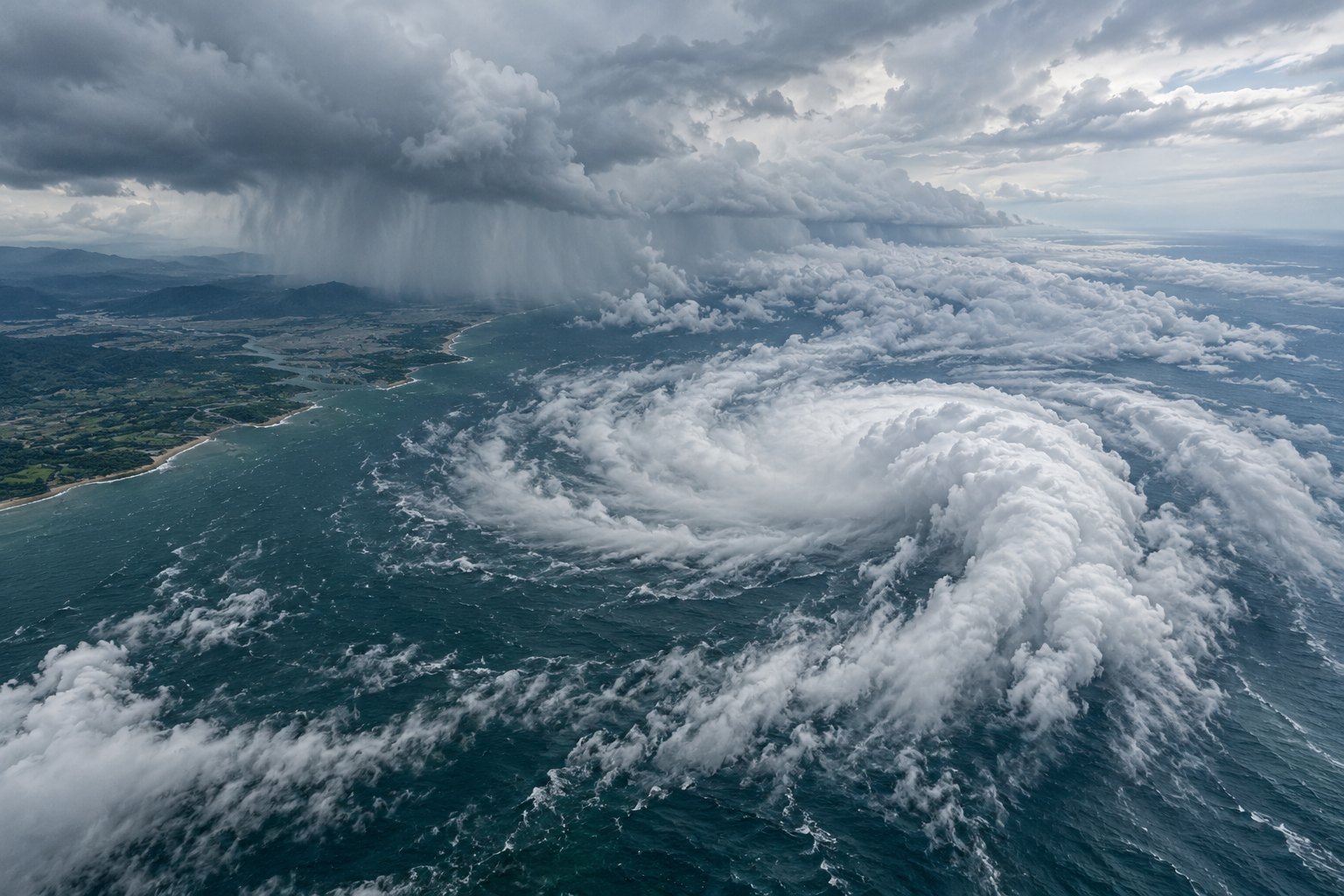
Monsoon low-pressure systems are lows, depressions and deep depressions, graded by the India Meteorological Department by wind speed at sea and closed isobars over land. Many form over the north Bay of Bengal and move west-northwest along the monsoon trough, bringing heavy rain. IMD counted 14 such systems in the 2026 southwest monsoon, against a normal 13.
Syllabus: Prelims · Geography; GS1 · Geophysical Phenomena; GS3 · Disaster Management
Why this matters for UPSC
GS1 geography asks how the Indian monsoon works. Prelims can ask IMD's wind thresholds for a depression, deep depression and cyclonic storm, or what the monsoon trough is; Mains, why Bay of Bengal depressions decide where rain falls.
In short
Monsoon low-pressure systems are the lows, depressions and deep depressions, graded by the India Meteorological Department (IMD), that IMD calls the principal rain-bearing systems of the southwest monsoon.
The number, track and persistence of monsoon lows, more than the seasonal total, decide where India floods or dries; forecasting them matters most.
Why it matters
For a farmer in central India, a Bay of Bengal depression is often what turns a dry sowing window into a wet one, because these systems carry sea moisture far inland. When none form for weeks, as in June 2026, rain fails across the farm belt and sowing slips; when one stalls, the same districts can flood within days. That is why a season can be short of rain overall and still bring floods and extreme downpours. Knowing a system's grade also tells fishermen, port officers and district officials how strong the winds will be and how soon to act.
Prelims pointers
- IMD wind grades (3-minute sustained surface wind): severe cyclonic storm 48-63 knots, very severe 64-89, extremely severe 90-119, super cyclonic storm 120 and above.
- Wind averaging: IMD uses 3 minutes; the US National Hurricane Center uses 1 minute; some countries use 10 minutes.
- Break monsoon: the monsoon trough moves north to the Himalayan foothills; rain falls there and the Brahmaputra may flood while most of India stays dry.
- Monsoon depressions are cold-core near the surface and warm-core aloft, tilt southward with height and extend 6-9 km vertically.
- Tropical cyclogenesis needs sea surface temperature of at least 26.5°C to about 50 m depth and a location at least 500 km from the equator.
- Off-shore trough: a shallow low along India's west coast, from north Kerala to south Gujarat, that strengthens monsoon rain on the coast.
- Cyclone frequency: about five a year over the north Indian Ocean, four times as many in the Bay of Bengal as in the Arabian Sea.
Practise a UPSC-style question
With reference to the classification of low-pressure systems by the India Meteorological Department, consider the following statements:
1. A deep depression has maximum sustained surface winds of 34 to 47 knots.
2. A system with maximum sustained surface winds of 17 to 27 knots is called a depression.
3. Over land, a low-pressure system is graded by the number of closed isobars at 2 hPa intervals.
Which of the statements given above is/are correct?
- (a) 1 and 2 only
- (b) 2 and 3 only
- (c) 1 and 3 only
- (d) 1, 2 and 3
Show the answer
Answer: (b) 2 and 3 only
Answer: (b) 2 and 3 only. A deep depression is 28-33 knots; 34-47 knots is a cyclonic storm.
Statement 1: incorrect. A deep depression has 28-33 knots (50-61 km/h); 34-47 knots is the range of a cyclonic storm.
Statement 2: correct. IMD calls a system with maximum sustained 3-minute surface winds of 17-27 knots (31-49 km/h) a depression.
Statement 3: correct. Over land IMD uses pressure: one closed isobar at 2 hPa intervals makes a low, two a depression, three a deep depression.
Eliminate: statement 1 is wrong because 34 knots is the cyclonic storm threshold. Out: (a), (c), (d).
Trap: Near-miss figure. The 34-47 knot band is real, but it belongs to the next grade up, the cyclonic storm.
Remember: Depression 17-27, deep depression 28-33, cyclonic storm 34-47 knots.
More Explainers
- State Legislative Councils: Articles 168-172 and the graduates' and teachers' seats Polity
- Whales and dolphins in Indian waters: legal protection, IUCN status and strandings Environment
- The Aligarh Movement, AMU and the Article 30 minority test Polity
- Environmental clearance by States: SEIAA, SEAC and the EIA Notification, 2006 Environment
- Software vulnerabilities: CVE, CVSS, coordinated disclosure and CERT-In's role Sci-Tech
- Drug trafficking law in India: NDPS Act, PIT-NDPS, NCB and NCORD National
- Choosing the UN Secretary-General: Article 97, UNSC veto and straw polls World & IR
- UN Convention against Torture, and why India has not ratified it Polity
- NavIC: why India's navigation constellation cannot give a standalone position Sci-Tech
- International Energy Agency: membership, 90-day oil stocks and India's status World & IR
- PM Surya Ghar: Muft Bijli Yojana and the rooftop solar subsidy Economy
- HFSS foods: FSSAI's draft limits and front-of-pack warning labels National