
Article 371C: Manipur's hill councils outside the Sixth Schedule
Why in news: Clashes hit Manipur's Kamjong, Ukhrul and Kangpokpi hill districts on 9-10 October 2026; the Hill Areas Committee had met on 18 September.
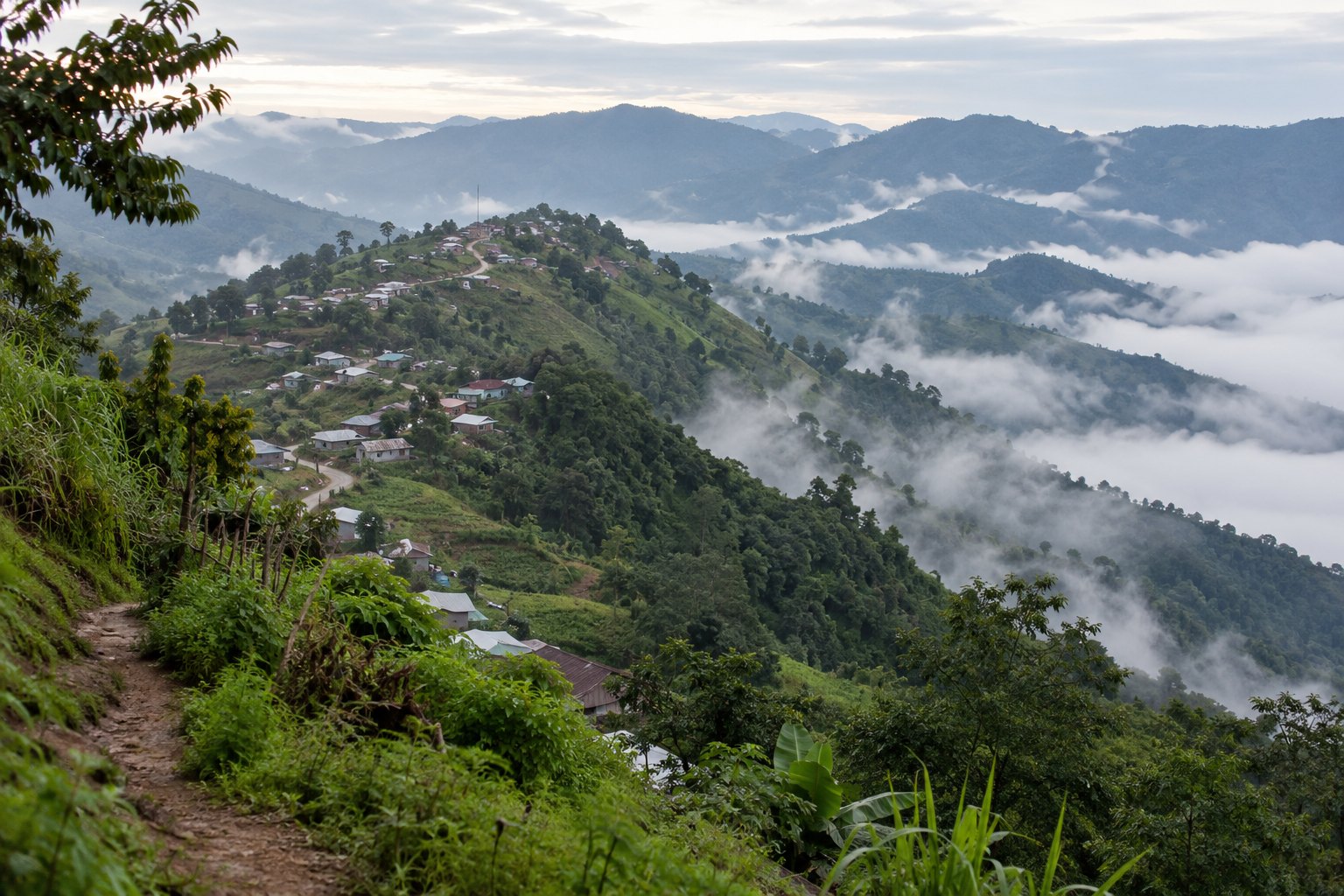
Manipur's hill areas lie outside the Sixth Schedule: under Article 371C, the Assembly's Hill Areas Committee examines Bills and plans for them, and six district councils under a 1971 Act handle local services but cannot legislate. The committee met on 18 September 2026 after a prolonged gap; clashes hit Kamjong, Ukhrul and Kangpokpi hill districts on 9-10 October.
Syllabus: GS2 · Constitution; GS2 · Federalism & Local Government; Prelims · Polity & Governance
Why this matters for UPSC
GS2 polity: special provisions for States and local government in tribal areas. Prelims can ask what Article 371C and the Sixth Schedule provide and who sits on the Hill Areas Committee; Mains, about devolution and unelected district councils.
In short
Manipur's hill areas sit outside the Sixth Schedule: Article 371C gives their legislators a Hill Areas Committee, while statutory district councils run local affairs.
Manipur's design gives the hills a voice but not law-making power; it works only when councils are elected and the committee sits regularly.
Why it matters
For a family in a hill village of Ukhrul or Churachandpur, the district council is meant to be the elected body that decides on primary schools, dispensaries, markets, drinking water and land allotment. Without elected members, those choices pass to a Deputy Commissioner, an appointed official, and residents lose the vote that shapes local spending. Because the councils can only recommend laws, matters of custom, inheritance and marriage wait on what the Assembly chooses to pass, and the Hill Areas Committee is where hill legislators examine those Bills. When that committee seldom sits, the hills lose their main check on the laws and plans made for them. The wider question is how much self-government a State's tribal areas should have, and in what form.
Prelims pointers
- Article 371C: inserted by the Constitution (Twenty-seventh Amendment) Act, 1971, effective 15 February 1972; the President declares by order which areas are Manipur's Hill Areas.
- Hill Areas Committee membership: all MLAs from constituencies wholly or partly in the Hill Areas, except the Chief Minister and the Speaker; other Ministers may speak but not vote.
- 1972 Order, paragraph 4: a non-Money Bill affecting the Hill Areas and mainly on Scheduled matters is referred after introduction; the Governor finally decides any doubt over referral.
- 1971 Act, section 33: a district council may tax professions, trades, callings and employments, animals, non-motor vehicles and boats, and the entry of goods into markets.
- Third Amendment Act, 2008 (Manipur Act No. 7 of 2008): raised each council's directly elected seats from 18 to 24 and vested council polls in a State Election Commission.
- Sixth Schedule (Articles 244(2) and 275(1)): ten autonomous districts in Assam, Meghalaya, Tripura and Mizoram; a District Council has up to 30 members, at most four nominated.
- Article 243M(2): Part IX does not apply to Nagaland, Meghalaya and Mizoram, or to Manipur's hill areas for which District Councils exist under any law.
- Article 244(1): the Fifth Schedule governs Scheduled Areas and Scheduled Tribes in every State other than Assam, Meghalaya, Tripura and Mizoram.
Practise a UPSC-style question
With reference to Article 371C of the Constitution of India, consider the following statements:
1. It was inserted by the Constitution (Twenty-seventh Amendment) Act, 1971.
2. It requires the Governor of Manipur to report annually to the Union Home Minister on the administration of the Hill Areas.
3. It leaves it to the President to declare, by order, which areas of Manipur are Hill Areas.
Which of the statements given above is/are correct?
- (a) 1 and 2 only
- (b) 2 and 3 only
- (c) 1 and 3 only
- (d) 1, 2 and 3
Show the answer
Answer: (c) 1 and 3 only
Answer: (c) 1 and 3 only. The Governor's annual report on the Hill Areas goes to the President, not a Union minister.
Statement 1: correct. The Constitution (Twenty-seventh Amendment) Act, 1971 inserted Article 371C, in force from 15 February 1972.
Statement 2: incorrect. Article 371C(2) has the Governor report annually, or when required, to the President on the Hill Areas' administration.
Statement 3: correct. The Explanation to Article 371C defines Hill Areas as the areas the President declares by order.
Eliminate: Judge statement 2 first: the report goes to the President, so statement 2 is incorrect. Out: (a), (b), (d).
Trap: Swapped attribution. The annual report is real, but it is pinned on the Union Home Minister instead of the President.
Remember: Article 371C: Hill Areas Committee by presidential order; the Governor reports to the President.
More Explainers
- State Legislative Councils: Articles 168-172 and the graduates' and teachers' seats Polity
- Whales and dolphins in Indian waters: legal protection, IUCN status and strandings Environment
- The Aligarh Movement, AMU and the Article 30 minority test Polity
- Environmental clearance by States: SEIAA, SEAC and the EIA Notification, 2006 Environment
- Software vulnerabilities: CVE, CVSS, coordinated disclosure and CERT-In's role Sci-Tech
- Drug trafficking law in India: NDPS Act, PIT-NDPS, NCB and NCORD National
- Choosing the UN Secretary-General: Article 97, UNSC veto and straw polls World & IR
- UN Convention against Torture, and why India has not ratified it Polity
- NavIC: why India's navigation constellation cannot give a standalone position Sci-Tech
- International Energy Agency: membership, 90-day oil stocks and India's status World & IR
- PM Surya Ghar: Muft Bijli Yojana and the rooftop solar subsidy Economy
- HFSS foods: FSSAI's draft limits and front-of-pack warning labels National