
Nagoya Protocol and India's access and benefit-sharing law
Why in news: On 17 October 2026 the NBA reported sharing benefit money with 29 State boards and one UT council, before CBD COP17 in Yerevan.
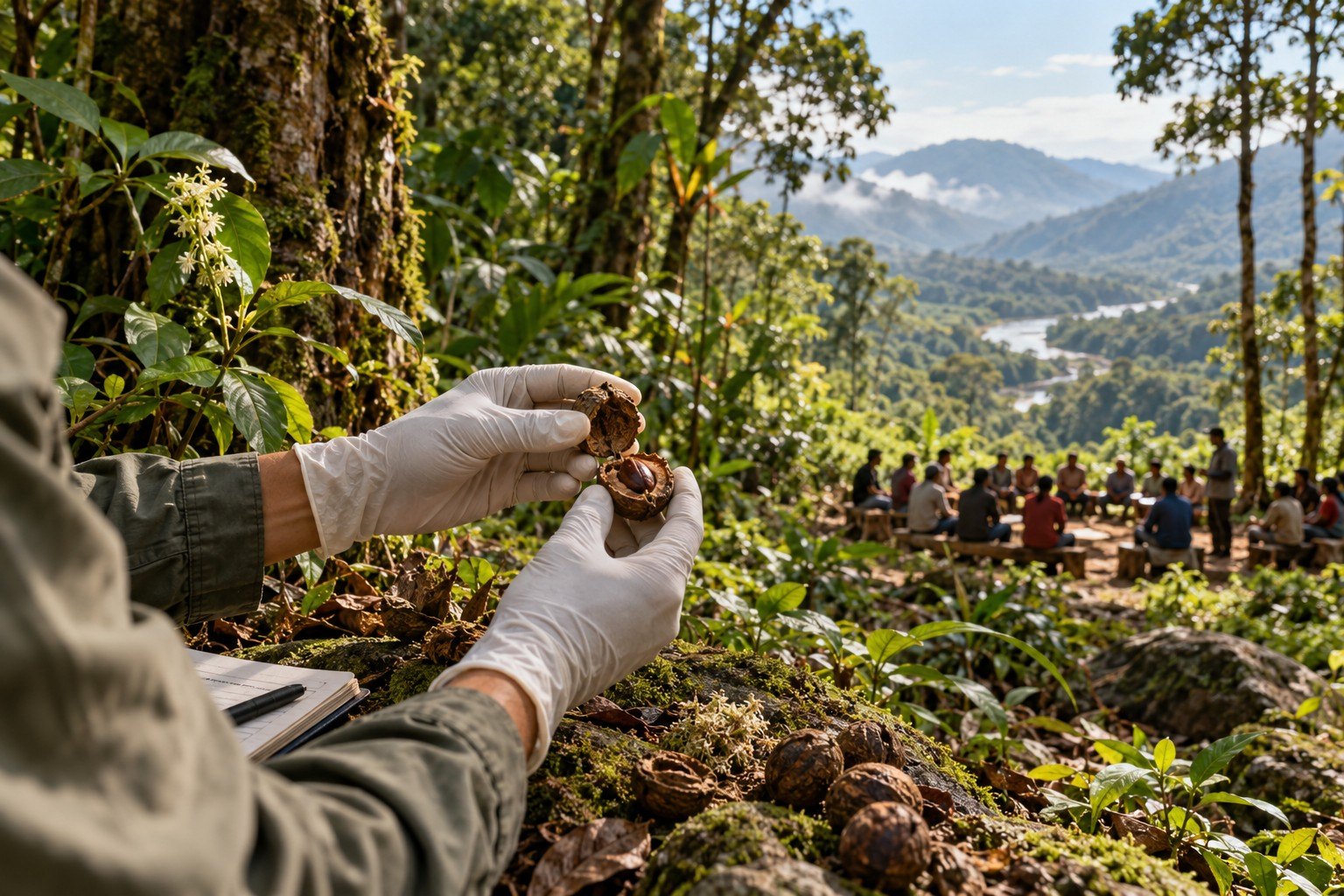
The Nagoya Protocol, a supplementary treaty to the Convention on Biological Diversity, requires users of genetic resources to obtain prior informed consent and share benefits on mutually agreed terms. India applies it through the Biological Diversity Act, 2002, in three tiers: the National Biodiversity Authority, State boards and local committees. The NBA announced a benefit-sharing release on 17 October 2026.
Syllabus: Prelims · Environment & Ecology; GS2 · Statutory & Regulatory Bodies; GS3 · Environment & Conservation
Why this matters for UPSC
GS3 conservation and GS2 international agreements: Prelims asks what the Nagoya Protocol requires and which tier of the Biological Diversity Act approves access; Mains asks whether benefit-sharing reaches local communities.
In short
The Nagoya Protocol (adopted at Nagoya, Japan in 2010) is the CBD's supplementary treaty on access and benefit-sharing: users need the provider's consent and must share benefits fairly.
Benefit-sharing is fair only when money reaches those who conserve; India must trace custodians and keep BMC consent strong while easing access.
Why it matters
A farmer who keeps an old maize or millet variety, or a village that knows a healing plant, rarely sees money when a seed company or drug maker profits from it. Benefit-sharing law changes that: the company must pay a share, and the money is meant to return to the place the resource came from. Where the source is known, payment can reach the grower directly; where produce passed through markets, it is spread across States and committees. The larger question is fairness between those who use nature for profit and those who conserve it, and whether easier rules for industry weaken the consent of communities.
Prelims pointers
- The Protocol was adopted on 29 October 2010 at Nagoya, Japan; the amended preamble of the Biological Diversity Act records that India is a Party to it.
- CBD bodies first took up digital sequence information in December 2016; in December 2022, COP15 decided to set up a multilateral benefit-sharing mechanism for it.
- The NBA was established in 2003; its head office is in Chennai, and it approves activities under sections 3, 4 and 6 of the Act.
- Section 7 exempts codified traditional knowledge, cultivated medicinal plants, local communities and registered AYUSH practitioners from prior intimation to the State board.
- A BMC is formed at Gram Panchayat level in rural areas and by Nagar Panchayats or municipal bodies in towns; it has seven to eleven members.
- Benefit share for commercial use is a percentage of annual gross ex-factory sale price excluding taxes; firms with turnover up to Rs 5 crore pay nothing.
- Since 2024 a breach of sections 3, 4, 6 or 7 draws a penalty of Rs 1 lakh to Rs 50 lakh, set by an adjudicating officer.
- Appeals against a benefit-sharing determination or a penalty order go to the National Green Tribunal.
Practise a UPSC-style question
With reference to the Nagoya Protocol, consider the following statements:
1. It is a supplementary agreement to the United Nations Framework Convention on Climate Change.
2. Its access measures must provide for the issue of a permit or its equivalent when access is granted.
Which of the statements given above is/are correct?
- (a) 1 only
- (b) 2 only
- (c) Both 1 and 2
- (d) Neither 1 nor 2
Show the answer
Answer: (b) 2 only
Answer: (b) 2 only. The Protocol belongs to the Convention on Biological Diversity, and access under it ends in a permit or its equivalent.
Statement 1: incorrect. The Nagoya Protocol is a supplementary agreement to the Convention on Biological Diversity (CBD), not to the UNFCCC.
Statement 2: correct. The CBD Secretariat lists, among the Protocol's access obligations, providing for the issue of a permit or equivalent when access is granted.
Eliminate: Statement 1 ties an access and benefit-sharing treaty to the climate convention, which is wrong. Out: (a), (c).
Eliminate: Statement 2 is right, as domestic access rules must provide for a permit or its equivalent. Out: (d).
Trap: Swapped attribution. The question pins the biodiversity convention's protocol on the climate convention, a different treaty with its own protocols.
Remember: Nagoya Protocol = the CBD's access and benefit-sharing treaty; access is granted through a permit or its equivalent.
In the news
More Explainers
- State Legislative Councils: Articles 168-172 and the graduates' and teachers' seats Polity
- Whales and dolphins in Indian waters: legal protection, IUCN status and strandings Environment
- The Aligarh Movement, AMU and the Article 30 minority test Polity
- Environmental clearance by States: SEIAA, SEAC and the EIA Notification, 2006 Environment
- Software vulnerabilities: CVE, CVSS, coordinated disclosure and CERT-In's role Sci-Tech
- Drug trafficking law in India: NDPS Act, PIT-NDPS, NCB and NCORD National
- Choosing the UN Secretary-General: Article 97, UNSC veto and straw polls World & IR
- UN Convention against Torture, and why India has not ratified it Polity
- NavIC: why India's navigation constellation cannot give a standalone position Sci-Tech
- International Energy Agency: membership, 90-day oil stocks and India's status World & IR
- PM Surya Ghar: Muft Bijli Yojana and the rooftop solar subsidy Economy
- HFSS foods: FSSAI's draft limits and front-of-pack warning labels National