
International Telecommunication Union: sectors, Council and India's PP-30 bid
Why in news: An ITU document of 1 October 2026 for PP-26 records that the Council approved India's invitation to host PP-30, pending formal acceptance at PP-26.
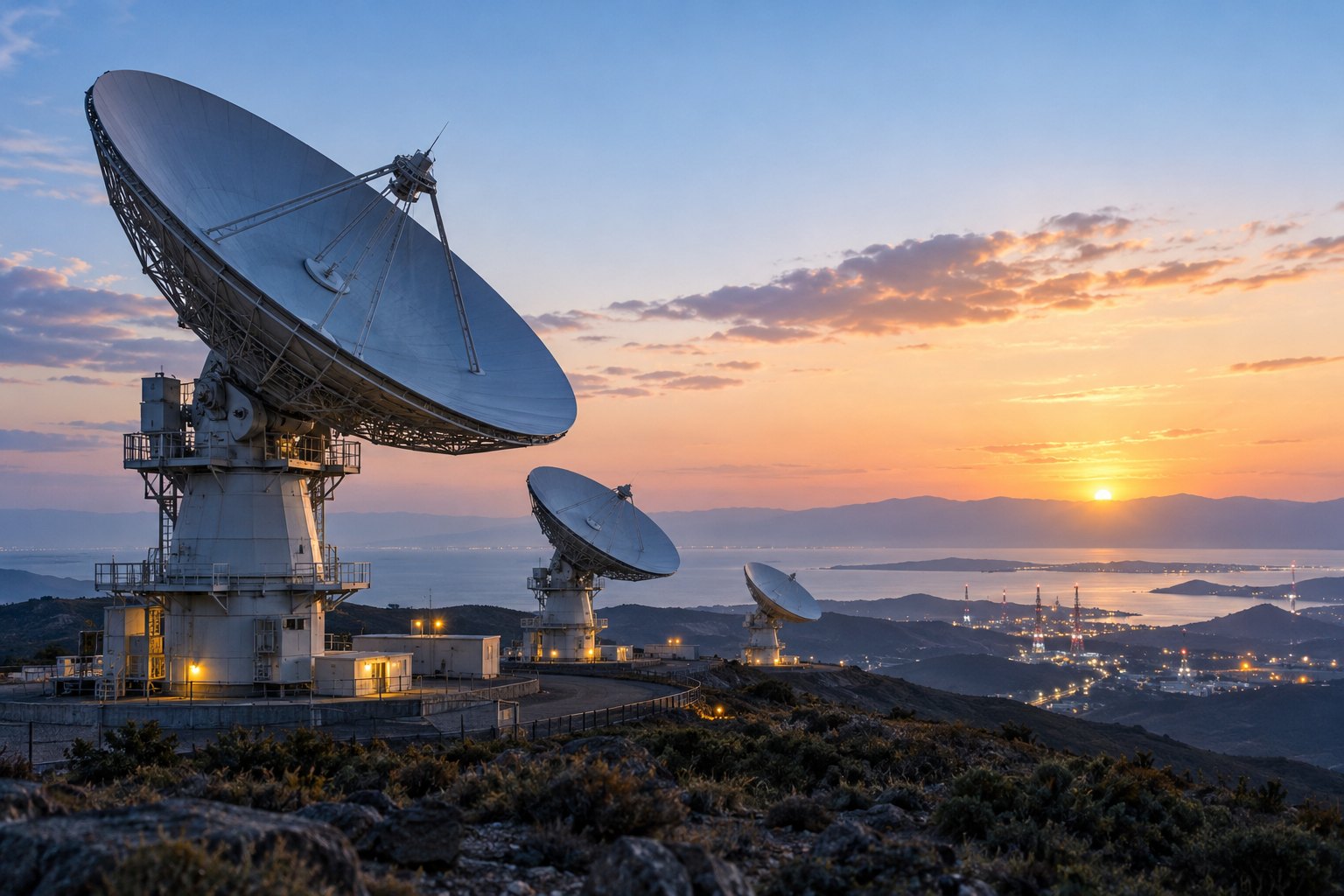
The International Telecommunication Union (ITU) is the United Nations specialised agency for telecommunications. Through three sectors it allocates radio spectrum and satellite orbits, sets technical standards and helps developing countries connect. Its Council, at its 2026 session, approved India's invitation to host the 2030 Plenipotentiary Conference; formal acceptance rests with the 2026 conference in Doha in November.
Syllabus: Prelims · Current Affairs & IR; GS3 · IT, Space, Biotech & IPR; GS2 · Groupings & Agreements
In short
The International Telecommunication Union (ITU), the UN specialised agency for telecommunications, sets shared rules for spectrum, satellite orbits and standards; India bids to host its 2030 Plenipotentiary Conference.
If PP-26 accepts, PP-30 gives India a hand in telecom's next rules, a voice best used to win developing countries a fair spectrum share.
Why it matters
Every phone call that crosses a border, every satellite that carries television and every mobile phone that works when a traveller lands abroad depends on rules agreed at the ITU. Radio spectrum is shared and limited: if two countries use the same frequencies near a border, or two satellites claim the same orbital position, their signals interfere. ITU-R coordinates that use, and ITU-T standards let equipment from different makers work together. For India, hosting the Plenipotentiary Conference would bring the elections and policy decisions of the next four-year cycle, covering fields such as 6G and artificial intelligence, to Indian soil. That happens only if PP-26 formally accepts the invitation.
Prelims pointers
- Plenipotentiary Conference: ITU's supreme body, held every four years; elects the Secretary-General, Deputy Secretary-General, the three Bureau Directors and the Council's Member States.
- ITU-R: holds World Radiocommunication Conferences, which revise the Radio Regulations, the international treaty on use of spectrum and satellite orbits.
- ITU-T: issues international telecom standards called Recommendations; its assembly, the WTSA, meets every four years.
- ITU-D: the Telecommunication Development Sector; supports networks and access in developing countries.
- Membership: Member States, plus Sector Members, Associates and Academia drawn from industry, research bodies and universities.
- Other UN specialised agencies: Universal Postal Union (Bern) for postal services; World Intellectual Property Organization (Geneva) for intellectual property.
Practise a UPSC-style question
With reference to the International Telecommunication Union (ITU), consider the following statements:
1. Its Radiocommunication Sector (ITU-R) works mainly to expand telecom access in developing countries.
2. It is a specialised agency of the United Nations with its headquarters in Geneva.
Which of the statements given above is/are correct?
- (a) 1 only
- (b) 2 only
- (c) Both 1 and 2
- (d) Neither 1 nor 2
Show the answer
Answer: (b) 2 only
1 is incorrect: expanding access in developing countries is the work of the Telecommunication Development Sector (ITU-D); ITU-R manages radio spectrum and satellite orbits. 2 is correct: the ITU is a UN specialised agency based in Geneva.
More Explainers
- State Legislative Councils: Articles 168-172 and the graduates' and teachers' seats Polity
- Whales and dolphins in Indian waters: legal protection, IUCN status and strandings Environment
- The Aligarh Movement, AMU and the Article 30 minority test Polity
- Environmental clearance by States: SEIAA, SEAC and the EIA Notification, 2006 Environment
- Software vulnerabilities: CVE, CVSS, coordinated disclosure and CERT-In's role Sci-Tech
- Drug trafficking law in India: NDPS Act, PIT-NDPS, NCB and NCORD National
- Choosing the UN Secretary-General: Article 97, UNSC veto and straw polls World & IR
- UN Convention against Torture, and why India has not ratified it Polity
- NavIC: why India's navigation constellation cannot give a standalone position Sci-Tech
- International Energy Agency: membership, 90-day oil stocks and India's status World & IR
- PM Surya Ghar: Muft Bijli Yojana and the rooftop solar subsidy Economy
- HFSS foods: FSSAI's draft limits and front-of-pack warning labels National