
Producer Price Index and the revised Wholesale Price Index, base 2022-23
Why in news: The Office of the Economic Adviser released September 2026 WPI, Output PPI and trial Input PPI figures on 14 October 2026.
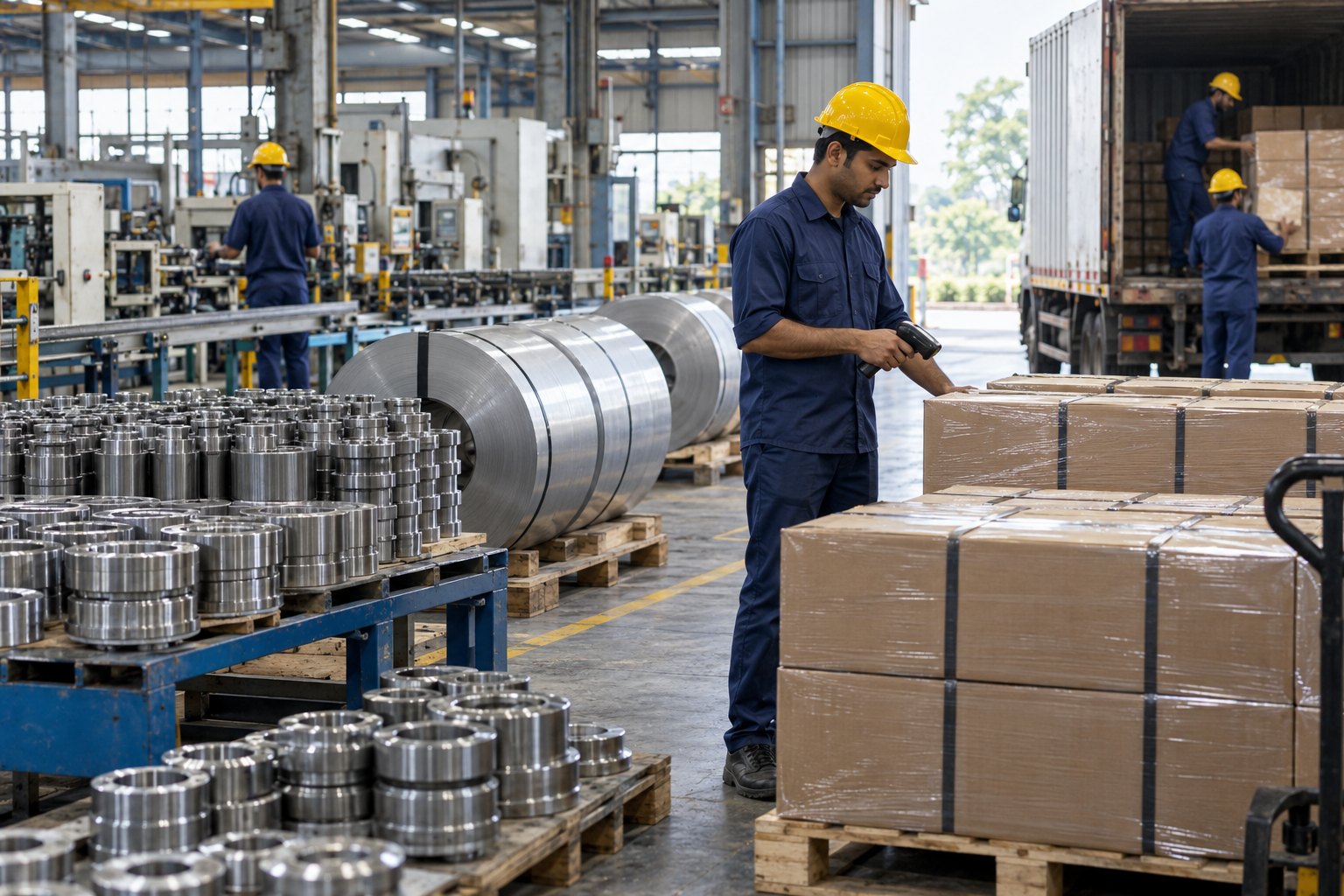
The Producer Price Index (PPI) measures prices from the producer's side: the Output PPI tracks what producers receive, the Input PPI what they pay for inputs. The Office of the Economic Adviser launched them in June 2026, with base 2022-23, beside a revised Wholesale Price Index (WPI). Their September 2026 figures came out on 14 October 2026.
Syllabus: GS3 · Indian Economy & Growth; Prelims · Economy & Social Development
Why this matters for UPSC
GS3 Indian economy, inflation and its measurement: Prelims asks who compiles the WPI and PPI and which price concept and weights each uses; Mains, why India is moving from WPI to PPI and what double deflation does for GDP.
In short
The Producer Price Index is a pair of price measures, Output PPI for prices producers receive and Input PPI for prices they pay, now compiled beside a revised WPI.
PPI aligns India's price statistics with national accounts and global practice; its worth rests on lifting Input PPI out of trial and widening services coverage.
Why it matters
A road contractor whose bills rise with a price index, a factory owner watching raw-material costs and the statistician estimating GDP all lean on these numbers. When an index weights goods by trade instead of by what India produces, a heavily imported item can move it more than its place in the home economy justifies, and contract payments follow that distortion. Separate input and output indices show whether a firm's margins are squeezed by costlier inputs or widened by higher selling prices. For growth figures, deflating inputs and outputs on their own stops a jump in fuel costs from being misread as a change in real production. Better price measurement feeds fairer contracts, sharper policy and more credible GDP.
Prelims pointers
- WPI and PPIs aggregate items by the Laspeyres formula; item indices use a short-term chain-based Jevons method, a geometric mean of price relatives.
- Basic prices tracked: ex-factory for manufactures, ex-mine for minerals, ex-storage for mineral oils, mandi prices for farm goods; Minimum Support Price is left out.
- Output PPI has four major groups: Agriculture, Forestry and Fishing; Mining and Quarrying; Manufactured Products; and Electricity.
- Petroleum products sit in Fuel and Power in the WPI but in Manufactured Products in the Output PPI, where coal and crude fall under Mining and Quarrying.
- Missing prices are now imputed by Targeted Mean Imputation, replacing the carry-forward method of the 2011-12 WPI.
- The Consumer Price Index, of retail prices paid by households, is compiled by the National Statistics Office, MoSPI; the RBI's inflation target is set in CPI terms.
- WPI, Output PPI and trial Input PPI for a month are released on the 14th of the next month; provisional figures become final after ten weeks.
Practise a UPSC-style question
With reference to the Wholesale Price Index (WPI) with base year 2022-23, consider the following statements:
1. It is compiled and released by the National Statistics Office under the Ministry of Statistics and Programme Implementation.
2. Its item weights are derived from Gross Value of Output instead of net traded value.
3. Crude petroleum and natural gas have been shifted to its Fuel and Power major group.
Which of the statements given above is/are correct?
- (a) 1 and 2 only
- (b) 2 and 3 only
- (c) 1 and 3 only
- (d) 1, 2 and 3
Show the answer
Answer: (b) 2 and 3 only
Answer: (b) 2 and 3 only. The compiling office in statement 1 is wrong; the weights and the regrouping are right.
Statement 1: incorrect. The Office of the Economic Adviser, DPIIT, Ministry of Commerce and Industry, compiles and releases the WPI; the National Statistics Office, MoSPI, compiles the CPI.
Statement 2: correct. The 2022-23 series weights items by Gross Value of Output; the 2011-12 series used net traded value, output plus imports minus exports.
Statement 3: correct. Crude Petroleum and Natural Gas moved from Primary Articles to Fuel and Power, beside coal, electricity and mineral oils.
Eliminate: Statement 1 names the wrong compiling office, so every option that includes it goes. Out: (a), (c), (d).
Trap: Swapped attribution. A true index is pinned on the statistics ministry, which compiles the CPI and GDP, to catch a student who assumes every price index comes from MoSPI.
Remember: WPI and all PPIs: OEA, DPIIT (Commerce). CPI: NSO, MoSPI.
More Explainers
- State Legislative Councils: Articles 168-172 and the graduates' and teachers' seats Polity
- Whales and dolphins in Indian waters: legal protection, IUCN status and strandings Environment
- The Aligarh Movement, AMU and the Article 30 minority test Polity
- Environmental clearance by States: SEIAA, SEAC and the EIA Notification, 2006 Environment
- Software vulnerabilities: CVE, CVSS, coordinated disclosure and CERT-In's role Sci-Tech
- Drug trafficking law in India: NDPS Act, PIT-NDPS, NCB and NCORD National
- Choosing the UN Secretary-General: Article 97, UNSC veto and straw polls World & IR
- UN Convention against Torture, and why India has not ratified it Polity
- NavIC: why India's navigation constellation cannot give a standalone position Sci-Tech
- International Energy Agency: membership, 90-day oil stocks and India's status World & IR
- PM Surya Ghar: Muft Bijli Yojana and the rooftop solar subsidy Economy
- HFSS foods: FSSAI's draft limits and front-of-pack warning labels National