
Rail accident compensation: no-fault liability, Claims Tribunal and travel insurance
Why in news: A Supreme Court order of 6 October 2026 directs that counter tickets be insured in the same manner as online tickets from 27 October 2026.
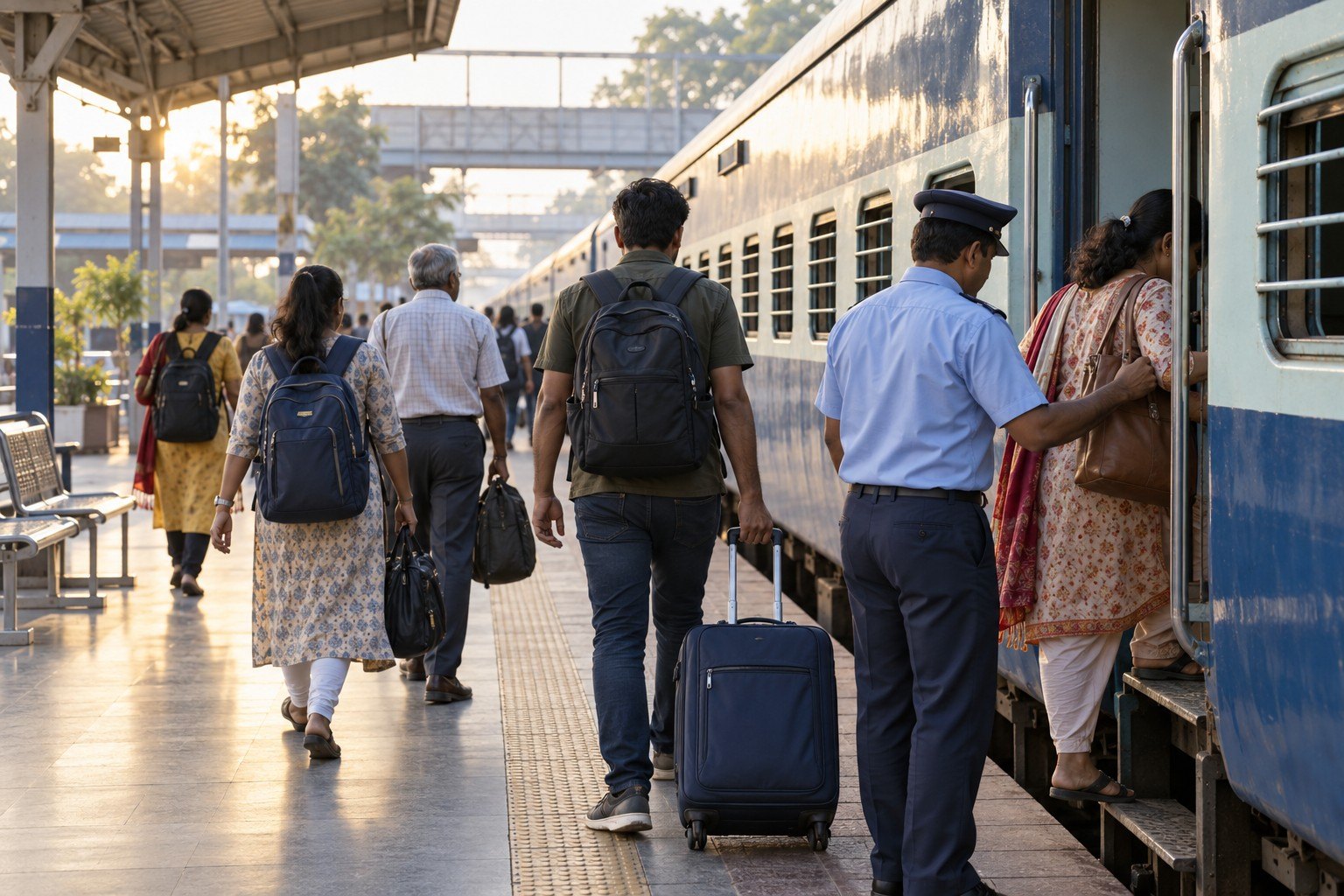
Sections 124 and 124A of the Railways Act, 1989 make the railway administration compensate passengers killed or injured in train accidents and untoward incidents, fault or no fault; the Railway Claims Tribunal decides claims. Optional insurance covers only e-tickets. A Supreme Court order of 6 October 2026 directs that counter tickets be insured in the same manner from 27 October.
Syllabus: Prelims · Polity & Governance; GS2 · Statutory & Regulatory Bodies; GS3 · Infrastructure
Why this matters for UPSC
GS2 (statutory and quasi-judicial bodies) and GS3 (railways): Prelims can ask what sections 124 and 124A of the Railways Act, 1989 cover and how the Railway Claims Tribunal works; Mains can ask whether no-fault compensation and insurance protect all passengers equally.
In short
Rail accident compensation is a no-fault duty: under the Railways Act, 1989, the railway administration pays prescribed sums for passenger death or injury in an accident or untoward incident.
No-fault liability is sound law; its promise now rests on revised sums, quicker tribunal relief and insurance reaching counter-ticket travellers.
Why it matters
A family that loses its earner in a derailment, or a commuter who slips from a crowded local train, does not have to prove that the Railways were careless before it is paid. That spares poor families a long fight against a large organisation. Yet the help a victim gets has depended partly on how the ticket was bought: a traveller who booked online could add insurance for a few paise, while one who queued at a station counter, as the poorest travellers mostly do, could not. The larger question is whether a public carrier owes every passenger the same protection, and whether fixed sums keep pace with what grieving families lose.
Prelims pointers
- Section 124, Railways Act, 1989: collisions, derailments and other accidents to passenger trains; covers death, injury and accompanying goods; a railway servant on duty counts as passenger.
- Section 124A proviso bars compensation for suicide or attempt, self-inflicted injury, own criminal act, intoxication or insanity, and natural cause, disease or unrelated medical treatment.
- Compensation Schedule from 1 January 2017: Rs 8 lakh for death; Rs 64,000 to Rs 8 lakh for listed injuries, e.g. Rs 4 lakh for spinal fracture with paraplegia.
- Railway Claims Tribunal: its 1987 Act in force from 8 November 1989; District Court powers; claim within one year; 21 benches in 18 cities, per the claims portal.
- Optional Travel Insurance Scheme (from 1 September 2016): confirmed, RAC or part-confirmed IRCTC e-tickets, Indian citizens only; 45 paise per passenger since 17 February 2024.
- Insurance benefits: Rs 10 lakh for death or permanent total disability, up to Rs 7.5 lakh for partial disability, Rs 2 lakh hospitalisation, Rs 10,000 for mortal remains.
- Ex gratia (Ministry of Railways, 2023): train accident Rs 5 lakh death, Rs 2.5 lakh grievous, Rs 50,000 simple injury; untoward incident Rs 1.5 lakh, Rs 50,000, Rs 5,000.
- Rina Devi (2018): falls while boarding or alighting are untoward incidents; award is the higher of the accident-date sum with interest or the award-date sum.
Practise a UPSC-style question
With reference to compensation for railway passengers under the Railways Act, 1989, consider the following statements:
1. Under section 124, a claimant must first prove negligence on the part of the railway administration.
2. The accidental falling of a passenger from a train carrying passengers is an untoward incident under the Act.
3. No compensation is payable under section 124A if the passenger's death results from suicide or attempted suicide.
Which of the statements given above is/are correct?
- (a) 1 and 2 only
- (b) 2 and 3 only
- (c) 1 and 3 only
- (d) 1, 2 and 3
Show the answer
Answer: (b) 2 and 3 only
Answer: (b) 2 and 3 only. Liability under sections 124 and 124A is no-fault, which rules out statement 1.
Statement 1: incorrect. Section 124 makes the railway liable whether or not there was any wrongful act, neglect or default on its part.
Statement 2: correct. Section 123(c) counts the accidental falling of a passenger from a train carrying passengers as an untoward incident.
Statement 3: correct. The proviso to section 124A bars compensation for death or injury due to suicide or attempted suicide.
Eliminate: Judge statement 1 first: the Act pays whether or not the railway was negligent, so statement 1 is incorrect. Out: (a), (c), (d).
Trap: Sounds right. A duty to prove negligence sounds natural for a damages claim, but the Act imposes none on railway passengers.
Remember: Sections 124 and 124A: compensation whether or not the railway was at fault; only the 124A proviso's grounds bar it.
More Explainers
- State Legislative Councils: Articles 168-172 and the graduates' and teachers' seats Polity
- Whales and dolphins in Indian waters: legal protection, IUCN status and strandings Environment
- The Aligarh Movement, AMU and the Article 30 minority test Polity
- Environmental clearance by States: SEIAA, SEAC and the EIA Notification, 2006 Environment
- Software vulnerabilities: CVE, CVSS, coordinated disclosure and CERT-In's role Sci-Tech
- Drug trafficking law in India: NDPS Act, PIT-NDPS, NCB and NCORD National
- Choosing the UN Secretary-General: Article 97, UNSC veto and straw polls World & IR
- UN Convention against Torture, and why India has not ratified it Polity
- NavIC: why India's navigation constellation cannot give a standalone position Sci-Tech
- International Energy Agency: membership, 90-day oil stocks and India's status World & IR
- PM Surya Ghar: Muft Bijli Yojana and the rooftop solar subsidy Economy
- HFSS foods: FSSAI's draft limits and front-of-pack warning labels National