
Plastic Waste Management Rules, 2016: single-use ban, EPR and disposal
Why in news: On 23 March 2026 the Environment Minister told the Lok Sabha that 20.7 million tonnes of plastic packaging waste had been recycled under EPR.
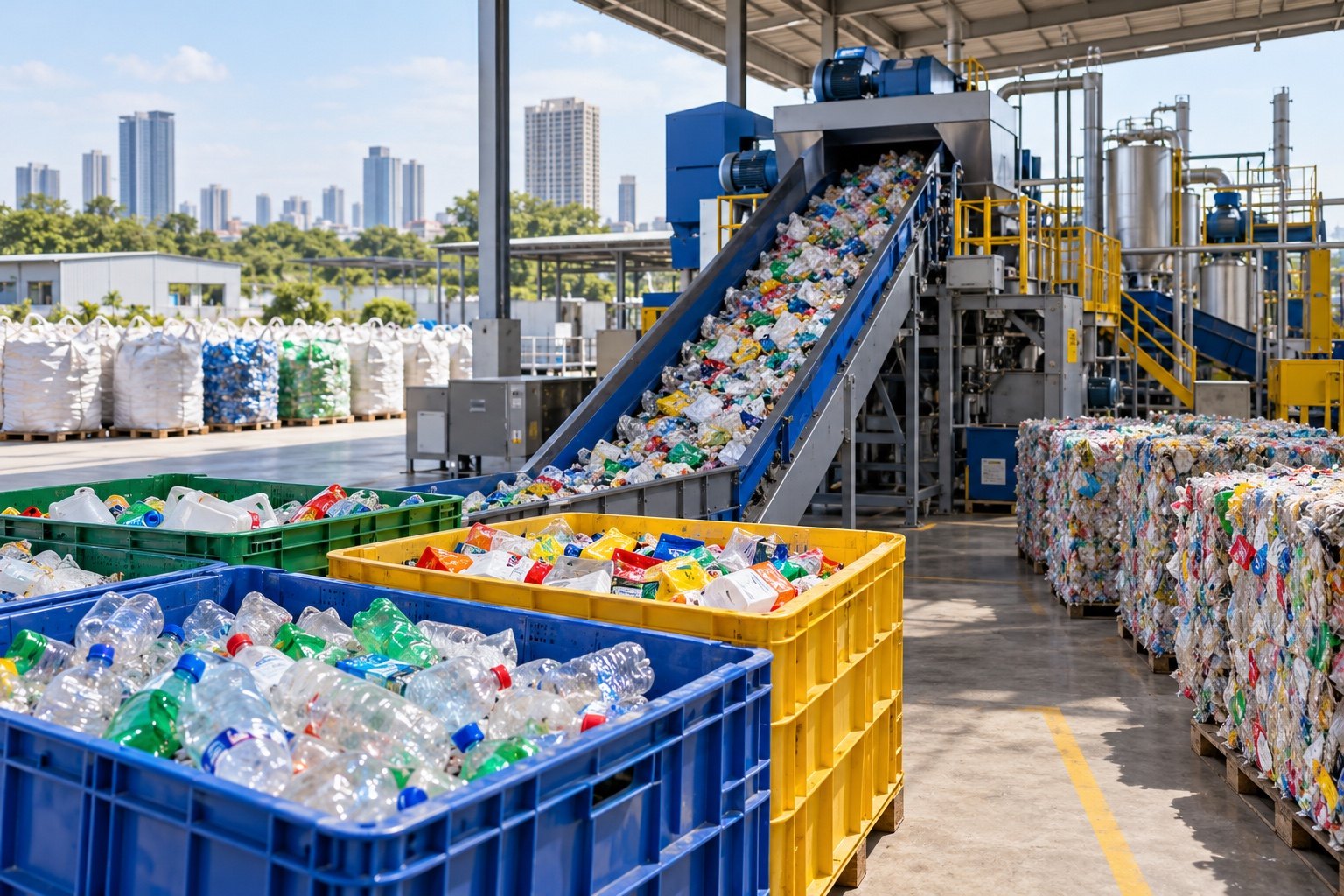
The Plastic Waste Management Rules, 2016, under the Environment (Protection) Act, 1986, set who collects, registers and processes plastic waste. Amendments banned identified single-use items from 1 July 2022 and set recycling targets for producers. On 23 March 2026 the Environment Minister told the Lok Sabha that 20.7 million tonnes of packaging waste had been recycled under EPR.
Syllabus: Prelims · Environment & Ecology; GS2 · Government Policies; GS3 · Environment & Conservation
Why this matters for UPSC
GS3 environmental pollution and conservation: Prelims can ask carry-bag thickness, the banned single-use items, who registers under Extended Producer Responsibility and compostable versus biodegradable plastics; Mains, whether EPR curbs plastic pollution.
In short
The Plastic Waste Management Rules, 2016, framed under the Environment (Protection) Act, 1986, regulate plastic from manufacture to disposal, placing collection duties on local bodies and recycling duties on producers.
The Rules are sound on paper; their worth rests on honest certificate checks, recycling over burning and less plastic at source.
Why it matters
A shopper can no longer be handed a thin plastic bag or a plastic straw legally, because the ban moved the cost of littering onto the makers and sellers of such items. Companies that sell packaged goods now have to pay for collecting and recycling the packaging they put in the market, so the price of waste is built into the product. Towns and villages must count their plastic waste and stop it being burnt in the open, which affects the air people breathe. The larger question is whether making polluters pay leads to less plastic, or only to paper compliance while waste is still burnt.
Prelims pointers
- PIBOs operating in more than two States register with the CPCB; those in one or two States with the State board, both through the online portal.
- Minimum recycling for Category I rigid packaging rises from 50% of the EPR target in 2024-25 to 80% from 2027-28.
- Brand owners using rigid plastic packaging carry a minimum reuse obligation; brand owners include online marketplaces and retail chains.
- Compostable items must conform to IS/ISO 17088:2021 and carry the label 'compostable only under industrial composting'.
- Biodegradable items must state the number of days and the recipient environment, such as soil or water, in which they degrade.
- The EPR of micro and small producers is met by the raw-material manufacturer or importer that supplied them.
- Rule 4(4), added in 2021, says a later ban on such plastic items takes effect only ten years after its publication.
- Under rule 13(8), as amended in 2024, an applicant is deemed registered if registration is not granted within thirty days of a complete application.
Practise a UPSC-style question
With reference to the Plastic Waste Management Rules, 2016, as amended, consider the following statements:
1. Carry bags made of virgin or recycled plastic must now be at least 120 microns thick.
2. The minimum thickness rule applies equally to carry bags made of compostable plastic.
Which of the statements given above is/are correct?
- (a) 1 only
- (b) 2 only
- (c) Both 1 and 2
- (d) Neither 1 nor 2
Show the answer
Answer: (a) 1 only
Answer: (a) 1 only. The 120-micron floor binds ordinary plastic bags, while compostable bags are exempt from it.
Statement 1: correct. The 2021 amendment to rule 4(1)(c) raised the floor to 75 microns from 30 September 2021 and 120 microns from 31 December 2022.
Statement 2: incorrect. Rule 4(1)(h) says the thickness provision does not apply to carry bags made of compostable plastic; they need a CPCB certificate instead.
Eliminate: Statement 2 is the surer call, since compostable bags are tested by standard, not thickness. Out: (b), (c).
Eliminate: Statement 1 holds, as the 120-micron limit is in force. Out: (d).
Trap: Wrong scope. The statement stretches the thickness rule to compostable bags, which rule 4(1)(h) expressly exempts.
Remember: 50, then 75, then 120 microns for plastic carry bags; compostable bags are exempt but need CPCB certification.
More Explainers
- State Legislative Councils: Articles 168-172 and the graduates' and teachers' seats Polity
- Whales and dolphins in Indian waters: legal protection, IUCN status and strandings Environment
- The Aligarh Movement, AMU and the Article 30 minority test Polity
- Environmental clearance by States: SEIAA, SEAC and the EIA Notification, 2006 Environment
- Software vulnerabilities: CVE, CVSS, coordinated disclosure and CERT-In's role Sci-Tech
- Drug trafficking law in India: NDPS Act, PIT-NDPS, NCB and NCORD National
- Choosing the UN Secretary-General: Article 97, UNSC veto and straw polls World & IR
- UN Convention against Torture, and why India has not ratified it Polity
- NavIC: why India's navigation constellation cannot give a standalone position Sci-Tech
- International Energy Agency: membership, 90-day oil stocks and India's status World & IR
- PM Surya Ghar: Muft Bijli Yojana and the rooftop solar subsidy Economy
- HFSS foods: FSSAI's draft limits and front-of-pack warning labels National