
Section 163 BNSS: how prohibitory orders work and their limits
Why in news: Section 163 was imposed in New Delhi district before protests planned for October 10-11, 2026, after Delhi Police refused permission for the gathering.
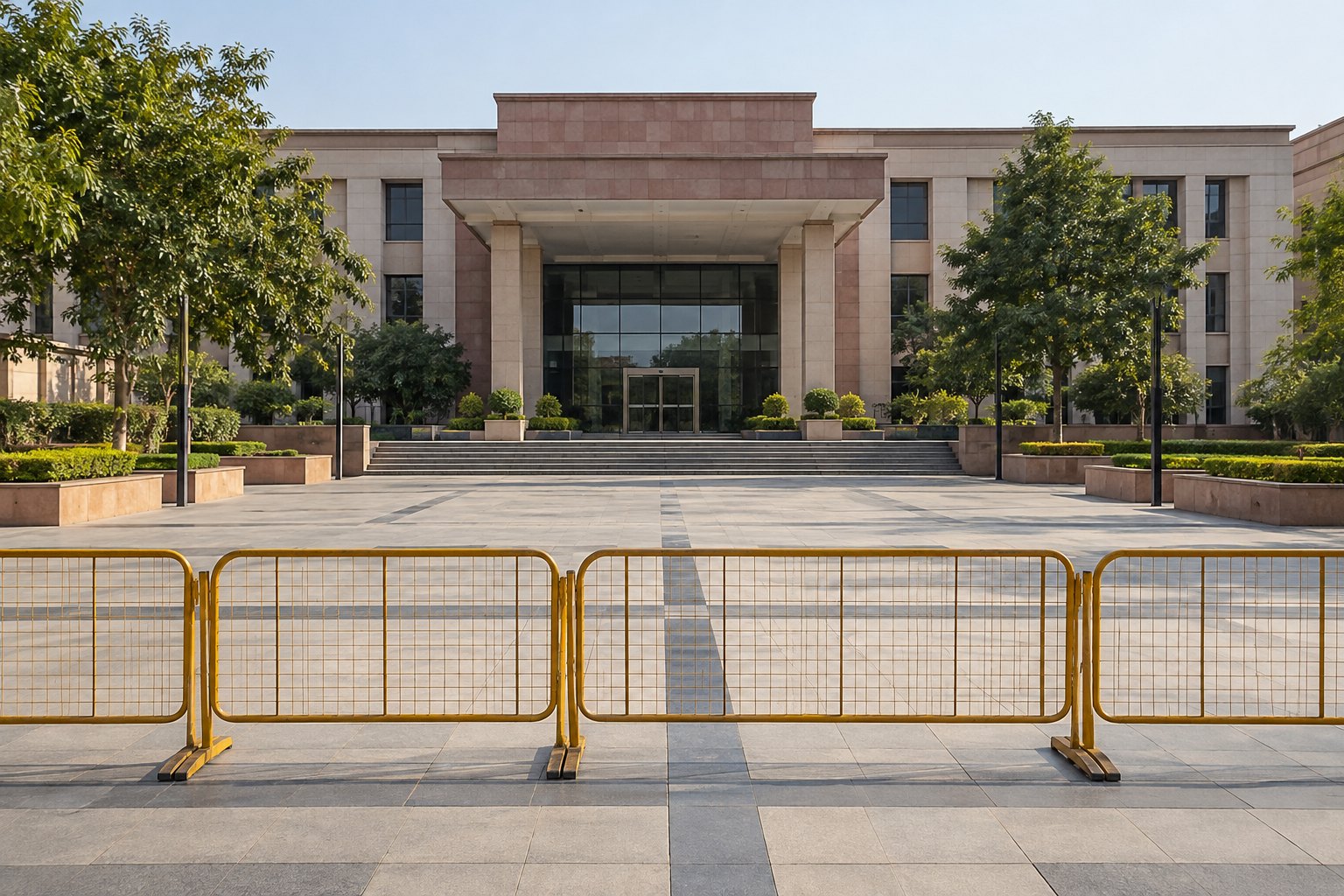
Section 163 of the Bharatiya Nagarik Suraksha Sanhita, 2023 lets an Executive Magistrate order people to refrain from an act when immediate prevention is needed to stop danger to life, obstruction or a disturbance of public tranquillity. It replaced Section 144 of the CrPC in 2024. It was imposed in New Delhi district before protests planned for October 10-11, 2026.
Syllabus: GS2 · Constitution; Prelims · Polity & Governance; GS2 · Governance & e-Governance
In short
Section 163 of the Bharatiya Nagarik Suraksha Sanhita (BNSS), 2023, successor to Section 144 CrPC, lets an Executive Magistrate bar acts to avert immediate danger, testing Article 19 freedoms.
Speed justifies the power only in a sudden emergency; once it governs CCTV and record-keeping, Article 19 shrinks without any law changing.
Why it matters
A Section 163 order decides whether people in an area can gather, march or even run ordinary business as before. For a protester it can turn a peaceful meeting into an offence; for a shopkeeper or landlord it can mean a duty to install CCTV or report tenants to the police. The order comes from an executive officer, not a court, and often without hearing anyone, so its limits are the safeguard: a real and immediate threat, a narrow direction and a two-month expiry. When orders are renewed as routine, an emergency power becomes everyday governance, and the freedoms of speech and assembly under Article 19 shrink without any law being changed.
Prelims pointers
- Article 19(1)(b): right to assemble peaceably and without arms; Article 19(3) allows reasonable restrictions for sovereignty and integrity of India or public order.
- Article 19(1)(a): freedom of speech and expression; Article 19(2) grounds include public order, security of the State and incitement to an offence.
- Section 163 BNSS: a District Magistrate, Sub-divisional Magistrate or specially empowered Executive Magistrate may issue the order.
- Duration: two months from the Magistrate's order; the State Government may extend it for a further period of up to six months.
- Executive Magistrates are appointed by the State Government; Judicial Magistrates try cases under the High Court's control.
- Disobeying a prohibitory order is punishable under Section 223 of the Bharatiya Nyaya Sanhita, 2023 (earlier Section 188 of the IPC).
- Unlawful assembly: five or more persons with a common unlawful object (Section 189 BNS, earlier Section 141 IPC).
- Internet suspensions now fall under the Telecommunications Act, 2023; Anuradha Bhasin (2020) requires such orders to be necessary, proportionate and published.
Practise a UPSC-style question
With reference to prohibitory orders in India, consider the following statements:
1. Section 163 of the Bharatiya Nagarik Suraksha Sanhita, 2023 took the place of Section 144 of the Code of Criminal Procedure, 1973.
2. A prohibitory order under Section 163 is issued by a Judicial Magistrate of the first class.
Which of the statements given above is/are correct?
- (a) 1 only
- (b) 2 only
- (c) Both 1 and 2
- (d) Neither 1 nor 2
Show the answer
Answer: (a) 1 only
1 is correct: when the BNSS replaced the CrPC in 2024, Section 163 took over the power that Section 144 CrPC had given. 2 is incorrect: the order is issued by a District Magistrate, a Sub-divisional Magistrate or another Executive Magistrate specially empowered by the State Government, not by a Judicial Magistrate.
More Explainers
- State Legislative Councils: Articles 168-172 and the graduates' and teachers' seats Polity
- Whales and dolphins in Indian waters: legal protection, IUCN status and strandings Environment
- The Aligarh Movement, AMU and the Article 30 minority test Polity
- Environmental clearance by States: SEIAA, SEAC and the EIA Notification, 2006 Environment
- Software vulnerabilities: CVE, CVSS, coordinated disclosure and CERT-In's role Sci-Tech
- Drug trafficking law in India: NDPS Act, PIT-NDPS, NCB and NCORD National
- Choosing the UN Secretary-General: Article 97, UNSC veto and straw polls World & IR
- UN Convention against Torture, and why India has not ratified it Polity
- NavIC: why India's navigation constellation cannot give a standalone position Sci-Tech
- International Energy Agency: membership, 90-day oil stocks and India's status World & IR
- PM Surya Ghar: Muft Bijli Yojana and the rooftop solar subsidy Economy
- HFSS foods: FSSAI's draft limits and front-of-pack warning labels National