
Project Cheetah: India's intercontinental cheetah reintroduction
Why in news: An eight-month-old cub of Namibian cheetah Aasha was found dead at Kuno National Park, reported on 13 October 2026.
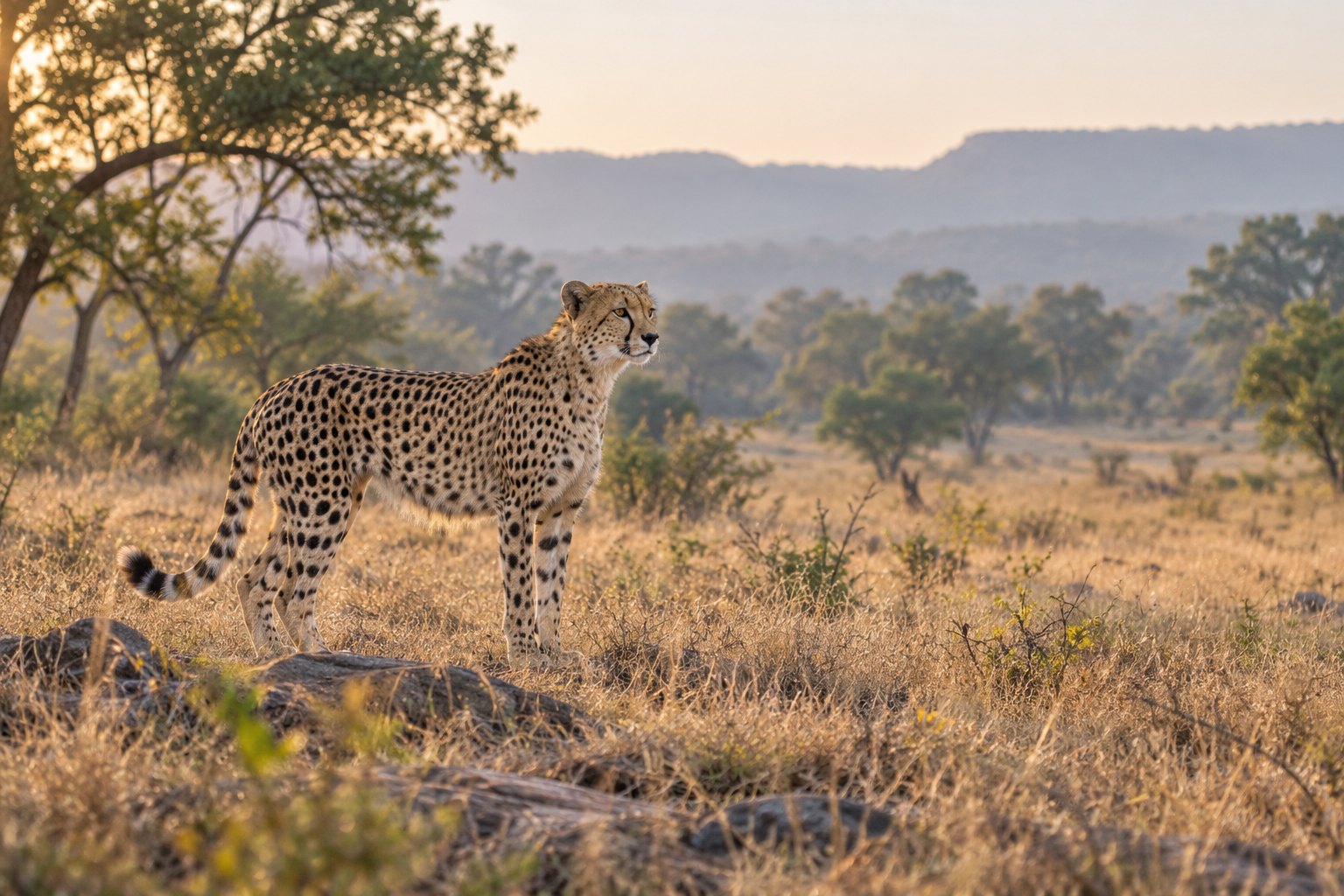
Project Cheetah, launched on 17 September 2022 and implemented by the National Tiger Conservation Authority, reintroduces African cheetahs from Namibia, South Africa and Botswana to Kuno National Park and Gandhi Sagar Wildlife Sanctuary in Madhya Pradesh. A cub's death at Kuno, reported on 13 October 2026, brings the programme back into the news.
Syllabus: Prelims · Environment & Ecology; GS3 · Environment & Conservation
Why this matters for UPSC
GS3 conservation and Prelims environment: Prelims can ask Project Cheetah's implementing body, its source countries, where Kuno and Gandhi Sagar lie and the cheetah's IUCN status; Mains can ask about species reintroduction and grassland conservation.
In short
Project Cheetah, launched on 17 September 2022 under the Ministry of Environment, Forest and Climate Change, reintroduces the cheetah, the only large carnivore lost in independent India.
Project Cheetah will succeed only if breeding at Kuno becomes a connected, genetically diverse metapopulation, with grasslands and communities protected alongside the cats.
Why it matters
A farmer's family near Kuno, a cheetah tracker and a grassland bird all gain or lose with this project. India's dry grasslands and scrub forests have long been treated as wasteland and turned into cropland, and the species living there, such as the blackbuck and the great Indian bustard, have suffered most. A top predator like the cheetah gives the State a reason to protect and restore those habitats, while jobs as trackers and Cheetah Mitras give local people a stake. If India-born cheetahs keep breeding and spread between Kuno and Gandhi Sagar, the country regains a lost species and a model for restoring ecosystems; if deaths outpace births, the project depends on imports from Africa indefinitely.
Prelims pointers
- Implementing body: National Tiger Conservation Authority (NTCA), a statutory body under the Ministry of Environment, Forest and Climate Change; technical partner: Wildlife Institute of India.
- Source countries: Namibia (2022), South Africa (2023), Botswana (2026); all in southern Africa.
- Kuno National Park: Sheopur district, Madhya Pradesh; the perennial Kuno river flows through it; semi-arid bio-geographic zone.
- Gandhi Sagar Wildlife Sanctuary: Mandsaur and Neemuch districts of Madhya Pradesh, on both banks of the Chambal, bordering Rajasthan.
- IUCN Red List: the cheetah species is Vulnerable; the Asiatic cheetah subspecies, surviving only in Iran, is Critically Endangered.
- Funding: the cheetah project draws on the Centrally Sponsored Scheme of Project Tiger.
- Other sites named: Nauradehi Wildlife Sanctuary (Madhya Pradesh), Banni grasslands (Gujarat), Shahgarh bulge and Mukundara Hills Tiger Reserve (Rajasthan).
- International Big Cat Alliance, launched on 9 April 2023, covers seven big cats including the cheetah.
Practise a UPSC-style question
With reference to Project Cheetah, consider the following statements:
1. The first batch of cheetahs translocated to India under the project came from South Africa.
2. The project is implemented by the National Tiger Conservation Authority, a statutory body under the Ministry of Environment, Forest and Climate Change.
3. The cheetahs brought to India belong to the Asiatic subspecies sourced from Iran.
Which of the statements given above is/are correct?
- (a) 1 only
- (b) 2 only
- (c) 3 only
- (d) 1, 2 and 3
Show the answer
Answer: (b) 2 only
1 is incorrect: the first batch of eight cheetahs came from Namibia in September 2022; South Africa's twelve followed in February 2023. 2 is correct: the NTCA, a statutory body under the MoEFCC, implements the project with the Madhya Pradesh Forest Department and WII. 3 is incorrect: India brought African cheetahs, because sourcing the critically endangered Asiatic cheetah from Iran would harm that population.
More Explainers
- State Legislative Councils: Articles 168-172 and the graduates' and teachers' seats Polity
- Whales and dolphins in Indian waters: legal protection, IUCN status and strandings Environment
- The Aligarh Movement, AMU and the Article 30 minority test Polity
- Environmental clearance by States: SEIAA, SEAC and the EIA Notification, 2006 Environment
- Software vulnerabilities: CVE, CVSS, coordinated disclosure and CERT-In's role Sci-Tech
- Drug trafficking law in India: NDPS Act, PIT-NDPS, NCB and NCORD National
- Choosing the UN Secretary-General: Article 97, UNSC veto and straw polls World & IR
- UN Convention against Torture, and why India has not ratified it Polity
- NavIC: why India's navigation constellation cannot give a standalone position Sci-Tech
- International Energy Agency: membership, 90-day oil stocks and India's status World & IR
- PM Surya Ghar: Muft Bijli Yojana and the rooftop solar subsidy Economy
- HFSS foods: FSSAI's draft limits and front-of-pack warning labels National