
International Organization for Migration: the UN's migration agency
Why in news: On 11 October 2026 the IOM said at least 139 migrants had died and 84 were missing after a boat capsized off Djibouti.
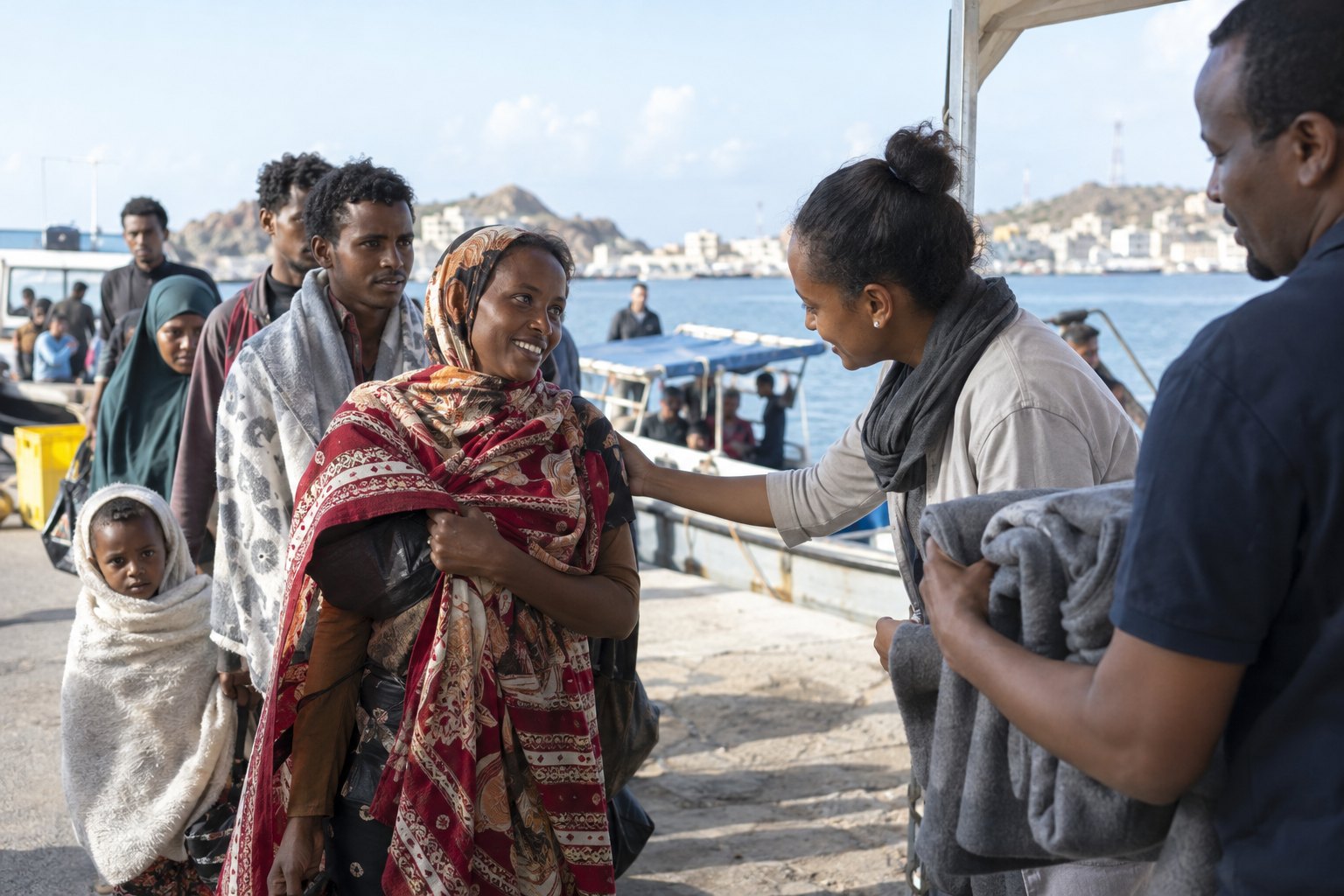
The International Organization for Migration (IOM), founded in 1951 and based in Geneva, is the leading intergovernmental body on migration and has been part of the United Nations System since a 2016 agreement. It has 174 member states; India joined in June 2008. On 11 October 2026 it reported at least 139 migrants dead in a shipwreck off Djibouti.
Syllabus: Prelims · Current Affairs & IR; Prelims · Geography; GS2 · Groupings & Agreements
In short
The International Organization for Migration (IOM), founded in 1951 and based in Geneva, is the leading intergovernmental body on migration, part of the UN System since 2016.
The IOM can count the dead, aid survivors and advise governments, but fewer deaths need legal pathways and funding that only States can provide.
Why it matters
An Indian worker leaving for a job in the Gulf and an Ethiopian boarding an overcrowded boat off Djibouti are both migrants, and the IOM is the global body built to serve them. For India it brought home nationals stranded after the Gulf War of 1991 and later worked with the government on safe overseas employment. Its records are often the only count of those who die on the way: the Missing Migrants Project logged more than 900 dead or missing on the Eastern Route in 2025. With an estimated 281 million international migrants and a global compact that binds no State, safe travel depends on what governments choose to fund and on the legal pathways they open.
Prelims pointers
- IOM: headquartered in Geneva; founded outside the UN in 1951; part of the United Nations System since the 2016 agreement.
- IOM Constitution (1953): recognises the link between migration and economic, social and cultural development, and the right of freedom of movement.
- Missing Migrants Project: the IOM's record, kept since 2014, of people who die or go missing while migrating towards an international destination.
- Displacement Tracking Matrix: the IOM's system for counting and tracking the movements of displaced people and migrants.
- Routes out of East Africa: Eastern Route to Yemen and Saudi Arabia; Northern Route across the Sahara to North Africa; Southern Route to South Africa.
- Bab el-Mandeb Strait: joins the Red Sea to the Gulf of Aden; Djibouti and Eritrea lie on its African shore, Yemen on the Arabian shore.
- Djibouti: a Horn of Africa country bordering Eritrea, Ethiopia and Somalia; Obock is a port town on its northern coast.
- UNHCR: the UN refugee agency, set up by the General Assembly in 1950; India is not a party to the 1951 Refugee Convention.
Practise a UPSC-style question
With reference to the International Organization for Migration (IOM), consider the following statements:
1. It was founded in 1951 to help resettle people displaced in Europe after the Second World War.
2. It was established by a resolution of the United Nations General Assembly.
3. India is a member state of the organisation.
Which of the statements given above is/are correct?
- (a) 1 and 2 only
- (b) 2 and 3 only
- (c) 1 and 3 only
- (d) 1, 2 and 3
Show the answer
Answer: (c) 1 and 3 only
1 is correct: it began in 1951 as the Provisional Intergovernmental Committee for the Movement of Migrants from Europe, to deal with post-war displacement. 2 is incorrect: it was created at a conference in Brussels convened on the initiative of Belgium and the United States, outside the United Nations, and joined the UN System only in 2016. 3 is correct: India became a member state in June 2008.
More Explainers
- State Legislative Councils: Articles 168-172 and the graduates' and teachers' seats Polity
- Whales and dolphins in Indian waters: legal protection, IUCN status and strandings Environment
- The Aligarh Movement, AMU and the Article 30 minority test Polity
- Environmental clearance by States: SEIAA, SEAC and the EIA Notification, 2006 Environment
- Software vulnerabilities: CVE, CVSS, coordinated disclosure and CERT-In's role Sci-Tech
- Drug trafficking law in India: NDPS Act, PIT-NDPS, NCB and NCORD National
- Choosing the UN Secretary-General: Article 97, UNSC veto and straw polls World & IR
- UN Convention against Torture, and why India has not ratified it Polity
- NavIC: why India's navigation constellation cannot give a standalone position Sci-Tech
- International Energy Agency: membership, 90-day oil stocks and India's status World & IR
- PM Surya Ghar: Muft Bijli Yojana and the rooftop solar subsidy Economy
- HFSS foods: FSSAI's draft limits and front-of-pack warning labels National