
Section 126 BNSS: security for keeping the peace
Why in news: Delhi Police said three persons arrested "u/s 126/170 BNSS" on 10 October 2026 were released on a one-year Rs 50,000 bond on 11 October.
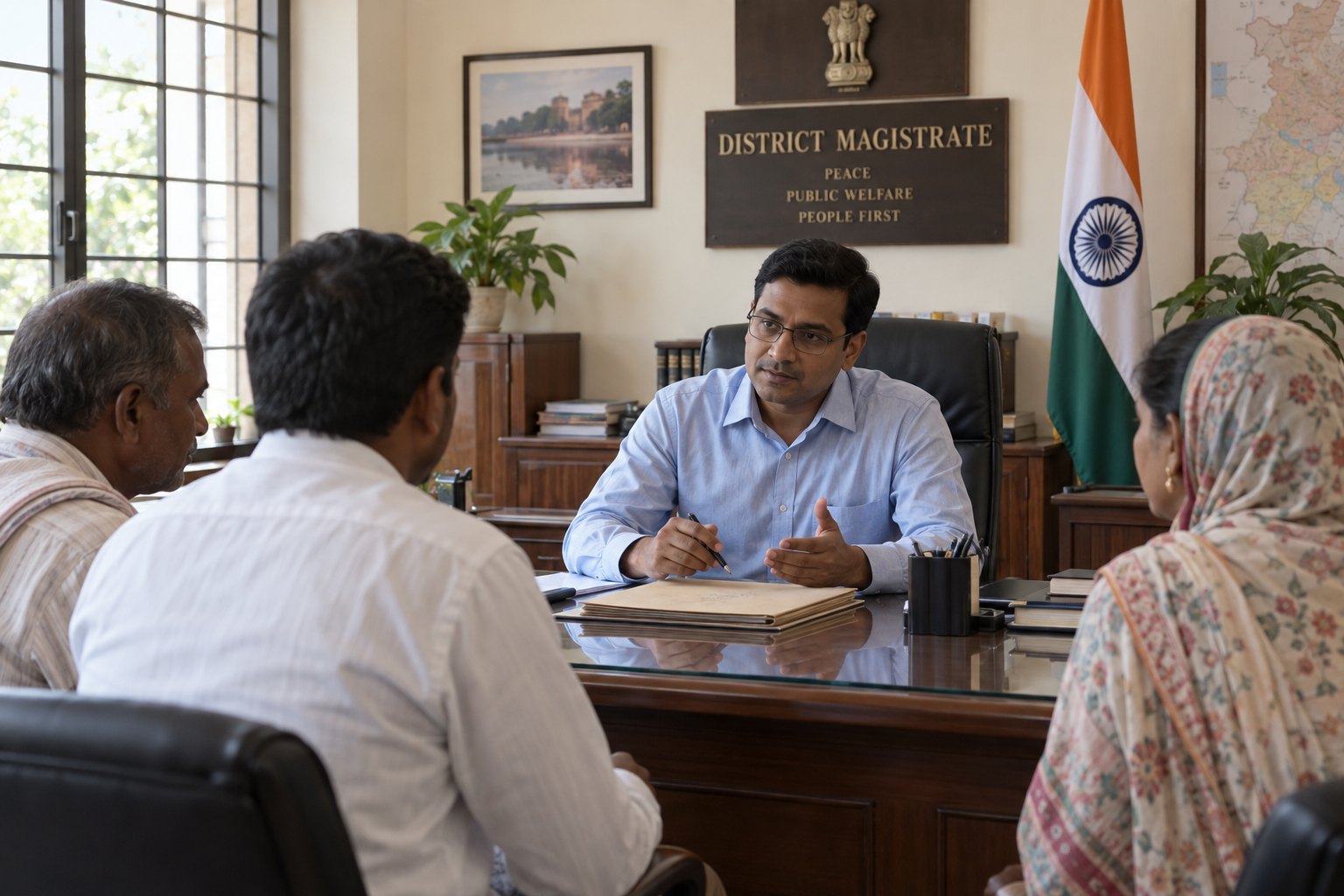
Section 126 of the Bharatiya Nagarik Suraksha Sanhita, 2023 lets an Executive Magistrate ask a person likely to breach the peace to show cause why a bond for keeping the peace, for up to one year, should not be ordered. Delhi Police said three persons it arrested preventively were released on a Rs 50,000 bond on 11 October 2026.
Syllabus: GS2 · Separation of Powers; Prelims · Polity & Governance; GS2 · Executive & Judiciary
In short
Section 126 of the Bharatiya Nagarik Suraksha Sanhita, 2023 lets an Executive Magistrate bind a person, convicted of nothing, to keep the peace, weighing public order against liberty.
Section 126 should remain a narrow preventive tool: its written order, timed inquiry and one-year cap must work as real limits, especially against protesters.
Why it matters
A person who has been convicted of nothing can be asked to promise, with money at stake, to stay peaceful for up to a year. A protester or a party to a local quarrel may be called before an Executive Magistrate on information that a breach of the peace is likely. Not giving the bond after a final order means simple imprisonment until the period ends or the bond is given. The decision rests with an officer of the executive and there is no trial for an offence, so the safeguards carry the weight: a written order, an inquiry on evidence, a six-month limit and an amount that is not excessive. The larger question is how far the State may restrain liberty to prevent disorder before any offence takes place.
Prelims pointers
- Chapter IX of the BNSS, 2023: security for keeping the peace and for good behaviour; Chapter XII: preventive action of the police.
- Section 126: the power lies with an Executive Magistrate; the apprehended breach or the person must be within that Magistrate's local jurisdiction.
- Section 130: the show-cause order is written and states the substance of the information, the bond amount, its term and the number of sureties.
- Section 135: the inquiry follows summons-case procedure as nearly as practicable; a Sessions Judge may vacate a direction continuing it beyond six months.
- Section 136: the final order cannot differ in nature, be larger in amount or run longer than the section 130 order; for a child, only sureties execute the bond.
- Section 139: under a bond for good behaviour, committing, attempting or abetting any offence punishable with imprisonment is a breach.
- Section 141: breach of a peace bond given under section 136 allows arrest and detention in prison until the bond period expires.
- Section 142: the District Magistrate may release a person jailed for not giving security under an Executive Magistrate's order; the Chief Judicial Magistrate in other cases.
Practise a UPSC-style question
With reference to security for keeping the peace under section 126 of the Bharatiya Nagarik Suraksha Sanhita, 2023, consider the following statements:
1. The show-cause proceedings under this section are taken before a Judicial Magistrate of the first class.
2. A bond for keeping the peace under this section may be ordered for a period of up to three years.
Which of the statements given above is/are correct?
- (a) 1 only
- (b) 2 only
- (c) Both 1 and 2
- (d) Neither 1 nor 2
Show the answer
Answer: (d) Neither 1 nor 2
1 is incorrect: section 126 gives the power to an Executive Magistrate, not a Judicial Magistrate. 2 is incorrect: the bond under section 126 cannot exceed one year; three years is the limit under section 125, which applies on conviction.
More Explainers
- State Legislative Councils: Articles 168-172 and the graduates' and teachers' seats Polity
- Whales and dolphins in Indian waters: legal protection, IUCN status and strandings Environment
- The Aligarh Movement, AMU and the Article 30 minority test Polity
- Environmental clearance by States: SEIAA, SEAC and the EIA Notification, 2006 Environment
- Software vulnerabilities: CVE, CVSS, coordinated disclosure and CERT-In's role Sci-Tech
- Drug trafficking law in India: NDPS Act, PIT-NDPS, NCB and NCORD National
- Choosing the UN Secretary-General: Article 97, UNSC veto and straw polls World & IR
- UN Convention against Torture, and why India has not ratified it Polity
- NavIC: why India's navigation constellation cannot give a standalone position Sci-Tech
- International Energy Agency: membership, 90-day oil stocks and India's status World & IR
- PM Surya Ghar: Muft Bijli Yojana and the rooftop solar subsidy Economy
- HFSS foods: FSSAI's draft limits and front-of-pack warning labels National