
Regulating animal experiments: Prevention of Cruelty to Animals Act and CCSEA
Why in news: The Centre's draft laboratory-animal rules (G.S.R. 864(E), 6 October 2026) drew a call for withdrawal from PETA India on 19 October 2026.
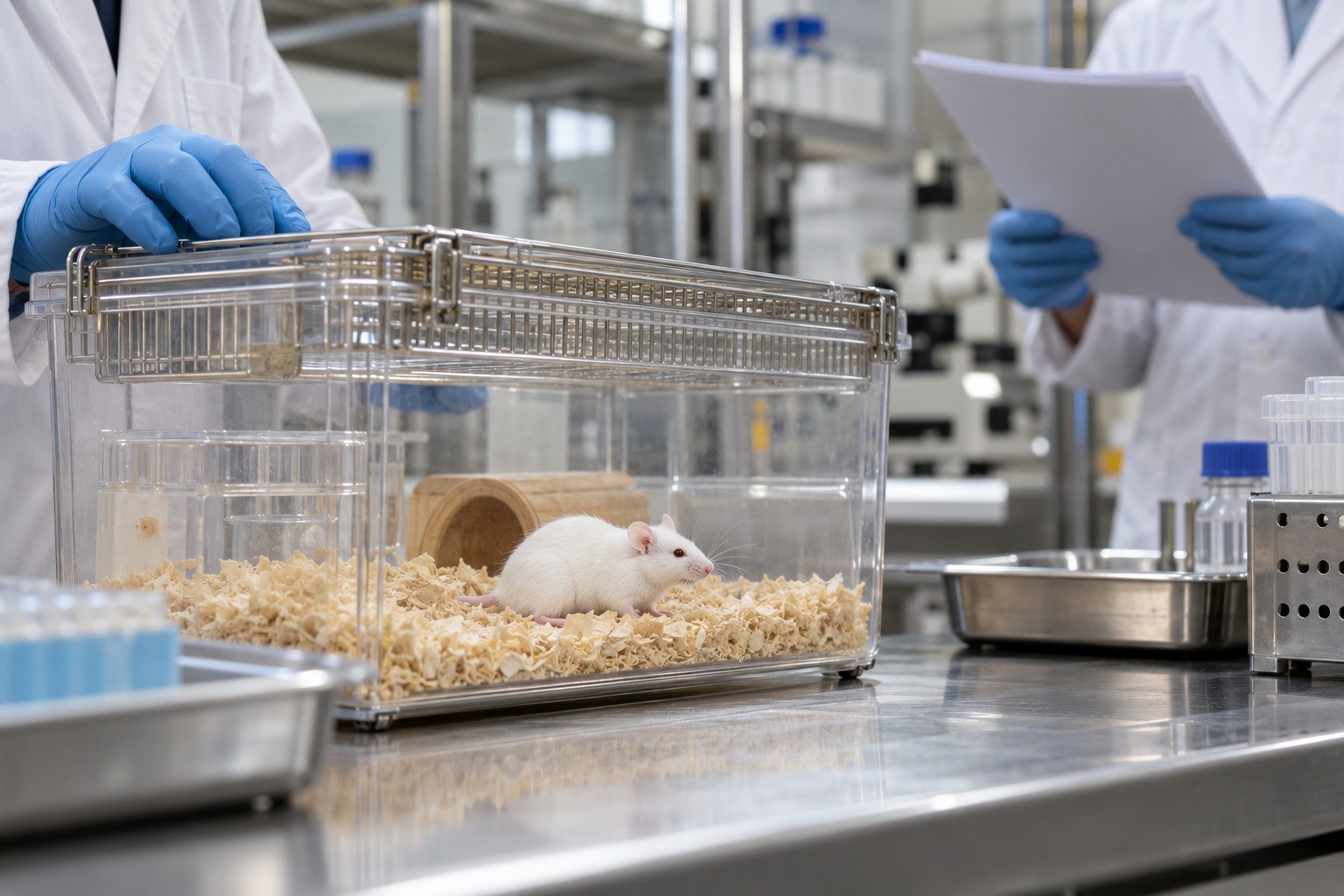
Chapter IV of the Prevention of Cruelty to Animals Act, 1960 allows experiments on animals that advance knowledge to save life or fight disease, under the Committee for Control and Supervision of Experiments on Animals (CCSEA), which registers laboratories and makes binding rules. Draft rules published on 6 October 2026 propose grading experiments by the pain they cause.
Syllabus: GS4 · Ethics in Public Administration; Prelims · Environment & Ecology; GS2 · Statutory & Regulatory Bodies
Why this matters for UPSC
GS2 statutory bodies and GS4 research ethics: Prelims asks what Chapter IV of the Prevention of Cruelty to Animals Act, 1960 permits, CCSEA's powers and the 3Rs; Mains, how to balance research needs against animal welfare.
In short
Experiments on animals are lawful in India under section 14 of the Prevention of Cruelty to Animals Act, 1960, but Chapter IV places them under CCSEA to prevent unnecessary pain.
India's regime should judge experiments by the suffering they cause, keep independent inspection, and steadily replace animals as validated non-animal methods mature.
Why it matters
Every patient who takes a new medicine or vaccine relies on safety tests, many of which still use animals, and every laboratory rat, rabbit or monkey relies on these rules to limit its pain. Who signs off an experiment decides how hard it is questioned: an in-house committee knows the science but sits close to the researchers, while a central committee is more independent but slower. Lighter review speeds research but risks needless suffering; heavier review protects animals but can delay studies. Wider use of computer models and lab-grown human tissue could cut the number of animals used and give results closer to human biology.
Prelims pointers
- Section 17(2), PCA Act, 1960: CCSEA's rules must avoid experiments where books, models or films suffice in teaching, and as far as possible those merely for manual skill.
- Section 17(2), PCA Act, 1960: experiments on larger animals are to be avoided where guinea pigs, rabbits, frogs or rats give the same result.
- Section 18, PCA Act, 1960: officers authorised by CCSEA may enter any institution at a reasonable time and demand its experiment records.
- Section 19, PCA Act, 1960: after a hearing, CCSEA may bar a person or institution from experiments for a period or indefinitely, or impose conditions.
- 1998 Rules: an IAEC includes a biological scientist, a veterinarian, the animal-facility scientist, a scientist from outside the institute and a socially aware non-scientist.
- Cosmetics Rules, 2020: made under the Drugs and Cosmetics Act, 1940; they bar import of cosmetics tested on animals after 12 November 2014.
- Section 5, PCA Act, 1960: the Animal Welfare Board of India's members include the Inspector General of Forests and the Animal Husbandry Commissioner, ex officio, and six MPs.
Practise a UPSC-style question
With reference to the Committee for Control and Supervision of Experiments on Animals (CCSEA), consider the following statements:
1. The Central Government constitutes it on the advice of the National Biodiversity Authority.
2. Rules made by it bind persons in charge of institutions in which experiments on animals are performed.
Which of the statements given above is/are correct?
- (a) 1 only
- (b) 2 only
- (c) Both 1 and 2
- (d) Neither 1 nor 2
Show the answer
Answer: (b) 2 only
Answer: (b) 2 only. CCSEA's rules bind institutions, but it is constituted on the Animal Welfare Board of India's advice.
Statement 1: incorrect. Section 15 of the PCA Act, 1960 lets the Centre constitute CCSEA on the advice of the Animal Welfare Board of India, not the National Biodiversity Authority.
Statement 2: correct. Section 17(4) of the PCA Act, 1960 makes CCSEA's rules binding on persons in charge of institutions where experiments are performed.
Eliminate: Statement 1 names the wrong advisory body, since CCSEA sits under the PCA Act, not the biodiversity law. Out: (a), (c).
Eliminate: Statement 2 holds, as the rules are binding under section 17. Out: (d).
Trap: Swapped attribution. A real statutory body is credited as CCSEA's adviser in place of the Animal Welfare Board of India.
Remember: PCA Act, 1960: CCSEA under section 15 on the Animal Welfare Board's advice; its rules bind institutions.
More Explainers
- State Legislative Councils: Articles 168-172 and the graduates' and teachers' seats Polity
- Whales and dolphins in Indian waters: legal protection, IUCN status and strandings Environment
- The Aligarh Movement, AMU and the Article 30 minority test Polity
- Environmental clearance by States: SEIAA, SEAC and the EIA Notification, 2006 Environment
- Software vulnerabilities: CVE, CVSS, coordinated disclosure and CERT-In's role Sci-Tech
- Drug trafficking law in India: NDPS Act, PIT-NDPS, NCB and NCORD National
- Choosing the UN Secretary-General: Article 97, UNSC veto and straw polls World & IR
- UN Convention against Torture, and why India has not ratified it Polity
- NavIC: why India's navigation constellation cannot give a standalone position Sci-Tech
- International Energy Agency: membership, 90-day oil stocks and India's status World & IR
- PM Surya Ghar: Muft Bijli Yojana and the rooftop solar subsidy Economy
- HFSS foods: FSSAI's draft limits and front-of-pack warning labels National