
Section 5, Environment (Protection) Act, 1986: Delhi's calendar curbs and GRAP
Why in news: Delhi's calendar curbs, notified on 23 June 2026 under section 5, take effect on 1 November 2026; the Chief Minister announced them on 20 October.
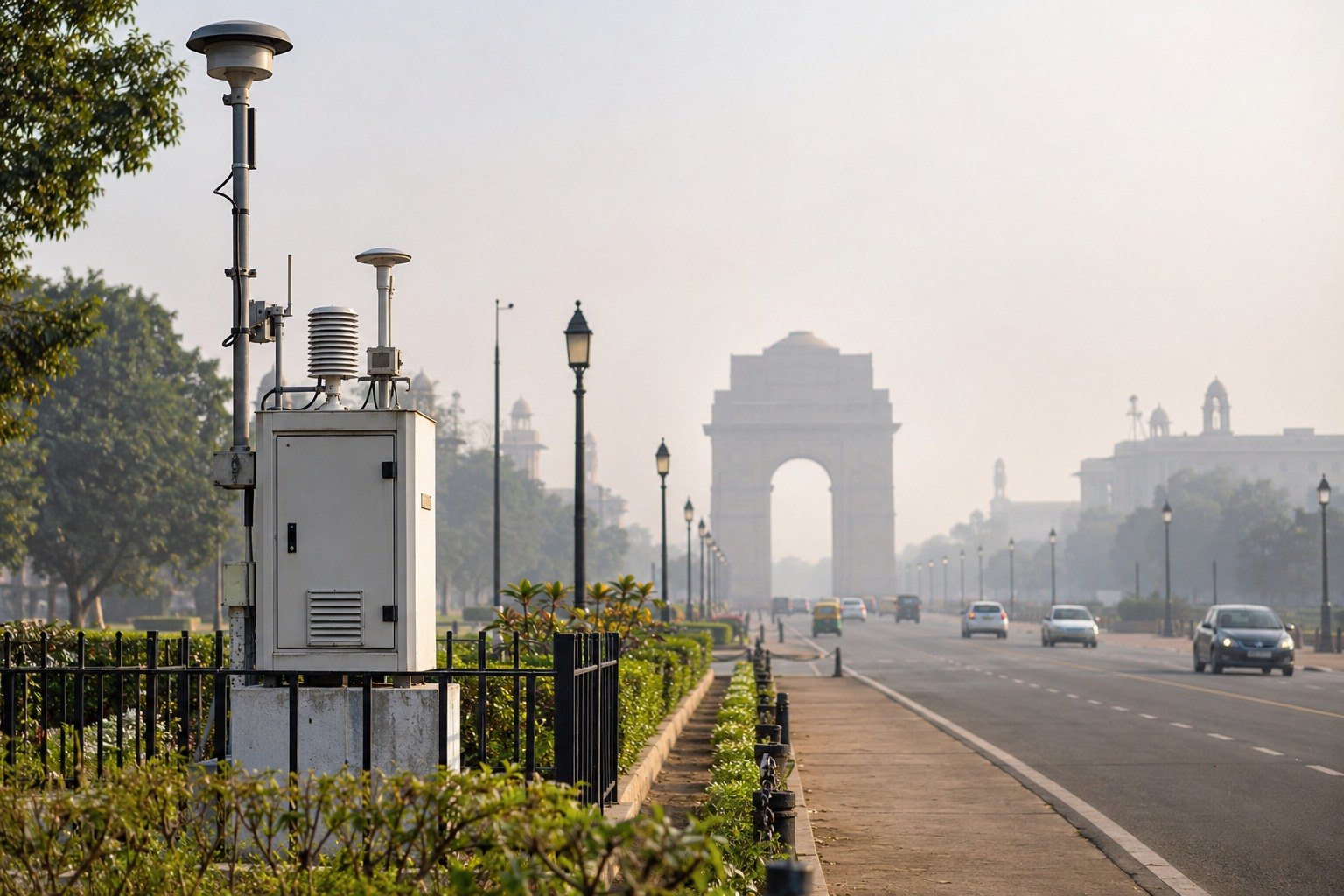
Two legal tracks govern Delhi's winter pollution curbs. Directions under section 5 of the Environment (Protection) Act, 1986 apply by date, every 1 November to 28 February. The Commission for Air Quality Management's Graded Response Action Plan (GRAP) adds curbs only as the Air Quality Index (AQI) worsens. Delhi's dated curbs take effect on 1 November 2026.
Syllabus: Prelims · Environment & Ecology; GS2 · Statutory & Regulatory Bodies; GS2 · Government Policies
Why this matters for UPSC
GS3 environment and GS2 governance: Prelims can ask what section 5 of the Environment (Protection) Act, 1986 and section 12 of the CAQM Act, 2021 empower and how GRAP is triggered; Mains, whether date-bound or AQI-triggered curbs better control Delhi's winter pollution.
In short
Delhi's winter curbs rest on section 5 of the Environment (Protection) Act, 1986 and apply by date; CAQM's GRAP, under section 12 of its 2021 Act, applies by AQI.
A dated floor beneath AQI-triggered GRAP suits a crisis that returns every winter; its test is NCR-wide coordination, fair burden-sharing and steady enforcement.
Why it matters
A family in a neighbouring town with an older diesel car, or a builder with a half-finished block, now knows months ahead what winter will bring: the curbs arrive on fixed dates, not when a daily air reading crosses a line. Office workers know they may be told to work from home, and housing societies know they will answer if a guard lights a fire to keep warm. Acting before smog sets in can stop it building up, but the same rules also bind on cleaner days and cost wages and business. The larger question is how a city that chokes every winter should weigh public health against livelihoods.
Prelims pointers
- Section 5, Environment (Protection) Act, 1986: the Central Government may give binding directions to any person, officer or authority, even to close an industry or stop electricity or water.
- Section 5A of the same Act (added in 2010): anyone aggrieved by a section 5 direction may appeal to the National Green Tribunal.
- Section 15, as substituted by the Jan Vishwas (Amendment of Provisions) Act, 2023: penalty Rs 10,000 to Rs 15 lakh, plus Rs 10,000 a day while a breach continues.
- Section 15C: an adjudicating officer, not below Joint Secretary to the Union or Secretary to a State, imposes these penalties; appeals go to the tribunal under section 15D.
- Section 19, Air Act, 1981: the State Government, after consulting the State Board, declares air pollution control areas and may ban unapproved fuels, appliances or burning there.
- Section 12, CAQM Act, 2021: the Commission may take measures and issue binding directions, including closing industries, to protect air quality in the NCR and adjoining areas.
- Section 14, CAQM Act, 2021: up to five years' imprisonment or a fine up to Rs 1 crore, or both; farmers' stubble burning is excluded.
- Section 29, CAQM Act, 2021 dissolved the Environment Pollution (Prevention and Control) Authority for the NCR, set up in 1998 under the Environment (Protection) Act, 1986.
Practise a UPSC-style question
With reference to section 5 of the Environment (Protection) Act, 1986, consider the following statements:
1. An appeal against a direction issued under it lies to the High Court of the State concerned.
2. A direction issued under it may order the stoppage or regulation of the supply of electricity or water.
3. It has effect notwithstanding anything in any other law, subject to the provisions of the Act itself.
Which of the statements given above is/are correct?
- (a) 1 and 2 only
- (b) 2 and 3 only
- (c) 1 and 3 only
- (d) 1, 2 and 3
Show the answer
Answer: (b) 2 and 3 only
Answer: (b) 2 and 3 only. Section 5 overrides other laws and reaches utilities, but its appeals go to the NGT.
Statement 1: incorrect. Section 5A, added by the National Green Tribunal Act, 2010, sends appeals against section 5 directions to the National Green Tribunal.
Statement 2: correct. The Explanation to section 5 says the power includes directing stoppage or regulation of the supply of electricity, water or any other service.
Statement 3: correct. Section 5 opens: notwithstanding anything contained in any other law but subject to the provisions of this Act.
Eliminate: Statement 1 names the wrong forum, since section 5A sends appeals to the NGT. Out: (a), (c), (d).
Trap: Swapped attribution. The appeal is real, but it is pinned on the High Court instead of the National Green Tribunal.
Remember: Section 5 EPA: binding directions, even closure or power and water cuts; appeal to the NGT under section 5A.
More Explainers
- State Legislative Councils: Articles 168-172 and the graduates' and teachers' seats Polity
- Whales and dolphins in Indian waters: legal protection, IUCN status and strandings Environment
- The Aligarh Movement, AMU and the Article 30 minority test Polity
- Environmental clearance by States: SEIAA, SEAC and the EIA Notification, 2006 Environment
- Software vulnerabilities: CVE, CVSS, coordinated disclosure and CERT-In's role Sci-Tech
- Drug trafficking law in India: NDPS Act, PIT-NDPS, NCB and NCORD National
- Choosing the UN Secretary-General: Article 97, UNSC veto and straw polls World & IR
- UN Convention against Torture, and why India has not ratified it Polity
- NavIC: why India's navigation constellation cannot give a standalone position Sci-Tech
- International Energy Agency: membership, 90-day oil stocks and India's status World & IR
- PM Surya Ghar: Muft Bijli Yojana and the rooftop solar subsidy Economy
- HFSS foods: FSSAI's draft limits and front-of-pack warning labels National