
India's free trade agreement network: CEPA, ECTA, TEPA and CETA
Why in news: An October 2026 Bloomberg Economics report estimated that India's FTAs, with EU and New Zealand pacts, could add about $140 billion to GDP by 2035.
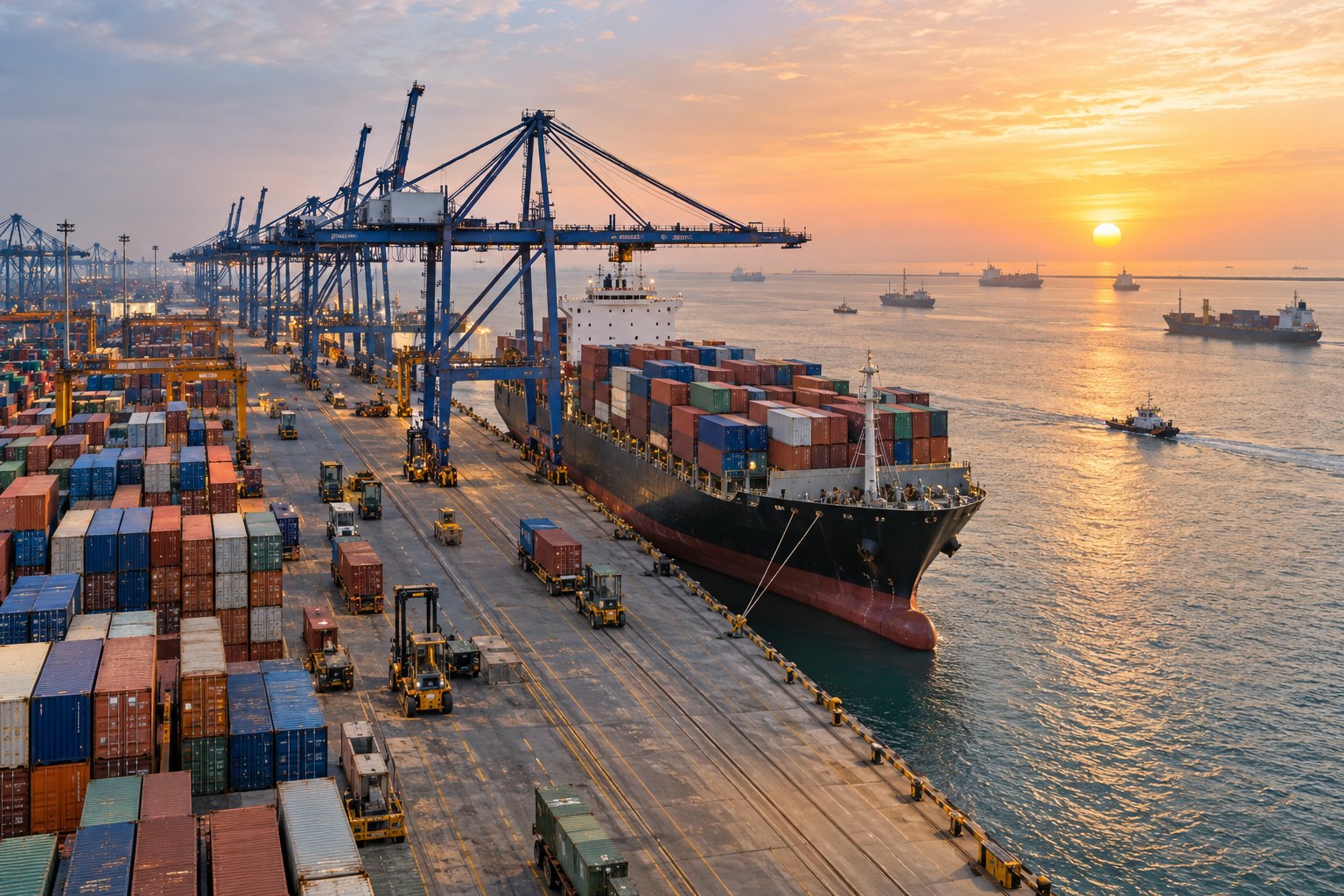
A free trade agreement cuts customs duties on most trade between partners; India's newer pacts, styled CEPA, ECTA, TEPA or CETA, also cover services, investment and mobility of professionals. Partners include the UAE, Australia, EFTA, the UK, Oman and New Zealand. A Bloomberg Economics report estimates these FTAs could add about $140 billion to India's GDP by 2035.
Syllabus: GS3 · Indian Economy & Growth; Prelims · Current Affairs & IR; GS2 · Groupings & Agreements
Why this matters for UPSC
GS2 bilateral agreements and GS3 trade: Prelims can match each agreement to its partner and ask what an FTA, a customs union or rules of origin are; Mains, whether new-generation FTAs serve India's exporters and farmers.
In short
A free trade agreement cuts duties on substantially all trade between partners; India's new-generation pacts add services, investment and mobility, while shielding sensitive farm sectors.
India's FTA network buys market access and investment promises; its worth will be judged by utilisation, delivered FDI and domestic reform, not signatures.
Why it matters
A small garment or leather exporter feels an FTA first: a partner's duty falls to zero and the Indian product competes on price. Since January 2026, every Indian export enters Australia duty-free under the ECTA, per the commerce ministry. The newer pacts also reach people who never ship goods: chefs, yoga instructors and IT professionals get visa pathways, and Indian workers in the UK avoid paying social security twice. Dairy farmers are shielded, because dairy sits on the exclusion lists. The larger issue is diversification. Bloomberg Economics put the average US tariff on Indian goods at 11.6% in August 2026, against 2.4% in 2024, and it argues the gains depend on implementation and domestic reform.
Prelims pointers
- EFTA's four members are Switzerland, Norway, Iceland and Liechtenstein, none in the EU; Switzerland is India's largest EFTA trading partner, then Norway, per PIB.
- An FTA lets each member keep its own external tariff; a customs union adopts a common one. Rules of origin decide which goods qualify.
- GATT Article XXIV permits FTAs and customs unions as exceptions to MFN treatment; GATS Article V does the same for services agreements.
- GATS modes of services supply: Mode 1 cross-border supply, Mode 2 consumption abroad, Mode 3 commercial presence, Mode 4 movement of natural persons.
- A tariff rate quota charges a lower duty on a fixed quantity; the India-New Zealand FTA uses one, with minimum import prices, for apples, kiwifruit and Manuka honey.
- The India-UK Double Contribution Convention exempts Indian workers on temporary UK assignments from UK social security contributions; exemption raised from 3 to 5 years (PIB, 17 June 2026).
- TEPA's investment pledge counts FDI only and excludes foreign portfolio investment; TEPA has 14 chapters and the UK CETA 30, per PIB.
- India and Australia are negotiating to expand the ECTA into a Comprehensive Economic Cooperation Agreement, per PIB (27 February 2026).
Practise a UPSC-style question
Consider the following pairs:
(Trade agreement : Partner of India)
1. Comprehensive Economic and Trade Agreement : United Kingdom
2. Economic Cooperation and Trade Agreement : United Arab Emirates
3. Trade and Economic Partnership Agreement : European Free Trade Association
4. Comprehensive Economic Cooperation and Partnership Agreement : Mauritius
How many of the above pairs are correctly matched?
- (a) Only one
- (b) Only two
- (c) Only three
- (d) All four
Show the answer
Answer: (c) Only three
1 is correct: India's CETA is with the United Kingdom, signed on 24 July 2025. 2 is incorrect: the ECTA is with Australia; India's pact with the UAE is a Comprehensive Economic Partnership Agreement (CEPA). 3 is correct: the TEPA is with the four EFTA States. 4 is correct: the CECPA with Mauritius, signed in 2021, was India's first trade agreement with an African country.
In the news
More Explainers
- State Legislative Councils: Articles 168-172 and the graduates' and teachers' seats Polity
- Whales and dolphins in Indian waters: legal protection, IUCN status and strandings Environment
- The Aligarh Movement, AMU and the Article 30 minority test Polity
- Environmental clearance by States: SEIAA, SEAC and the EIA Notification, 2006 Environment
- Software vulnerabilities: CVE, CVSS, coordinated disclosure and CERT-In's role Sci-Tech
- Drug trafficking law in India: NDPS Act, PIT-NDPS, NCB and NCORD National
- Choosing the UN Secretary-General: Article 97, UNSC veto and straw polls World & IR
- UN Convention against Torture, and why India has not ratified it Polity
- NavIC: why India's navigation constellation cannot give a standalone position Sci-Tech
- International Energy Agency: membership, 90-day oil stocks and India's status World & IR
- PM Surya Ghar: Muft Bijli Yojana and the rooftop solar subsidy Economy
- HFSS foods: FSSAI's draft limits and front-of-pack warning labels National