
Mumps and the UIP: why India gives MR, not MMR
Why in news: A report of 18 October 2026 says Keralam's mumps outbreak, running since late 2023, has renewed demands to add MMR to the UIP.
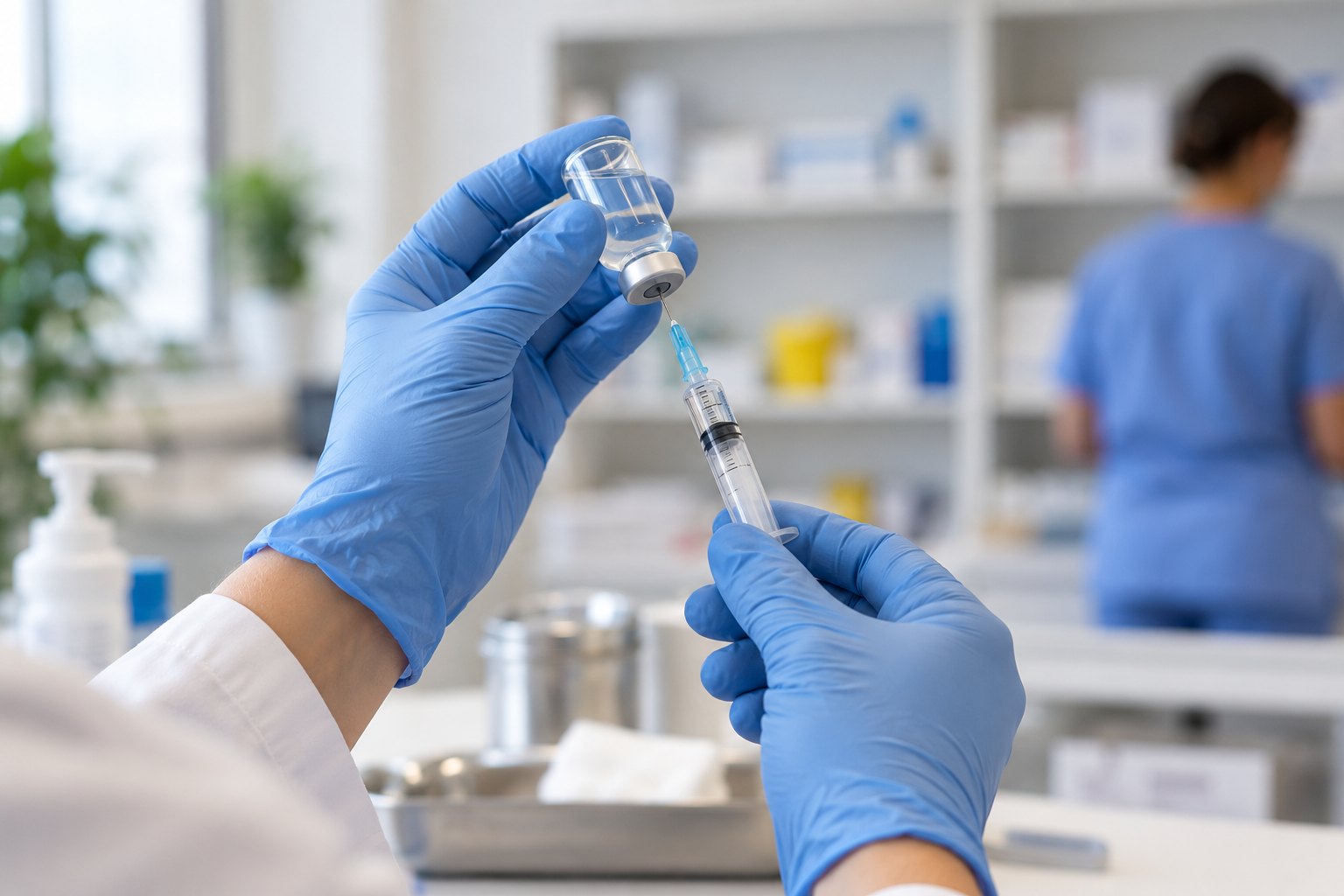
Mumps is a contagious viral infection that swells the salivary glands and can cause deafness, meningitis and orchitis. India's Universal Immunization Programme gives the MR vaccine against measles and rubella but not mumps, which the MMR vaccine adds. A mumps outbreak in Keralam since late 2023 has renewed demands to switch to MMR.
Syllabus: Prelims · Science & Technology; GS2 · Government Policies; GS3 · Science & Technology
Why this matters for UPSC
GS2 health and GS3 science: Prelims can ask how mumps spreads, which diseases the Universal Immunization Programme covers and what WHO advises on MMR; Mains, how India should add vaccines to its national schedule.
In short
Mumps is a vaccine-preventable viral infection of the salivary glands. India's Universal Immunization Programme (UIP) uses the MR vaccine, which omits mumps; the MMR vaccine covers it.
India should add mumps through MMR once measles-rubella elimination is secure and Indian burden data exist, so the switch prevents disease without shifting it.
Why it matters
A child in India gets the MR vaccine free at a government centre, but protection against mumps needs the MMR vaccine, which the national schedule does not give. Families who cannot buy it privately leave their children exposed. When mumps spreads through a school or hostel, classes stop for weeks, as in three Keralam districts, and a few children are left with lasting disability such as deafness. Adding a vaccine is not free either: a costlier shot for every child must be weighed against other health needs, and a half-done rollout can make adult cases more common. The larger question is how India decides which diseases its free programme should cover.
Prelims pointers
- Mumps virus: one serotype but twelve genotypes, lettered A to N (excluding E and M); genotype is assigned by sequencing the SH and HN genes.
- Mumps incubation averages 16–18 days; orchitis, oophoritis and mastitis occur only when infection comes after puberty.
- WHO-prequalified mumps vaccine strains: Jeryl–Lynn (developed in the United States), RIT 4385 and Leningrad–Zagreb.
- WHO schedule where infant measles deaths stay high: first MMR dose at 9 months, second at 15–18 months; minimum gap 4 weeks.
- MR vaccine under UIP: 0.5 ml, subcutaneous, right upper arm; the first Vitamin A dose is given with MR-1 at 9 months.
- Mission Indradhanush, launched in December 2014, aims to raise full immunization coverage of children to 90%.
- WHO's 2024 mumps position rests on recommendations of its Strategic Advisory Group of Experts (SAGE) on Immunization, made in September 2023.
Practise a UPSC-style question
With reference to mumps, consider the following statements:
1. The mumps virus belongs to the family Paramyxoviridae, and humans are its only known natural host.
2. Mumps spreads mainly through contaminated food and water, like hepatitis A.
Which of the statements given above is/are correct?
- (a) 1 only
- (b) 2 only
- (c) Both 1 and 2
- (d) Neither 1 nor 2
Show the answer
Answer: (a) 1 only
Answer: (a) 1 only. Mumps is a respiratory-spread paramyxovirus infection, not a food- or water-borne one.
Statement 1: correct. WHO's 2024 position paper places the mumps virus in genus Rubulavirus of family Paramyxoviridae and names humans as its only known natural host.
Statement 2: incorrect. WHO says mumps spreads by direct contact or respiratory droplets from the upper respiratory tract, not through food or water.
Eliminate: Statement 2 is wrong, because mumps is droplet-borne. Out: (b), (c).
Eliminate: Statement 1 matches WHO's description of the virus. Out: (d).
Trap: Swapped attribution. The route of hepatitis A, a faecal-oral infection, is pinned on mumps, which spreads through droplets and contact.
Remember: Mumps: paramyxovirus, humans only host, droplets and contact.
More Explainers
- State Legislative Councils: Articles 168-172 and the graduates' and teachers' seats Polity
- Whales and dolphins in Indian waters: legal protection, IUCN status and strandings Environment
- The Aligarh Movement, AMU and the Article 30 minority test Polity
- Environmental clearance by States: SEIAA, SEAC and the EIA Notification, 2006 Environment
- Software vulnerabilities: CVE, CVSS, coordinated disclosure and CERT-In's role Sci-Tech
- Drug trafficking law in India: NDPS Act, PIT-NDPS, NCB and NCORD National
- Choosing the UN Secretary-General: Article 97, UNSC veto and straw polls World & IR
- UN Convention against Torture, and why India has not ratified it Polity
- NavIC: why India's navigation constellation cannot give a standalone position Sci-Tech
- International Energy Agency: membership, 90-day oil stocks and India's status World & IR
- PM Surya Ghar: Muft Bijli Yojana and the rooftop solar subsidy Economy
- HFSS foods: FSSAI's draft limits and front-of-pack warning labels National