
Right to Information Act, 2005: how the law works at 21
Why in news: RTI Diwas on 12 October 2026 marked 21 years of the Right to Information Act, 2005.
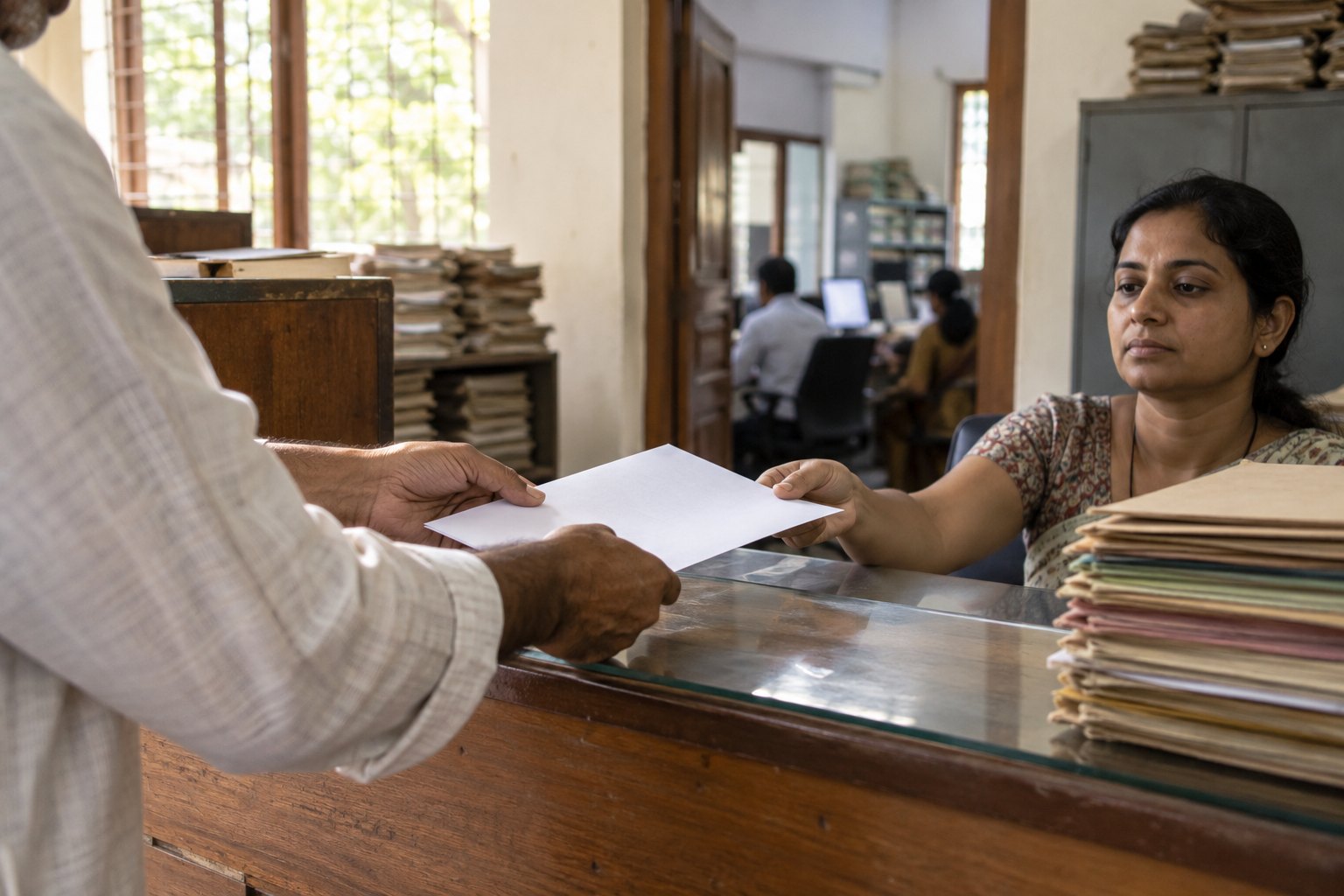
The Right to Information Act, 2005 lets every citizen demand information held by a public authority, which must answer within 30 days. Central and State Information Commissions hear appeals and can fine officers who default. A 2019 amendment lets the Central Government set the commissioners' term and pay. The Act turned 21 on 12 October 2026.
Syllabus: Prelims · Polity & Governance; GS4 · Probity in Governance; GS2 · Statutory & Regulatory Bodies
In short
The Right to Information Act, 2005 makes access to information held by public authorities a citizen's legal right, enforced through deadlines, appeals and autonomous Information Commissions.
RTI's promise rests on watchdogs governments cannot quietly weaken: tenure fixed by law and a public-interest test for privacy keep the state answerable.
Why it matters
A pensioner whose arrears are stuck, or a villager who suspects a road was paid for but never built, can file a short written request and make the office produce the file, the payments and the reasons within 30 days. A favour becomes a right with a deadline. That deadline works only if someone enforces it: the Information Commissions fine officers who stall, and their independence decides how hard they push governments. That is why the 2019 change to commissioners' term and pay, and the 2023 rewrite of the personal-information exemption, matter well beyond lawyers. Together they decide how much of the state's paperwork a citizen can still see, and so how far corruption and arbitrary decisions can be checked from below.
Prelims pointers
- Right to know: the Supreme Court reads it into Article 19(1)(a) (State of Uttar Pradesh v Raj Narain, 1975); the RTI Act, 2005 gives it statutory form.
- Section 3: the right belongs to citizens; section 6(2): an applicant need give no reason for asking.
- Central Information Commission: a statutory body; the President appoints members on the advice of the PM, Lok Sabha's Leader of Opposition and a PM-nominated Union Cabinet Minister.
- State Information Commission: the Governor appoints members on the recommendation of the Chief Minister, the Leader of Opposition in the Assembly and a CM-nominated Cabinet Minister.
- Commissions' powers: civil-court powers under the Code of Civil Procedure, 1908 while inquiring; binding decisions; may order compensation to the complainant.
- Section 22: the RTI Act overrides the Official Secrets Act, 1923 and any inconsistent law.
- Section 8(3): information on events 20 years old must be given, except on sovereignty and security, legislative privilege and Cabinet papers.
- Commissioners may not be MPs or MLAs, hold an office of profit, be connected with a political party, or carry on business or a profession.
Practise a UPSC-style question
With reference to the Central Information Commission, consider the following statements:
1. Its members are appointed by the President on the recommendation of a committee chaired by the Prime Minister.
2. The Leader of Opposition in the Rajya Sabha is a member of the committee that recommends its members.
3. It consists of a Chief Information Commissioner and not more than ten Information Commissioners.
Which of the statements given above is/are correct?
- (a) 1 and 2 only
- (b) 2 and 3 only
- (c) 1 and 3 only
- (d) 1, 2 and 3
Show the answer
Answer: (c) 1 and 3 only
1 is correct: section 12(3) of the RTI Act, 2005 provides for appointment by the President on a committee's recommendation, with the Prime Minister as chair. 2 is incorrect: the committee has the Leader of Opposition in the Lok Sabha, not the Rajya Sabha, with a Union Cabinet Minister nominated by the Prime Minister. 3 is correct: section 12(2) caps the Information Commissioners at ten besides the Chief.
In the news
More Explainers
- State Legislative Councils: Articles 168-172 and the graduates' and teachers' seats Polity
- Whales and dolphins in Indian waters: legal protection, IUCN status and strandings Environment
- The Aligarh Movement, AMU and the Article 30 minority test Polity
- Environmental clearance by States: SEIAA, SEAC and the EIA Notification, 2006 Environment
- Software vulnerabilities: CVE, CVSS, coordinated disclosure and CERT-In's role Sci-Tech
- Drug trafficking law in India: NDPS Act, PIT-NDPS, NCB and NCORD National
- Choosing the UN Secretary-General: Article 97, UNSC veto and straw polls World & IR
- UN Convention against Torture, and why India has not ratified it Polity
- NavIC: why India's navigation constellation cannot give a standalone position Sci-Tech
- International Energy Agency: membership, 90-day oil stocks and India's status World & IR
- PM Surya Ghar: Muft Bijli Yojana and the rooftop solar subsidy Economy
- HFSS foods: FSSAI's draft limits and front-of-pack warning labels National