
EU's Russian-crude fuel ban and the oil price cap
Why in news: CREA's September 2026 analysis, reported on 18 October 2026, found six of seven Russian-crude-linked fuel cargoes unloaded at EU ports came from Jamnagar.
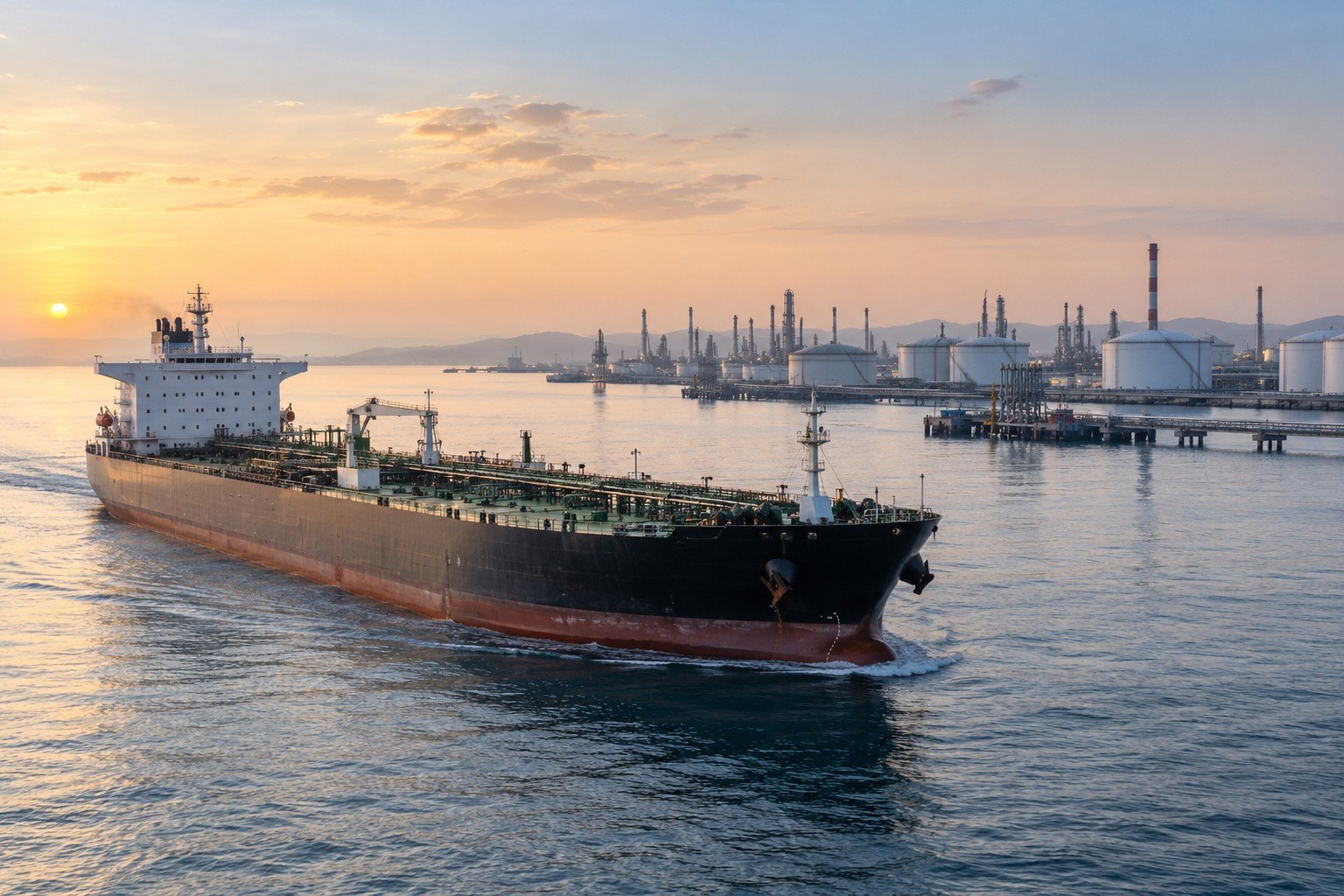
Article 3ma of EU Regulation 833/2014 has barred, since 21 January 2026, imports of petroleum products refined in third countries from Russian crude, while a dynamic price cap limits Western shipping of Russian oil. CREA's September 2026 analysis found six of seven flagged fuel cargoes unloaded at EU ports came from Jamnagar in Gujarat.
Syllabus: Prelims · Current Affairs & IR; GS3 · Infrastructure; GS2 · Foreign Policies & the Diaspora
Why this matters for UPSC
GS2 international relations, on the effect of developed countries' policies on India's interests, and GS3 energy: Prelims can ask Article 3ma's partner list and the price cap formula; Mains, extraterritorial sanctions and India's refined-fuel exports.
In short
Article 3ma of EU Regulation 833/2014, inserted in July 2025, bars fuel refined from Russian crude in third countries; with a dynamic price cap, it targets Russia's oil revenue.
Article 3ma tests whether origin rules can follow refined molecules; India must balance discounted Russian crude against secure access to European fuel markets.
Why it matters
Indian refineries such as Jamnagar in Gujarat sell diesel and other fuels abroad, and European importers are among their buyers. When an Indian refinery mixes discounted Russian crude into its intake, a European buyer must now show the fuel was not made from it, or risk breaking EU law. That paperwork and the risk of enforcement action can push European customers to other suppliers, or push refiners to keep separate records and crude streams. The larger issue is how far one bloc's sanctions can reach into the trade of countries that never signed up to them, and how India keeps both cheap energy and open export markets.
Prelims pointers
- Article 215 of the Treaty on the Functioning of the European Union is the legal basis for EU restrictive measures such as Regulation 833/2014.
- A partner country under Article 1(zg) of Regulation 833/2014 applies curbs on Russian crude and fuel imports substantially equivalent to the EU's Article 3m.
- CN code 2709 covers crude petroleum oils; CN code 2710 covers petroleum products such as diesel and gasoil.
- Under Article 3n(11), a recalculated cap that differs by 5% or less from the existing cap leaves the cap unchanged.
- The G7 Oil Price Cap Coalition set up the price cap on Russian seaborne crude and petroleum products in 2022.
- Annex XXVIII of Regulation 833/2014 holds the price per barrel; the Commission amends it by implementing regulation.
Practise a UPSC-style question
With reference to Article 3ma of the EU's Regulation (EU) No 833/2014, consider the following statements:
1. Article 3ma was inserted into the Regulation by an implementing act of the European Commission.
2. Fuel from a country that was a net exporter of crude oil in the previous calendar year is presumed refined from domestic crude.
3. A partner country under the Regulation applies curbs on Russian oil imports substantially equivalent to the EU's own.
Which of the statements given above is/are correct?
- (a) 1 and 2 only
- (b) 2 and 3 only
- (c) 1 and 3 only
- (d) 1, 2 and 3
Show the answer
Answer: (b) 2 and 3 only
Answer: (b) 2 and 3 only. The Council, not the Commission, inserted Article 3ma; the other two describe its rules correctly.
Statement 1: incorrect. Article 3ma was inserted by Council Regulation (EU) 2025/1494 of 18 July 2025, adopted under Article 215 TFEU.
Statement 2: correct. Article 3ma(1) treats fuel from the previous calendar year's net crude exporters as made from domestic crude, unless an authority has reasonable grounds to doubt it.
Statement 3: correct. Article 1(zg) defines a partner country as one applying measures substantially equivalent to Article 3m; Annex LI lists five.
Eliminate: Statement 1 is the surest call, since sanctions regulations are Council acts. Out: (a), (c), (d).
Trap: Swapped attribution. The Commission does amend the price cap by implementing regulation, so crediting it with Article 3ma itself sounds plausible.
Remember: The Council adopts the sanctions regulation; the Commission only resets the price cap and issues guidance.
More Explainers
- State Legislative Councils: Articles 168-172 and the graduates' and teachers' seats Polity
- Whales and dolphins in Indian waters: legal protection, IUCN status and strandings Environment
- The Aligarh Movement, AMU and the Article 30 minority test Polity
- Environmental clearance by States: SEIAA, SEAC and the EIA Notification, 2006 Environment
- Software vulnerabilities: CVE, CVSS, coordinated disclosure and CERT-In's role Sci-Tech
- Drug trafficking law in India: NDPS Act, PIT-NDPS, NCB and NCORD National
- Choosing the UN Secretary-General: Article 97, UNSC veto and straw polls World & IR
- UN Convention against Torture, and why India has not ratified it Polity
- NavIC: why India's navigation constellation cannot give a standalone position Sci-Tech
- International Energy Agency: membership, 90-day oil stocks and India's status World & IR
- PM Surya Ghar: Muft Bijli Yojana and the rooftop solar subsidy Economy
- HFSS foods: FSSAI's draft limits and front-of-pack warning labels National