
The Aligarh Movement, AMU and the Article 30 minority test
Why in news: On 17 October 2026, AMU marked Sir Syed Day, the 209th birth anniversary of its founder, Sir Syed Ahmad Khan.
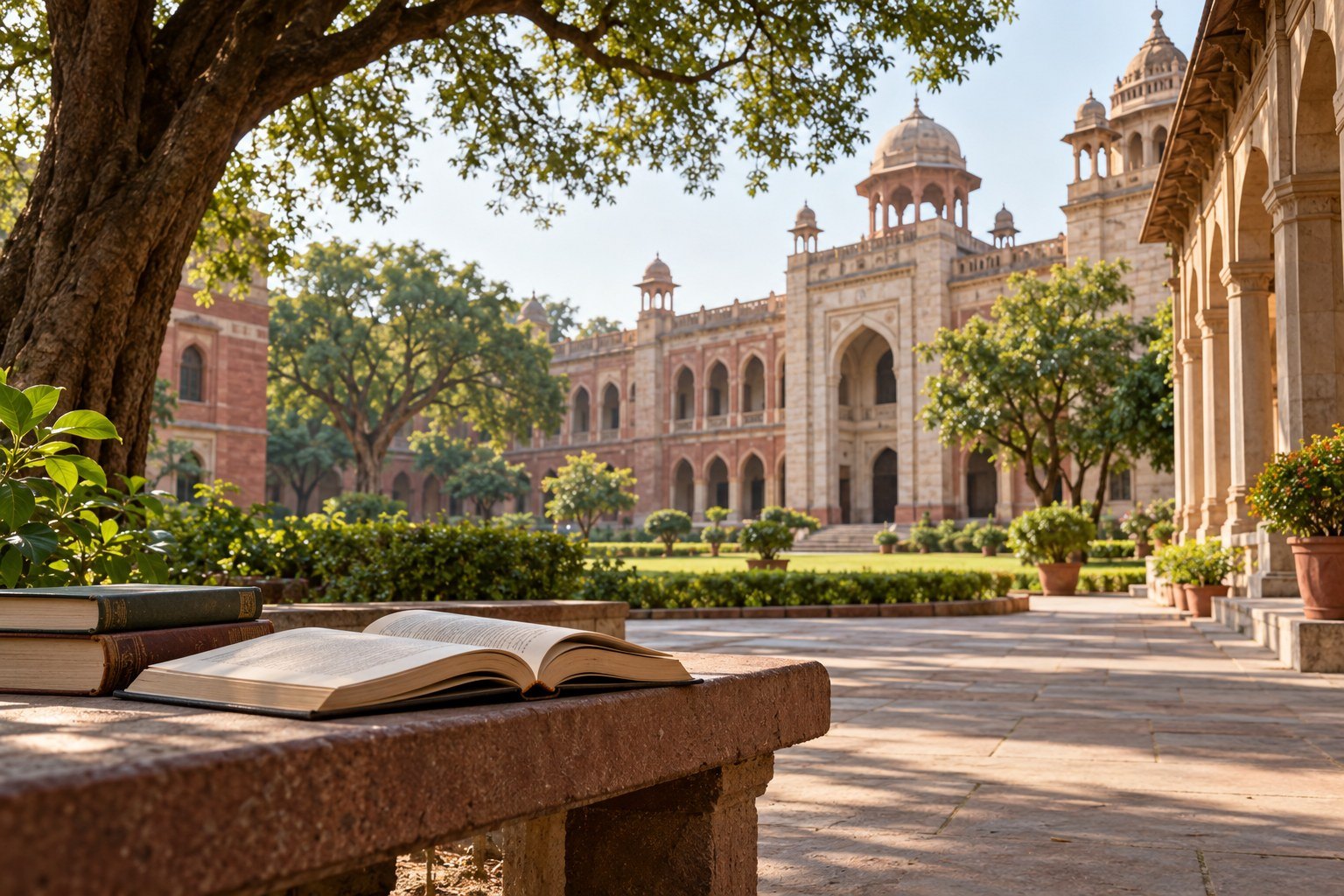
The Aligarh Movement was Sir Syed Ahmad Khan's post-1857 drive to bring English education and modern science to Indian Muslims. Its college became Aligarh Muslim University in 1920, and in 2024 a seven-judge Supreme Court bench laid down a new Article 30 test for minority institutions. AMU marked his 209th birth anniversary on 17 October 2026.
Syllabus: GS2 · Constitution; GS1 · Modern Indian History; Prelims · History & Culture
Why this matters for UPSC
GS1 asks about 19th-century socio-religious reform movements, their journals and institutions; GS2, about minority rights under Article 30. Prelims can test the Aligarh Movement's institutions and the 2024 ruling's indicia; Mains, how a minority institution is identified.
In short
The Aligarh Movement was Sir Syed Ahmad Khan's post-1857 campaign for English and scientific education among Muslims; the college it built became AMU, now central to Article 30 law.
The movement showed that schools and journals can remake a community; AMU's status should now rest on evidence of its founding, not incorporation alone.
Why it matters
For a student or a parent choosing a college, minority status changes how that college is run. A college founded by a religious or linguistic minority keeps more freedom to manage its own affairs, and the State's admission quotas for other private colleges do not bind it. Under the 2024 ruling, such a college does not lose that protection only because a law later incorporated it; the story of who founded it, and why, decides. For anyone studying reform, the Aligarh Movement shows change carried through schools, translations and journals: it joined faith to scientific reasoning and opened a path into modern education and public service.
Prelims pointers
- Article 30(1): all minorities, whether based on religion or language, have the right to establish and administer educational institutions of their choice.
- Article 30(1A), inserted by the 44th Amendment (1978): the amount fixed for compulsorily acquiring a minority institution's property must not restrict or abrogate that right.
- Article 30(2): in granting aid, the State shall not discriminate against an educational institution because a religious or linguistic minority manages it.
- Article 29(2): no citizen may be denied admission to a State-maintained or State-aided educational institution on grounds only of religion, race, caste or language.
- Article 15(5), 93rd Amendment (2005): special admission provisions for backward classes, SCs and STs may extend to private institutions, aided or unaided, except minority institutions under Article 30(1).
- Entry 63 of the Union List (Seventh Schedule) names Benares Hindu University, Aligarh Muslim University and Delhi University, as known at the Constitution's commencement.
- National Commission for Minority Educational Institutions Act, 2004: the commission hears appeals when minority status is refused; its Chairperson must have been a High Court judge.
- Article 28(1): no religious instruction may be provided in an educational institution wholly maintained out of State funds.
Practise a UPSC-style question
With reference to the Aligarh Movement, consider the following statements:
1. The Aligarh Institute Gazette was the organ of the Scientific Society set up by Sir Syed Ahmad Khan.
2. The journal Tahzib-ul-Akhlaq, known in English as the Mohammedan Social Reformer, was started by Syed Mahmood.
3. Sir Syed Ahmad Khan patterned the Muhammadan Anglo-Oriental College on the universities of Oxford and Cambridge.
Which of the statements given above is/are correct?
- (a) 1 and 2 only
- (b) 2 and 3 only
- (c) 1 and 3 only
- (d) 1, 2 and 3
Show the answer
Answer: (c) 1 and 3 only
Answer: (c) 1 and 3 only. Sir Syed himself, not his son, started Tahzib-ul-Akhlaq; the other two statements hold.
Statement 1: correct. AMU's Founder page calls the Aligarh Institute Gazette, launched in March 1866, an organ of the Scientific Society.
Statement 2: incorrect. Sir Syed brought out Tahzib-ul-Akhlaq in 1870; his son Syed Mahmood drafted the 1872 proposal for an independent university.
Statement 3: correct. AMU says he patterned the MAO College on Oxford and Cambridge, which he had seen on his trip to England.
Eliminate: Statement 2 is the surest: the Mohammedan Social Reformer was Sir Syed's own journal, so every option that keeps 2 goes. Out: (a), (b), (d).
Trap: Swapped attribution. The journal and its English name are right, but it is pinned on Syed Mahmood, the son who drafted the university proposal, instead of Sir Syed.
Remember: Gazette (1866) was the Scientific Society's organ; Tahzib-ul-Akhlaq (1870), the Mohammedan Social Reformer; both Sir Syed's.
More Explainers
- State Legislative Councils: Articles 168-172 and the graduates' and teachers' seats Polity
- Whales and dolphins in Indian waters: legal protection, IUCN status and strandings Environment
- Environmental clearance by States: SEIAA, SEAC and the EIA Notification, 2006 Environment
- Software vulnerabilities: CVE, CVSS, coordinated disclosure and CERT-In's role Sci-Tech
- Drug trafficking law in India: NDPS Act, PIT-NDPS, NCB and NCORD National
- Choosing the UN Secretary-General: Article 97, UNSC veto and straw polls World & IR
- UN Convention against Torture, and why India has not ratified it Polity
- NavIC: why India's navigation constellation cannot give a standalone position Sci-Tech
- International Energy Agency: membership, 90-day oil stocks and India's status World & IR
- PM Surya Ghar: Muft Bijli Yojana and the rooftop solar subsidy Economy
- HFSS foods: FSSAI's draft limits and front-of-pack warning labels National
- HTT-40 basic trainer and the IAF's pilot-training pipeline Defence