
Katchatheevu and the 1974 and 1976 India–Sri Lanka maritime agreements
Why in news: On 11 October 2026, Sri Lanka's President Anura Kumara Dissanayake said India had told its Supreme Court that Katchatheevu belongs to Sri Lanka.
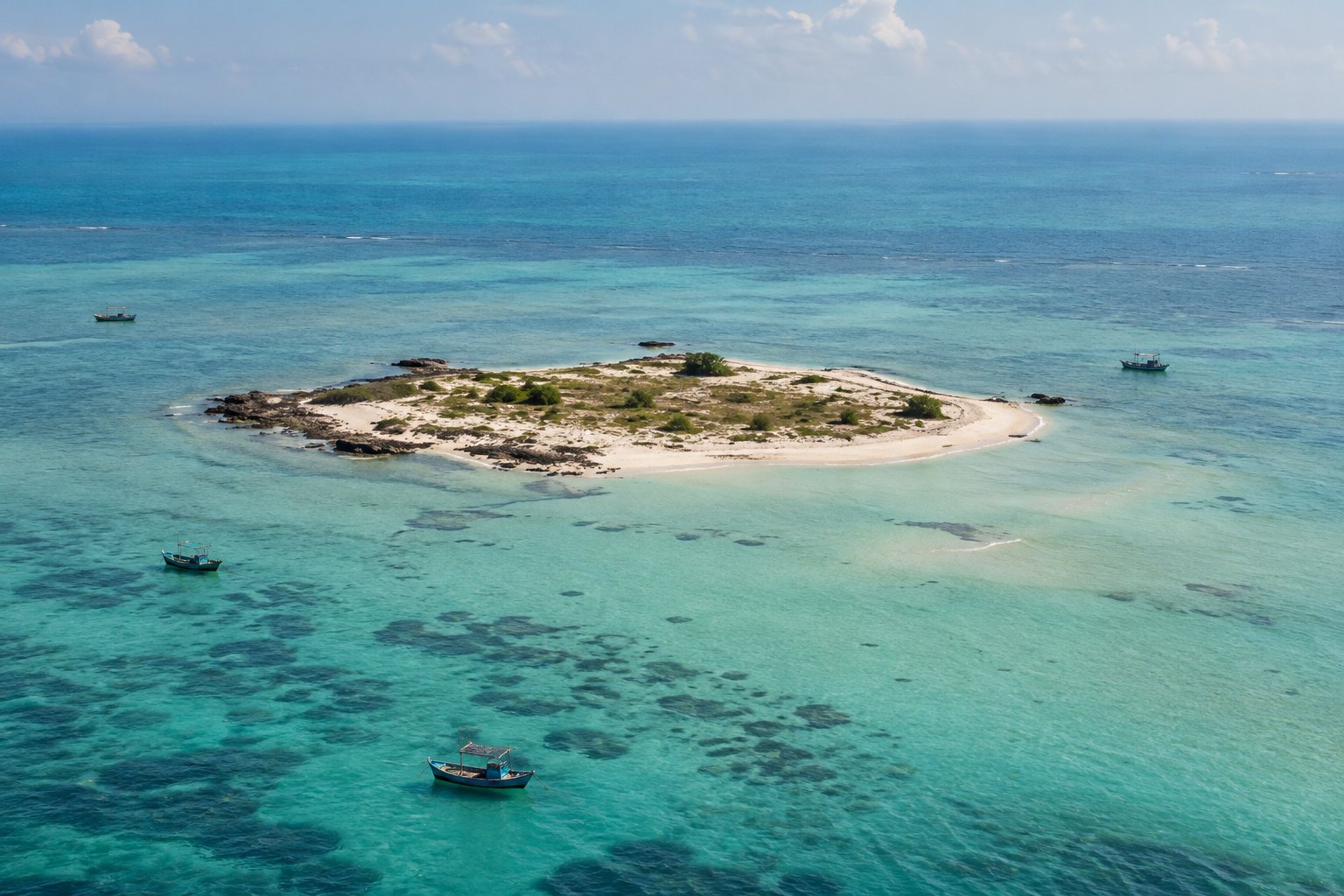
Katchatheevu is an islet in the Palk Strait on Sri Lanka's side of the 1974 India–Sri Lanka boundary. That agreement lets Indian fishermen and pilgrims visit without visas; a 1976 agreement extended the line into the Gulf of Mannar and Bay of Bengal. On 11 October Sri Lanka's President said India told its Supreme Court the island is Sri Lankan.
Syllabus: Prelims · Geography; GS2 · India & its Neighbourhood; GS2 · Groupings & Agreements
In short
Katchatheevu, an islet in the Palk Strait, lies on Sri Lanka's side of the 1974 India–Sri Lanka boundary; court petitions and fishermen's arrests keep the question alive.
Pending the court's verdict, India's interest lies in holding the 1974-76 line and reforming fishing; livelihoods need sustainable catches, not redrawn borders.
Why it matters
For a trawler crew from Tamil Nadu's coast, the line decides whether a night's catch ends at the harbour or in an arrest. Fishermen from the State's coastal districts often cross the IMBL near Katchatheevu into the rich waters off northern Sri Lanka, many using bottom trawling, and the Sri Lankan Navy detains them for illegal fishing. The 1974 pact lets them visit the island; the 1976 pact, covering the Gulf of Mannar and the Bay of Bengal, gives each country exclusive rights over its own zone's resources. The dispute tests how India balances its fishermen's livelihoods, politics in Tamil Nadu and New Delhi, and ties with a neighbour whose President has promised that Sri Lankan land, sea and air will not be used against India.
Prelims pointers
- Palk Strait: between Tamil Nadu and the Jaffna Peninsula of Sri Lanka's Northern Province; it links the Bay of Bengal with Palk Bay.
- Adam's Bridge (Ram Setu): a chain of shoals between Pamban (Rameswaram) Island in India and Mannar Island in Sri Lanka.
- Gulf of Mannar: lies south of Adam's Bridge, between India's south-east coast and western Sri Lanka; the 1976 agreement drew the boundary there.
- Berubari Union reference (1960): ceding Indian territory to another country needs a constitutional amendment under Article 368, not merely a law under Article 3.
- Article 253 of the Constitution: Parliament may make any law to implement a treaty or agreement with another country.
- Exclusive economic zone: under UNCLOS, 1982, up to 200 nautical miles from the baseline; the coastal state has sovereign rights over its resources.
- Contrast: the 100th Constitutional Amendment Act, 2015 gave effect to the India–Bangladesh Land Boundary Agreement.
Practise a UPSC-style question
With reference to the India–Sri Lanka maritime boundary agreements, consider the following statements:
1. The 1974 agreement fixed the boundary between the two countries in the Gulf of Mannar.
2. The 1974 agreement allows Indian fishermen and pilgrims to visit Katchatheevu without Sri Lankan visas.
3. The 1976 agreement fixed the maritime boundary between the two countries in the Bay of Bengal.
Which of the statements given above is/are correct?
- (a) 1 and 2 only
- (b) 2 and 3 only
- (c) 1 and 3 only
- (d) 1, 2 and 3
Show the answer
Answer: (b) 2 and 3 only
1 is incorrect: the 1974 agreement drew the line from the Palk Strait to Adam's Bridge; the Gulf of Mannar boundary came in the 1976 agreement. 2 is correct: Article 5 of the 1974 agreement allows such visits without travel documents or visas. 3 is correct: Article 2 of the 1976 agreement fixes the Bay of Bengal boundary.
More Explainers
- State Legislative Councils: Articles 168-172 and the graduates' and teachers' seats Polity
- Whales and dolphins in Indian waters: legal protection, IUCN status and strandings Environment
- The Aligarh Movement, AMU and the Article 30 minority test Polity
- Environmental clearance by States: SEIAA, SEAC and the EIA Notification, 2006 Environment
- Software vulnerabilities: CVE, CVSS, coordinated disclosure and CERT-In's role Sci-Tech
- Drug trafficking law in India: NDPS Act, PIT-NDPS, NCB and NCORD National
- Choosing the UN Secretary-General: Article 97, UNSC veto and straw polls World & IR
- UN Convention against Torture, and why India has not ratified it Polity
- NavIC: why India's navigation constellation cannot give a standalone position Sci-Tech
- International Energy Agency: membership, 90-day oil stocks and India's status World & IR
- PM Surya Ghar: Muft Bijli Yojana and the rooftop solar subsidy Economy
- HFSS foods: FSSAI's draft limits and front-of-pack warning labels National