
Line of Actual Control: how India and China manage an undefined line
Why in news: On 13 October 2026 the Ministry of External Affairs rejected China's objection to India's standard names for 28 places in Ladakh.
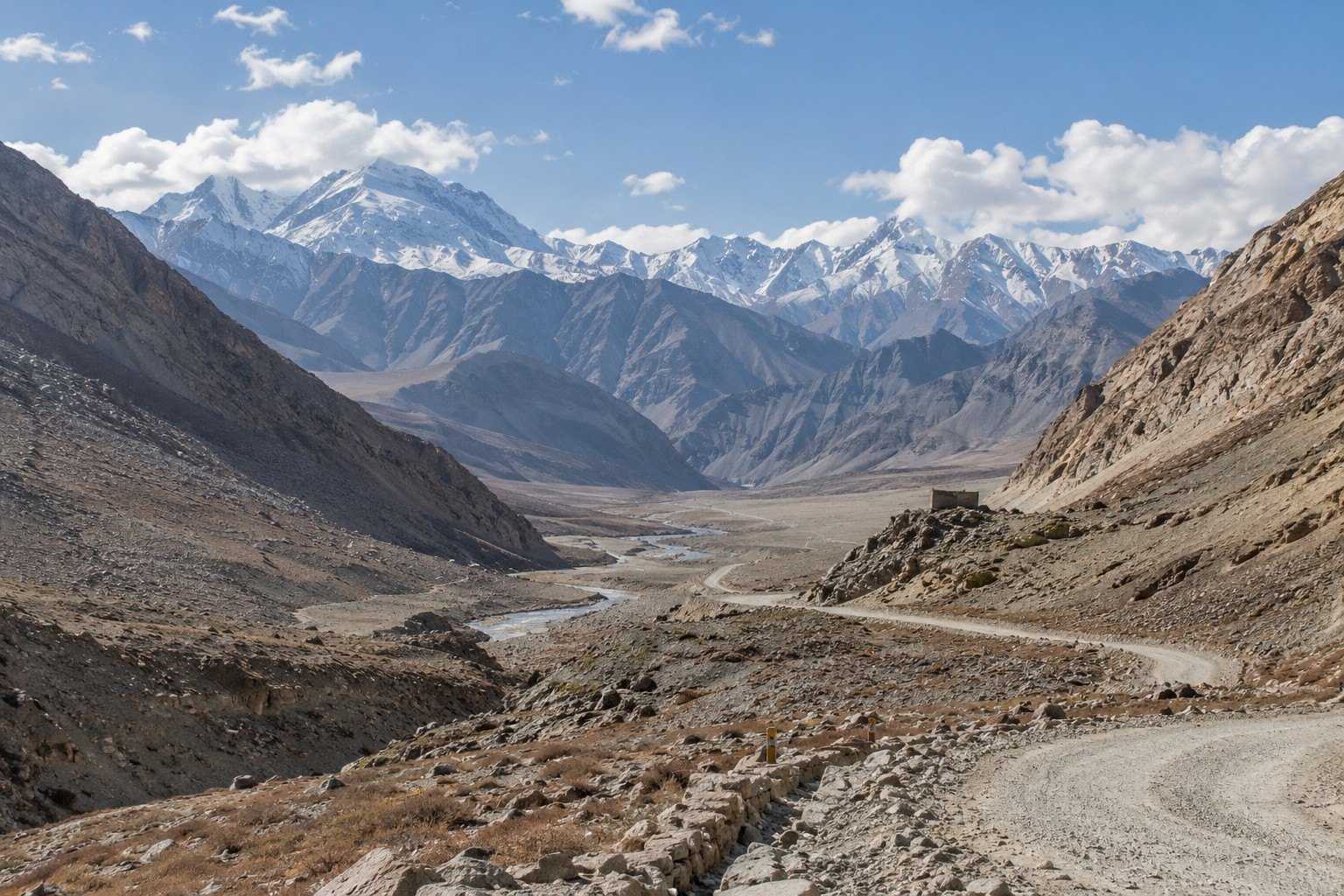
The Line of Actual Control (LAC) is the line India and China have pledged to respect, pending a settlement of their boundary question, though the two have never jointly delineated it. Agreements of 1993, 1996, 2005, 2012 and 2013 govern troops along it. It is in the news after China objected to India's standard names for 28 places in Ladakh.
Syllabus: Prelims · Current Affairs & IR; GS2 · India & its Neighbourhood; GS2 · Groupings & Agreements
Why this matters for UPSC
GS2 India and its neighbourhood and GS3 security in border areas: Prelims can ask which agreement set which rule along the Line of Actual Control; Mains, how India manages an undefined border with China.
In short
The Line of Actual Control (LAC) is the interim line India and China have agreed to respect until the boundary question is settled, though they have never jointly delineated it.
Peace on the LAC rests on agreements, not a shared line; reviving clarification of its alignment would shrink the grey zones where face-offs begin.
Why it matters
For soldiers on patrol in eastern Ladakh or Arunachal Pradesh, the absence of an agreed line means that the same hillside can be Indian ground on one side's map and Chinese ground on the other's. Every patrol in such a stretch can turn into a face-off, and the 2020 clashes showed that a face-off can turn deadly. For the country, the LAC sets the temperature of the whole relationship with China: when it was disturbed, leader-level talks, flights and pilgrimages were frozen for years, and they resumed only after disengagement. For border residents, stability decides whether border trade points and pilgrim routes stay open. A line both sides can see the same way would remove the commonest trigger of crises.
Prelims pointers
- The 2005 Protocol has both sides avoid exercises above one Division (about 15,000 troops) close to the LAC and requires 15 days' notice above a Brigade Group (about 5,000).
- Under the 2005 Protocol, an alleged air intrusion may be raised at a Flag Meeting within 48 hours; the other side reports within four weeks.
- Border meeting points named in the 2005 Protocol: Spanggur Gap (Western Sector), Nathu La (Sikkim Sector) and Bum La (Eastern Sector).
- The 1996 agreement on military confidence-building measures needed ratification to enter into force; either side may end it with six months' written notice.
- The 2013 Agreement on Border Defence Cooperation lets the two sides consider a hotline between their military headquarters; it was signed at Beijing.
- The WMCC holds consultations once or twice a year, alternately in India and China, with emergency meetings by mutual agreement.
- Under the so-called Sino-Pakistan 'Boundary Agreement' of 1963, India holds that Pakistan illegally ceded 5,180 sq km of Indian territory to China.
- The 2005 Agreement on Political Parameters and Guiding Principles is the frame for settling the India-China boundary question.
Practise a UPSC-style question
With reference to the India-China agreements on the Line of Actual Control (LAC), consider the following statements:
1. The 1993 Agreement commits both sides to strictly respect and observe the LAC pending an ultimate solution to the boundary question.
2. The 2013 Agreement on Border Defence Cooperation bars either side from tailing the other's patrols where the LAC is not commonly understood.
3. The 2012 agreement empowers the Working Mechanism for Consultation and Coordination to negotiate the final boundary settlement.
Which of the statements given above is/are correct?
- (a) 1 and 2 only
- (b) 2 and 3 only
- (c) 1 and 3 only
- (d) 1, 2 and 3
Show the answer
Answer: (a) 1 and 2 only
Answer: (a) 1 and 2 only. The 1993 and 2013 texts say so; the 2012 mechanism is barred from boundary talks.
Statement 1: correct. The 1993 Agreement says both sides shall strictly respect and observe the LAC pending an ultimate solution of the boundary question.
Statement 2: correct. Article VI of the 2013 Agreement says neither side shall follow or tail the other's patrols where there is no common understanding of the LAC.
Statement 3: incorrect. Article V of the 2012 agreement says the WMCC will not discuss resolution of the Boundary Question; that is for the Special Representatives.
Eliminate: Statement 3 is wrong, since the WMCC is barred from boundary resolution. Out: (b), (c), (d).
Trap: Swapped attribution. The boundary-settlement role of the Special Representatives is pinned on the WMCC.
Remember: WMCC manages the border; Special Representatives discuss the boundary settlement.
In the news
More Explainers
- State Legislative Councils: Articles 168-172 and the graduates' and teachers' seats Polity
- Whales and dolphins in Indian waters: legal protection, IUCN status and strandings Environment
- The Aligarh Movement, AMU and the Article 30 minority test Polity
- Environmental clearance by States: SEIAA, SEAC and the EIA Notification, 2006 Environment
- Software vulnerabilities: CVE, CVSS, coordinated disclosure and CERT-In's role Sci-Tech
- Drug trafficking law in India: NDPS Act, PIT-NDPS, NCB and NCORD National
- Choosing the UN Secretary-General: Article 97, UNSC veto and straw polls World & IR
- UN Convention against Torture, and why India has not ratified it Polity
- NavIC: why India's navigation constellation cannot give a standalone position Sci-Tech
- International Energy Agency: membership, 90-day oil stocks and India's status World & IR
- PM Surya Ghar: Muft Bijli Yojana and the rooftop solar subsidy Economy
- HFSS foods: FSSAI's draft limits and front-of-pack warning labels National