
Goa's iron-ore mining: Shah Commission, Goa Foundation rulings and MMDR auctions
Why in news: On 12 October 2026, the Bombay High Court quashed the Enforcement Directorate's money-laundering case against a mining group after its predicate FIR was quashed.
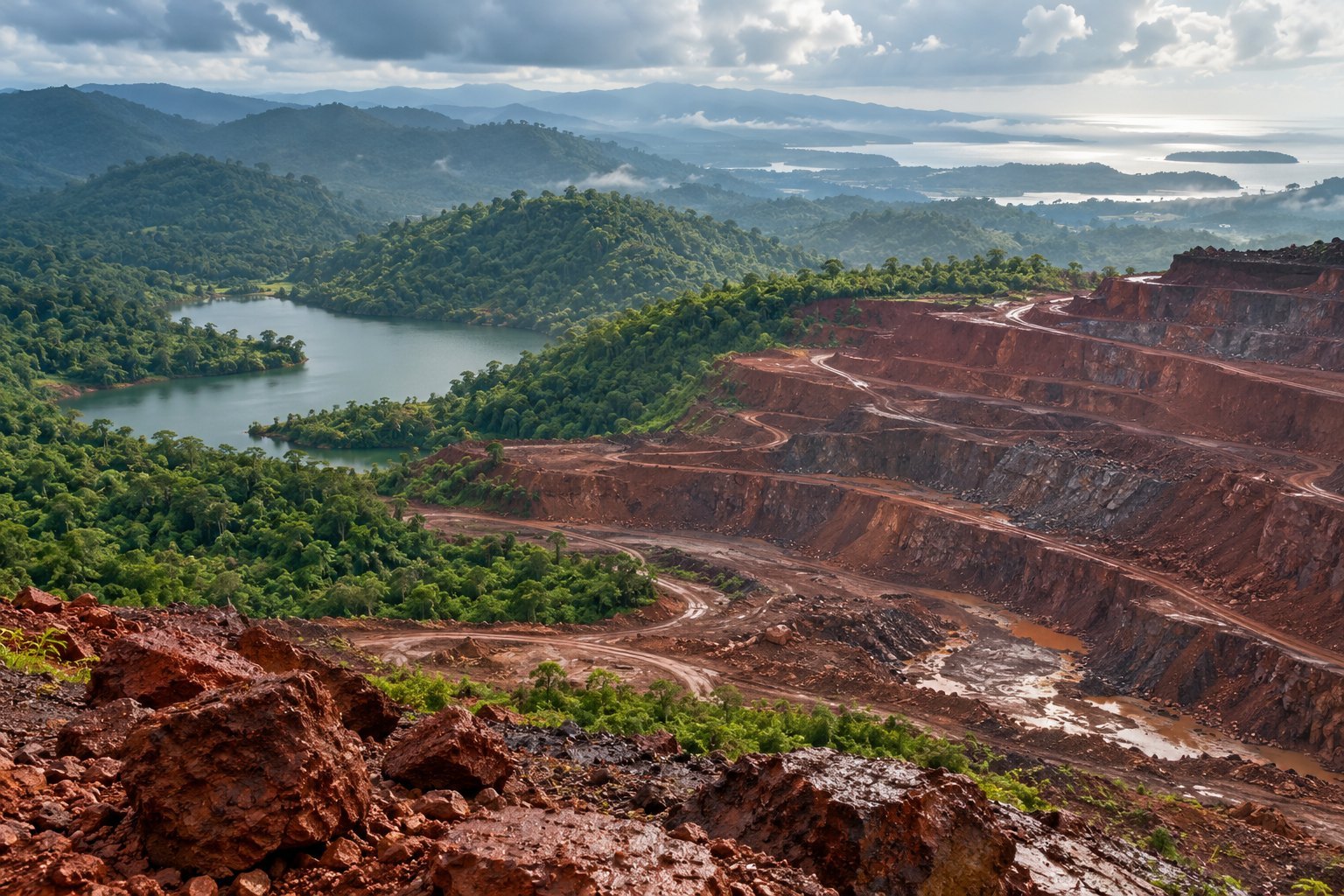
Goa's iron-ore leases, once Portuguese concessions in perpetuity, became mining leases under a 1987 Act. The Supreme Court held in 2014 that they had expired in 2007, and in 2018 quashed their second renewals; fresh leases are auctioned under the MMDR Act. On 12 October 2026, the Bombay High Court at Goa quashed a money-laundering case against a mining group.
Syllabus: GS2 · Government Policies; GS1 · Resources & Industry Location; GS3 · Environment & Conservation
Why this matters for UPSC
GS3 mineral resources and GS2 policy: Prelims can ask what sections 8A and 10B of the MMDR Act provide, which minerals are notified minerals and what the Commissions of Inquiry Act, 1952 requires; Mains, how auction and intergenerational equity should guide mineral allocation.
In short
Goa's iron-ore question is about allocating a finite public resource: leases born as Portuguese concessions, declared expired by the Supreme Court, now granted by auction under the MMDR Act.
Goa shows that allocating minerals needs a fair method and firm enforcement: auctions set the price, but caps, clearances and saved rents protect future generations.
Why it matters
For a Goan mining village, ore meant jobs, trucks bought for the ore trade and work at the jetties, and also a degraded environment. When leases were renewed instead of offered to the highest bidder, the State kept only royalty while lessees kept most of the value of a resource owned by the public. Then shutdowns from 2012 and again from 2018 hit truckers and workers who had no part in the deals. How a government hands out a finite mineral decides who gains today and what is left for the next generation. The same question returns with coal blocks, sand and spectrum: a fair method, firm enforcement and savings for the future.
Prelims pointers
- MMDR Act, section 8A: leases for minerals outside Parts A and B of the First Schedule run fifty years; on expiry the lease is put up for auction.
- Fourth Schedule, MMDR Act: the notified minerals are bauxite, iron ore, limestone and manganese ore.
- Section 10B, MMDR Act: for a notified mineral in a notified area, the State Government selects the lessee through competitive bidding, including e-auction.
- Section 9B, MMDR Act: the State Government sets up a District Mineral Foundation as a non-profit trust in each district affected by mining.
- Section 9C, MMDR Act: the Central Government sets up the National Mineral Exploration and Development Trust; lessees pay it three per cent of royalty.
- Commissions of Inquiry Act, 1952: section 3 empowers the appropriate Government to appoint a commission; sections 8B and 8C give affected persons a hearing and cross-examination.
- Natural Resources Allocation (2012): answering a presidential reference under Article 143(1), a Constitution Bench held that auctioning every natural resource is not a constitutional mandate.
- Article 39(b): a Directive Principle on distributing the material resources of the community to best serve the common good; it fixes no method of distribution.
Practise a UPSC-style question
With reference to the Mines and Minerals (Development and Regulation) Act, 1957, as amended in 2015, consider the following statements:
1. A mining lease for a mineral such as iron ore is granted for a period of fifty years.
2. On expiry of such a lease, the State Government may renew it once for a further twenty years.
Which of the statements given above is/are correct?
- (a) 1 only
- (b) 2 only
- (c) Both 1 and 2
- (d) Neither 1 nor 2
Show the answer
Answer: (a) 1 only
Answer: (a) 1 only. Section 8A gives fifty-year leases and sends them to auction on expiry, so there is no renewal.
Statement 1: correct. Section 8A, inserted by the MMDR Amendment Act, 2015, grants leases for minerals outside Parts A and B of the First Schedule, iron ore included, for fifty years.
Statement 2: incorrect. Under section 8A(4), on expiry the lease is put up for auction; renewal for up to twenty years under section 8(3) applies to Part A minerals such as coal.
Eliminate: Judge statement 2 first: an expired iron-ore lease goes back to auction, not to renewal. Out: (b), (c).
Eliminate: Judge statement 1: the fifty-year term is in section 8A. Out: (d).
Trap: Swapped attribution. The twenty-year renewal is real, but it belongs to section 8(3) and coal-type minerals, not to iron ore under section 8A.
Remember: Iron ore after 2015: fifty-year lease under section 8A, then auction again.
More Explainers
- State Legislative Councils: Articles 168-172 and the graduates' and teachers' seats Polity
- Whales and dolphins in Indian waters: legal protection, IUCN status and strandings Environment
- The Aligarh Movement, AMU and the Article 30 minority test Polity
- Environmental clearance by States: SEIAA, SEAC and the EIA Notification, 2006 Environment
- Software vulnerabilities: CVE, CVSS, coordinated disclosure and CERT-In's role Sci-Tech
- Drug trafficking law in India: NDPS Act, PIT-NDPS, NCB and NCORD National
- Choosing the UN Secretary-General: Article 97, UNSC veto and straw polls World & IR
- UN Convention against Torture, and why India has not ratified it Polity
- NavIC: why India's navigation constellation cannot give a standalone position Sci-Tech
- International Energy Agency: membership, 90-day oil stocks and India's status World & IR
- PM Surya Ghar: Muft Bijli Yojana and the rooftop solar subsidy Economy
- HFSS foods: FSSAI's draft limits and front-of-pack warning labels National