
Tele-MANAS: the National Tele Mental Health Programme (14416)
Why in news: On 9 October 2026, before World Mental Health Day, the Health Ministry said Tele-MANAS had received 47,75,644 calls through 53 cells in 36 States/UTs.
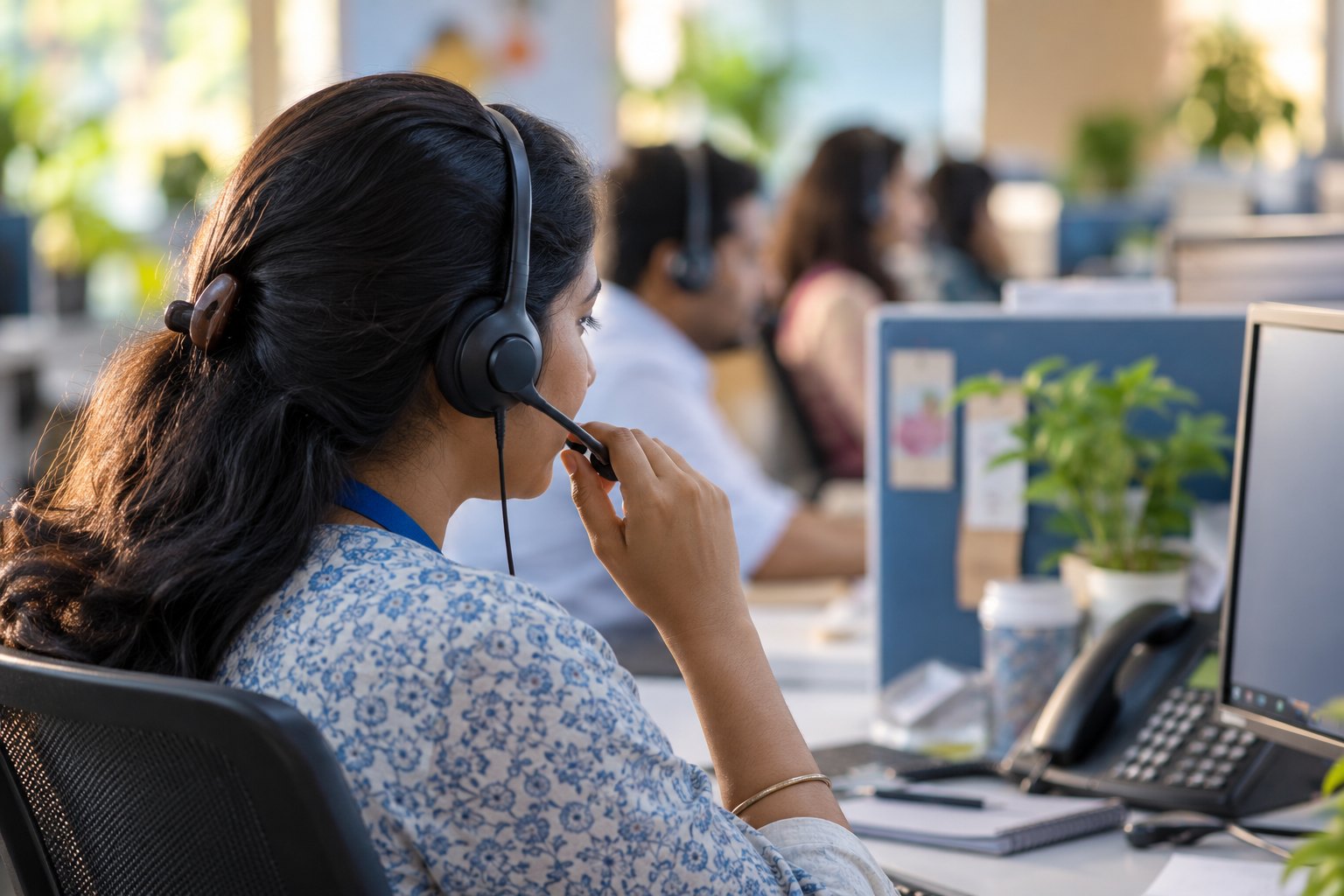
Tele-MANAS (Tele Mental Health Assistance and Networking Across States) is the Union Health Ministry's free, round-the-clock mental health helpline on 14416, launched on 10 October 2022. Counsellors in State cells answer first and refer callers onward to specialists, district services or e-Sanjeevani. The Ministry said on 9 October 2026 that it had received 47,75,644 calls since launch.
Syllabus: Prelims · Economy & Social Development; GS2 · Government Policies; GS2 · Welfare of Vulnerable Sections
Why this matters for UPSC
GS II, health and welfare schemes: Prelims can ask Tele-MANAS's two tiers and partner institutes, the DMHP's Bellary Model and sections 18 and 115 of the Mental Healthcare Act, 2017; Mains, India's mental health treatment gap.
In short
Tele-MANAS, the National Tele Mental Health Programme launched in 2022, is a free 24x7 helpline (14416) and the digital arm of the District Mental Health Programme (DMHP).
Tele-MANAS has made the first conversation easy; its worth now rests on district teams and specialists who turn a call into care.
Why it matters
A student anxious before an examination, a worker under stress or a parent worried about a teenager can now talk to a trained counsellor from any phone, free, without travelling to a clinic. That matters where most people with a mental disorder never reach treatment, because help is far away, costly or carries shame; the treatment gap is the distance between need and care. A family facing a crisis at night learns where to take a relative. A village with no psychiatrist gets a first point of contact. The larger question is whether a phone line can be backed by enough psychiatrists, district teams and medicines to finish the care that a call begins.
Prelims pointers
- Mental Healthcare Act, 2017, section 18: a right to access mental healthcare from government-run or funded services in every district, free for BPL, destitute or homeless persons.
- Section 5: any person who is not a minor may make a written advance directive on how to be treated, or not treated, for mental illness.
- Section 115: a person attempting suicide is presumed to have severe stress, is not to be tried and punished under section 309 IPC; government must provide care.
- Under the Act, the Centre sets up the Central Mental Health Authority; each State a State Mental Health Authority, which constitutes Mental Health Review Boards.
- DMHP: a district team that includes a psychiatrist, clinical psychologist, psychiatric social worker and psychiatric or community nurse; a 10-bedded inpatient facility; supported through the National Health Mission.
- Tele-MANAS regional coordinating centres: NIMHANS Bengaluru, LGBRIMH Tezpur, CIP Ranchi, IHBAS Delhi and PGIMER Chandigarh.
- Central mental health institutions: three, NIMHANS Bengaluru, LGBRIMH Tezpur and CIP Ranchi; the Budget 2026-27 announced Ranchi and Tezpur as Regional Apex Institutions.
- National Mental Health Survey 2015-16: by NIMHANS in 12 States; adult prevalence 10.6% (excluding tobacco use disorder), higher in urban metros than elsewhere.
Practise a UPSC-style question
With reference to Tele-MANAS, the National Tele Mental Health Programme, consider the following statements:
1. Its overall implementation is guided by the Ministry of Electronics and Information Technology.
2. Its Tier 1 consists of State Tele-MANAS cells staffed by trained counsellors and mental health specialists.
3. Its stated aim describes it as a digital component of the National Mental Health Programme.
Which of the statements given above is/are correct?
- (a) 1 and 2 only
- (b) 2 and 3 only
- (c) 1 and 3 only
- (d) 1, 2 and 3
Show the answer
Answer: (b) 2 and 3 only
Answer: (b) 2 and 3 only. The Ministry of Health and Family Welfare, not MeitY, guides the programme.
Statement 1: incorrect. The Union Budget 2022 entrusted the Ministry of Health and Family Welfare with guiding Tele-MANAS's overall implementation.
Statement 2: correct. Tier 1 is the State Tele-MANAS cells with trained counsellors and mental health specialists; Tier 2 is DMHP or medical college specialists and e-Sanjeevani.
Statement 3: correct. Its official aim calls it a digital component of the National Mental Health Programme, and its FAQ calls it the digital arm of the DMHP.
Eliminate: Judge statement 1 first: a health helpline is run by the Health Ministry, so statement 1 is incorrect. Out: (a), (c), (d).
Trap: Swapped attribution. A digital service is pinned on the IT ministry, though its technology partner is IIIT-Bangalore and its ministry is Health.
Remember: Tele-MANAS: Ministry of Health and Family Welfare; Tier 1 State cells, Tier 2 DMHP or e-Sanjeevani.
In the news
More Explainers
- State Legislative Councils: Articles 168-172 and the graduates' and teachers' seats Polity
- Whales and dolphins in Indian waters: legal protection, IUCN status and strandings Environment
- The Aligarh Movement, AMU and the Article 30 minority test Polity
- Environmental clearance by States: SEIAA, SEAC and the EIA Notification, 2006 Environment
- Software vulnerabilities: CVE, CVSS, coordinated disclosure and CERT-In's role Sci-Tech
- Drug trafficking law in India: NDPS Act, PIT-NDPS, NCB and NCORD National
- Choosing the UN Secretary-General: Article 97, UNSC veto and straw polls World & IR
- UN Convention against Torture, and why India has not ratified it Polity
- NavIC: why India's navigation constellation cannot give a standalone position Sci-Tech
- International Energy Agency: membership, 90-day oil stocks and India's status World & IR
- PM Surya Ghar: Muft Bijli Yojana and the rooftop solar subsidy Economy
- HFSS foods: FSSAI's draft limits and front-of-pack warning labels National