
LOX-methane rocket engines and ISRO's LME1100
Why in news: ISRO ignited the full-scale gas generator of its LME1100 LOX-methane engine for the first time on 9 October 2026.
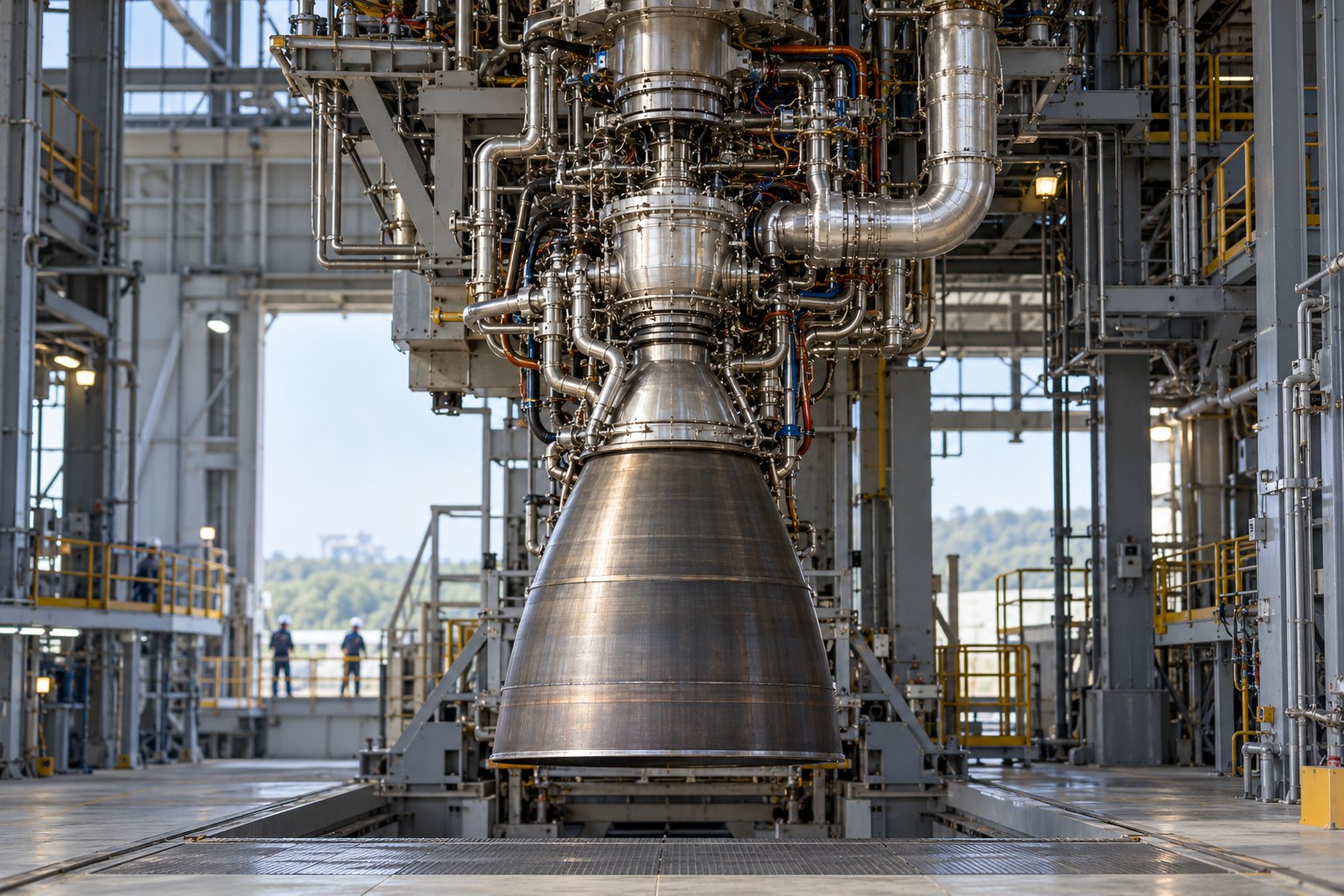
A LOX-methane engine burns liquid oxygen with liquid methane, the pair ISRO has chosen as main propulsion for its Next Generation Launch Vehicle. It differs from the hydrogen-fuelled cryogenic CE-20 and the kerosene-fuelled semi-cryogenic SE2000. ISRO ignited the full-scale gas generator of its 1,100 kN LME1100 engine for the first time on 9 October 2026.
Syllabus: Prelims · Current Affairs & IR; GS3 · Indian Achievements in S&T; GS3 · IT, Space, Biotech & IPR
Why this matters for UPSC
GS3 science and technology (space, indigenisation of technology): Prelims can ask which propellants the CE-20, SE2000 and LME1100 burn and the stages they power; Mains, how reusable, lower-cost launchers such as the NGLV serve India's space goals.
In short
A LOX-methane engine burns liquid oxygen with liquid methane, a cryogenic pair that ISRO has chosen as the primary propulsion for its Next Generation Launch Vehicle.
LOX-methane offers India a cleaner, reusable route to heavy lift, but only a qualified full engine, not a gas generator test, makes the LME1100 NGLV-ready.
Why it matters
An engine decides how much a rocket can lift and what each launch costs. Hydrogen engines like the CE-20 are efficient but need very cold, very large tanks. Methane is easier to store and, by ISRO's account, burns clean and needs little upkeep, which matters when a rocket stage is recovered and flown again. The Next Generation Launch Vehicle is meant to have a reusable first stage, so a working methane engine is what would let India launch heavier payloads more cheaply. That bears on the Bharatiya Antariksh Station and the crewed Moon landing the government targets for 2040. It also matters for Indian firms that are already printing and supplying the engine's parts.
Prelims pointers
- LVM3 has two S200 solid strap-ons (developed at VSSC), the L110 liquid core stage with two Vikas engines, and the C25 cryogenic upper stage.
- CE-20, developed by the Liquid Propulsion Systems Centre, is India's largest cryogenic engine; ISRO says it is qualified for 19 to 22 tonnes of thrust and for Gaganyaan.
- SE2000 is a 2000 kN LOX-kerosene engine with a specific impulse of 335 s; ISRO's refined kerosene is called isrosene.
- The Vikas engine, ISRO's 800 kN workhorse liquid engine, is used in PSLV, GSLV and LVM3.
- The Union Cabinet approved the NGLV on 18 September 2024: up to 30 tonnes to low Earth orbit, three times LVM3's payload at 1.5 times its cost.
- ISRO's Cryogenic Upper Stage Project was set up to build an indigenous stage replacing the one procured from Russia for GSLV flights.
Practise a UPSC-style question
With reference to the propellants of ISRO's liquid rocket engines, consider the following statements:
1. The SE2000 semi-cryogenic engine burns liquid oxygen with liquid hydrogen.
2. The CE-20 engine of the C25 upper stage of LVM3 burns liquid oxygen with liquid hydrogen.
3. The LM20-TD technology demonstrator, built from CE-20 engine subsystems, burned liquid oxygen with liquid methane.
Which of the statements given above is/are correct?
- (a) 1 and 2 only
- (b) 2 and 3 only
- (c) 1 and 3 only
- (d) 1, 2 and 3
Show the answer
Answer: (b) 2 and 3 only
Answer: (b) 2 and 3 only. The CE-20 burns LOX-LH2 and the LM20-TD demonstrator burned LOX-methane; only the SE2000 line is wrong.
Statement 1: incorrect. ISRO describes the SE2000 as a Liquid Oxygen / Kerosene engine; kerosene, not hydrogen, is what makes it semi-cryogenic.
Statement 2: correct. ISRO's LVM3 page says the C25 stage is powered by CE-20, India's largest cryogenic engine, and ISRO calls the CE-20 a LOX/LH2 cryogenic engine.
Statement 3: correct. ISRO built the 20-tonne LM20-TD from existing CE-20 subsystems in 2019-2020 to study the LOX-methane propellant combination; its tests gave inputs for a LOX-methane engine.
Eliminate: Statement 1 is the surest: semi-cryogenic means LOX with kerosene, so any option holding 1 goes. Out: (a), (c), (d).
Trap: Swapped attribution. The hydrogen fuel of the cryogenic CE-20 is pinned on the semi-cryogenic SE2000, whose name sounds close enough to pass.
Remember: Cryogenic = LOX + LH2 (CE-20); semi-cryogenic = LOX + kerosene (SE2000); LOX-methane = LM20-TD, then LME1100.
More Explainers
- State Legislative Councils: Articles 168-172 and the graduates' and teachers' seats Polity
- Whales and dolphins in Indian waters: legal protection, IUCN status and strandings Environment
- The Aligarh Movement, AMU and the Article 30 minority test Polity
- Environmental clearance by States: SEIAA, SEAC and the EIA Notification, 2006 Environment
- Software vulnerabilities: CVE, CVSS, coordinated disclosure and CERT-In's role Sci-Tech
- Drug trafficking law in India: NDPS Act, PIT-NDPS, NCB and NCORD National
- Choosing the UN Secretary-General: Article 97, UNSC veto and straw polls World & IR
- UN Convention against Torture, and why India has not ratified it Polity
- NavIC: why India's navigation constellation cannot give a standalone position Sci-Tech
- International Energy Agency: membership, 90-day oil stocks and India's status World & IR
- PM Surya Ghar: Muft Bijli Yojana and the rooftop solar subsidy Economy
- HFSS foods: FSSAI's draft limits and front-of-pack warning labels National