
MINUSCA: how the Security Council mandates, caps and renews a mission
Why in news: On 20 October 2026 MINUSCA's head urged the Security Council, before its mid-November renewal vote, to keep adequate force levels.
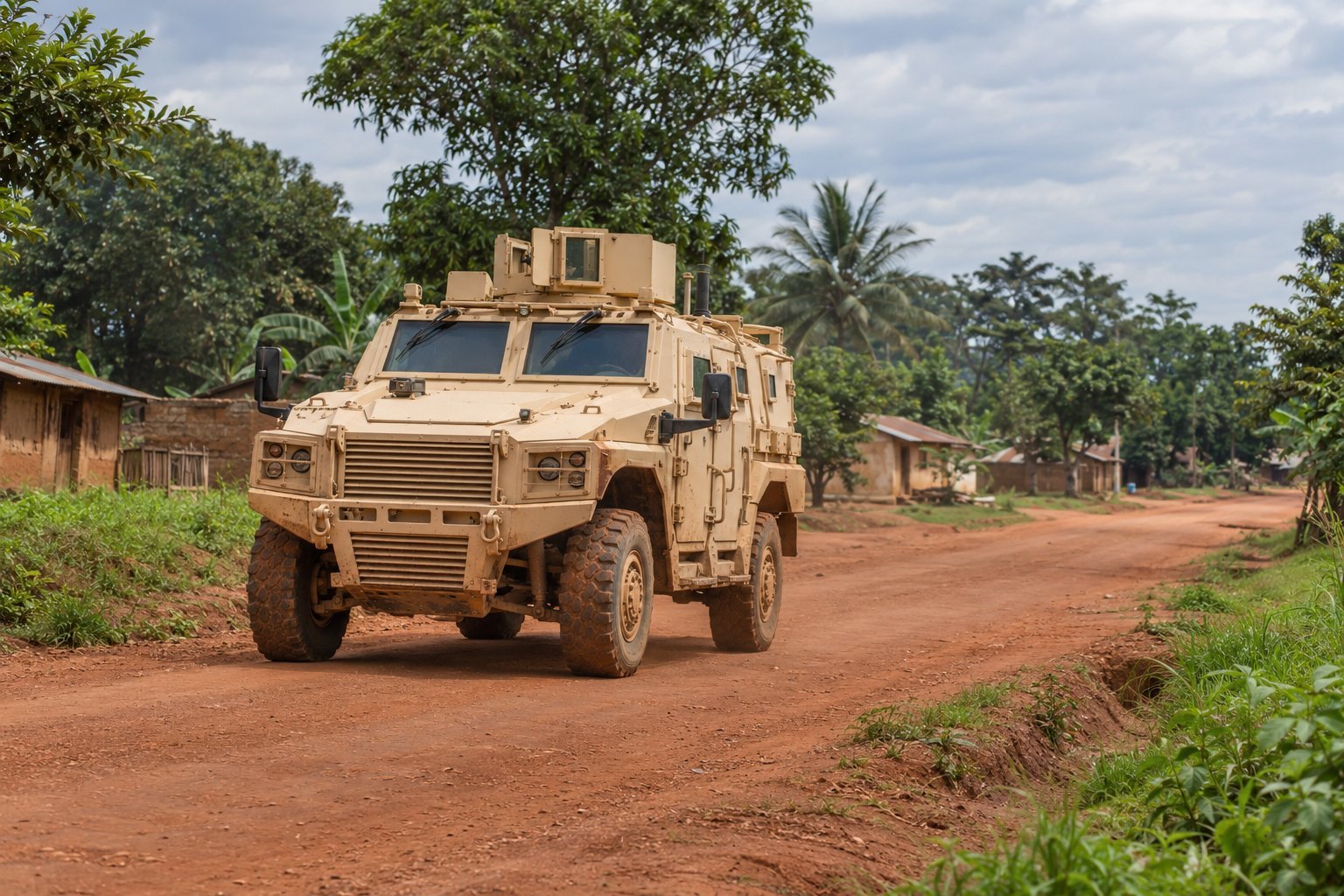
MINUSCA, the United Nations Multidimensional Integrated Stabilization Mission in the Central African Republic, was set up by Security Council resolution 2149 (2014) to protect civilians first. Resolution 2800 (2025) renewed it until 15 November 2026 with up to 14,046 military personnel. On 20 October 2026 its head warned the Council against an early drawdown as Sudan's war spills over.
Syllabus: Prelims · Current Affairs & IR; Prelims · Geography; GS2 · International Institutions
Why this matters for UPSC
GS II international institutions: Prelims asks how the Security Council mandates a mission, Article 27 voting and where the Central African Republic lies; Mains asks whether peacekeeping drawdowns follow security or budgets.
In short
UN peacekeeping is the Security Council's tool for holding a fragile peace: its resolution usually creates a mission, fixes its mandate and troop ceiling, and renews it.
MINUSCA shows a mandate must shrink with security gains, not budgets; the Council should renew it until Central African forces can protect civilians themselves.
Why it matters
For a family in Birao or Am-Dafock, near the Sudan border, a peacekeeping base can decide whether armed men loot their village or move on. When the mission shrinks, patrols thin out and that shelter goes with them. The Council's choice is therefore about lives, not only budgets. It also shows a wider problem: missions are paid for by all UN members but sized by fifteen, and when big funders press for savings, a country still rebuilding its army and courts may lose protection before it can stand alone. For India, one of the largest suppliers of peacekeepers, every such debate shapes how its soldiers will be sent and kept safe.
Prelims pointers
- MINUSCA: authorised by resolution 2149 of 10 April 2014; headquarters Bangui; protection of civilians is its utmost priority.
- MISCA, the African-led mission set up under resolution 2127 (2013), transferred its authority to MINUSCA on 15 September 2014.
- Principles of UN peacekeeping: consent of the main parties, impartiality, and non-use of force except in self-defence and defence of the mandate.
- UN Charter Article 27: substantive Council decisions need nine affirmative votes including the concurring votes of the five permanent members.
- UN Charter Article 25: all members agree to accept and carry out the decisions of the Security Council.
- Peacekeeping finance: Article 17 obliges members to pay; the General Assembly apportions costs by a special scale; the budget year runs 1 July to 30 June.
- UNTSO and UNMOGIP (India and Pakistan) are the two missions paid from the UN regular budget, not separate peacekeeping accounts.
- Central African Republic: landlocked; borders Chad, Sudan, South Sudan, the Democratic Republic of the Congo, the Republic of Congo and Cameroon.
Practise a UPSC-style question
With reference to the principles of United Nations peacekeeping, consider the following statements:
1. Peacekeeping operations are deployed with the consent of the main parties to the conflict.
2. Peacekeepers may use force at the tactical level in self-defence and in defence of the mandate.
Which of the statements given above is/are correct?
- (a) 1 only
- (b) 2 only
- (c) Both 1 and 2
- (d) Neither 1 nor 2
Show the answer
Answer: (c) Both 1 and 2
Answer: (c) Both 1 and 2. Consent and limited force are two of the three basic principles of UN peacekeeping.
Statement 1: correct. UN peacekeeping operations deploy with the consent of the main parties, which commit to a political process.
Statement 2: correct. Peacekeepers are not an enforcement tool but may use force tactically, with Council authorisation, in self-defence and defence of the mandate.
Eliminate: Judge statement 1 first: consent of the parties is the best-known principle, so it is correct. Out: (b), (d).
Eliminate: Judge statement 2: force in self-defence and defence of the mandate is the third principle, so it is correct. Out: (a).
Trap: Extreme word. Students who think peacekeepers may never use force reject statement 2, though tactical force in defence of the mandate is allowed.
Remember: Three principles: consent, impartiality, force only in self-defence and defence of the mandate.
More Explainers
- State Legislative Councils: Articles 168-172 and the graduates' and teachers' seats Polity
- Whales and dolphins in Indian waters: legal protection, IUCN status and strandings Environment
- The Aligarh Movement, AMU and the Article 30 minority test Polity
- Environmental clearance by States: SEIAA, SEAC and the EIA Notification, 2006 Environment
- Software vulnerabilities: CVE, CVSS, coordinated disclosure and CERT-In's role Sci-Tech
- Drug trafficking law in India: NDPS Act, PIT-NDPS, NCB and NCORD National
- Choosing the UN Secretary-General: Article 97, UNSC veto and straw polls World & IR
- UN Convention against Torture, and why India has not ratified it Polity
- NavIC: why India's navigation constellation cannot give a standalone position Sci-Tech
- International Energy Agency: membership, 90-day oil stocks and India's status World & IR
- PM Surya Ghar: Muft Bijli Yojana and the rooftop solar subsidy Economy
- HFSS foods: FSSAI's draft limits and front-of-pack warning labels National