
Parliamentary privilege: Articles 105 and 194, contempt and Committee of Privileges
Why in news: On 15 October 2026 the Public Accounts Committee decided to give the Speaker notice of a privilege motion against Chief Secretaries who skipped its meeting.
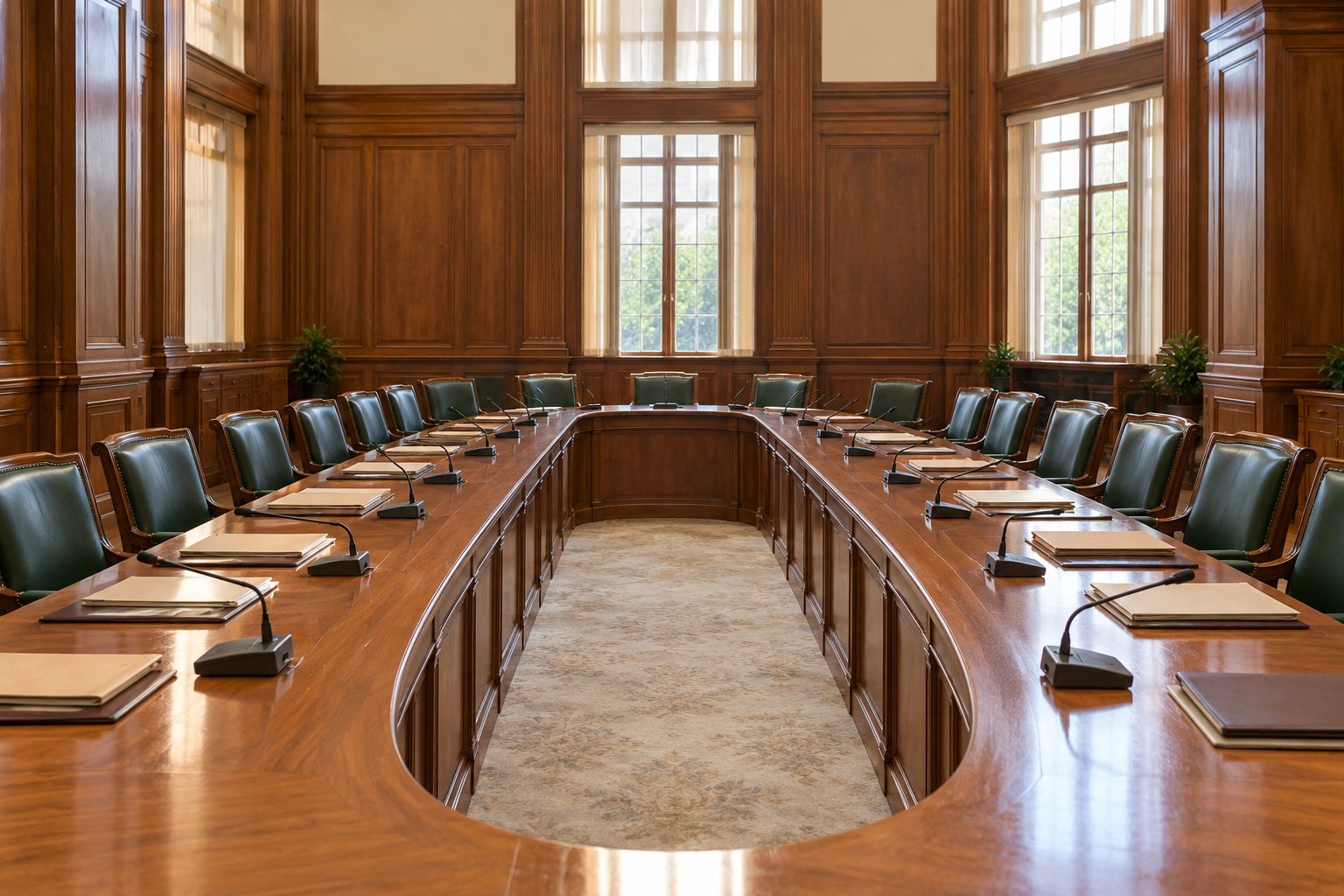
Parliamentary privilege is the set of rights and immunities that each House of Parliament or a State Legislature, and its members and committees, hold under Articles 105 and 194 of the Constitution. A House may punish breach or contempt, even by outsiders. Parliament's Public Accounts Committee has decided to seek privilege action against State Chief Secretaries who skipped its meeting.
Syllabus: Prelims · Polity & Governance; GS2 · Parliament & State Legislatures; GS2 · Governance & e-Governance
Why this matters for UPSC
Parliamentary privilege is GS2 (Parliament and State Legislatures: powers and privileges). Prelims can ask what Articles 105 and 194 provide and how the Committee of Privileges is formed; Mains, about privilege, contempt and accountability.
In short
Parliamentary privilege is the set of special rights and immunities that each House, its members and committees enjoy under Articles 105 and 194, so they can work unobstructed.
Privilege must protect Parliament's work, including its committees' power to summon officials, without turning into a shield against criticism or judicial review.
Why it matters
Privilege decides how far Parliament can make the government answer to it. A committee that cannot make officers appear cannot find out why money meant for students was paid late or to the wrong people, so the power to summon is what gives scrutiny teeth. The same power can be turned on journalists, critics or officials who displease a House, and the person accused is judged by the body that complains. Freedom of speech inside the House lets a member expose wrongdoing without fear of a defamation case, but it also means a citizen named in a speech has no remedy in court. The balance between an effective legislature and a citizen's rights runs through every privilege case.
Prelims pointers
- Article 105(3): until Parliament makes a law, a House's other privileges are those it held just before section 15 of the 44th Amendment Act, 1978 (in force 20 June 1979).
- Section 135A, Code of Civil Procedure, 1908: no civil arrest of a member during a House or committee meeting and 40 days before and after; no shield from criminal arrest.
- Article 361A: no court liability for a substantially true newspaper or broadcast report of proceedings unless malice is proved; secret sittings are excluded.
- Lok Sabha Committee of Privileges: not more than 15 members nominated by the Speaker (Rule 313); Rajya Sabha's: ten members nominated by the Chairman, quorum five.
- Lok Sabha Rule 225: when a member objects, leave to raise a privilege question needs at least 25 members rising in support.
- Public Accounts Committee: up to 22 members, 15 elected yearly by the Lok Sabha by single transferable vote and up to 7 from the Rajya Sabha; no Minister.
- Article 122: courts cannot question Parliament's proceedings for irregularity of procedure; Article 212 does the same for State Legislatures.
- Article 211: a State Legislature cannot discuss the conduct of a Supreme Court or High Court judge in the discharge of duties.
Practise a UPSC-style question
With reference to the privileges of legislatures under the Constitution of India, consider the following statements:
1. Article 105(2) protects a Member of Parliament from court proceedings for any vote given in a parliamentary committee.
2. Article 194 gives the Houses of State Legislatures privileges in terms identical to those that Article 105 gives Parliament.
3. Parliament has enacted a law under Article 105(3) that defines the privileges of each House.
Which of the statements given above is/are correct?
- (a) 1 and 2 only
- (b) 2 and 3 only
- (c) 1 and 3 only
- (d) 1, 2 and 3
Show the answer
Answer: (a) 1 and 2 only
Answer: (a) 1 and 2 only. No law has ever been made under Article 105(3), so statement 3 fails and only (a) remains.
Statement 1: correct. Article 105(2) covers anything said or any vote given in Parliament or any committee thereof.
Statement 2: correct. Article 194 gives State Legislatures, their members and committees the privileges of Article 105 in identical terms.
Statement 3: incorrect. Neither Parliament nor any State Legislature has made a law under clause (3); precedent still governs.
Eliminate: Judge statement 3 first: privileges were never codified, so statement 3 is incorrect. Out: (b), (c), (d).
Trap: Sounds right. Article 105(3) does allow a law, so a statement that one exists feels plausible, but the power was never used.
Remember: Article 105(3) and 194(3): a law is permitted, none is made; pre-1979 precedent applies.
More Explainers
- State Legislative Councils: Articles 168-172 and the graduates' and teachers' seats Polity
- Whales and dolphins in Indian waters: legal protection, IUCN status and strandings Environment
- The Aligarh Movement, AMU and the Article 30 minority test Polity
- Environmental clearance by States: SEIAA, SEAC and the EIA Notification, 2006 Environment
- Software vulnerabilities: CVE, CVSS, coordinated disclosure and CERT-In's role Sci-Tech
- Drug trafficking law in India: NDPS Act, PIT-NDPS, NCB and NCORD National
- Choosing the UN Secretary-General: Article 97, UNSC veto and straw polls World & IR
- UN Convention against Torture, and why India has not ratified it Polity
- NavIC: why India's navigation constellation cannot give a standalone position Sci-Tech
- International Energy Agency: membership, 90-day oil stocks and India's status World & IR
- PM Surya Ghar: Muft Bijli Yojana and the rooftop solar subsidy Economy
- HFSS foods: FSSAI's draft limits and front-of-pack warning labels National