
Chandrasekhar limit: why white dwarfs stop at 1.4 solar masses
Why in news: An IISc simulation study in The Astrophysical Journal Letters, released on 9 October 2026, found a magnetised white dwarf could reach about 2.4 solar masses.
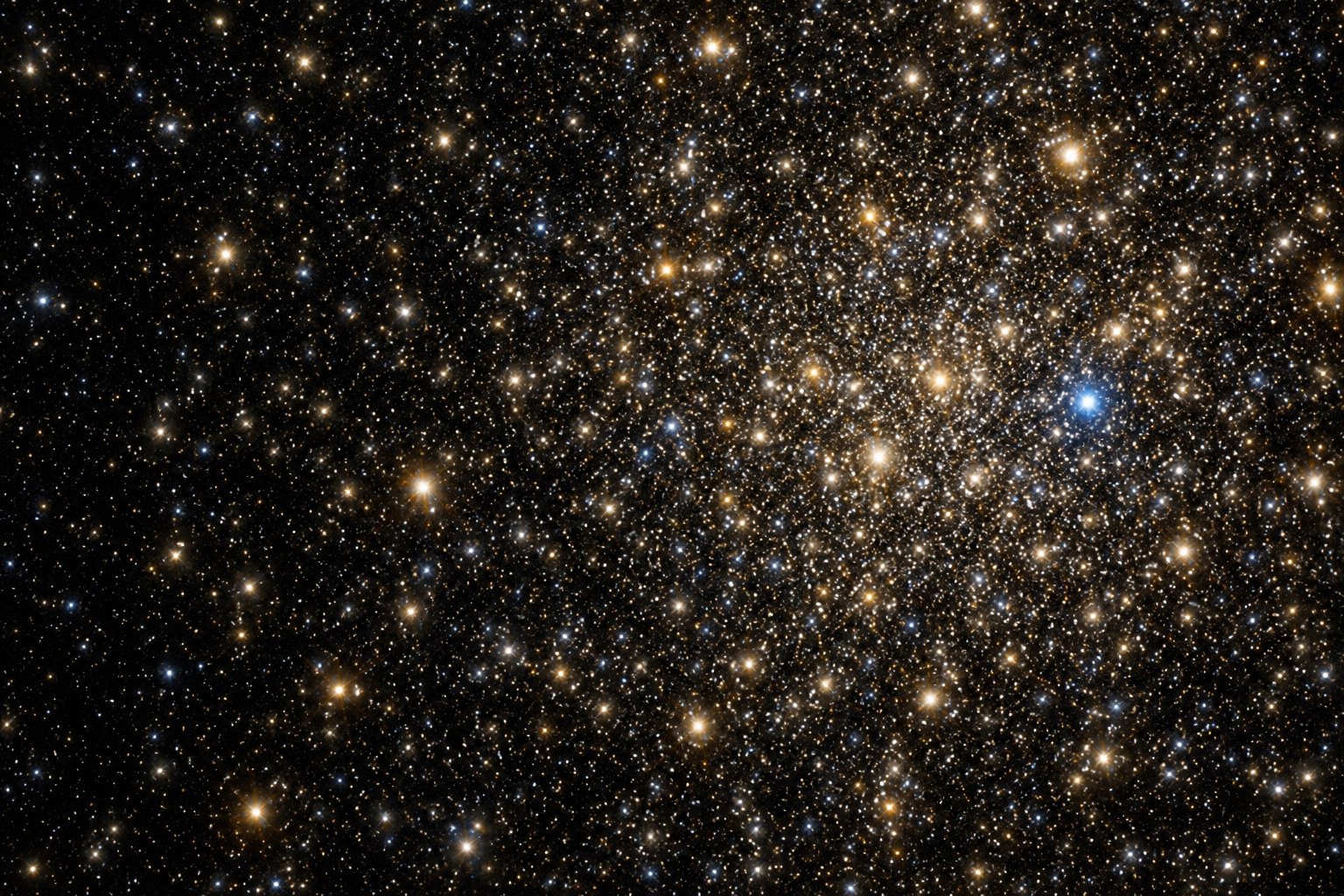
The Chandrasekhar limit is the largest mass, about 1.4 times the Sun's, that a non-rotating, non-magnetised white dwarf can keep up against gravity. A heavier stellar core collapses further, or explodes as a Type Ia supernova. An Indian Institute of Science study now shows strong magnetic fields could let some white dwarfs reach about 2.4 solar masses.
Syllabus: Prelims · Science & Technology; GS3 · Science & Technology; GS3 · Indian Achievements in S&T
Why this matters for UPSC
GS3 science and technology, and achievements of Indians in science: Prelims can ask about the Chandrasekhar limit, white dwarfs, neutron stars and Type Ia supernovae; Mains, about how stars die and Indian astrophysics from Chandrasekhar to IISc.
In short
The Chandrasekhar limit, about 1.4 solar masses, is the heaviest a white dwarf can be while electron degeneracy pressure alone holds it up against its own gravity.
The Chandrasekhar limit remains the backbone of stellar physics; IISc's work suggests magnetism can raise its value, a claim only telescopes can settle.
Why it matters
The Chandrasekhar limit is why astronomers can use some exploding stars as measuring sticks for the cosmos. If every Type Ia supernova blows up at nearly the same mass, each gives off about the same light, so how dim one looks tells how far away it is. Distances found this way have been used to trace how the universe has expanded over time. If magnetism lets some white dwarfs grow much heavier, a few of these explosions could be brighter than the rule expects, and astronomers would need to recognise them before trusting them as yardsticks. The story also shows Indian science at work on one question for nearly a century, from a young physicist's calculation to a Bengaluru laboratory's computer models.
Prelims pointers
- End-states by birth mass, per NASA: below about 8 solar masses a star ends as a white dwarf; heavier stars explode, leaving a neutron star or black hole.
- Neutron stars: about 20 km across and denser than white dwarfs; most are seen as pulsars, and a magnetar's field is about 1,000 times a typical one's.
- Supernova classes: Type Ia spectra lack hydrogen lines and come from white dwarfs; Type II spectra show hydrogen and come from massive stars' core collapse.
- Sirius B, companion of Sirius in Canis Major, is a white dwarf: Bessel inferred it in 1844 from Sirius's wobble and Alvan Clark later saw it.
- Chandra X-ray Observatory: NASA's, launched by the Space Shuttle Columbia on 23 July 1999 into a highly elliptical high-Earth orbit.
- Nobel Prize in Physics 1983: shared equally by Subrahmanyan Chandrasekhar (structure and evolution of stars) and William Alfred Fowler (nuclear reactions forming the elements).
- Tycho's supernova of 1572, in Cassiopeia, was a Type Ia; its probable surviving companion, found with Hubble, backs the binary-star origin.
Practise a UPSC-style question
With reference to white dwarfs, consider the following statements:
1. A white dwarf resists further collapse through electron degeneracy pressure, not through nuclear fusion in its core.
2. The more massive a white dwarf is, the larger its radius becomes.
3. Stars born with less than about 8 times the Sun's mass end their lives as white dwarfs.
Which of the statements given above is/are correct?
- (a) 1 and 2 only
- (b) 2 and 3 only
- (c) 1 and 3 only
- (d) 1, 2 and 3
Show the answer
Answer: (c) 1 and 3 only
Answer: (c) 1 and 3 only. A heavier white dwarf is smaller, not larger, so only statement 2 fails.
Statement 1: correct. With fusion over, packed electrons that cannot share quantum states (Pauli Exclusion Principle) hold the star up.
Statement 2: incorrect. Extra mass forces the electrons closer together, so a more massive white dwarf has a smaller radius.
Statement 3: correct. NASA puts the cut-off at about 8 solar masses; heavier stars end as neutron stars or black holes.
Eliminate: Judge statement 2 first: degenerate matter shrinks as mass grows, so statement 2 is incorrect. Out: (a), (b), (d).
Trap: Reversed direction. Ordinary objects grow with mass, so a student expects a heavier white dwarf to be bigger; degenerate matter does the opposite.
Remember: White dwarf: no fusion, held by electron degeneracy pressure; heavier means smaller; ceiling about 1.4 solar masses.
More Explainers
- State Legislative Councils: Articles 168-172 and the graduates' and teachers' seats Polity
- Whales and dolphins in Indian waters: legal protection, IUCN status and strandings Environment
- The Aligarh Movement, AMU and the Article 30 minority test Polity
- Environmental clearance by States: SEIAA, SEAC and the EIA Notification, 2006 Environment
- Software vulnerabilities: CVE, CVSS, coordinated disclosure and CERT-In's role Sci-Tech
- Drug trafficking law in India: NDPS Act, PIT-NDPS, NCB and NCORD National
- Choosing the UN Secretary-General: Article 97, UNSC veto and straw polls World & IR
- UN Convention against Torture, and why India has not ratified it Polity
- NavIC: why India's navigation constellation cannot give a standalone position Sci-Tech
- International Energy Agency: membership, 90-day oil stocks and India's status World & IR
- PM Surya Ghar: Muft Bijli Yojana and the rooftop solar subsidy Economy
- HFSS foods: FSSAI's draft limits and front-of-pack warning labels National