
Unilateral and secondary sanctions: CAATSA, the 2026 US Act, UN sanctions
Why in news: A US-Russia deal of 9 October 2026 lets Russian diesel into world markets; a US waiver for India under its 2026 Act is undecided.
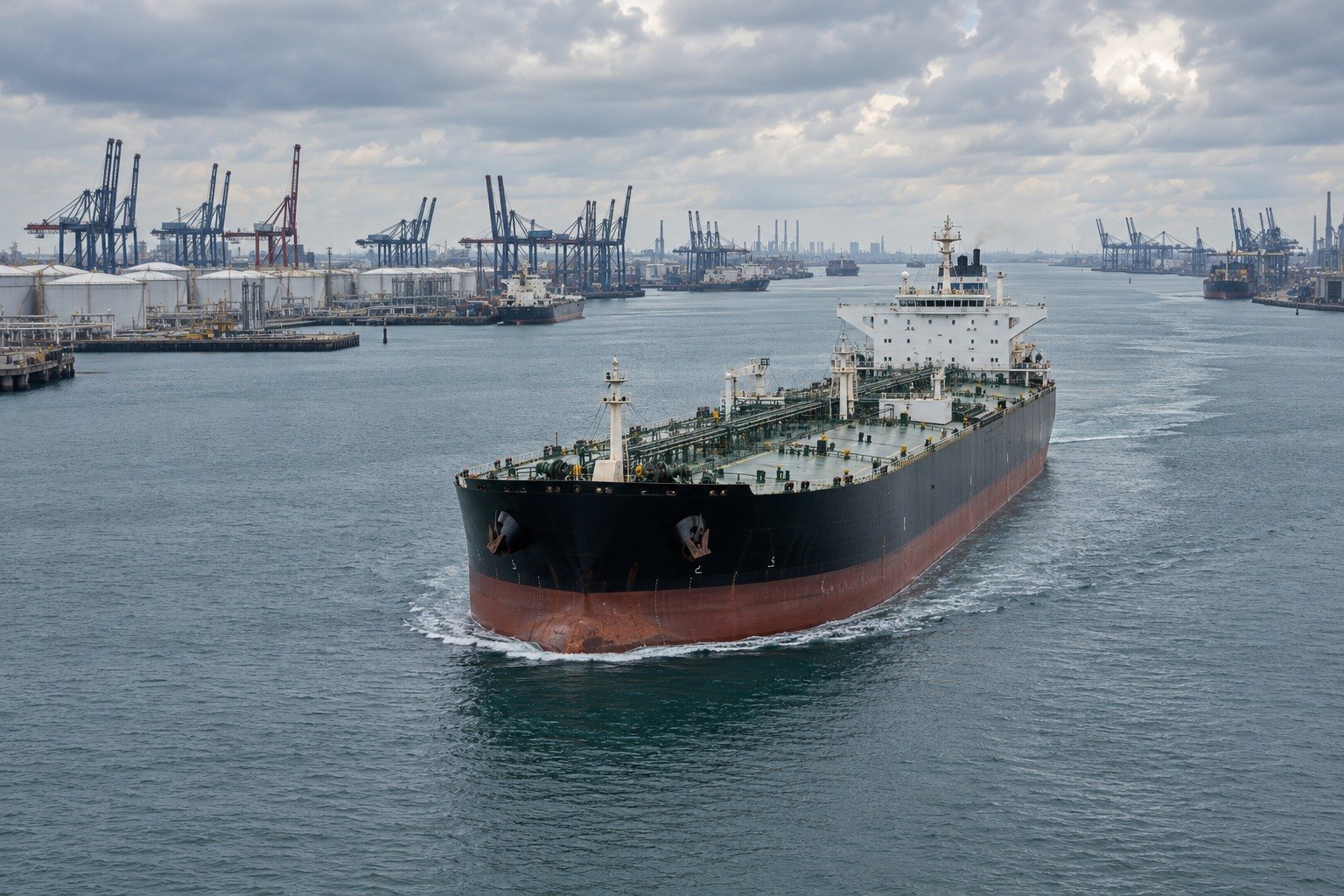
Unilateral sanctions are penalties one country imposes under its own law; secondary sanctions extend them to foreign firms dealing with the target, unlike UN Security Council sanctions, which bind all members. In the news: a US deal lets Russian diesel reach world markets while a 2026 US Act allows tariffs up to 100% on big buyers of Russian oil.
Syllabus: Prelims · Current Affairs & IR; GS3 · Infrastructure; GS2 · Foreign Policies & the Diaspora
Why this matters for UPSC
GS2 international relations: Prelims can ask Article 41 of the UN Charter, OFAC's parent department and the trigger in CAATSA section 231; Mains, how unilateral sanctions test India's energy security and strategic autonomy.
In short
Unilateral sanctions are one state's penalties under its own law; secondary sanctions stretch them to foreign firms dealing with the target, unlike binding UN Security Council sanctions.
India should keep energy purchases commercial and its stand anchored in the UN Charter, using waivers and diversified sourcing to shield citizens.
Why it matters
India buys crude oil abroad, and the price refiners pay feeds into what people pay for diesel, cooking gas and bus fares. If India buys cheaper Russian oil and the United States answers with a duty of up to 100% on Indian goods, the cost lands on exporters who never touch oil: a garment maker or a machinery firm selling to American buyers could lose orders overnight. So one country's law can force a choice between cheaper fuel at home and jobs in export industries. The larger issue is who sets the rules of world trade: sanctions agreed in the Security Council carry the consent of all members, while one country's law stretched to other nations' firms does not.
Prelims pointers
- Article 41, UN Charter: the Security Council may order measures not involving armed force, such as interrupting economic relations or communications and severing diplomatic relations.
- Article 42, UN Charter: if Article 41 measures prove inadequate, the Security Council may act with air, sea or land forces.
- UN sanctions regimes: Security Council sanctions date from 1966 (Southern Rhodesia); each regime is run by a sanctions committee chaired by a Council member.
- CAATSA section 235 menu: Export-Import Bank denial, export-licence bans, US bank loans capped at $10 million a year, procurement bans and visa denial to corporate officers.
- CAATSA section 236: once sanctions are imposed, the President may waive them if the waiver is in the US national security interest.
- OFAC history: formally created in December 1950, after China entered the Korean War; successor to the Office of Foreign Funds Control set up in 1940.
- CAATSA section 231 precedent: Turkey's Presidency of Defense Industries (SSB) was sanctioned on 14 December 2020 for procuring Russia's S-400 surface-to-air missile system.
Practise a UPSC-style question
With reference to the Countering America's Adversaries Through Sanctions Act (CAATSA) of the United States, consider the following statements:
1. It was enacted in 2017 to impose sanctions on Iran, Russia and China.
2. Its section 231 penalises significant transactions with the defence or intelligence sectors of the Russian Federation.
3. Under section 231, at least five of the sanctions listed in section 235 must be imposed on a person found liable.
Which of the statements given above is/are correct?
- (a) 1 and 2 only
- (b) 2 and 3 only
- (c) 1 and 3 only
- (d) 1, 2 and 3
Show the answer
Answer: (b) 2 and 3 only
Answer: (b) 2 and 3 only. CAATSA's third target is North Korea, not China; the section 231 statements are accurate.
Statement 1: incorrect. CAATSA, Public Law 115-44 of 2 August 2017, targets Iran, Russia and North Korea; China is not one of its named adversaries.
Statement 2: correct. Section 231 covers anyone who knowingly makes a significant transaction with Russia's defence or intelligence sectors.
Statement 3: correct. Section 231 requires the President to impose five or more of the twelve sanctions described in section 235.
Eliminate: statement 1 names China in place of North Korea, so it is incorrect. Out: (a), (c), (d).
Trap: Swapped attribution. A real law's list of target countries is given with one country swapped for another US rival.
Remember: CAATSA (2017) = Iran, Russia, North Korea; section 231 = five of section 235's twelve sanctions.
In the news
More Explainers
- State Legislative Councils: Articles 168-172 and the graduates' and teachers' seats Polity
- Whales and dolphins in Indian waters: legal protection, IUCN status and strandings Environment
- The Aligarh Movement, AMU and the Article 30 minority test Polity
- Environmental clearance by States: SEIAA, SEAC and the EIA Notification, 2006 Environment
- Software vulnerabilities: CVE, CVSS, coordinated disclosure and CERT-In's role Sci-Tech
- Drug trafficking law in India: NDPS Act, PIT-NDPS, NCB and NCORD National
- Choosing the UN Secretary-General: Article 97, UNSC veto and straw polls World & IR
- UN Convention against Torture, and why India has not ratified it Polity
- NavIC: why India's navigation constellation cannot give a standalone position Sci-Tech
- International Energy Agency: membership, 90-day oil stocks and India's status World & IR
- PM Surya Ghar: Muft Bijli Yojana and the rooftop solar subsidy Economy
- HFSS foods: FSSAI's draft limits and front-of-pack warning labels National