
Speaker and Deputy Speaker of the Lok Sabha: Articles 93-97
Why in news: PRS's review of the Monsoon Session, 20 July to 13 August 2026, notes the Lok Sabha still has no Deputy Speaker.
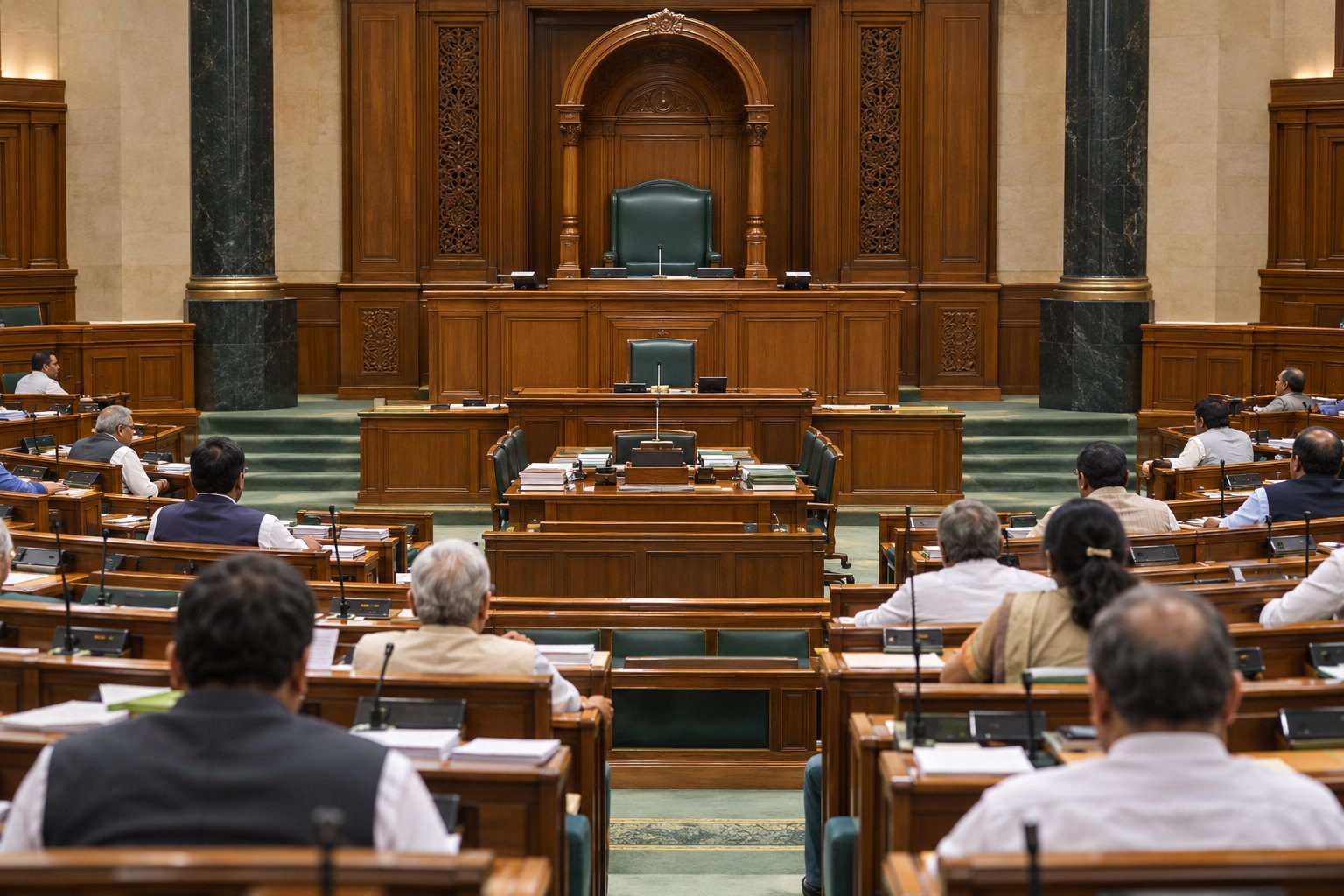
The Speaker and Deputy Speaker are the Lok Sabha's presiding officers, chosen by the House from among its members under Article 93 and removable by a resolution passed by a majority of all its then members after 14 days' notice. PRS Legislative Research's Monsoon Session 2026 review records over seven years without a Deputy Speaker.
Syllabus: Prelims · Polity & Governance; GS2 · Parliament & State Legislatures; GS2 · Constitutional Bodies
Why this matters for UPSC
GS2 Parliament: Prelims asks to whom the Speaker resigns, the majority needed for removal, the casting vote and the Tenth Schedule role; Mains asks about the Speaker's neutrality and the long Deputy Speaker vacancy under Article 93.
In short
Chosen by the Lok Sabha from its members under Article 93, the Speaker and Deputy Speaker preside over the House; their authority rests on assumed, not compelled, impartiality.
Article 93 needs a deadline: an empty Deputy Speaker's chair and contested defection rulings weaken the impartial Chair the Constitution assumes.
Why it matters
Every MP depends on the person in the Chair to decide who may speak, which motions are taken up and whether a Bill counts as a Money Bill. The Speaker also decides whether an MP who changes sides loses the seat, so a single ruling can change a government's majority. When the Deputy Speaker's post stays empty, there is no elected second officer: in the Speaker's absence a member of the panel of Chairpersons presides, and if the Speaker's office falls vacant a member appointed by the President performs its duties. The larger question is whether the Chair is trusted by the opposition as much as by the government.
Prelims pointers
- Article 94: the Speaker resigns by writing to the Deputy Speaker; the Deputy Speaker resigns by writing to the Speaker.
- Article 94(c): removal needs a resolution passed by a majority of all the then members, moved after at least 14 days' notice.
- Rule 201, Lok Sabha Rules: leave to move a removal resolution is granted only if at least 50 members rise in support.
- Article 96(2): while his removal is debated, the Speaker may speak and vote in the first instance but has no casting vote.
- Article 110(3): the Speaker's decision on whether a Bill is a Money Bill is final; Article 118(4): the Speaker presides at a joint sitting.
- Article 95(1): if both offices are vacant, a member appointed by the President performs the duties of the Speaker.
- Rule 9: the Speaker nominates a panel of not more than ten Chairpersons, who hold office until a new panel is nominated.
Practise a UPSC-style question
With reference to the Speaker of the Lok Sabha, consider the following statements:
1. When the Lok Sabha is dissolved, the Speaker continues in office until immediately before the first meeting of the new House.
2. The Speaker resigns the office by writing under his hand addressed to the President of India.
Which of the statements given above is/are correct?
- (a) 1 only
- (b) 2 only
- (c) Both 1 and 2
- (d) Neither 1 nor 2
Show the answer
Answer: (a) 1 only
Answer: (a) 1 only. The Speaker survives dissolution, but resigns to the Deputy Speaker, not the President.
Statement 1: correct. The second proviso to Article 94 keeps the Speaker in office after dissolution until just before the new Lok Sabha first meets.
Statement 2: incorrect. Under Article 94(b) the Speaker addresses the resignation to the Deputy Speaker; the Deputy Speaker addresses it to the Speaker.
Eliminate: Statement 2 is the surest: Article 94(b) names the Deputy Speaker as the addressee. Out: (b), (c).
Eliminate: Statement 1 holds under the proviso to Article 94. Out: (d).
Trap: Swapped attribution. The President fixes the date of the Speaker's election (Rule 7), so a resignation addressed to the President sounds natural.
Remember: Speaker resigns to the Deputy Speaker; Deputy Speaker to the Speaker; the Speaker outlasts dissolution.
More Explainers
- State Legislative Councils: Articles 168-172 and the graduates' and teachers' seats Polity
- Whales and dolphins in Indian waters: legal protection, IUCN status and strandings Environment
- The Aligarh Movement, AMU and the Article 30 minority test Polity
- Environmental clearance by States: SEIAA, SEAC and the EIA Notification, 2006 Environment
- Software vulnerabilities: CVE, CVSS, coordinated disclosure and CERT-In's role Sci-Tech
- Drug trafficking law in India: NDPS Act, PIT-NDPS, NCB and NCORD National
- Choosing the UN Secretary-General: Article 97, UNSC veto and straw polls World & IR
- UN Convention against Torture, and why India has not ratified it Polity
- NavIC: why India's navigation constellation cannot give a standalone position Sci-Tech
- International Energy Agency: membership, 90-day oil stocks and India's status World & IR
- PM Surya Ghar: Muft Bijli Yojana and the rooftop solar subsidy Economy
- HFSS foods: FSSAI's draft limits and front-of-pack warning labels National