
Women's work and the PLFS: LFPR, WPR and usual status
Why in news: A PIB backgrounder on 15 October 2026 reviewed women's work and enterprise, citing PLFS data on rising female participation.
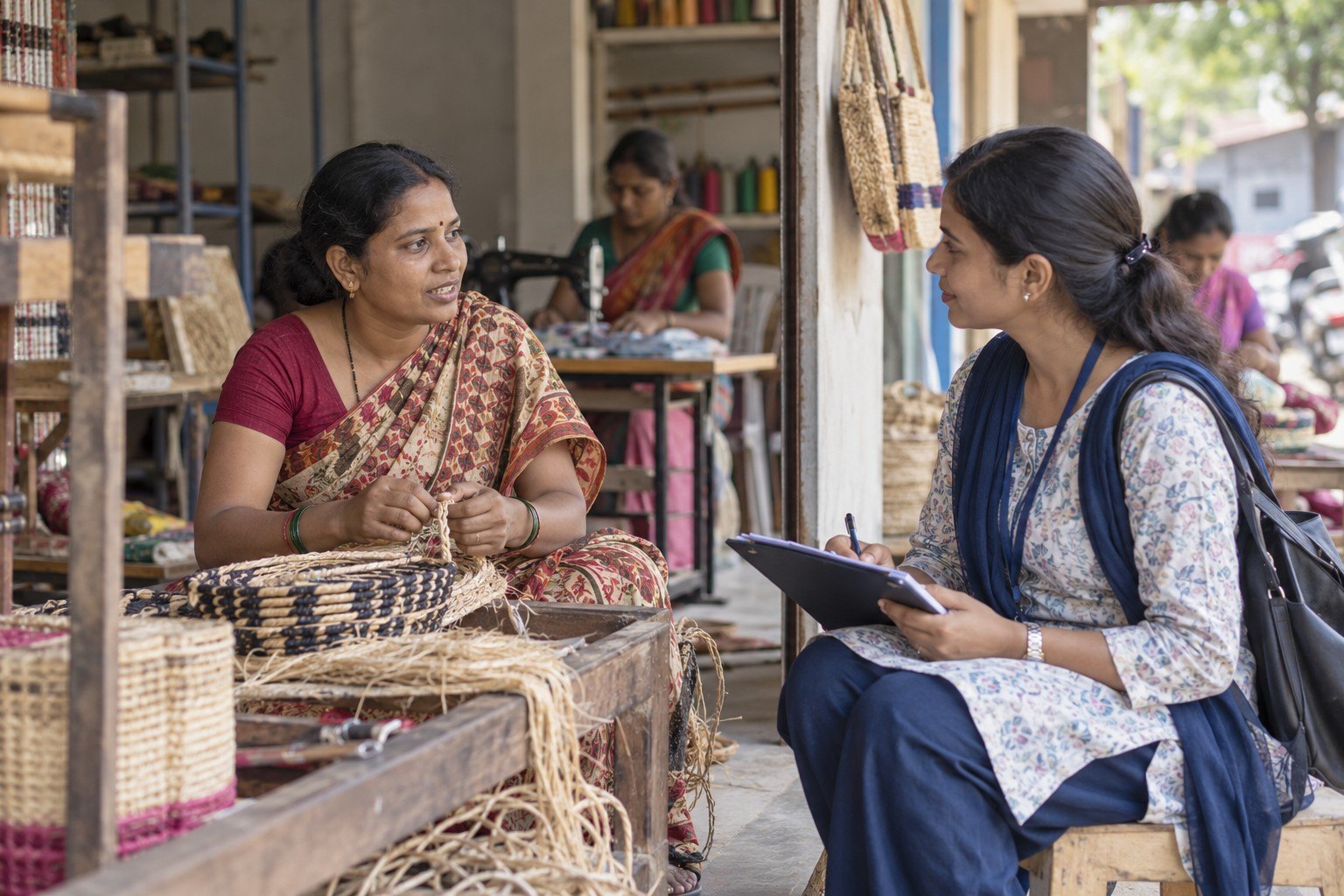
The Periodic Labour Force Survey (PLFS) of MoSPI measures work through the Labour Force Participation Rate, Worker Population Ratio and unemployment rate, using a 365-day usual status and a seven-day Current Weekly Status. A PIB backgrounder of 15 October 2026 cites female LFPR rising from 23.3% (2017-18) to 40.0% (2025), though MoSPI says 2025 estimates may not be strictly comparable.
Syllabus: GS3 · Indian Economy & Growth; GS3 · Inclusive Growth; GS1 · Women, Population & Urbanisation
Why this matters for UPSC
GS3 (Indian economy and employment) and GS1 (role of women): Prelims can ask how the PLFS defines LFPR, WPR, unemployment rate and usual status; Mains, why women's participation and quality of work lag.
In short
Women's work in India is measured by the Periodic Labour Force Survey (PLFS) of the National Statistics Office, whose ratios now frame policy on women's livelihoods.
Higher female participation counts as progress only when measured consistently and matched by safer, better-paid, formal work for women.
Why it matters
A woman who works on the family farm for a few months, or sells goods from home, may or may not be counted as a worker, depending on how a survey asks the question. The way India counts women's work therefore shapes what the country believes about them, and where money goes. If more women are counted but most remain in low-paid self-employment or unpaid family work, the gain in numbers does not become income or security. Child care keeps many women at home, so crèches, safe night shifts and credit for small businesses decide whether a woman can take up and keep a job. Reading the numbers correctly is the first step to judging any policy for women.
Prelims pointers
- Usual principal status is the activity on which a person spent relatively long time in the 365 days before the survey.
- From 2025 the PLFS gives monthly all-India estimates in Current Weekly Status, quarterly rural and urban estimates, and annual estimates in both statuses.
- MUDRA loan categories: Shishu up to ₹50,000; Kishor above ₹50,000 to ₹5 lakh; Tarun above ₹5 lakh to ₹10 lakh; TarunPlus above ₹10 lakh to ₹20 lakh.
- Under PMEGP, women receive a margin-money subsidy of 25% in urban areas and 35% in rural areas.
- Under the labour codes, adoptive and commissioning mothers get 12 weeks of maternity leave, and women get a ₹3,500 medical bonus where free pre- and post-natal care is absent.
- Section 42 of the Code on Wages, 2019: one-third of members of Central and State Advisory Boards must be women.
- Section 4(4) of the Industrial Relations Code, 2020: women's share on a Grievance Redressal Committee must not fall below their share of the workforce.
Practise a UPSC-style question
With reference to the Periodic Labour Force Survey (PLFS), consider the following statements:
1. Labour Force Participation Rate is the percentage of persons working, or seeking or available for work, in the population.
2. Unemployment Rate is the percentage of unemployed persons in the total population aged 15 years and above.
3. Worker Population Ratio is the percentage of employed persons in the population.
Which of the statements given above is/are correct?
- (a) 1 and 2 only
- (b) 2 and 3 only
- (c) 1 and 3 only
- (d) 1, 2 and 3
Show the answer
Answer: (c) 1 and 3 only
Answer: (c) 1 and 3 only. The unemployment rate is measured against the labour force, not the population.
Statement 1: correct. MoSPI defines LFPR as the share of persons in the labour force, those working or seeking or available for work, in the population.
Statement 2: incorrect. MoSPI defines the unemployment rate as the percentage of unemployed persons among persons in the labour force.
Statement 3: correct. The Worker Population Ratio is the percentage of employed persons in the population, so jobseekers are left out.
Eliminate: Judge statement 2 first: its base is the labour force, so statement 2 is incorrect. Out: (a), (b), (d).
Trap: Wrong base. Statement 2 keeps the right numerator but divides by the population, the base used for LFPR and WPR.
Remember: LFPR and WPR divide by population; the unemployment rate divides by the labour force.
More Explainers
- State Legislative Councils: Articles 168-172 and the graduates' and teachers' seats Polity
- Whales and dolphins in Indian waters: legal protection, IUCN status and strandings Environment
- The Aligarh Movement, AMU and the Article 30 minority test Polity
- Environmental clearance by States: SEIAA, SEAC and the EIA Notification, 2006 Environment
- Software vulnerabilities: CVE, CVSS, coordinated disclosure and CERT-In's role Sci-Tech
- Drug trafficking law in India: NDPS Act, PIT-NDPS, NCB and NCORD National
- Choosing the UN Secretary-General: Article 97, UNSC veto and straw polls World & IR
- UN Convention against Torture, and why India has not ratified it Polity
- NavIC: why India's navigation constellation cannot give a standalone position Sci-Tech
- International Energy Agency: membership, 90-day oil stocks and India's status World & IR
- PM Surya Ghar: Muft Bijli Yojana and the rooftop solar subsidy Economy
- HFSS foods: FSSAI's draft limits and front-of-pack warning labels National