
Overseas Citizen of India cardholders: who qualifies, what rights, what limits
Why in news: In October 2026 the FRRO told actor Imran Khan, a US citizen and OCI cardholder, to leave India by 28 October after a Mumbai protest.
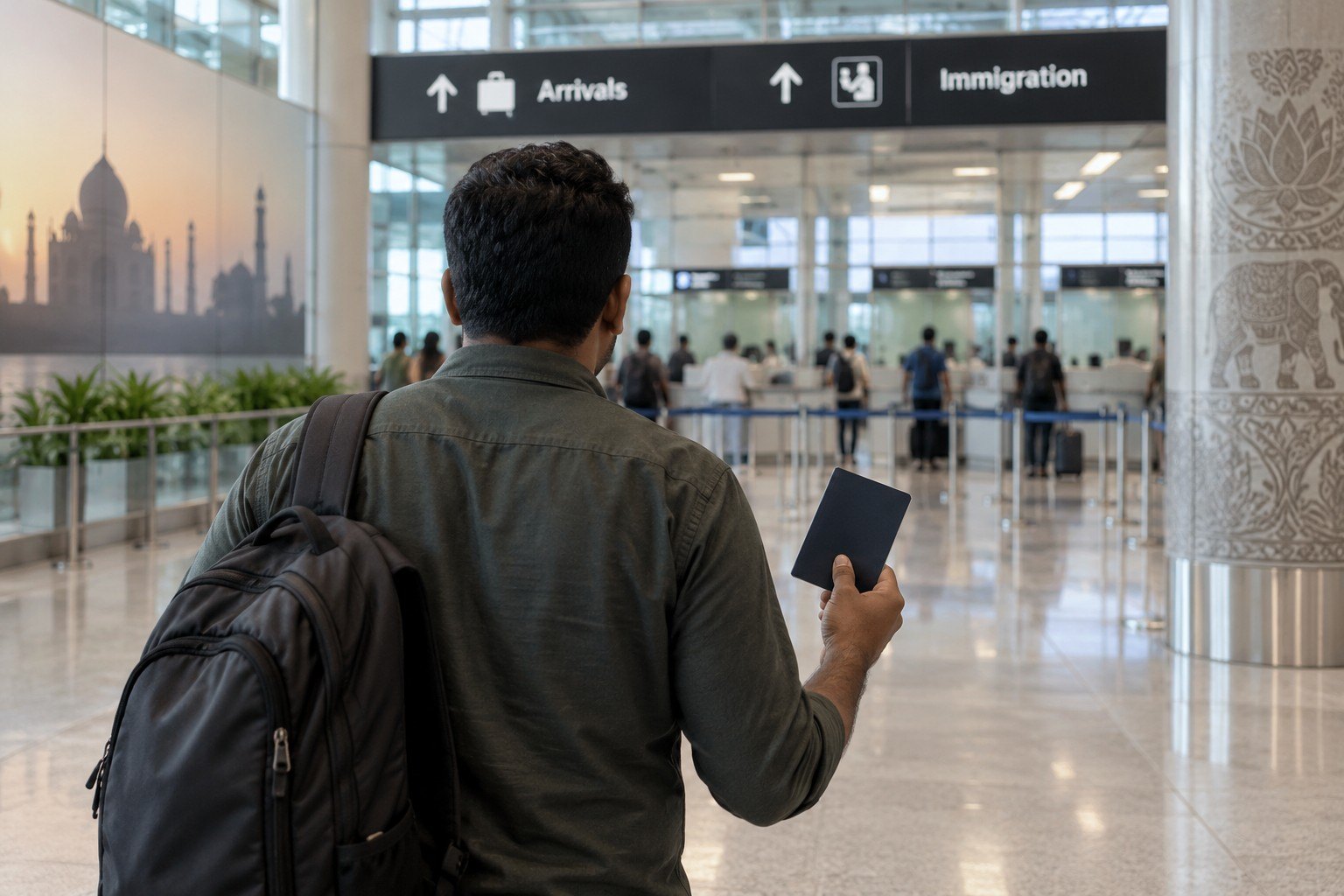
An Overseas Citizen of India (OCI) cardholder is a foreign national registered under Section 7A of the Citizenship Act, 1955, mostly people of Indian origin and foreign spouses of Indians. The card gives a lifelong multiple-entry visa but no vote or public office. A Leave India Notice to a US-citizen actor has put its limits in the news.
Syllabus: GS2 · Constitution; Prelims · Polity & Governance; GS2 · Foreign Policies & the Diaspora
Why this matters for UPSC
GS2 polity asks about citizenship under Part II and the Citizenship Act, 1955. Prelims can ask who qualifies under Section 7A and what Section 7B bars; GS2 Mains, how far the executive may curb a foreign national's stay.
In short
An Overseas Citizen of India cardholder is a foreign national given a lifelong visa and partial parity with Indians under Sections 7A to 7D of the Citizenship Act, 1955.
The OCI card is a privilege, not citizenship; revoking it should rest on notified rules, reasons and a fair hearing.
Why it matters
Families settled abroad depend on the card to come home freely. A software engineer in California with an Indian grandparent can fly in for a funeral, buy a flat in Pune or practise as a doctor here without a fresh visa each time. But the card can be withdrawn or the holder sent away by an executive order, and the holder cannot vote against the government that issues it. So the larger question is how much security a diaspora member gets from a status that the state grants and can take back. The answer shapes whether people of Indian origin keep living, investing and working in India.
Prelims pointers
- Article 9 of the Constitution: a person who voluntarily acquires a foreign State's citizenship is not an Indian citizen under Article 5.
- Article 11: nothing in Articles 5 to 10 limits Parliament's power to legislate on acquiring and terminating citizenship and all related matters.
- Section 9 of the Citizenship Act, 1955: an Indian citizen who voluntarily acquires another country's citizenship ceases to be a citizen.
- Territories that joined India after 15 August 1947, per MHA: Dadra and Nagar Haveli, Goa, Daman and Diu, Puducherry and Sikkim.
- Section 7B(3): every notification conferring rights on OCI cardholders must be laid before each House of Parliament.
- Section 7C(2): when an OCI cardholder renounces the card, a spouse registered through the marriage and every minor child registered as OCI also lose it.
- Section 7D also allows cancellation for fraud in registration, helping an enemy in war, or a jail sentence of two years or more within five years of registration.
Practise a UPSC-style question
With reference to registration as an Overseas Citizen of India (OCI) cardholder under the Citizenship Act, 1955, consider the following statements:
1. For a foreign-origin spouse of an Indian citizen to qualify, the registered marriage must have subsisted for at least two continuous years before the application.
2. The Act's ancestry bar on registration names Pakistan and Sri Lanka, with other countries to be notified by the Centre.
3. A person may claim eligibility through descent from someone who belonged to a territory that became part of India after 15 August 1947.
Which of the statements given above is/are correct?
- (a) 1 and 2 only
- (b) 2 and 3 only
- (c) 1 and 3 only
- (d) 1, 2 and 3
Show the answer
Answer: (c) 1 and 3 only
Answer: (c) 1 and 3 only. Spouses and descendants of Indians from later-joined territories qualify; the ancestry bar names Bangladesh, not Sri Lanka.
Statement 1: correct. Section 7A(1)(d) requires a registered marriage that has subsisted for at least two continuous years before the application, plus a prior security clearance.
Statement 2: incorrect. The proviso to Section 7A(1) bars anyone whose parent, grandparent or great-grandparent was a citizen of Pakistan or Bangladesh, or of a country the Centre notifies.
Statement 3: correct. Section 7A(1)(a)(iii) and (iv) cover people of territories such as Goa, Puducherry or Sikkim and their children, grandchildren and great-grandchildren.
Eliminate: Statement 2 is wrong, so every option containing it goes. Out: (a), (b), (d).
Trap: Look-alike names. Sri Lanka sits beside Pakistan as a neighbour, so it looks natural in the bar; the Act names Bangladesh.
Remember: OCI ancestry bar: Pakistan and Bangladesh; spouses need two years of registered marriage.
More Explainers
- State Legislative Councils: Articles 168-172 and the graduates' and teachers' seats Polity
- Whales and dolphins in Indian waters: legal protection, IUCN status and strandings Environment
- The Aligarh Movement, AMU and the Article 30 minority test Polity
- Environmental clearance by States: SEIAA, SEAC and the EIA Notification, 2006 Environment
- Software vulnerabilities: CVE, CVSS, coordinated disclosure and CERT-In's role Sci-Tech
- Drug trafficking law in India: NDPS Act, PIT-NDPS, NCB and NCORD National
- Choosing the UN Secretary-General: Article 97, UNSC veto and straw polls World & IR
- UN Convention against Torture, and why India has not ratified it Polity
- NavIC: why India's navigation constellation cannot give a standalone position Sci-Tech
- International Energy Agency: membership, 90-day oil stocks and India's status World & IR
- PM Surya Ghar: Muft Bijli Yojana and the rooftop solar subsidy Economy
- HFSS foods: FSSAI's draft limits and front-of-pack warning labels National