
India's trade deficit with China and its trade-defence toolkit
Why in news: On 14 October 2026, China's General Administration of Customs put India's January-September 2026 deficit with China at USD 105.93 billion.
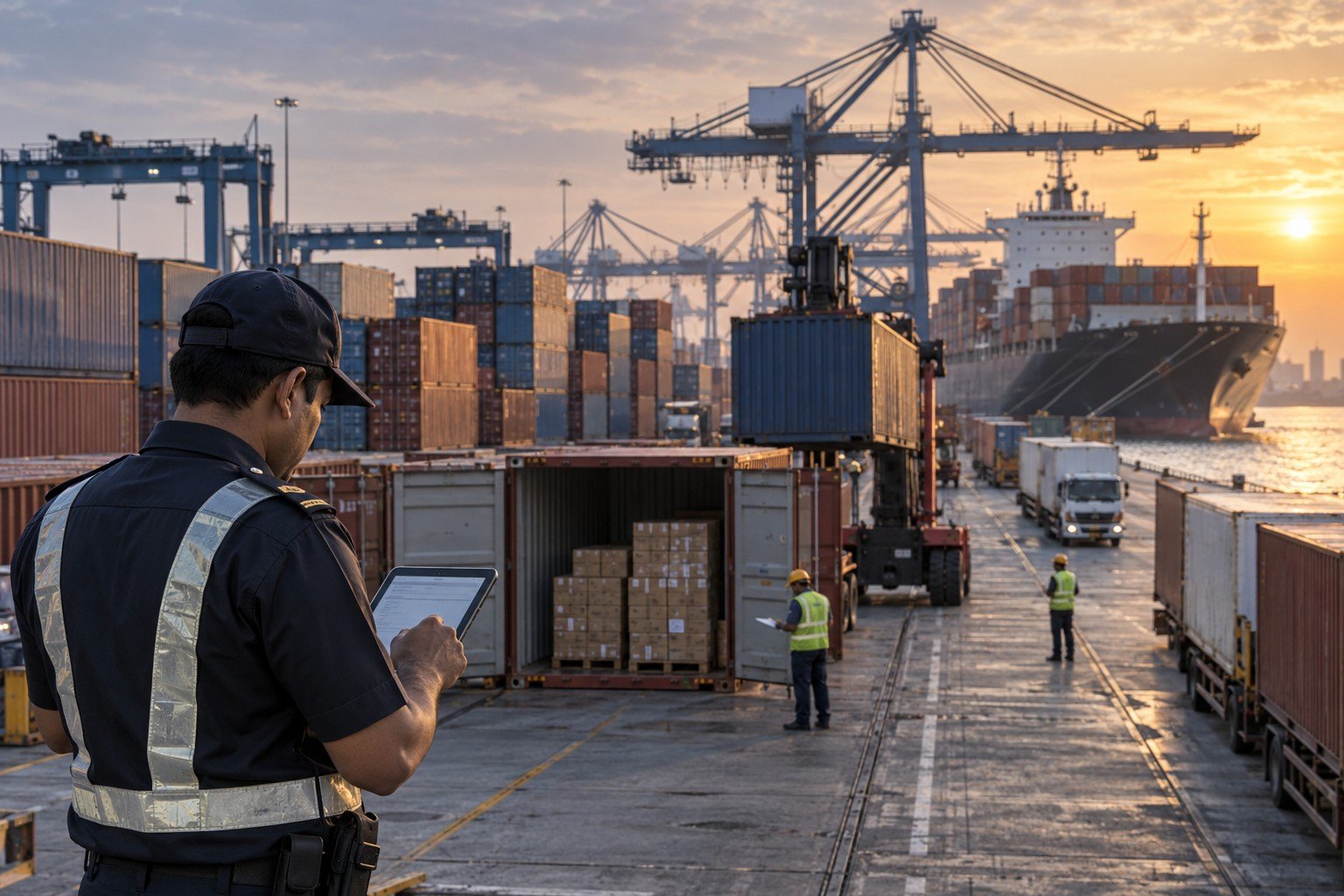
India imports more from China than it sells there, chiefly electronics, machinery and organic chemicals; the gap was USD 112.15 billion in 2025-26, per Commerce Ministry data. India's tools include DGTR trade remedies, Quality Control Orders, Press Note 3 screening and PLI. On 14 October 2026, China's customs data put the January-September 2026 deficit at USD 105.93 billion.
Syllabus: GS3 · Indian Economy & Growth; Prelims · Current Affairs & IR; GS3 · Liberalisation & Industry
Why this matters for UPSC
GS3 (external sector, trade policy) and GS2 (India-China relations). Prelims asks who probes and who imposes anti-dumping, countervailing and safeguard duties, what Press Note 3 covers and who is in RCEP; Mains, how India can narrow the China deficit.
In short
India's trade deficit with China is the excess of imports from China over exports to it, India's largest with any country, per India's Beijing Embassy.
India need not balance trade with China but must cut dependence; remedies and standards only buy time for domestic capacity.
Why it matters
Take a small electronics assembler that buys circuit boards and display panels from China: cheap Chinese inputs keep its phones affordable, but a Chinese export curb or a sudden price jump can stop its line. A chemical maker faces the opposite risk: goods sold below their home price can shut its plant before it grows, which is when an anti-dumping duty helps, though the duty raises costs for the firms that buy that chemical. For the country, the question is how to build capacity in components, drug ingredients and machinery without cutting off the inputs exporters depend on, and how to win access to the Chinese market for Indian goods in return.
Prelims pointers
- Directorate General of Trade Remedies: attached office of the Department of Commerce, Ministry of Commerce and Industry; formed in 2018 by merging DGAD and the Directorate General of Safeguards.
- Trade-remedy chain: the DGTR investigates under the Customs Tariff Act, 1975 and recommends; the Ministry of Finance decides whether to impose the duty.
- WTO Anti-Dumping Agreement (GATT Article VI): a duty needs dumping, injury and a causal link between them; it normally lapses after five years unless a review extends it.
- Safeguard duty, Section 8B, Customs Tariff Act, 1975: answers an import surge causing serious injury; generally applied to all sources (MFN basis); WTO limit four years unless extended.
- Countervailing duty: offsets a subsidy on imported goods; the WTO rules are in the Agreement on Subsidies and Countervailing Measures, which China invokes against India's PLI schemes (DS642, DS644).
- Press Note 3 (2020 Series), DPIIT: land-border-country investment, including via beneficial owners there, needs government approval; Cabinet (March 2026) approved automatic route where such ownership is non-controlling, up to 10%.
- Bureau of Indian Standards: national standards body under BIS Act, 2016, in the Ministry of Consumer Affairs, Food and Public Distribution; certification is voluntary unless a QCO mandates it.
- RCEP: free trade agreement of ten ASEAN member states with Australia, China, Japan, New Zealand and the Republic of Korea; India is not a party.
Practise a UPSC-style question
With reference to the Directorate General of Trade Remedies (DGTR), consider the following statements:
1. It is an attached office of the Department of Revenue in the Ministry of Finance.
2. It was formed in 2018 by merging the Directorate General of Anti-Dumping and Allied Duties and the Directorate General of Safeguards.
Which of the statements given above is/are correct?
- (a) 1 only
- (b) 2 only
- (c) Both 1 and 2
- (d) Neither 1 nor 2
Show the answer
Answer: (b) 2 only
Answer: (b) 2 only. The DGTR belongs to the Commerce Ministry, not the Finance Ministry; the 2018 merger is right.
Statement 1: incorrect. The DGTR is an attached office of the Department of Commerce, Ministry of Commerce and Industry; the Finance Ministry only acts on its recommendations.
Statement 2: correct. It was set up in 2018 by consolidating the Directorate General of Anti-Dumping and Allied Duties and the Directorate General of Safeguards.
Eliminate: Judge statement 1 first: the DGTR sits in the Department of Commerce, so statement 1 is incorrect. Out: (a), (c).
Eliminate: Statement 2 is correct, since the 2018 merger created the DGTR. Out: (d).
Trap: Swapped attribution. The Finance Ministry imposes the duties, so placing the DGTR itself under Finance feels natural.
Remember: DGTR (2018): a Commerce Ministry office that recommends; the Finance Ministry decides on duties.
In the news
More Explainers
- State Legislative Councils: Articles 168-172 and the graduates' and teachers' seats Polity
- Whales and dolphins in Indian waters: legal protection, IUCN status and strandings Environment
- The Aligarh Movement, AMU and the Article 30 minority test Polity
- Environmental clearance by States: SEIAA, SEAC and the EIA Notification, 2006 Environment
- Software vulnerabilities: CVE, CVSS, coordinated disclosure and CERT-In's role Sci-Tech
- Drug trafficking law in India: NDPS Act, PIT-NDPS, NCB and NCORD National
- Choosing the UN Secretary-General: Article 97, UNSC veto and straw polls World & IR
- UN Convention against Torture, and why India has not ratified it Polity
- NavIC: why India's navigation constellation cannot give a standalone position Sci-Tech
- International Energy Agency: membership, 90-day oil stocks and India's status World & IR
- PM Surya Ghar: Muft Bijli Yojana and the rooftop solar subsidy Economy
- HFSS foods: FSSAI's draft limits and front-of-pack warning labels National