
UN Human Rights Council: membership, elections and the UPR
Why in news: On 13 October 2026 the UN General Assembly elected 15 Council members, all on uncontested slates, for terms from 1 January 2027.
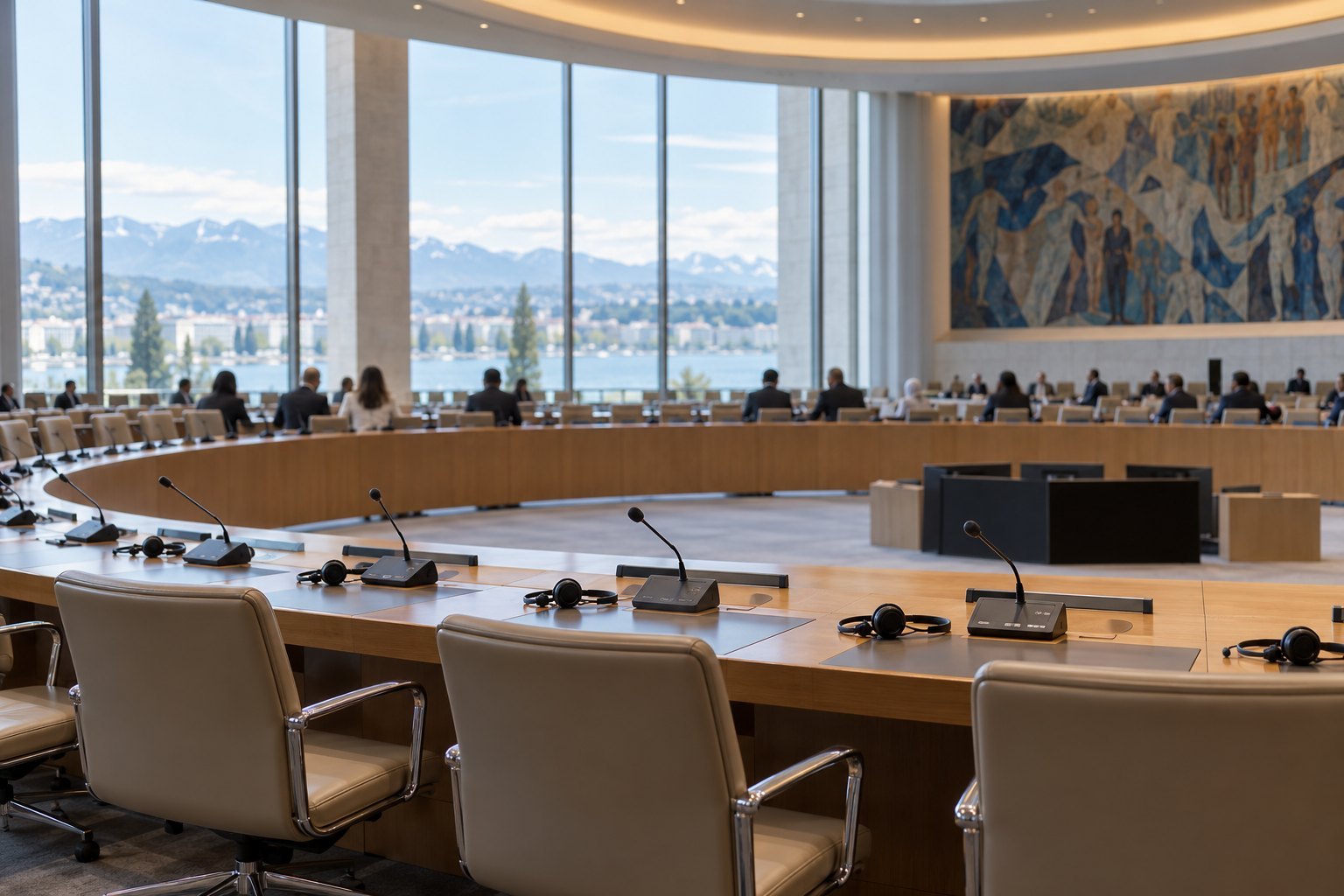
The UN Human Rights Council, created by General Assembly resolution 60/251 in 2006, is a 47-member Geneva-based body that promotes and protects human rights and reviews every UN Member State through the Universal Periodic Review. On 13 October 2026, the General Assembly elected 15 members, all unopposed, for 2027-2029.
Syllabus: Prelims · Current Affairs & IR; GS2 · Groupings & Agreements; GS2 · International Institutions
Why this matters for UPSC
GS2 covers important international institutions, their structure and mandate. Prelims can ask about resolution 60/251, the regional seat split, the 97-vote election and the Universal Periodic Review; Mains, about the Council's credibility and India's role.
In short
The UN Human Rights Council is the UN's main intergovernmental human rights body, created by General Assembly resolution 60/251 (2006) to replace the discredited Commission on Human Rights.
The Council's universal review gives it reach no other body has; contested elections and non-selective scrutiny would restore the credibility its predecessor lost.
Why it matters
The Council is where the world's governments look at each other's treatment of their own people. Its Special Procedures and inquiry missions can put torture, unlawful killings or attacks on civilians on the record, and that record shapes sanctions, aid and prosecutions later. For people living under abusive governments, a Council resolution can be the first official recognition of what they suffered. When every seat is uncontested, however, governments with poor records can join without a contest, and the body that judges others loses authority. For India, a member until 2028, the Council is also where its own record is reviewed and where its votes on other countries are watched.
Prelims pointers
- Resolution 60/251 (15 March 2006): created the Council in Geneva as a General Assembly subsidiary organ and asked ECOSOC to abolish the Commission on Human Rights.
- Seats by regional group: African 13, Asia-Pacific 13, Eastern European 6, Latin American and Caribbean 8, Western European and other States 7.
- Election: direct, individual, secret ballot needing an absolute majority (97 of 193); three-year terms, no immediate re-election after two consecutive terms.
- Suspension: two-thirds of General Assembly members present and voting, for gross and systematic violations; Libya (2011) and Russia (2022) were suspended.
- Universal Periodic Review: provided in paragraph 5(e) of resolution 60/251; first review 2008; fourth cycle from November 2022.
- Special sessions: called at a member's request with support of one-third of members; at least three regular sessions, ten weeks, a year.
- Bureau: a president and four vice-presidents, one from each regional group.
Practise a UPSC-style question
With reference to the UN Human Rights Council, consider the following statements:
1. It was set up by General Assembly resolution 60/251 in 2006 to replace the Commission on Human Rights.
2. It is a subsidiary organ of the UN Economic and Social Council.
3. It is based in Geneva and meets at the United Nations Office there.
Which of the statements given above is/are correct?
- (a) 1 and 2 only
- (b) 2 and 3 only
- (c) 1 and 3 only
- (d) 1, 2 and 3
Show the answer
Answer: (c) 1 and 3 only
Answer: (c) 1 and 3 only. The Council reports to the General Assembly, not to ECOSOC.
Statement 1: correct. Resolution 60/251 of 15 March 2006 created the Council in place of the Commission on Human Rights.
Statement 2: incorrect. Resolution 60/251 made the Council a subsidiary organ of the General Assembly; the old Commission sat under ECOSOC.
Statement 3: correct. The resolution bases the Council in Geneva, and it meets at the United Nations Office at Geneva.
Eliminate: statement 2 is wrong, as the Council is the General Assembly's subsidiary organ. Out: (a), (b), (d).
Trap: Swapped attribution. Statement 2 pins the Council on ECOSOC, the parent of the Commission it replaced.
Remember: Human Rights Council: resolution 60/251 (2006), Geneva, subsidiary organ of the General Assembly.
More Explainers
- State Legislative Councils: Articles 168-172 and the graduates' and teachers' seats Polity
- Whales and dolphins in Indian waters: legal protection, IUCN status and strandings Environment
- The Aligarh Movement, AMU and the Article 30 minority test Polity
- Environmental clearance by States: SEIAA, SEAC and the EIA Notification, 2006 Environment
- Software vulnerabilities: CVE, CVSS, coordinated disclosure and CERT-In's role Sci-Tech
- Drug trafficking law in India: NDPS Act, PIT-NDPS, NCB and NCORD National
- Choosing the UN Secretary-General: Article 97, UNSC veto and straw polls World & IR
- UN Convention against Torture, and why India has not ratified it Polity
- NavIC: why India's navigation constellation cannot give a standalone position Sci-Tech
- International Energy Agency: membership, 90-day oil stocks and India's status World & IR
- PM Surya Ghar: Muft Bijli Yojana and the rooftop solar subsidy Economy
- HFSS foods: FSSAI's draft limits and front-of-pack warning labels National