
Delimitation of constituencies: Articles 82, 170 and the 2026 freeze
Why in news: On 16 October 2026 the Congress President asked the Prime Minister for an all-party meeting before any new delimitation proposal is finalised.
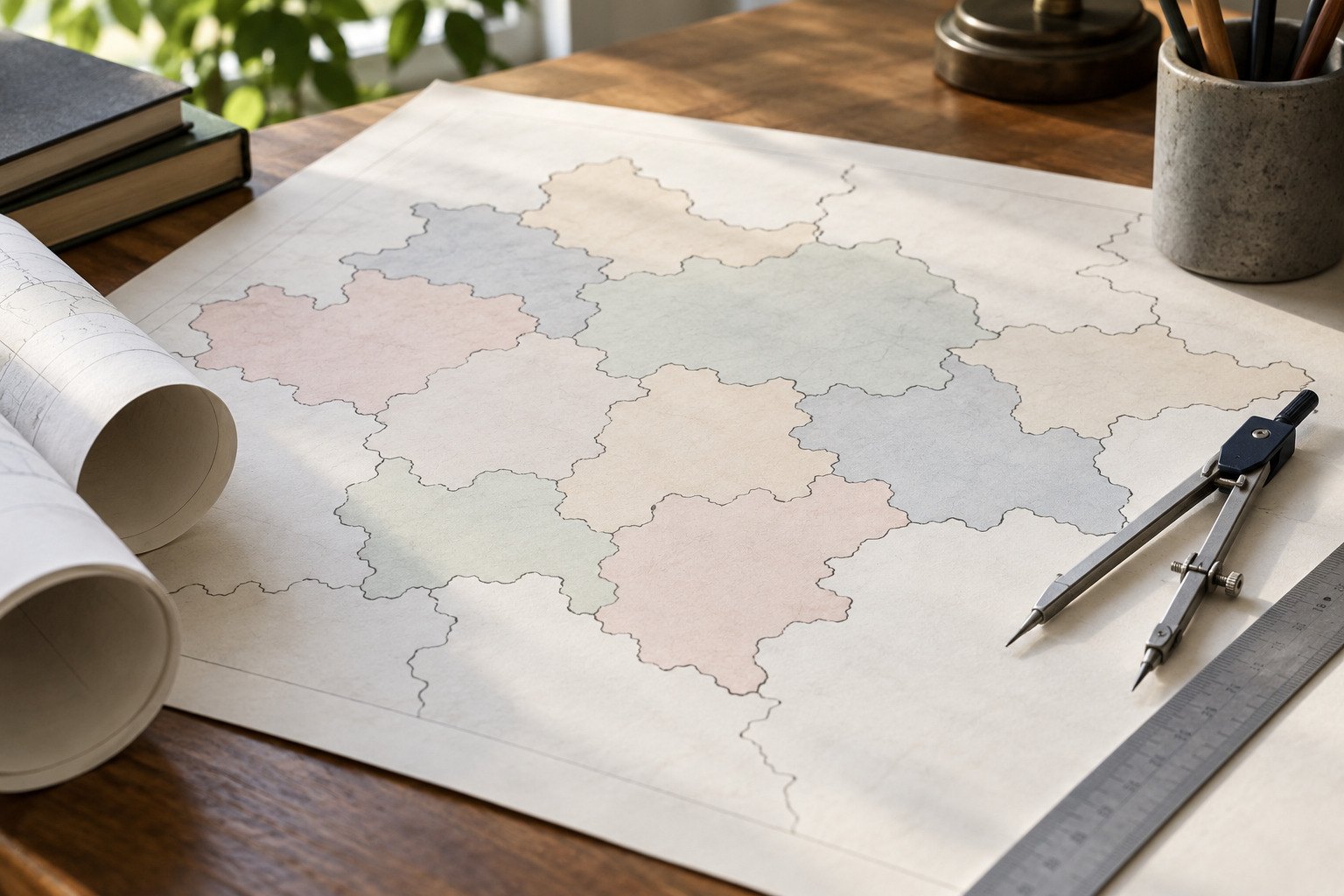
Delimitation redraws Lok Sabha and Assembly constituencies and reallocates seats after a Census, under Articles 82 and 170 of the Constitution. Each State's share of seats stays frozen on the 1971 Census until the first Census after 2026. An amendment Bill to end the freeze failed in April, the Congress President says; he now seeks all-party talks.
Syllabus: GS2 · Constitution; GS2 · Federalism & Local Government; GS2 · Parliament & State Legislatures
Why this matters for UPSC
GS2 polity, Parliament and State Legislatures and federalism: Prelims asks how many Delimitation Commissions have sat and which Articles govern readjustment; Mains asks whether population-based seat allocation strains federal balance.
In short
Delimitation redraws territorial constituencies and reallocates seats on Census population, as Articles 82 and 170 require, through a Delimitation Commission set up under a Parliamentary Act.
Delimitation must keep votes equal without eroding States' trust; ending the 2026 freeze needs broad consensus, fresh Census figures and an independent Commission.
Why it matters
A voter in a fast-growing district may share an MP with far more people than a voter elsewhere, because boundaries and seat shares follow old Census counts. Redrawing restores closer equality between votes, but it also changes how many MPs each State sends to Parliament, and therefore how much say a State has in national laws and governments. Allocation strictly by population could shrink the share of States that slowed their population growth, while the freeze leaves faster-growing States with more people per MP. The same exercise decides when one-third of seats will be reserved for women, so delay holds back that reform too. Getting it wrong could strain trust between the Union and the States.
Prelims pointers
- Article 81 caps the Lok Sabha at 530 members from States and 20 from Union territories.
- Article 170 sets a State Assembly's strength at not more than 500 and not less than 60 members.
- Articles 330 and 332 reserve seats for Scheduled Castes and Scheduled Tribes in proportion to their population, now counted on the 2001 Census.
- Article 330A reserves one-third of the SC and ST seats in the Lok Sabha for women of those groups.
- The First Schedule to the Representation of the People Act, 1950 allots Parliamentary Constituencies to States; its Second Schedule gives Assembly seats.
- Each Parliamentary Constituency is made up of whole Assembly Constituencies; no Assembly Constituency extends into two.
- In Meghraj Kothari v. Delimitation Commission (1966), a Constitution Bench treated published delimitation orders as law not open to challenge.
- The Election Commission redrew Assam's constituencies in 2023 under Section 8A of the Representation of the People Act, 1950, keeping 126 Assembly and 14 Lok Sabha seats.
Practise a UPSC-style question
Consider the following statements about Delimitation Commissions in India:
1. Four Delimitation Commissions were constituted up to 2019, the last of them under the Delimitation Act, 2002.
2. The Delimitation Commission of 1963 was constituted under the Delimitation Commission Act, 1962.
3. The Delimitation Commission of 2002 was chaired by a serving Chief Justice of India.
4. The State Election Commissioner of the State concerned was an ex officio member of the 2002 Commission.
How many of the above statements are correct?
- (a) Only one
- (b) Only two
- (c) Only three
- (d) All four
Show the answer
Answer: (c) Only three
Answer: (c) Only three. Statements 1, 2 and 4 are correct; the 2002 chair was a retired judge.
Statement 1: correct. The Election Commission's Atlas 2024 lists four Commissions up to 2019: 1952, 1963, 1973 and 2002, the last under the Delimitation Act, 2002.
Statement 2: correct. The 1963 Commission was set up under the Delimitation Commission Act, 1962; the 1973 one under the Delimitation Act, 1972.
Statement 3: incorrect. The 2002 Commission was chaired by a retired Judge of the Supreme Court, not a serving Chief Justice of India (PIB, 2003).
Statement 4: correct. The State Election Commissioners of the States concerned sat as ex officio members, beside an Election Commissioner nominated by the CEC.
Eliminate: Statement 3 is the surest error, since the chair was a retired judge. Out: (d).
Eliminate: Statements 1, 2 and 4 all match the ECI and PIB record, so three are correct. Out: (a), (b).
Trap: Near-miss figure. The Commission years (1963, 1973) and their Act years (1962, 1972) differ by one, and a student who expects them to match may mark statement 2 wrong.
Remember: Commissions 1952, 1963, 1973, 2002; Acts 1952, 1962, 1972, 2002.
More Explainers
- State Legislative Councils: Articles 168-172 and the graduates' and teachers' seats Polity
- Whales and dolphins in Indian waters: legal protection, IUCN status and strandings Environment
- The Aligarh Movement, AMU and the Article 30 minority test Polity
- Environmental clearance by States: SEIAA, SEAC and the EIA Notification, 2006 Environment
- Software vulnerabilities: CVE, CVSS, coordinated disclosure and CERT-In's role Sci-Tech
- Drug trafficking law in India: NDPS Act, PIT-NDPS, NCB and NCORD National
- Choosing the UN Secretary-General: Article 97, UNSC veto and straw polls World & IR
- UN Convention against Torture, and why India has not ratified it Polity
- NavIC: why India's navigation constellation cannot give a standalone position Sci-Tech
- International Energy Agency: membership, 90-day oil stocks and India's status World & IR
- PM Surya Ghar: Muft Bijli Yojana and the rooftop solar subsidy Economy
- HFSS foods: FSSAI's draft limits and front-of-pack warning labels National