
National Viral Hepatitis Control Programme and the 2030 elimination goal
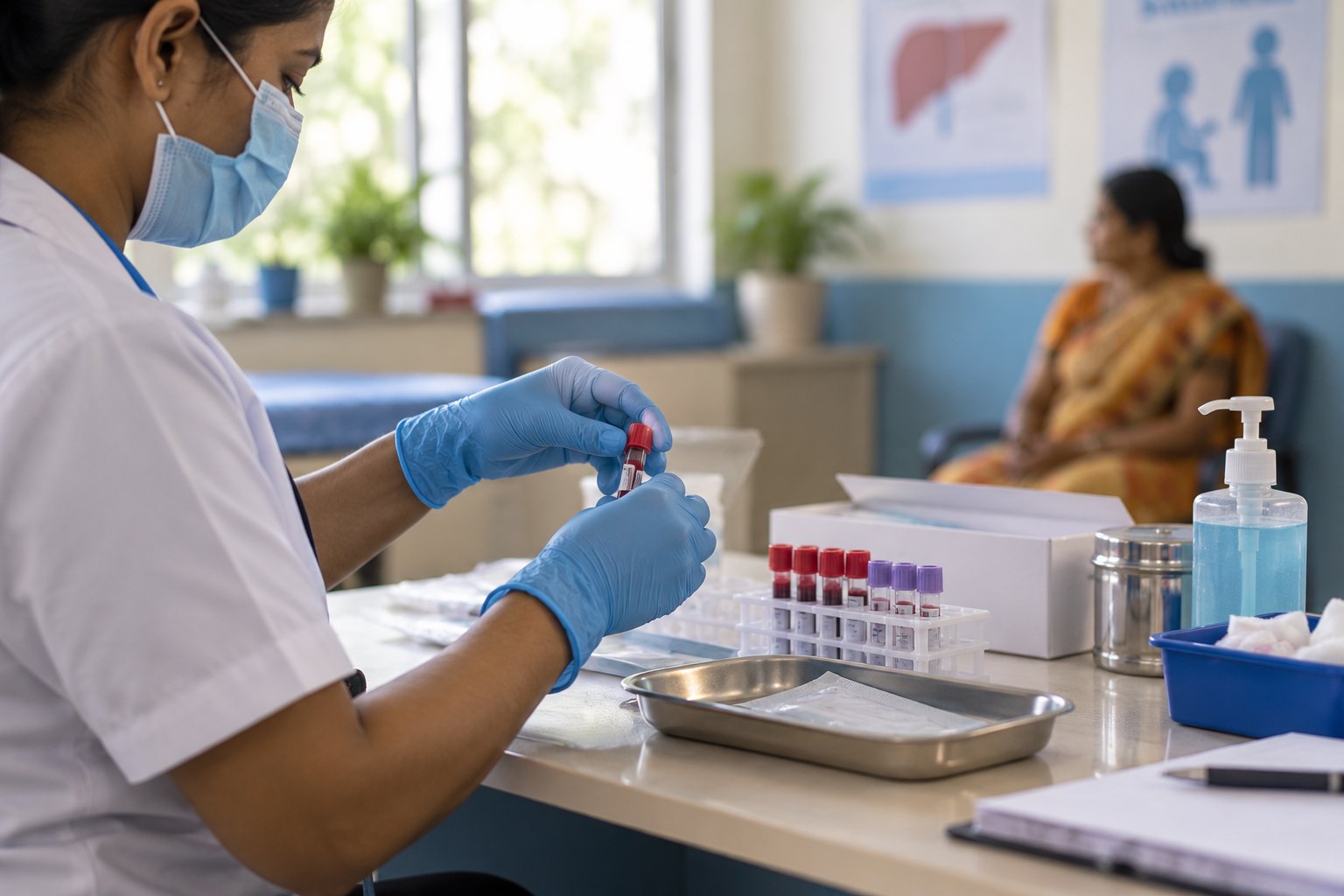
The National Viral Hepatitis Control Programme, launched on 28 July 2018 under the National Health Mission, offers free screening, diagnosis and drugs for hepatitis B and C. It aims at countrywide elimination of hepatitis C by 2030, in line with SDG 3.3. India has reaffirmed its goal of ending hepatitis B and C as public health threats by 2030.
Syllabus: Prelims · Economy & Social Development; Prelims · Science & Technology; GS2 · Government Policies
Why this matters for UPSC
GS2 Mains (health, government interventions) can ask how the National Viral Hepatitis Control Programme pursues the 2030 goal under SDG 3.3; Prelims can ask how hepatitis viruses spread and which ones a vaccine prevents.
In short
The National Viral Hepatitis Control Programme (NVHCP), launched in 2018 under the National Health Mission, seeks to eliminate hepatitis C and sharply reduce hepatitis B by 2030.
India's 2030 goal now hinges on finding silent carriers: population screening, full birth-dose coverage and stigma-free care matter more than new drugs.
Why it matters
A newborn whose mother carries hepatitis B is the person this programme most protects: infection in infancy turns chronic in about 95% of cases, against under 5% in adults, per WHO. A birth dose within 24 hours, with immunoglobulin where needed, can stop that lifelong infection at the start. For an adult with hepatitis C, free direct-acting antivirals turn a slow path to cirrhosis and liver cancer into a cure within weeks. Because both viruses stay silent for years, most carriers do not know they are infected. Whether India meets its 2030 goal therefore depends less on medicines than on finding people early, reaching them in villages and removing the stigma that keeps them from testing.
Prelims pointers
- Hepatitis A and E spread by the faecal-oral route through contaminated food and water; they are usually acute and self-limiting.
- Hepatitis B spreads through blood and body fluids, most commonly from mother to child at birth; a vaccine prevents it.
- Hepatitis C is bloodborne, spread mainly by unsafe injections, procedures and shared needles; it has no vaccine but is curable.
- Hepatitis D infects only people already carrying hepatitis B virus, so the hepatitis B vaccine also protects against it.
- A positive anti-HCV antibody test shows past infection; a nucleic acid test for HCV RNA confirms chronic infection needing treatment.
- Sustainable Development Goal target 3.3 calls for combating hepatitis, water-borne and other communicable diseases by 2030.
- WHO's global strategy seeks a 90% cut in new hepatitis infections and a 65% cut in deaths by 2030, compared to 2015.
- World Hepatitis Day is observed every year on 28 July; WHO runs the campaign.
Practise a UPSC-style question
With reference to hepatitis B and hepatitis C, consider the following statements:
1. A vaccine is available against hepatitis B, but no vaccine exists against hepatitis C.
2. Direct-acting antivirals cure most chronic hepatitis B patients in weeks, while hepatitis C needs lifelong treatment.
Which of the statements given above is/are correct?
- (a) 1 only
- (b) 2 only
- (c) Both 1 and 2
- (d) Neither 1 nor 2
Show the answer
Answer: (a) 1 only
1 is correct: hepatitis B is vaccine-preventable, while WHO notes there is no effective vaccine against hepatitis C. 2 is incorrect: it is the reverse; direct-acting antivirals cure hepatitis C in weeks, while most people on chronic hepatitis B treatment continue it for life.
More Explainers
- State Legislative Councils: Articles 168-172 and the graduates' and teachers' seats Polity
- Whales and dolphins in Indian waters: legal protection, IUCN status and strandings Environment
- The Aligarh Movement, AMU and the Article 30 minority test Polity
- Environmental clearance by States: SEIAA, SEAC and the EIA Notification, 2006 Environment
- Software vulnerabilities: CVE, CVSS, coordinated disclosure and CERT-In's role Sci-Tech
- Drug trafficking law in India: NDPS Act, PIT-NDPS, NCB and NCORD National
- Choosing the UN Secretary-General: Article 97, UNSC veto and straw polls World & IR
- UN Convention against Torture, and why India has not ratified it Polity
- NavIC: why India's navigation constellation cannot give a standalone position Sci-Tech
- International Energy Agency: membership, 90-day oil stocks and India's status World & IR
- PM Surya Ghar: Muft Bijli Yojana and the rooftop solar subsidy Economy
- HFSS foods: FSSAI's draft limits and front-of-pack warning labels National