
Juvenile Justice Act, 2015: Boards, committees and the 16-18 rule
Why in news: The Supreme Court's Juvenile Justice Committee and UNICEF held a national consultation on ten years of the Act on 10-11 October 2026.
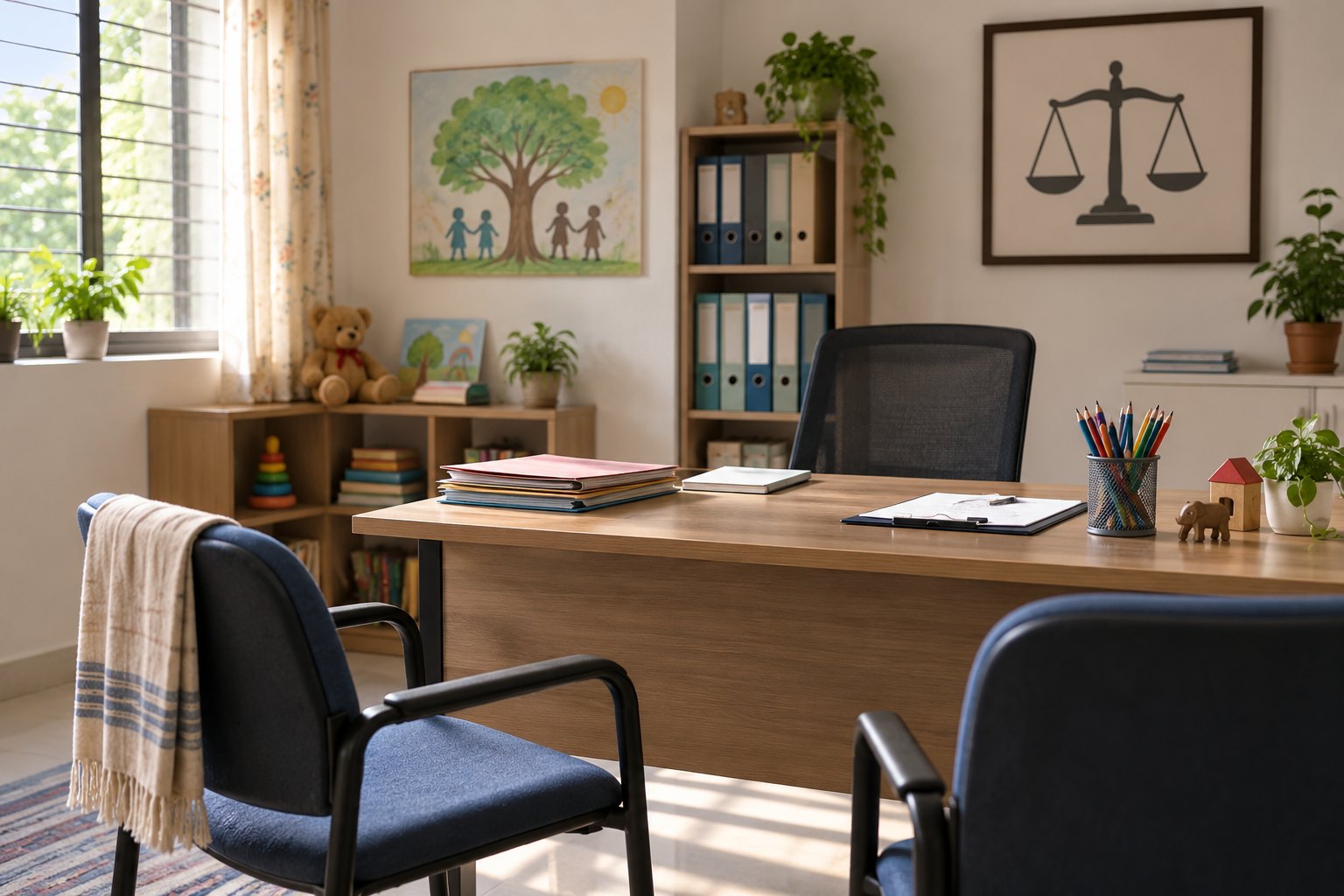
The Juvenile Justice (Care and Protection of Children) Act, 2015 governs children under 18 who are accused of offences or need care. Juvenile Justice Boards hear the first group and Child Welfare Committees the second. A Supreme Court consultation on 10-11 October 2026 reviewed its ten years and flagged pending cases and understaffed Boards.
Syllabus: Prelims · Polity & Governance; GS2 · Statutory & Regulatory Bodies; GS2 · Welfare of Vulnerable Sections
Why this matters for UPSC
GS2 covers laws and bodies that protect vulnerable sections. Prelims can ask the Juvenile Justice Board's composition, the three classes of offence, Section 15 and CARA's role; Mains, whether the system rehabilitates children or only disposes of cases.
In short
The Juvenile Justice (Care and Protection of Children) Act, 2015 governs children under 18 who offend or need care, weighing reform against accountability for grave crimes.
The Act's design is sound; full Boards, timely inquiries and real legal aid must make a closed case a rehabilitated child.
Why it matters
A 17-year-old accused of a crime does not go straight to an ordinary criminal court. A Board of one magistrate and two social workers first decides what happened and what help the child needs: counselling, community service, probation, or up to three years in a special home. Only a heinous charge against a 16- or 17-year-old can lead to an adult trial, and even then the child stays in a place of safety till 21. When Boards sit without a full bench or cases drag on, children wait for months without schooling or counselling, which defeats the Act's aim of reform. The larger question is whether the system rehabilitates children or merely closes their files.
Prelims pointers
- Juvenile Justice Board (Section 4): set up by the State Government for every district; a Principal Magistrate with three years' experience and two social workers, at least one a woman.
- Child Welfare Committee (Section 27): a Chairperson and four members, at least one a woman and one a child expert; deals with children in need of care and protection.
- Section 15: preliminary assessment only for a child aged 16-18 accused of a heinous offence; the Board may take help from psychologists or psycho-social workers.
- Section 21: no child in conflict with law may be sentenced to death or to life imprisonment without the possibility of release.
- Petty offences: at most three years' jail; heinous: minimum seven years or more; serious (2021): minimum over three to seven years, or maximum above seven with no seven-year minimum.
- Central Adoption Resource Authority (Section 68): promotes in-country adoption, regulates inter-country adoption and is the Central Authority under the 1993 Hague Convention on inter-country adoption.
- 2021 amendment: offences under the Act punishable with three to seven years became non-cognizable and non-bailable; all are triable by the Children's Court.
- Section 56: a relative may adopt a child from another relative irrespective of religion; adoptions under the Hindu Adoptions and Maintenance Act, 1956 fall outside the Act.
Practise a UPSC-style question
With reference to the Juvenile Justice Board under the Juvenile Justice (Care and Protection of Children) Act, 2015, consider the following statements:
1. A Board is headed by the Chief Judicial Magistrate or the Chief Metropolitan Magistrate of the district.
2. The State Government constitutes one or more Boards for every district.
3. At least one of the two social-worker members of a Board must be a woman.
Which of the statements given above is/are correct?
- (a) 1 and 2 only
- (b) 2 and 3 only
- (c) 1 and 3 only
- (d) 1, 2 and 3
Show the answer
Answer: (b) 2 and 3 only
1 is incorrect: the Principal Magistrate is a Metropolitan Magistrate or Judicial Magistrate of First Class who is not the Chief Judicial or Chief Metropolitan Magistrate. 2 is correct: Section 4 requires the State Government to set up one or more Boards in every district. 3 is correct: the two social workers must include at least one woman.
More Explainers
- State Legislative Councils: Articles 168-172 and the graduates' and teachers' seats Polity
- Whales and dolphins in Indian waters: legal protection, IUCN status and strandings Environment
- The Aligarh Movement, AMU and the Article 30 minority test Polity
- Environmental clearance by States: SEIAA, SEAC and the EIA Notification, 2006 Environment
- Software vulnerabilities: CVE, CVSS, coordinated disclosure and CERT-In's role Sci-Tech
- Drug trafficking law in India: NDPS Act, PIT-NDPS, NCB and NCORD National
- Choosing the UN Secretary-General: Article 97, UNSC veto and straw polls World & IR
- UN Convention against Torture, and why India has not ratified it Polity
- NavIC: why India's navigation constellation cannot give a standalone position Sci-Tech
- International Energy Agency: membership, 90-day oil stocks and India's status World & IR
- PM Surya Ghar: Muft Bijli Yojana and the rooftop solar subsidy Economy
- HFSS foods: FSSAI's draft limits and front-of-pack warning labels National