
Research Development and Innovation (RDI) Scheme: funding private R&D
Why in news: PIB reported on 12 October 2026 that the Technology Development Board had signed a Rs 86 crore RDI Fund agreement with Peptris Technologies.
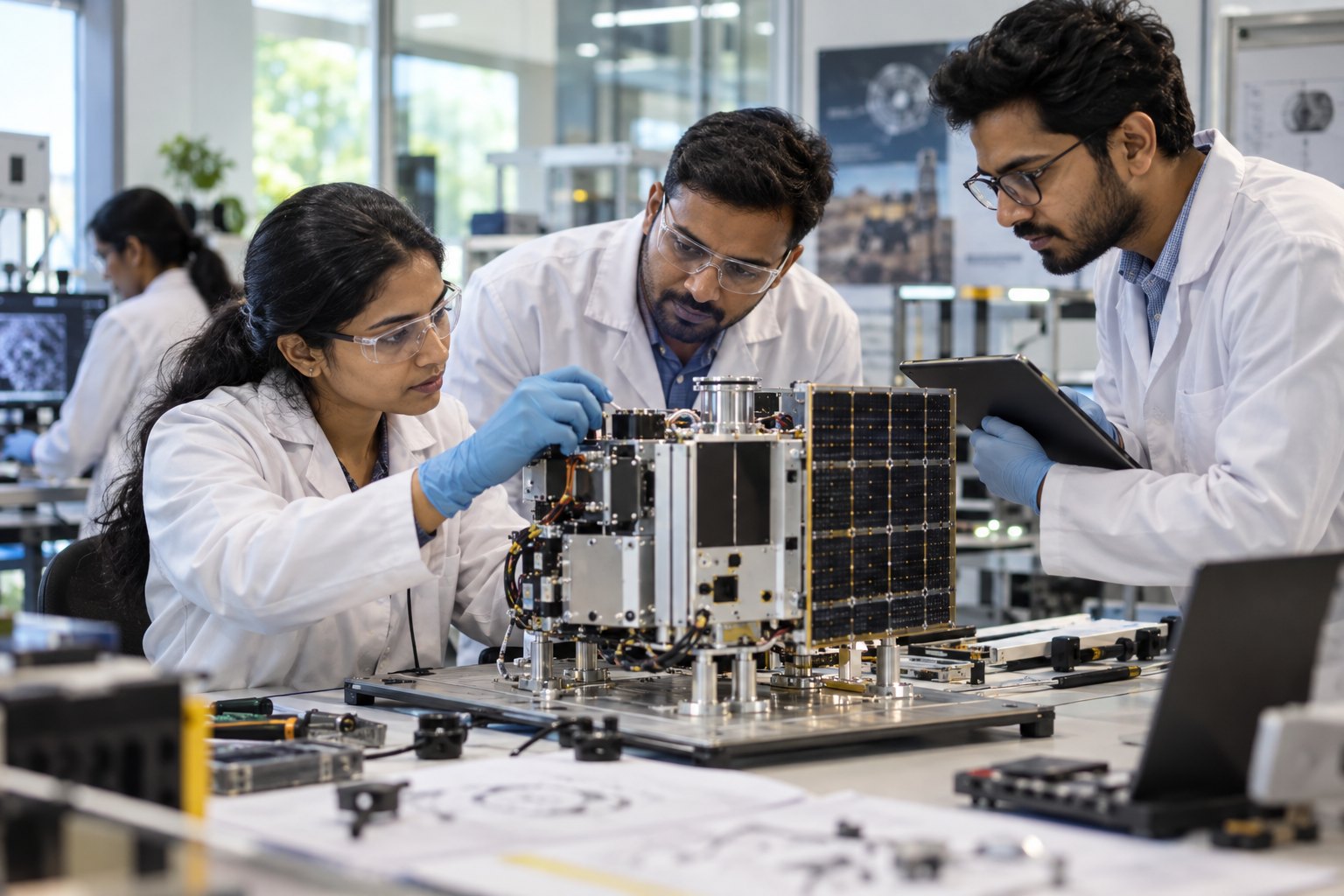
The Research Development and Innovation (RDI) Scheme, approved by the Union Cabinet on 1 July 2025 with a Rs 1 lakh crore corpus, finances private research at Technology Readiness Level 4 and above through low-interest loans and equity. Second-level fund managers pass the money on. The Technology Development Board has now committed Rs 86 crore to Peptris Technologies.
Syllabus: Prelims · Current Affairs & IR; GS2 · Government Policies; GS3 · Science & Technology
In short
Approved by the Union Cabinet on 1 July 2025, the Rs 1 lakh crore RDI Scheme finances private research through cheap long-term loans and equity, never grants.
The RDI Scheme rightly shares research risk without gifting money; it works only if sanctioned funds reach firms fast and grants still cover early science.
Why it matters
A start-up with a promising laboratory result often runs out of money before it can build a working product, because banks want collateral and quick repayment. The RDI Scheme lends for long periods at low or nil interest, or takes a stake, so that such a firm can take its idea through testing towards the market. Peptris, for example, can now move four drug candidates towards clinical trials over three years. The larger issue is that India's private sector has spent little on research; the scheme tries to change that by sharing the risk while normally leaving at least half the cost to the firm itself.
Prelims pointers
- RDI Scheme: approved by the Union Cabinet; corpus Rs 1 lakh crore; nodal department is the Department of Science and Technology.
- Governing Board of ANRF, chaired by the Prime Minister: gives overarching strategic direction to the RDI Scheme.
- Executive Council of ANRF: approves the scheme's guidelines and recommends second-level fund managers and project types.
- Empowered Group of Secretaries, led by the Cabinet Secretary: approves sectors, scheme changes and second-level fund managers, and reviews performance.
- Forms of support: long-term loans at low or nil interest, equity (especially for start-ups), equity-linked instruments, and contributions to a Deep-Tech Fund of Funds; no grants.
- Second-level fund managers may be an Alternative Investment Fund, a Development Finance Institution, a Non-Banking Financial Company or a Focused Research Organisation.
- Exclusions: next-generation R&D labs, RDI financing for government entities, and short-term loans; no funds are earmarked for States.
- Technology Readiness Level: a 1-to-9 scale of a technology's maturity; the RDI Scheme funds TRL 4 and above.
Practise a UPSC-style question
With reference to the Research Development and Innovation (RDI) Scheme, consider the following statements:
1. The Ministry of Finance is the nodal department for implementing the scheme.
2. The Governing Board of the Anusandhan National Research Foundation, chaired by the Prime Minister, gives the scheme strategic direction.
Which of the statements given above is/are correct?
- (a) 1 only
- (b) 2 only
- (c) Both 1 and 2
- (d) Neither 1 nor 2
Show the answer
Answer: (b) 2 only
1 is incorrect: the Department of Science and Technology, not the Ministry of Finance, is the nodal department for the RDI Scheme. 2 is correct: the ANRF Governing Board, chaired by the Prime Minister, provides overarching strategic direction to the scheme.
More Explainers
- State Legislative Councils: Articles 168-172 and the graduates' and teachers' seats Polity
- Whales and dolphins in Indian waters: legal protection, IUCN status and strandings Environment
- The Aligarh Movement, AMU and the Article 30 minority test Polity
- Environmental clearance by States: SEIAA, SEAC and the EIA Notification, 2006 Environment
- Software vulnerabilities: CVE, CVSS, coordinated disclosure and CERT-In's role Sci-Tech
- Drug trafficking law in India: NDPS Act, PIT-NDPS, NCB and NCORD National
- Choosing the UN Secretary-General: Article 97, UNSC veto and straw polls World & IR
- UN Convention against Torture, and why India has not ratified it Polity
- NavIC: why India's navigation constellation cannot give a standalone position Sci-Tech
- International Energy Agency: membership, 90-day oil stocks and India's status World & IR
- PM Surya Ghar: Muft Bijli Yojana and the rooftop solar subsidy Economy
- HFSS foods: FSSAI's draft limits and front-of-pack warning labels National