
Aircraft accident investigation in India: the AAIB and its rules
Why in news: In mid-October 2026 the AAIB made public its final report on the 14 September 2023 Learjet 45XR crash at Mumbai airport.
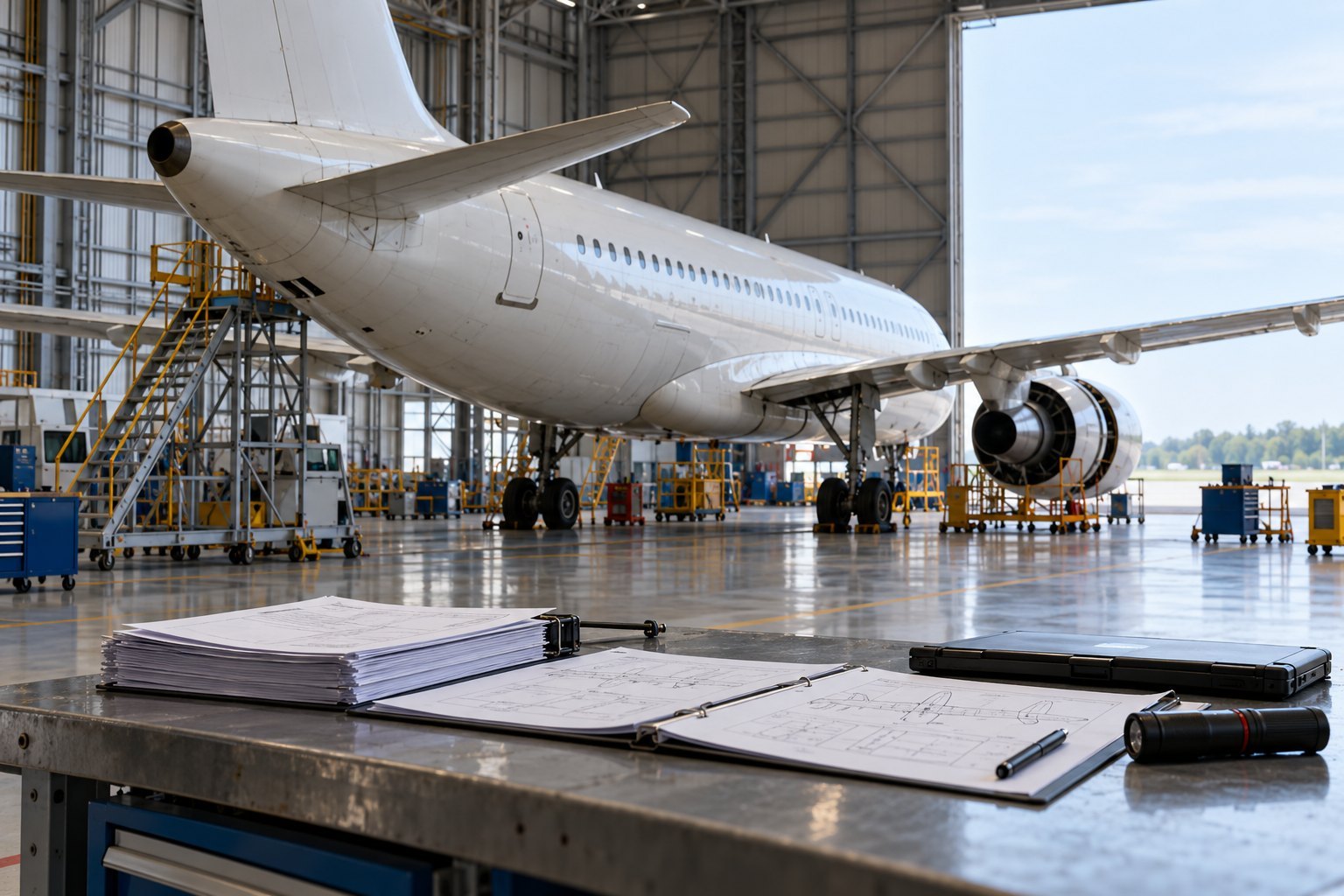
The Aircraft Accident Investigation Bureau (AAIB), an attached office of the Ministry of Civil Aviation set up in 2012, investigates air accidents under ICAO Annex 13 and the Aircraft (Investigation of Accidents and Incidents) Rules, 2025, to prevent repeats, not to fix blame. Its final report on the September 2023 Learjet crash at Mumbai puts the system in focus.
Syllabus: Prelims · Current Affairs & IR; GS2 · Statutory & Regulatory Bodies; GS3 · Infrastructure
Why this matters for UPSC
GS2 government bodies and GS3 infrastructure: Prelims can ask the AAIB's parent ministry, who investigates what under the 2025 Rules and ICAO Annex 13; Mains, why the investigator must stand apart from DGCA.
In short
Aircraft accident investigation is a no-blame safety inquiry: the Aircraft Accident Investigation Bureau (AAIB) finds why an aircraft crashed so that the regulator and operators can prevent the next one.
Investigation prevents the next crash only when reports arrive on time and DGCA acts on them; speed and follow-up matter as much as independence.
Why it matters
Every air traveller depends on lessons drawn from earlier crashes. When investigators can talk to crews without fear of punishment, and the inquiry is kept separate from any proceedings to fix blame, pilots and controllers tell what really happened, and the cause is found. A separate bureau can also say what the regulator's own inspections missed: in the Mumbai case, gaps in an operator's training and records had not surfaced in official audits. The weak link is time and follow-through. A report that arrives years late, or a recommendation the regulator never acts on, leaves the same risk in place for passengers, on charter flights as on airlines.
Prelims pointers
- Rule 3 of the 2025 Rules: the sole objective of investigation is prevention of accidents and incidents, not apportioning blame or liability.
- Under the 2025 Rules, DG, AAIB investigates every accident in India and serious incidents of aircraft over 2,250 kg or turbojet aeroplanes.
- DG, DGCA investigates incidents and the remaining serious incidents; AAIB may take any serious incident over, and DGCA's inquiry then closes.
- AAIB's classification of an occurrence as accident, serious incident or incident is final and binding under the 2025 Rules.
- Draft final reports go to the States of Registry, Operator, Design and Manufacture; the usual comment period is thirty days, extendable to sixty.
- A final report goes to ICAO when the aircraft involved is heavier than 5,700 kg.
- AAIB has MoUs to use the labs of HAL, National Aerospace Laboratories, National Metallurgical Laboratory, DMRL and DGCA.
- The 2025 Rules bar public release of cockpit voice recording audio, and the final report may not name the persons involved.
Practise a UPSC-style question
With reference to the Aircraft Accident Investigation Bureau (AAIB) of India, consider the following statements:
1. It is an attached office of the Ministry of Civil Aviation.
2. It was established in 2012 in line with the Standards and Recommended Practices of Annex 13 to the Chicago Convention.
3. Its final investigation reports are accepted and made public by the Director General of Civil Aviation.
Which of the statements given above is/are correct?
- (a) 1 and 2 only
- (b) 2 and 3 only
- (c) 1 and 3 only
- (d) 1, 2 and 3
Show the answer
Answer: (a) 1 and 2 only
Answer: (a) 1 and 2 only. AAIB is the ministry's attached office from 2012; its own Director General accepts its reports.
Statement 1: correct. The 2025 Rules and AAIB's own page describe it as an attached office of the Ministry of Civil Aviation, Government of India.
Statement 2: correct. The Ministry of Civil Aviation established AAIB on 30 July 2012, in line with Annex 13's Standards and Recommended Practices and India's State Safety Programme.
Statement 3: incorrect. Under Rule 11 of the 2025 Rules, the DG, AAIB accepts the Investigator-in-Charge's report and makes it public; DGCA receives the recommendations.
Eliminate: Statement 3 gives the investigator's power to the regulator. Out: (b), (c), (d).
Trap: Swapped attribution. The power to accept and publish reports is pinned on DGCA, the regulator, instead of the investigating bureau's own head.
Remember: AAIB investigates and publishes; DGCA regulates and acts on the recommendations.
More Explainers
- State Legislative Councils: Articles 168-172 and the graduates' and teachers' seats Polity
- Whales and dolphins in Indian waters: legal protection, IUCN status and strandings Environment
- The Aligarh Movement, AMU and the Article 30 minority test Polity
- Environmental clearance by States: SEIAA, SEAC and the EIA Notification, 2006 Environment
- Software vulnerabilities: CVE, CVSS, coordinated disclosure and CERT-In's role Sci-Tech
- Drug trafficking law in India: NDPS Act, PIT-NDPS, NCB and NCORD National
- Choosing the UN Secretary-General: Article 97, UNSC veto and straw polls World & IR
- UN Convention against Torture, and why India has not ratified it Polity
- NavIC: why India's navigation constellation cannot give a standalone position Sci-Tech
- International Energy Agency: membership, 90-day oil stocks and India's status World & IR
- PM Surya Ghar: Muft Bijli Yojana and the rooftop solar subsidy Economy
- HFSS foods: FSSAI's draft limits and front-of-pack warning labels National