
Arrest safeguards: Article 22, the BNSS arrest sections and the written-grounds rule
Why in news: On 21 September 2026 the Supreme Court, in Jaskaran Jeet Singh Deol, barred re-arrest after a written-grounds breach without a magistrate's order.
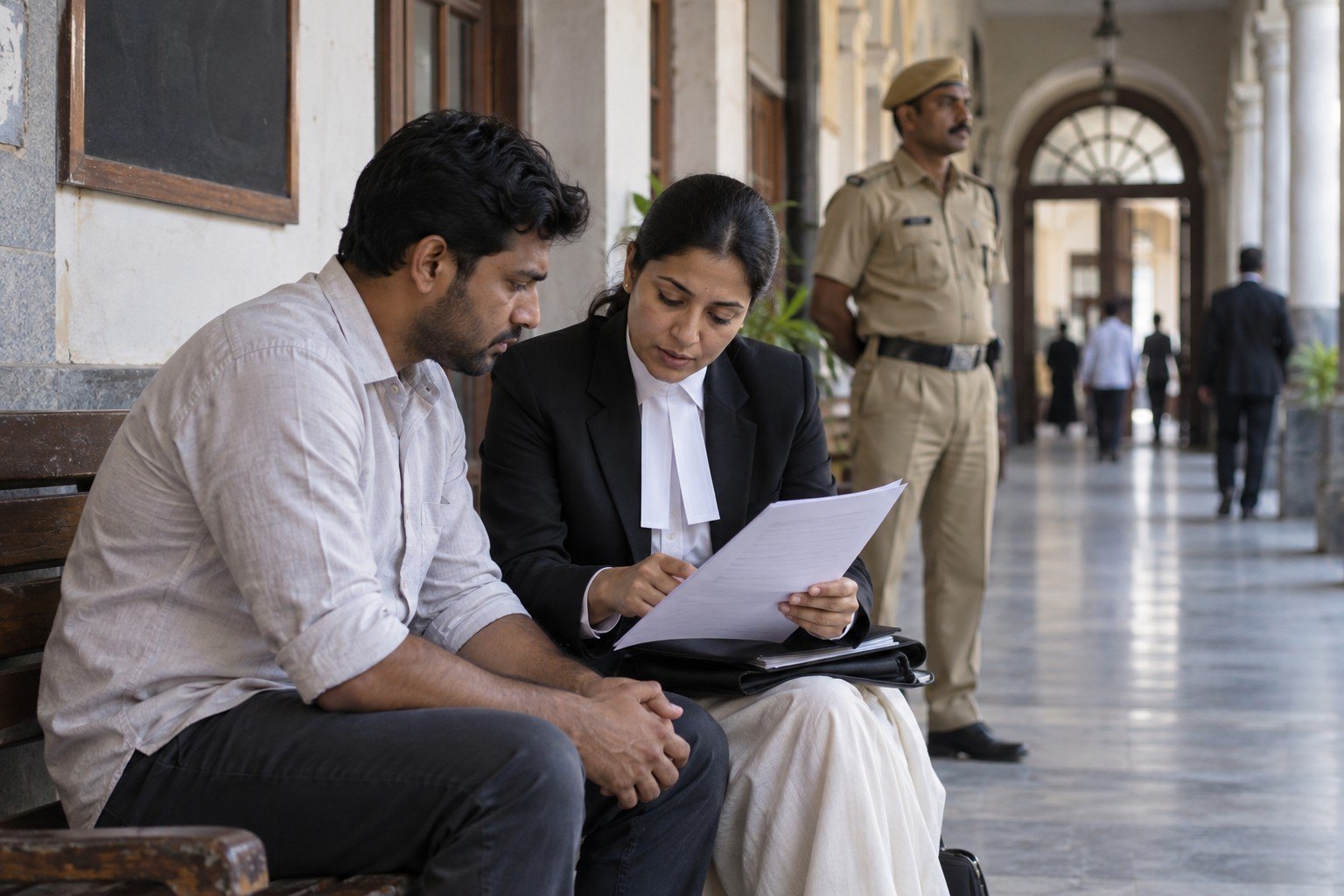
Article 22 of the Constitution entitles an arrested person to be told the grounds, to consult a lawyer of choice and to see a magistrate within 24 hours; the Bharatiya Nagarik Suraksha Sanhita, 2023 sets police arrest duties. On 21 September 2026 the Supreme Court held written grounds binding and put re-arrest after a breach under a magistrate.
Syllabus: GS2 · Constitution; Prelims · Polity & Governance; GS2 · Governance & e-Governance
Why this matters for UPSC
GS2 polity: Article 22's arrest safeguards, the BNSS, 2023 arrest sections and the Supreme Court's written-grounds rule. Prelims asks what Article 22 covers and excludes; Mains asks about custodial rights and police accountability.
In short
Article 22 of the Constitution guards arrested persons with grounds, a lawyer and a magistrate within 24 hours; the BNSS, 2023 and Supreme Court rulings make these police duties.
Article 22 works only when every arrest leaves a written trail a magistrate checks; codifying that trail protects liberty without stalling investigation.
Why it matters
Arrest is the moment the State's power over a citizen is greatest. A person picked up at dawn may not know the accusation, may be held far from family, and may be questioned before a lawyer arrives. A written note of the grounds gives that person something concrete to show a lawyer and a judge on the first day, so remand can be opposed and bail sought. Quick production before a magistrate puts a judge between the police station and a long stay in a cell. When these duties are skipped, the arrest itself collapses and the officer answers for it. The larger question is how a democracy lets police investigate serious crime while keeping liberty the rule and custody the exception.
Prelims pointers
- Article 22(1): an arrested person must be told the grounds as soon as may be and may consult, and be defended by, a lawyer of choice.
- Article 22(2): production before the nearest magistrate within 24 hours, excluding journey time; custody beyond that only with a magistrate's authority.
- Article 22(3): clauses (1) and (2) do not apply to an enemy alien or to a person held under a preventive detention law.
- Article 22(4)-(7): detention beyond three months needs an Advisory Board report, save under Parliament's law; 22(5) grounds and representation; 22(6) public-interest facts withheld.
- BNSS section 35(7): arresting an infirm person, or one above sixty, for an offence punishable under three years needs prior permission of a Deputy Superintendent of Police or above.
- BNSS section 38: an arrested person may meet an advocate of choice during interrogation, though not throughout it.
- BNSS section 187: total detention during investigation is capped at 90 days for offences punishable with death, life or ten years or more, 60 days otherwise.
- Arnesh Kumar v State of Bihar (2014): the Supreme Court barred automatic arrest for offences punishable up to seven years and required a checklist before detention.
Practise a UPSC-style question
With reference to Article 22 of the Constitution of India, consider the following statements:
1. A person arrested and detained in custody must be produced before the nearest magistrate within 48 hours, excluding journey time.
2. A person who is arrested cannot be denied the right to consult, and be defended by, a legal practitioner of his choice.
3. Clauses (1) and (2) of Article 22 do not apply to a person who is for the time being an enemy alien.
Which of the statements given above is/are correct?
- (a) 1 and 2 only
- (b) 2 and 3 only
- (c) 1 and 3 only
- (d) 1, 2 and 3
Show the answer
Answer: (b) 2 and 3 only
Answer: (b) 2 and 3 only. Article 22(2) sets 24 hours, not 48, so statement 1 fails while 2 and 3 hold.
Statement 1: incorrect. Article 22(2) requires production before the nearest magistrate within 24 hours of arrest, excluding the journey time.
Statement 2: correct. Article 22(1) bars denying an arrested person the right to consult, and be defended by, a lawyer of his choice.
Statement 3: correct. Article 22(3) takes an enemy alien, and a person held under a preventive detention law, outside clauses (1) and (2).
Eliminate: Judge statement 1 first: the constitutional limit is 24 hours, so statement 1 is incorrect. Out: (a), (c), (d).
Trap: Near-miss figure. The 24-hour limit is doubled to 48 hours, which is D.K. Basu's interval for medical checks, not the production limit.
Remember: Article 22(2): nearest magistrate within 24 hours, journey time excluded.
In the news
More Explainers
- State Legislative Councils: Articles 168-172 and the graduates' and teachers' seats Polity
- Whales and dolphins in Indian waters: legal protection, IUCN status and strandings Environment
- The Aligarh Movement, AMU and the Article 30 minority test Polity
- Environmental clearance by States: SEIAA, SEAC and the EIA Notification, 2006 Environment
- Software vulnerabilities: CVE, CVSS, coordinated disclosure and CERT-In's role Sci-Tech
- Drug trafficking law in India: NDPS Act, PIT-NDPS, NCB and NCORD National
- Choosing the UN Secretary-General: Article 97, UNSC veto and straw polls World & IR
- UN Convention against Torture, and why India has not ratified it Polity
- NavIC: why India's navigation constellation cannot give a standalone position Sci-Tech
- International Energy Agency: membership, 90-day oil stocks and India's status World & IR
- PM Surya Ghar: Muft Bijli Yojana and the rooftop solar subsidy Economy
- HFSS foods: FSSAI's draft limits and front-of-pack warning labels National