
Summoning, adjournment, prorogation and dissolution of Parliament: Article 85
Why in news: In letters of 16 and 19 October 2026, the Opposition and the government differed over Parliament staying unprorogued since its 13 August adjournment sine die.
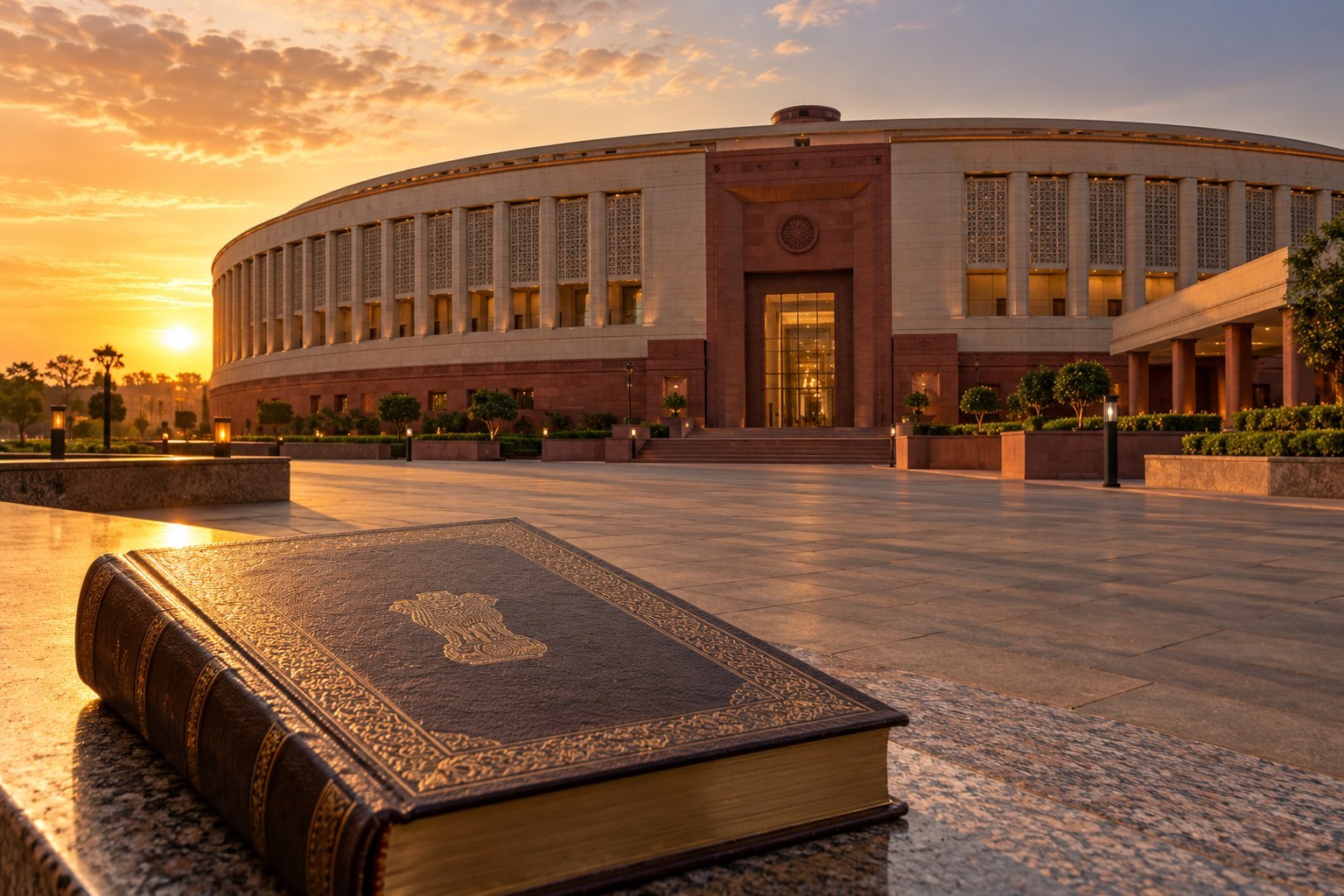
Article 85 of the Constitution lets the President summon each House of Parliament, prorogue either House and dissolve the Lok Sabha, with no more than six months between sessions. Adjournment pauses sittings; prorogation ends a session. Both Houses were adjourned sine die on 13 August 2026, and no prorogation had been notified by 19 October 2026.
Syllabus: GS2 · Constitution; Prelims · Polity & Governance; GS2 · Parliament & State Legislatures
Why this matters for UPSC
GS2 Parliament: conduct of business and the President's powers. Prelims asks what Article 85 provides, what lapses on prorogation or dissolution under Article 107, and when Article 123 Ordinances can issue; Mains, executive control of Parliament's calendar.
In short
Article 85 lets the President, on ministerial advice, summon and prorogue the Houses and dissolve the Lok Sabha, capping gaps between sessions at six months but fixing no prorogation deadline.
Article 85's silence on prorogation timing works only while convention holds; a prorogation norm and announced calendar would keep Parliament master of its own time.
Why it matters
For a member of Parliament, prorogation clears the desk: a notice of a question or motion not yet taken up must be given again next session, while a Bill already introduced, or under study in a committee, carries on. For citizens, it decides when the government may make law without Parliament. No Ordinance can issue while both Houses remain in session, so an unprorogued Parliament keeps that door shut, but the House can be called back at short notice without a new session. Because dates are fixed on the government's advice, how often and how long Parliament meets rests largely with the executive. The larger issue is how far Parliament controls its own time.
Prelims pointers
- Article 85(1): six months may not intervene between a House's last sitting in one session and the date set for its first sitting in the next.
- Article 85(2): the President may prorogue both Houses or either House alone, but may dissolve only the House of the People.
- Article 107: on dissolution, Bills pending in the Lok Sabha, or passed by it and pending in the Rajya Sabha, lapse (subject to Article 108); no Bill lapses on prorogation.
- Lok Sabha Rule 336 keeps a moved motion, resolution or amendment alive after prorogation; Rajya Sabha practice lets moved motions lapse unless the House revives them.
- Article 123: an Ordinance cannot issue while both Houses are in session; it ceases six weeks after Parliament reassembles, counted from the later date if the Houses reassemble separately.
- Article 87: the President's special address opens the first session after each general election and the first session of every year.
- Article 108(2): periods when a House is prorogued or adjourned for over four consecutive days do not count toward the six months that permit a joint sitting.
- Article 174 mirrors Article 85 for States: the Governor summons and prorogues the House or Houses and dissolves the Legislative Assembly; the Legislative Council is never dissolved.
Practise a UPSC-style question
With reference to the summoning and prorogation of Parliament, consider the following statements:
1. Six months shall not intervene between a House's last sitting in one session and the date appointed for its first sitting in the next.
2. The President may prorogue both Houses of Parliament together but cannot prorogue either House alone.
3. Session dates proposed by the Ministry of Parliamentary Affairs go to the Cabinet Committee on Parliamentary Affairs before the President approves them.
Which of the statements given above is/are correct?
- (a) 1 and 2 only
- (b) 2 and 3 only
- (c) 1 and 3 only
- (d) 1, 2 and 3
Show the answer
Answer: (c) 1 and 3 only
Answer: (c) 1 and 3 only. Article 85 lets the President prorogue either House on its own, so statement 2 fails.
Statement 1: correct. Article 85(1) caps the gap between a House's last sitting in one session and the first sitting of the next at six months.
Statement 2: incorrect. Article 85(2)(a) lets the President prorogue "the Houses or either House"; the Rajya Sabha alone was prorogued on 28 March 2015.
Statement 3: correct. The Ministry of Parliamentary Affairs puts a note to the Cabinet Committee on Parliamentary Affairs; once the Prime Minister agrees, the President approves the dates.
Eliminate: Judge statement 2 first: Article 85(2)(a) names "either House", so statement 2 is incorrect. Out: (a), (b), (d).
Trap: Wrong scope. The power covers either House alone as well as both together; the statement narrows it to both together.
Remember: Article 85(2): prorogue the Houses or either House; dissolve only the Lok Sabha.
More Explainers
- State Legislative Councils: Articles 168-172 and the graduates' and teachers' seats Polity
- Whales and dolphins in Indian waters: legal protection, IUCN status and strandings Environment
- The Aligarh Movement, AMU and the Article 30 minority test Polity
- Environmental clearance by States: SEIAA, SEAC and the EIA Notification, 2006 Environment
- Software vulnerabilities: CVE, CVSS, coordinated disclosure and CERT-In's role Sci-Tech
- Drug trafficking law in India: NDPS Act, PIT-NDPS, NCB and NCORD National
- Choosing the UN Secretary-General: Article 97, UNSC veto and straw polls World & IR
- UN Convention against Torture, and why India has not ratified it Polity
- NavIC: why India's navigation constellation cannot give a standalone position Sci-Tech
- International Energy Agency: membership, 90-day oil stocks and India's status World & IR
- PM Surya Ghar: Muft Bijli Yojana and the rooftop solar subsidy Economy
- HFSS foods: FSSAI's draft limits and front-of-pack warning labels National