
UNIFIL: the UN peacekeeping force in south Lebanon
Why in news: On 14 October 2026, UN peace-operations chief Jean-Pierre Lacroix visited Lebanon as UNIFIL's mandate nears its final end on 31 December 2026.
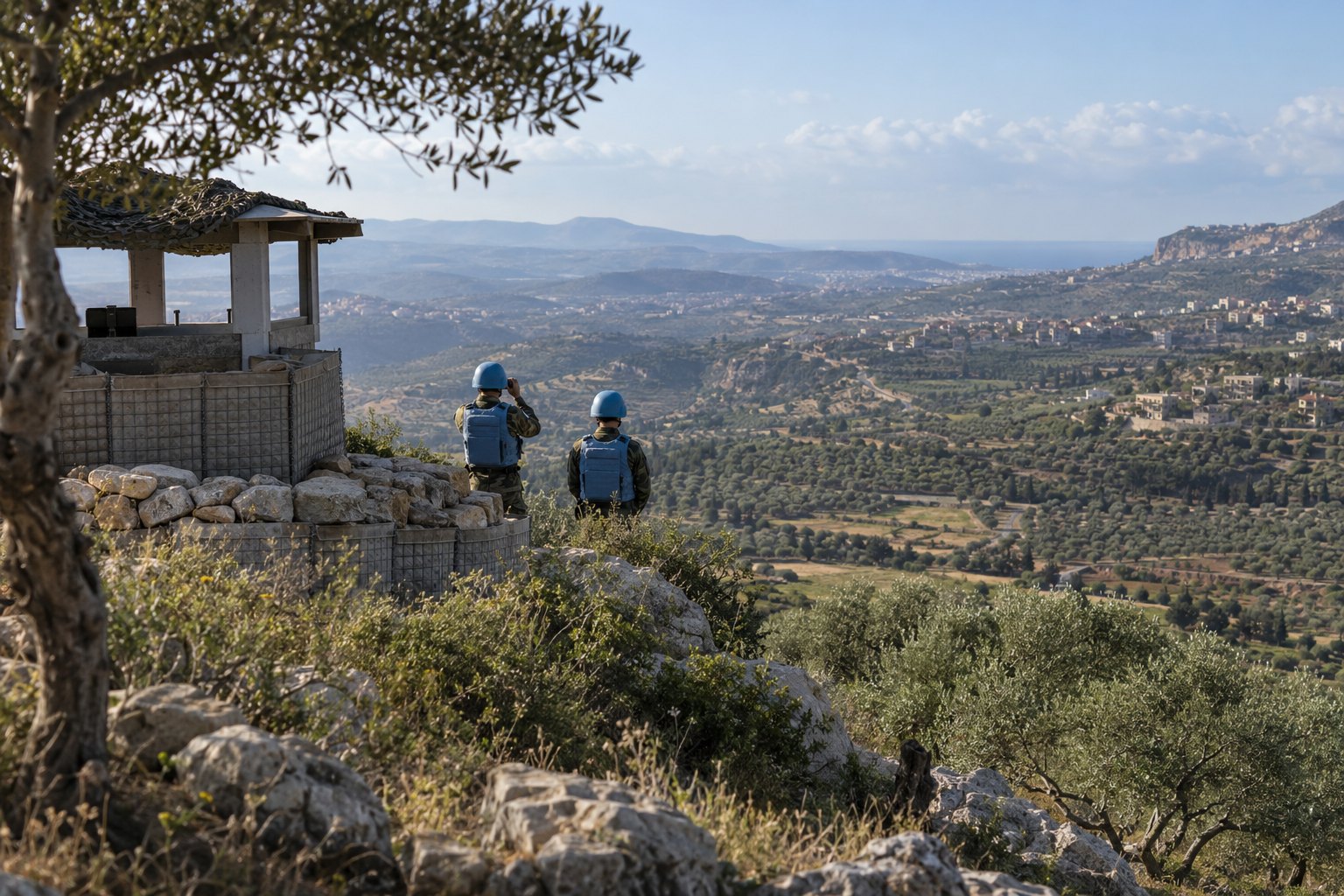
The United Nations Interim Force in Lebanon (UNIFIL) is a UN peacekeeping mission the Security Council set up in March 1978 to keep the peace in south Lebanon along the Israeli frontier. Resolution 1701 of 2006 enlarged its tasks. The UN's peace-operations chief visited Lebanon on 14 October 2026 as its final mandate nears its 31 December 2026 end.
Syllabus: Prelims · Current Affairs & IR; GS2 · Groupings & Agreements; GS2 · International Institutions
Why this matters for UPSC
GS2 international institutions: Prelims can ask who mandates UN peacekeeping, what resolution 1701 and the Blue Line are, and since when India's battalion has served in UNIFIL; Mains, on peacekeeping's limits.
In short
The United Nations Interim Force in Lebanon (UNIFIL) is a Security Council peacekeeping force in south Lebanon since 1978, meant to keep a buffer between Israel and Lebanon.
UNIFIL shows peacekeeping can hold a line but not impose peace; its exit must hand south Lebanon to a capable Lebanese army, not a vacuum.
Why it matters
For a family in a village near the Lebanon-Israel frontier, UNIFIL's patrols and its channel between the two armies have long been a cushion against the next round of fighting. Once the force goes, the Lebanese army alone must keep the south quiet, and Lebanon's President fears the gap will invite more violence. India's battalion, in the area for nearly three decades, will leave with the rest of the force, ending the village projects through which it built local goodwill. The larger question is whether UN peacekeeping can still work when a force lacks the power to disarm militias and the Security Council's support wanes.
Prelims pointers
- UN peacekeeping principles: consent of the main parties, impartiality, and no force except in self-defence and defence of the mandate.
- UN Charter: peacekeeping is not explicitly provided for; the Security Council authorises each operation without needing to cite a Charter chapter.
- Peacekeeping budget: proposed by the Secretary-General, reviewed by ACABQ and the General Assembly's Fifth Committee, approved by the Assembly; year runs 1 July to 30 June.
- Article 17 of the UN Charter: every member state must pay its assessed share; the General Assembly apportions peacekeeping costs on a special scale.
- UNIFIL: established on 19 March 1978; headquarters at Naqoura in south Lebanon; original resolutions 425 and 426 (1978).
- First UN peacekeeping mission: UN Truce Supervision Organization (UNTSO), 1948, Middle East; UN peacekeepers won the Nobel Peace Prize in 1988.
- INDBATT: an Indian Army battalion deployed in UNIFIL since November 1998, per the Ministry of External Affairs.
Practise a UPSC-style question
With reference to United Nations peacekeeping, consider the following statements:
1. The UN Charter explicitly provides for peacekeeping operations in its Chapter VI.
2. Decisions to establish, maintain or expand a UN peacekeeping operation are taken by the Security Council.
Which of the statements given above is/are correct?
- (a) 1 only
- (b) 2 only
- (c) Both 1 and 2
- (d) Neither 1 nor 2
Show the answer
Answer: (b) 2 only
Answer: (b) 2 only. The Security Council authorises peace operations, but the Charter never names peacekeeping.
Statement 1: incorrect. UN Peacekeeping states that peacekeeping is not explicitly provided for in the Charter; it is traditionally linked to Chapter VI, which the Council has never cited.
Statement 2: correct. UN Peacekeeping says decisions on establishing, maintaining or expanding an operation are taken by the Security Council, which holds primary responsibility for peace and security.
Eliminate: Statement 2 is the surest: every mission, UNIFIL included, rests on Council resolutions. Out: (a), (d).
Eliminate: Statement 1 is incorrect, since the Charter has no peacekeeping article. Out: (c).
Trap: Sounds right. Peacekeeping is often described as 'Chapter six and a half', so a student may assume the Charter spells it out in Chapter VI.
Remember: Peacekeeping is a practice the Charter does not name; the Security Council mandates every mission.
More Explainers
- State Legislative Councils: Articles 168-172 and the graduates' and teachers' seats Polity
- Whales and dolphins in Indian waters: legal protection, IUCN status and strandings Environment
- The Aligarh Movement, AMU and the Article 30 minority test Polity
- Environmental clearance by States: SEIAA, SEAC and the EIA Notification, 2006 Environment
- Software vulnerabilities: CVE, CVSS, coordinated disclosure and CERT-In's role Sci-Tech
- Drug trafficking law in India: NDPS Act, PIT-NDPS, NCB and NCORD National
- Choosing the UN Secretary-General: Article 97, UNSC veto and straw polls World & IR
- UN Convention against Torture, and why India has not ratified it Polity
- NavIC: why India's navigation constellation cannot give a standalone position Sci-Tech
- International Energy Agency: membership, 90-day oil stocks and India's status World & IR
- PM Surya Ghar: Muft Bijli Yojana and the rooftop solar subsidy Economy
- HFSS foods: FSSAI's draft limits and front-of-pack warning labels National