
Hypersonic missiles: glide vehicles, scramjet cruise missiles and India's tests
Why in news: South Korea flight-tested its first indigenously developed hypersonic glide vehicle on 8 October 2026, five days after a North Korean hypersonic missile test.
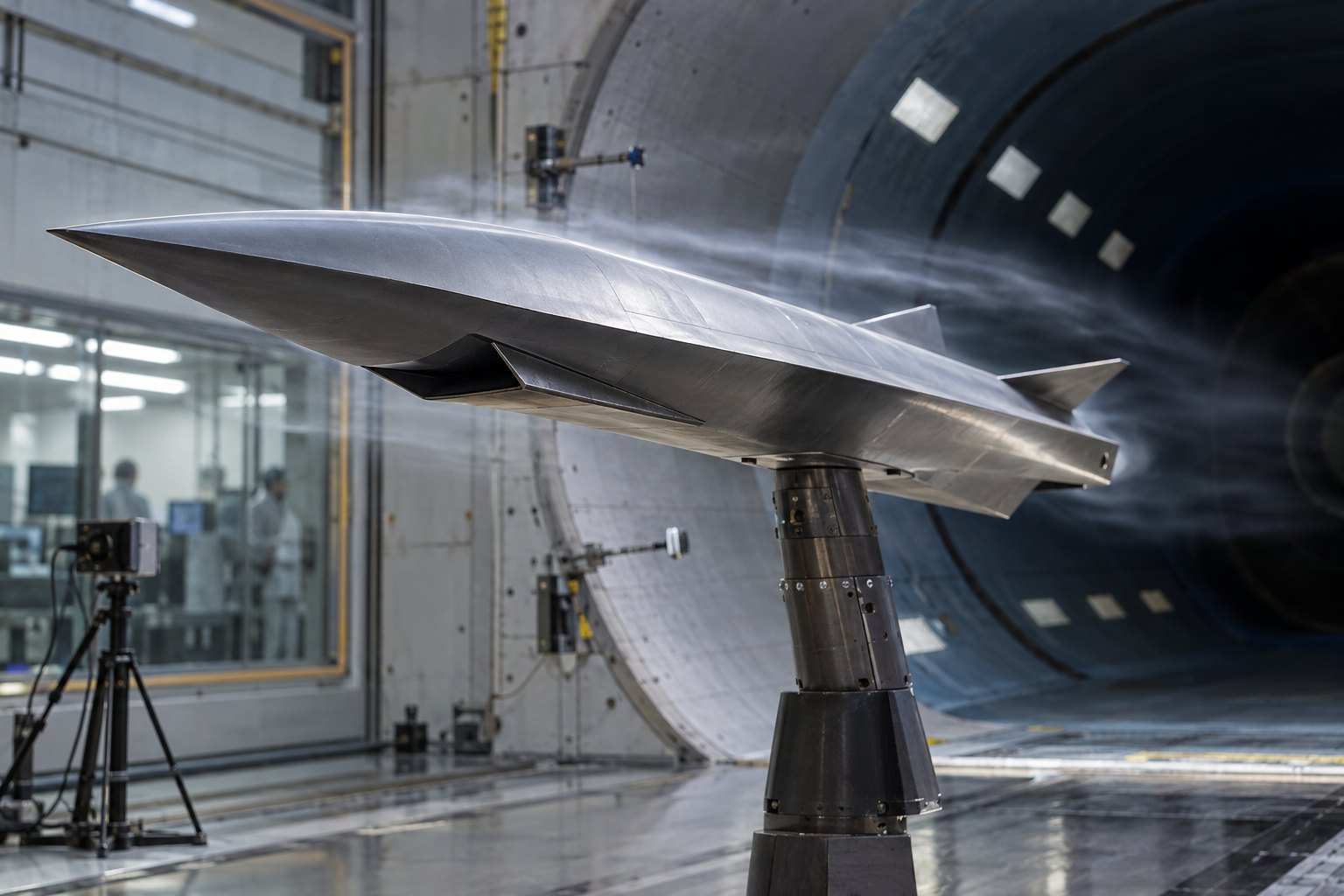
A hypersonic weapon flies at Mach 5 or faster and can manoeuvre in flight. A glide vehicle is boosted by a rocket and then glides; a cruise missile is driven by an air-breathing scramjet. India's DRDO is building a scramjet cruise missile. South Korea's first indigenous glide vehicle test on 8 October 2026 revived the subject.
Syllabus: Prelims · Current Affairs & IR; GS3 · Science & Technology; GS3 · Indian Achievements in S&T
Why this matters for UPSC
GS3 science and technology and defence indigenisation: Prelims can ask how a scramjet differs from a ramjet and a glide vehicle from a ballistic missile, and which DRDO laboratory runs which test; Mains, about hypersonic weapons and strategic stability.
In short
Hypersonic weapons fly at Mach 5 or faster and manoeuvre en route, unlike ballistic missiles; speed and low flight shrink the time to detect and intercept them.
India has proved scramjet combustion on the ground and in a short flight; the next test is a fielded cruise missile backed by defences.
Why it matters
A hypersonic weapon shrinks the time between a radar warning and impact. A commander facing one may get a single chance to intercept it and very little time to decide whether the attack is real. That changes how rival countries plan: each watches the other's tests and invests in its own weapons or in better sensors, and the two Koreas tested such weapons within a week of each other. For India, a working scramjet would allow a missile to reach distant, well-defended targets fast while relying on an engine built at home rather than bought abroad. The same speed also makes India's own cities and bases harder to protect, so the race is as much about defence as about attack.
Prelims pointers
- Hypersonic means Mach 5 or more; as the speed of sound depends on the gas and its temperature, which varies with altitude, Mach 5 is no fixed speed.
- Ramjets and scramjets have no compressor and produce no thrust when stationary, so a rocket booster must first accelerate them.
- Air-breathing engines take oxygen from the atmosphere, while a rocket carries all its oxygen; hence a scramjet is more efficient inside the atmosphere.
- Ballistic missile flight has three phases: boost, midcourse (coasting after booster burnout) and terminal (after re-entry), per the US Missile Defense Agency.
- DRDO functions under the Department of Defence Research and Development, Ministry of Defence; its Secretary also chairs DRDO.
- The CRS lists the United States, Russia, China, Australia, India, France, Germany and Japan among countries developing hypersonic weapons technology.
Practise a UPSC-style question
With reference to hypersonic weapons, consider the following statements:
1. A hypersonic glide vehicle is carried aloft by a rocket booster and then glides to its target.
2. A hypersonic cruise missile is powered during its flight by an air-breathing scramjet engine.
3. Unlike ballistic missiles, hypersonic weapons can manoeuvre on the way to their target.
Which of the statements given above is/are correct?
- (a) 1 and 2 only
- (b) 2 and 3 only
- (c) 1 and 3 only
- (d) 1, 2 and 3
Show the answer
Answer: (d) 1, 2 and 3
Answer: (d) 1, 2 and 3. All three state the standard distinction between the two hypersonic families and ballistic missiles.
Statement 1: correct. The CRS report R45811 describes glide vehicles as launched from a rocket before gliding; with the booster the system is a boost-glide weapon.
Statement 2: correct. The CRS describes hypersonic cruise missiles as powered by high-speed air-breathing engines, or scramjets; DRDO uses the same description.
Statement 3: correct. Hypersonic weapons do not follow a ballistic trajectory and can manoeuvre en route, which makes them harder to track and intercept.
Eliminate: statements 1 and 2 are the two textbook definitions, so both are correct. Out: (b), (c).
Eliminate: statement 3 is the defining contrast with ballistic missiles, so all three are correct. Out: (a).
Trap: Look-alike names. Students often swap the two families, giving the glide vehicle an engine or the cruise missile a booster-and-glide flight.
Remember: Glide vehicle = booster then glide; cruise missile = scramjet throughout; both manoeuvre, unlike ballistic missiles.
More Explainers
- State Legislative Councils: Articles 168-172 and the graduates' and teachers' seats Polity
- Whales and dolphins in Indian waters: legal protection, IUCN status and strandings Environment
- The Aligarh Movement, AMU and the Article 30 minority test Polity
- Environmental clearance by States: SEIAA, SEAC and the EIA Notification, 2006 Environment
- Software vulnerabilities: CVE, CVSS, coordinated disclosure and CERT-In's role Sci-Tech
- Drug trafficking law in India: NDPS Act, PIT-NDPS, NCB and NCORD National
- Choosing the UN Secretary-General: Article 97, UNSC veto and straw polls World & IR
- UN Convention against Torture, and why India has not ratified it Polity
- NavIC: why India's navigation constellation cannot give a standalone position Sci-Tech
- International Energy Agency: membership, 90-day oil stocks and India's status World & IR
- PM Surya Ghar: Muft Bijli Yojana and the rooftop solar subsidy Economy
- HFSS foods: FSSAI's draft limits and front-of-pack warning labels National