
State Election Commissions and the bar on courts in local polls
Why in news: The Supreme Court's order of 21 October 2026 on nominations for urban local body elections in Andhra Pradesh, after the High Court refused an extension.
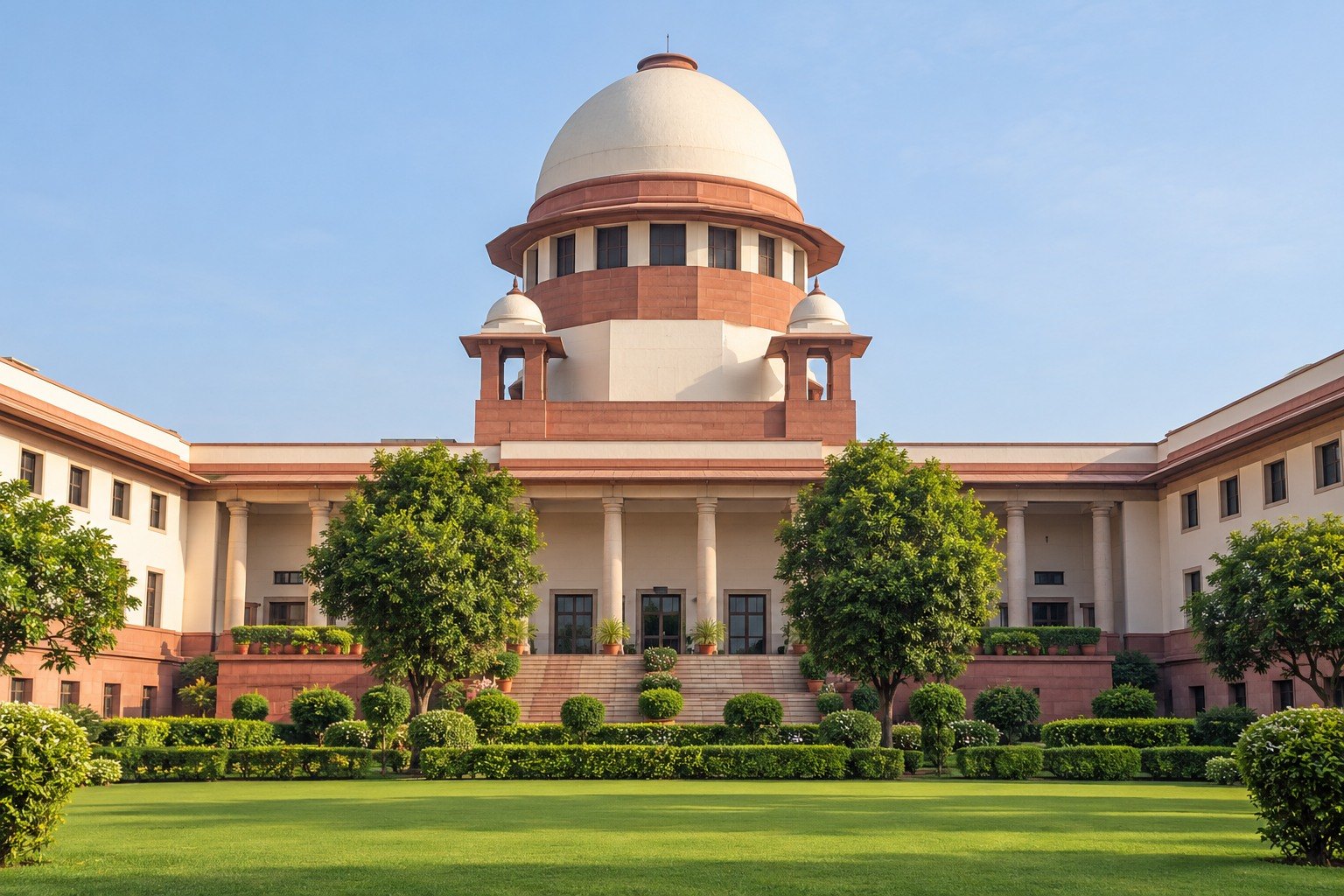
A State Election Commission, set up under Articles 243K and 243ZA, conducts every panchayat and municipal election, and Articles 243-O and 243ZG let such polls be questioned only through an election petition. On 21 October 2026 the Supreme Court asked the Andhra Pradesh State Election Commission to defer its final candidate list for urban local body polls.
Syllabus: GS2 · Federalism & Local Government; GS2 · Separation of Powers; Prelims · Polity & Governance
Why this matters for UPSC
GS2 polity and devolution to local levels: Prelims can ask which Article vests local polls in the State Election Commission and how its Commissioner is removed; Mains, how far courts may step into panchayat and municipal elections.
In short
A State Election Commission, created by Articles 243K and 243ZA, is the constitutional authority for panchayat and municipal polls; Articles 243-O and 243ZG limit how courts may question those polls.
A State Election Commission that acts firmly and early, free of State control, leaves courts little reason to intervene once polls begin.
Why it matters
A villager choosing a sarpanch or a city voter choosing a ward councillor depends on the State Election Commission, not the Election Commission of India, for a fair and timely vote. When a State drags its feet on ward boundaries or reserved seats, councils lapse and appointed officials run villages and towns with nobody elected to answer to residents. The bar on courts cuts both ways. It stops a handful of litigants from stalling an election that crores of voters are waiting for. But a would-be candidate kept from filing papers may get no quick help, because an election petition is heard only after the result. How far judges step in decides whether grassroots democracy is both punctual and fair.
Prelims pointers
- The State Election Commissioner is appointed by the Governor; in a Union territory, Articles 243L and 243ZB read the Administrator in place of the Governor.
- A State Election Commissioner's conditions of service cannot be varied to his disadvantage after appointment (proviso to Article 243K(2)).
- Article 243U requires a municipality to get a reasonable opportunity of being heard before dissolution; Article 243E has no such proviso for panchayats.
- Articles 243E and 243U: no fresh election is needed if a dissolved body's remaining term is less than six months.
- State Legislatures, not Parliament, make the law on matters relating to panchayat and municipal elections (Articles 243K(4) and 243ZA(2)), subject to the Constitution.
- Part IX came into force on 24 April 1993 and Part IXA on 1 June 1993.
Practise a UPSC-style question
With reference to the State Election Commission in India, consider the following statements:
1. The State Election Commissioner is appointed by the Governor of the State.
2. The State Election Commissioner can be removed only in the manner and on the grounds applicable to a Judge of the Supreme Court.
3. The Governor must make available to the State Election Commission the staff it needs, when the Commission so requests.
Which of the statements given above is/are correct?
- (a) 1 and 2 only
- (b) 2 and 3 only
- (c) 1 and 3 only
- (d) 1, 2 and 3
Show the answer
Answer: (c) 1 and 3 only
Answer: (c) 1 and 3 only. The removal standard is that of a High Court Judge.
Statement 1: correct. Article 243K(1) provides for a State Election Commissioner to be appointed by the Governor.
Statement 2: incorrect. The proviso to Article 243K(2) equates removal with that of a Judge of a High Court, not the Supreme Court.
Statement 3: correct. Article 243K(3) obliges the Governor to provide staff when the State Election Commission requests it.
Eliminate: statement 2 swaps the High Court for the Supreme Court. Out: (a), (b), (d).
Trap: Swapped attribution. The removal shield is real, but it is pinned on the wrong court to catch students who remember only that it mirrors a judge.
Remember: State Election Commissioner: appointed by the Governor, removed like a High Court Judge.
More Explainers
- State Legislative Councils: Articles 168-172 and the graduates' and teachers' seats Polity
- Whales and dolphins in Indian waters: legal protection, IUCN status and strandings Environment
- The Aligarh Movement, AMU and the Article 30 minority test Polity
- Environmental clearance by States: SEIAA, SEAC and the EIA Notification, 2006 Environment
- Software vulnerabilities: CVE, CVSS, coordinated disclosure and CERT-In's role Sci-Tech
- Drug trafficking law in India: NDPS Act, PIT-NDPS, NCB and NCORD National
- Choosing the UN Secretary-General: Article 97, UNSC veto and straw polls World & IR
- UN Convention against Torture, and why India has not ratified it Polity
- NavIC: why India's navigation constellation cannot give a standalone position Sci-Tech
- International Energy Agency: membership, 90-day oil stocks and India's status World & IR
- PM Surya Ghar: Muft Bijli Yojana and the rooftop solar subsidy Economy
- HFSS foods: FSSAI's draft limits and front-of-pack warning labels National