
Global Hunger Index: publishers, indicators and method
Why in news: The 2026 Global Hunger Index, released in October 2026, scores India at 24.1, in the 'serious' band, per its publishers.
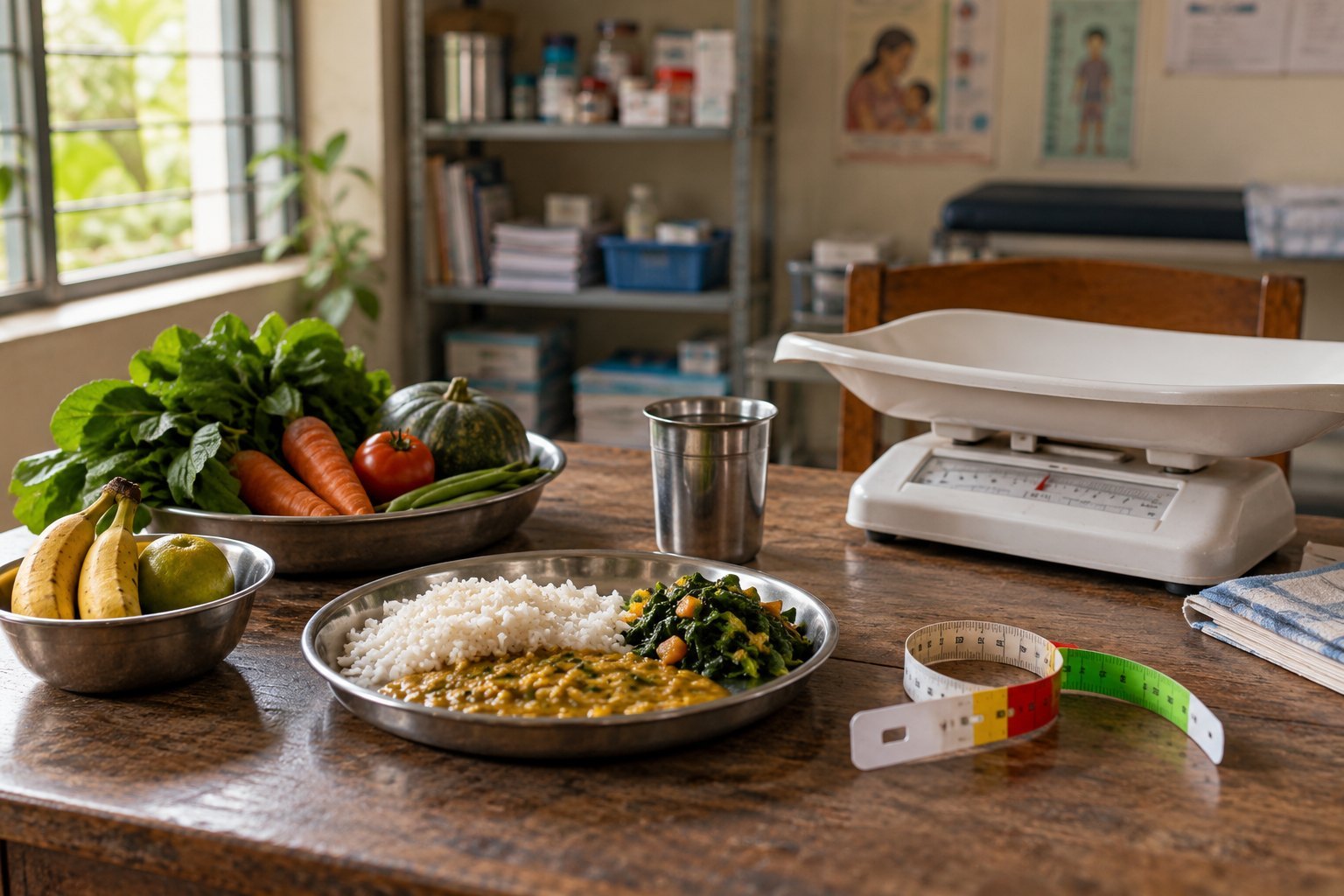
The Global Hunger Index is an annual, peer-reviewed report that scores hunger in countries on a 100-point scale from four indicators: undernourishment, child stunting, child wasting and child mortality. Its 2026 edition, released in October 2026, puts India's score at 24.1, in the 'serious' band, per its publishers.
Syllabus: GS3 · MSP, Subsidies & Food Security; GS2 · Welfare of Vulnerable Sections; GS2 · Poverty & Hunger
Why this matters for UPSC
GS2 covers issues of poverty and hunger. Prelims can ask who publishes the Global Hunger Index, its four indicators and their weights; Mains, whether the index measures hunger fairly and how India can reduce child wasting.
In short
The Global Hunger Index (GHI) is a peer-reviewed annual report that combines four undernutrition indicators into one score, ranging from 0 (no hunger) to 100.
The GHI is a useful alarm rather than a census; India should answer its wasting signal with better diets and larger, shared survey data.
Why it matters
Behind each indicator is a child or a household. A wasted child is dangerously thin for her height and at high risk of illness and death; a stunted child carries the damage into school and working life. The index tells governments, donors and citizens where hunger is worst and whether it is easing. For India, the 2026 picture is mixed: families now get more calories, yet many young children still do not get the right food, care and clean surroundings. The quarrel over method matters too, because a measure the government rejects is less likely to change policy, while a measure nobody checks can hide real hunger.
Prelims pointers
- GHI Severity of Hunger Scale: up to 9.9 low; 10.0-19.9 moderate; 20.0-34.9 serious; 35.0-49.9 alarming; 50.0 and above extremely alarming.
- Standardisation thresholds: undernourishment 80%, child stunting 70%, child wasting 30%, child mortality 35%, each just above the highest value observed.
- GHI inclusion: undernourishment of 5.0% or more and/or child mortality of 1.0% or more in any year since 2000; under 500,000 people excluded.
- GHI method change, 2015: child stunting and wasting were added and values standardised, raising almost every country's score.
- Data periods behind the 2026 GHI scores: undernourishment 2023-2025, child wasting 2021-2025, child stunting 2024, child mortality 2024.
- All four GHI indicators belong to the Sustainable Development Goals indicator set; undernourishment leads the SDG 2 (Zero Hunger) targets.
Practise a UPSC-style question
With reference to the Global Hunger Index, consider the following statements:
1. Undernourishment and child wasting each contribute one-third of a country's score.
2. Child stunting and child wasting each contribute one-sixth of a country's score.
3. Child wasting is measured as the share of children under five with low weight for their height.
Which of the statements given above is/are correct?
- (a) 1 and 2 only
- (b) 2 and 3 only
- (c) 1 and 3 only
- (d) 1, 2 and 3
Show the answer
Answer: (b) 2 and 3 only
Answer: (b) 2 and 3 only. The two one-third indicators are undernourishment and child mortality, not child wasting.
Statement 1: incorrect. Undernourishment and child mortality carry one-third each; child wasting carries one-sixth, per the GHI methodology.
Statement 2: correct. After standardisation, child stunting and child wasting each make up one-sixth of the GHI score.
Statement 3: correct. Child wasting is low weight for height in under-fives and reflects acute undernutrition; stunting is low height for age.
Eliminate: statement 3 is the textbook definition of wasting, so it is correct. Out: (a).
Eliminate: statement 1 swaps child mortality for child wasting among the one-third indicators, so it is incorrect. Out: (c), (d).
Trap: Swapped attribution. Statement 1 keeps the right weight, one-third, but pins it on child wasting instead of child mortality.
Remember: GHI weights: undernourishment and child mortality one-third each; stunting and wasting one-sixth each.
More Explainers
- State Legislative Councils: Articles 168-172 and the graduates' and teachers' seats Polity
- Whales and dolphins in Indian waters: legal protection, IUCN status and strandings Environment
- The Aligarh Movement, AMU and the Article 30 minority test Polity
- Environmental clearance by States: SEIAA, SEAC and the EIA Notification, 2006 Environment
- Software vulnerabilities: CVE, CVSS, coordinated disclosure and CERT-In's role Sci-Tech
- Drug trafficking law in India: NDPS Act, PIT-NDPS, NCB and NCORD National
- Choosing the UN Secretary-General: Article 97, UNSC veto and straw polls World & IR
- UN Convention against Torture, and why India has not ratified it Polity
- NavIC: why India's navigation constellation cannot give a standalone position Sci-Tech
- International Energy Agency: membership, 90-day oil stocks and India's status World & IR
- PM Surya Ghar: Muft Bijli Yojana and the rooftop solar subsidy Economy
- HFSS foods: FSSAI's draft limits and front-of-pack warning labels National