
Private nuclear power under SHANTI: Bharat Small Reactors and land consent
Why in news: On 9 October 2026, villagers in Rewa district, Madhya Pradesh, stopped preliminary borehole work for a proposed 2x220 MW nuclear power project near Rojhauhi village.
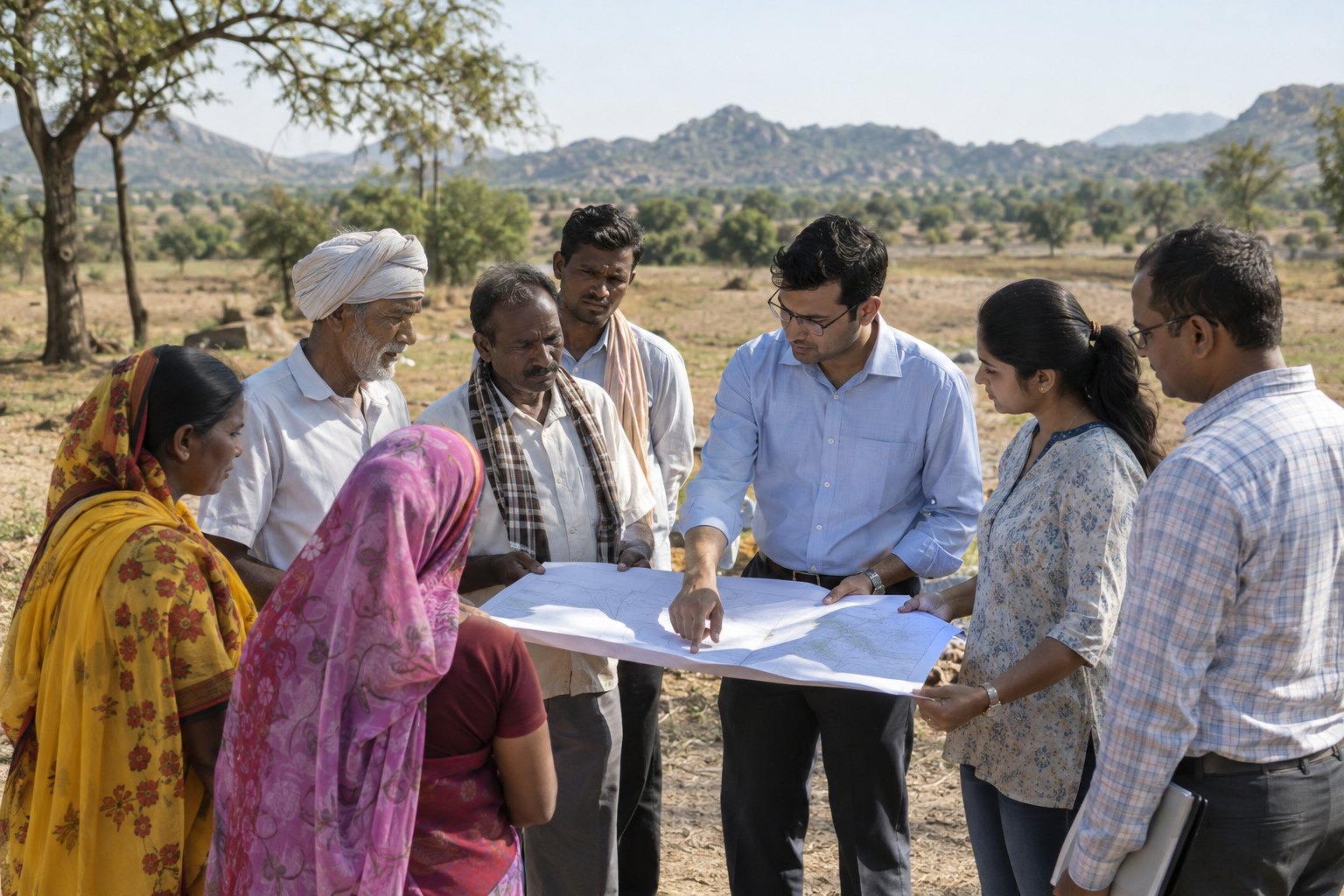
The SHANTI Act, 2025 opens nuclear power to private companies, which may run plants and make equipment under licence, while spent-fuel reprocessing and heavy water stay with the Centre. NPCIL offers industry its 220 MW Bharat Small Reactor for captive power. On 9 October 2026, villagers in Rewa, Madhya Pradesh, stopped borehole tests for a proposed 2x220 MW plant.
Syllabus: GS2 · Federalism & Local Government; GS3 · Infrastructure; GS2 · Government Policies
In short
The SHANTI Act, 2025 replaced the Atomic Energy Act, 1962 and the 2010 liability law, admitting licensed private operators, while local consent to land tests each site.
Private reactors can widen India's clean, round-the-clock power only if an independent regulator and informed local consent come before drilling.
Why it matters
A steel, cement or data-centre company that needs steady power day and night can now put its own money into a small reactor, instead of depending on coal. Private participation brings more investors and builders to a source that supplies only about 3% of India's electricity. For a farmer near a proposed site, it means a private developer may want the land, and the 2013 land Act lets land be acquired for a private company only if four in five affected families agree. The stand-off in Rewa shows that worries over land, water and radiation surface while a site is still being tested. How such objections are heard will shape how fast India moves towards its 100 GW target.
Prelims pointers
- Atomic Energy Regulatory Board: constituted in 1983 by executive order under the Atomic Energy Act, 1962; the SHANTI Bill gives it statutory recognition.
- Pressurised Heavy Water Reactor: uses natural uranium as fuel and heavy water as both moderator and coolant.
- Bharat Small Reactor (220 MW, NPCIL) is not the Bharat Small Modular Reactor (BSMR-200, 200 MWe), an initiative of the Bhabha Atomic Research Centre.
- NPCIL: a public sector enterprise under the Department of Atomic Energy; it designs, builds, operates and maintains nuclear power plants.
- Appellate Tribunal for Electricity: set up under the Electricity Act, 2003; it hears appeals under the SHANTI Bill.
- Section 41 of the 2013 land Act: acquisition in Scheduled Areas only as a demonstrable last resort, with prior consent of the Gram Sabha.
- Section 105 and the Fourth Schedule of the 2013 land Act: 13 Acts, including the Atomic Energy Act, 1962, are exempt, save compensation and resettlement rules extended by notification.
- Fifth Schedule areas exist in 10 States; Madhya Pradesh has 5 districts fully and 15 partly covered, per the Ministry of Panchayati Raj (December 2025).
Practise a UPSC-style question
With reference to the Sustainable Harnessing and Advancement of Nuclear Energy for Transforming India (SHANTI) Bill, 2025, consider the following statements:
1. It permits private companies to operate nuclear power plants and generate power under licence.
2. It reserves the reprocessing of spent nuclear fuel for the Central Government or its wholly owned institutions.
3. It makes the Central Electricity Regulatory Commission the appellate authority for appeals under its provisions.
Which of the statements given above is/are correct?
- (a) 1 and 2 only
- (b) 2 and 3 only
- (c) 1 and 3 only
- (d) 1, 2 and 3
Show the answer
Answer: (a) 1 and 2 only
1 is correct: private companies may undertake plant operation, power generation and equipment manufacturing. 2 is correct: spent-fuel management such as reprocessing, along with high-level waste and heavy water production, stays with the Central Government. 3 is incorrect: the appellate authority is the Appellate Tribunal for Electricity, set up under the Electricity Act, 2003, not the Central Electricity Regulatory Commission.
More Explainers
- State Legislative Councils: Articles 168-172 and the graduates' and teachers' seats Polity
- Whales and dolphins in Indian waters: legal protection, IUCN status and strandings Environment
- The Aligarh Movement, AMU and the Article 30 minority test Polity
- Environmental clearance by States: SEIAA, SEAC and the EIA Notification, 2006 Environment
- Software vulnerabilities: CVE, CVSS, coordinated disclosure and CERT-In's role Sci-Tech
- Drug trafficking law in India: NDPS Act, PIT-NDPS, NCB and NCORD National
- Choosing the UN Secretary-General: Article 97, UNSC veto and straw polls World & IR
- UN Convention against Torture, and why India has not ratified it Polity
- NavIC: why India's navigation constellation cannot give a standalone position Sci-Tech
- International Energy Agency: membership, 90-day oil stocks and India's status World & IR
- PM Surya Ghar: Muft Bijli Yojana and the rooftop solar subsidy Economy
- HFSS foods: FSSAI's draft limits and front-of-pack warning labels National