
Convention on Biological Diversity and the Kunming-Montreal framework
Why in news: CBD COP17 meets in Yerevan, Armenia, from 19 to 30 October 2026; the UN Secretary-General addressed its Leaders' Summit on 16 October.
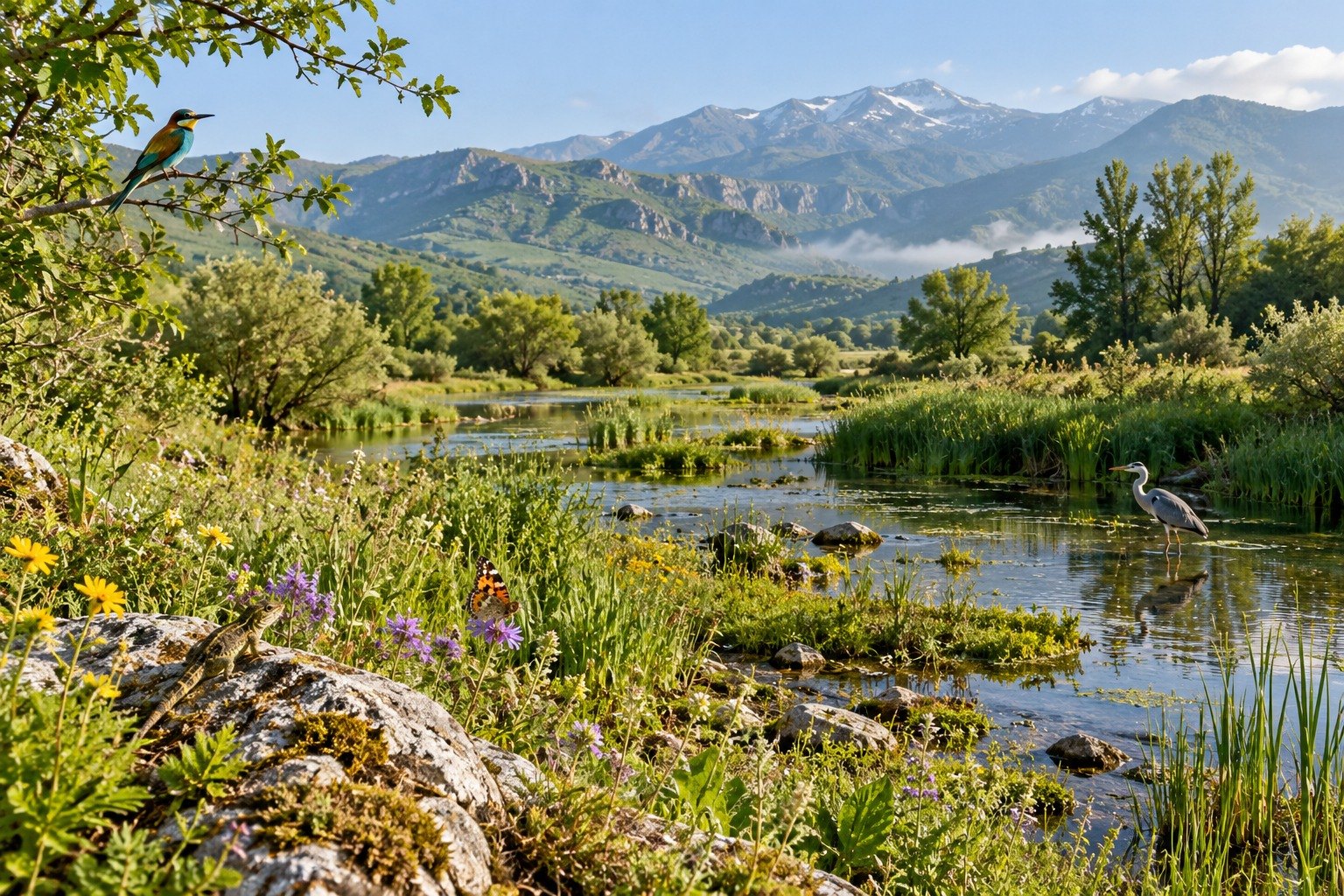
The Convention on Biological Diversity, opened for signature at the 1992 Rio Earth Summit, pursues conservation, sustainable use and fair sharing of benefits from genetic resources. Its Kunming-Montreal Global Biodiversity Framework of 2022 sets four goals for 2050 and 23 targets for 2030. The treaty's seventeenth Conference of the Parties meets in Yerevan, Armenia, from 19 to 30 October 2026.
Syllabus: Prelims · Environment & Ecology; GS3 · Environment & Conservation; GS2 · Groupings & Agreements
Why this matters for UPSC
GS3 environment and GS2 international institutions: Prelims asks the CBD's Protocols, the Kunming-Montreal targets and the Cali Fund; Mains asks the framework's goals and India's commitments through its NBSAP and the Biological Diversity Act, 2002.
In short
The Convention on Biological Diversity (1992) binds Parties to conserve biodiversity, use it sustainably and share genetic-resource benefits; its Kunming-Montreal Global Biodiversity Framework sets the 2030 agenda.
The framework will be judged on delivery: India must fund its 23 targets and local committees while pressing for Target 19 finance.
Why it matters
Biodiversity is the base of food, water, medicine and livelihoods, so the targets shape what governments protect, fund and permit. A forest-dwelling community gains a say, and possibly a share of money, when a company uses a plant or the gene data drawn from it, because benefit-sharing now follows both. Farmers feel the pesticide and nutrient targets; fishers, the marine protected areas; taxpayers, any shift of subsidies away from activities that damage nature. For India, with village-level biodiversity committees, the framework decides whether conservation is paid for and whether local knowledge earns a return, and its success is judged when Parties meet to review delivery.
Prelims pointers
- The CBD's text was adopted at Nairobi in May 1992; it entered into force 90 days after the 30th ratification.
- The Cartagena Protocol on Biosafety was adopted on 29 January 2000 and entered into force on 11 September 2003.
- The Nagoya Protocol was adopted on 29 October 2010 at Nagoya, Japan, and entered into force on 12 October 2014.
- The Aichi Biodiversity Targets were adopted at COP10 in Nagoya in 2010 for the 2011-2020 Strategic Plan for Biodiversity.
- KMGBF Target 7 halves excess nutrients and overall pesticide risk by 2030; Target 6 cuts invasive species introductions by at least 50%.
- Under decision 16/2, at least half of Cali Fund money should support self-identified needs of indigenous peoples and local communities.
- The National Biodiversity Authority, a statutory body set up in 2003 under the Biological Diversity Act, 2002, is headquartered in Chennai.
Practise a UPSC-style question
With reference to the Kunming-Montreal Global Biodiversity Framework, consider the following statements:
1. It calls for incentives harmful to biodiversity to be reduced by at least $200 billion per year by 2030.
2. It calls for at least 30 per cent of terrestrial and inland water areas, and of marine and coastal areas, to be effectively conserved by 2030.
3. It calls for at least 30 per cent of areas of degraded ecosystems to be under effective restoration by 2030.
Which of the statements given above is/are correct?
- (a) 1 and 2 only
- (b) 2 and 3 only
- (c) 1 and 3 only
- (d) 1, 2 and 3
Show the answer
Answer: (b) 2 and 3 only
Answer: (b) 2 and 3 only. Targets 3 and 2 carry the two 30 per cent figures; $200 billion is the finance target, not the subsidy cut.
Statement 1: incorrect. Target 18 cuts harmful incentives by at least $500 billion a year by 2030; $200 billion a year is Target 19's resource-mobilisation figure.
Statement 2: correct. Target 3 of decision 15/4 is the 30x30 target: at least 30 per cent of land and inland waters, and of seas, conserved by 2030.
Statement 3: correct. Target 2 asks that at least 30 per cent of degraded terrestrial, inland water, marine and coastal ecosystems be under effective restoration by 2030.
Eliminate: statement 1 is the surest, since $200 billion belongs to Target 19. Out: (a), (c), (d).
Trap: Near-miss figure. Both $200 billion and $500 billion appear in the framework; the question pins the finance figure on the subsidy target.
Remember: Target 18 cuts $500 billion of harmful incentives; Target 19 raises $200 billion a year.
In the news
More Explainers
- State Legislative Councils: Articles 168-172 and the graduates' and teachers' seats Polity
- Whales and dolphins in Indian waters: legal protection, IUCN status and strandings Environment
- The Aligarh Movement, AMU and the Article 30 minority test Polity
- Environmental clearance by States: SEIAA, SEAC and the EIA Notification, 2006 Environment
- Software vulnerabilities: CVE, CVSS, coordinated disclosure and CERT-In's role Sci-Tech
- Drug trafficking law in India: NDPS Act, PIT-NDPS, NCB and NCORD National
- Choosing the UN Secretary-General: Article 97, UNSC veto and straw polls World & IR
- UN Convention against Torture, and why India has not ratified it Polity
- NavIC: why India's navigation constellation cannot give a standalone position Sci-Tech
- International Energy Agency: membership, 90-day oil stocks and India's status World & IR
- PM Surya Ghar: Muft Bijli Yojana and the rooftop solar subsidy Economy
- HFSS foods: FSSAI's draft limits and front-of-pack warning labels National