
Rule 93: who may inspect election records, and the 2024 amendment
Why in news: On 14 October 2026 the Supreme Court pulled up the ECI for failing to trace the 2023 counting video of Karnataka's Sringeri seat.
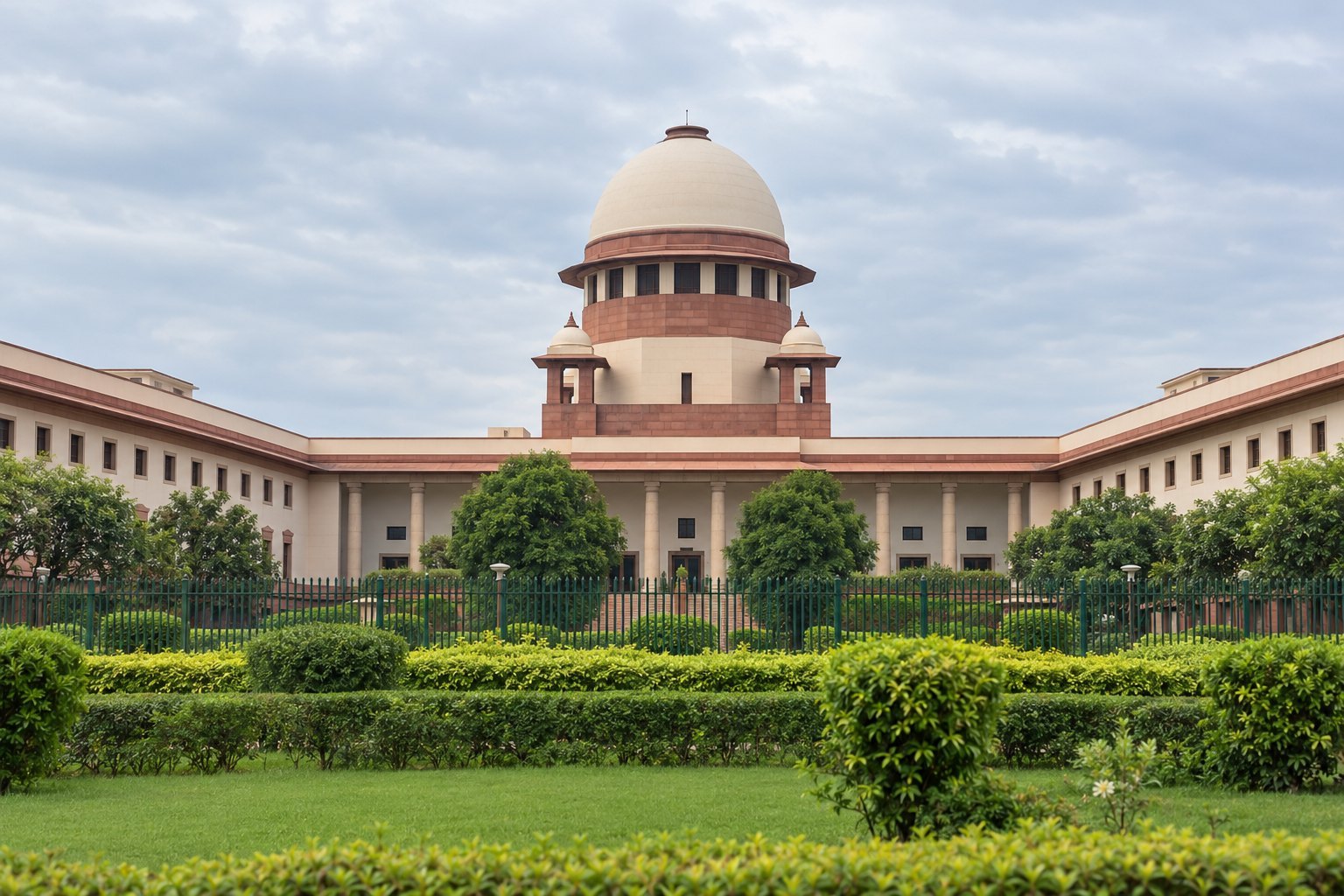
Rule 93 of the Conduct of Elections Rules, 1961 keeps ballot papers and other sealed election packets shut except on a court's order, and opens other papers to public inspection. A December 2024 amendment limited that to papers the rules specify, excluding CCTV and webcast footage. The Supreme Court on 14 October 2026 questioned a missing counting video.
Syllabus: Prelims · Polity & Governance; GS2 · Representation of the People Act; GS2 · Constitutional Bodies
Why this matters for UPSC
GS2 polity: salient features of the Representation of the People Act, 1951 and electoral transparency. Prelims can ask what Rule 93 seals and the 45-day petition limit; Mains, voter secrecy against open election records.
In short
Rule 93 of the Conduct of Elections Rules, 1961, framed under section 169 of the RP Act, 1951, decides which election records stay sealed and which the public may inspect.
Rule 93 should guard the secret ballot without hiding the record; listing electronic records and keeping them until disputes end would serve both.
Why it matters
A voter who suspects a miscount, or a losing candidate, needs records to prove it. If footage and officials' reports are open, citizens and journalists can check how a booth or counting hall was run, which builds trust in results. If they are closed, only candidates and courts can see them, and a voter must go to court first. But open footage can also show who came to vote and who stayed away, so a local strongman could pressure families. The rule decides that balance between a secret ballot and an open count, and whether evidence survives long enough for slow court cases.
Prelims pointers
- Section 169(3) of the RP Act, 1951: every rule is laid before each House for thirty days; both Houses may modify or annul it.
- Section 80A: the High Court tries election petitions, ordinarily through a single Judge whom the Chief Justice assigns.
- Section 86(7): the High Court should endeavour to conclude an election petition's trial within six months of its presentation.
- Section 116A: an appeal on law or fact lies to the Supreme Court within thirty days of the High Court's order.
- Rule 94: unused ballot papers are kept six months and the other sealed packets one year before destruction.
- Rule 49S: at the close of poll the presiding officer gives each polling agent present an attested copy of the Form 17C entries.
Practise a UPSC-style question
With reference to Rule 93 of the Conduct of Elections Rules, 1961, consider the following statements:
1. The December 2024 amendment to Rule 93 was notified by the Election Commission of India under section 169.
2. Packets of used ballot papers in official custody may be opened only under the order of a competent court.
3. Other election papers are open to public inspection subject to the conditions and fee the Election Commission directs.
Which of the statements given above is/are correct?
- (a) 1 and 2 only
- (b) 2 and 3 only
- (c) 1 and 3 only
- (d) 1, 2 and 3
Show the answer
Answer: (b) 2 and 3 only
Answer: (b) 2 and 3 only. Rule 93 seals some packets for courts and opens other papers to the public; the Centre makes the rules.
Statement 1: incorrect. Section 169 of the RP Act, 1951 empowers the Central Government; the Law Ministry notified S.O. 5517(E) after consulting the Election Commission.
Statement 2: correct. Rule 93(1) keeps used ballot papers, counterfoils and the marked roll sealed except under the order of a competent court.
Statement 3: correct. Rule 93(2) opens other papers to public inspection, with copies on application, subject to the Commission's conditions and fee.
Eliminate: Statement 1 is wrong because the rule-making power is the Central Government's, not the Commission's. Out: (a), (c), (d).
Trap: Swapped attribution. The Commission recommended and was consulted, so crediting it with notifying the rule sounds right but swaps the actor.
Remember: Election rules: Centre makes them under section 169, after consulting the ECI.
More Explainers
- State Legislative Councils: Articles 168-172 and the graduates' and teachers' seats Polity
- Whales and dolphins in Indian waters: legal protection, IUCN status and strandings Environment
- The Aligarh Movement, AMU and the Article 30 minority test Polity
- Environmental clearance by States: SEIAA, SEAC and the EIA Notification, 2006 Environment
- Software vulnerabilities: CVE, CVSS, coordinated disclosure and CERT-In's role Sci-Tech
- Drug trafficking law in India: NDPS Act, PIT-NDPS, NCB and NCORD National
- Choosing the UN Secretary-General: Article 97, UNSC veto and straw polls World & IR
- UN Convention against Torture, and why India has not ratified it Polity
- NavIC: why India's navigation constellation cannot give a standalone position Sci-Tech
- International Energy Agency: membership, 90-day oil stocks and India's status World & IR
- PM Surya Ghar: Muft Bijli Yojana and the rooftop solar subsidy Economy
- HFSS foods: FSSAI's draft limits and front-of-pack warning labels National