
Electoral rolls and the Special Intensive Revision (RP Act, 1950)
Why in news: On 12 October 2026, the Election Commission published Punjab's final electoral rolls for all 117 Assembly constituencies after the Special Intensive Revision.
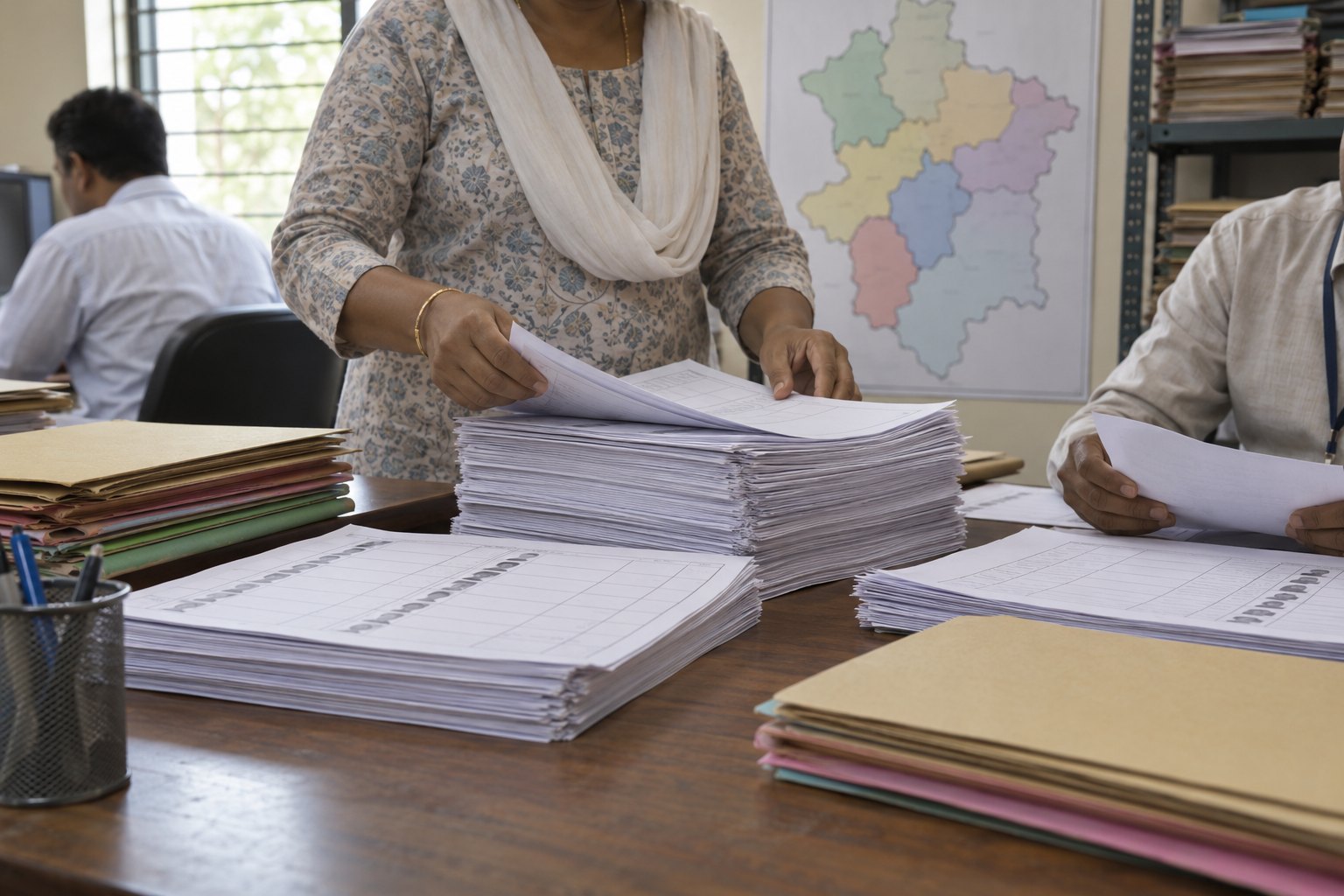
An electoral roll is the list of voters for a constituency, prepared under the Representation of the People Act, 1950 under the Election Commission's control. Section 21 provides for revising it, and section 21(3) lets the Commission order a special revision at any time. On 12 October 2026, Punjab's final roll after the Special Intensive Revision was published.
Syllabus: Prelims · Polity & Governance; GS2 · Representation of the People Act; GS2 · Constitutional Bodies
Why this matters for UPSC
GS2 polity, on the Representation of the People Act, 1950 and the Election Commission. Prelims asks who may be registered, what ordinarily resident means and who orders a revision; Mains asks how to keep rolls clean without losing eligible voters.
In short
An electoral roll is a constituency's voter list under the Representation of the People Act, 1950 and Article 324; revision must clean it without excluding eligible citizens.
Intensive revision should stay the reasoned exception, and no living elector should be struck off unheard or without a route of appeal.
Why it matters
For a citizen, a name on the electoral roll is the gate to the vote: a person left off cannot vote, however eligible. A revision that removes dead, shifted and duplicate entries makes the roll cleaner and harder to misuse. One that strikes off living, eligible voters, or asks them to prove their entitlement again, can shut out migrants, the poor and people without papers. That is why the Act requires a hearing before most deletions and an appeal against the officer's order. Punjab's revision shows the scale: lakhs of names were removed and lakhs of voters were served notices. The larger issue is keeping rolls accurate while protecting universal adult franchise.
Prelims pointers
- Article 324: superintendence, direction and control of preparing electoral rolls and conducting elections vest in the Election Commission of India.
- Article 325: one general electoral roll for every territorial constituency; no one is excluded on grounds only of religion, race, caste or sex.
- Article 326: elections to the Lok Sabha and State Assemblies are on adult suffrage; the 61st Amendment Act, 1988 lowered the voting age from 21 to 18.
- Section 16, RP Act, 1950: disqualified from the roll if not a citizen, of unsound mind declared by a competent court, or disqualified for electoral offences.
- Section 20: prisoners, and patients in mental-health establishments, are not ordinarily resident there; service voters are deemed resident at their home constituency.
- Section 20(8): service qualification covers the armed forces of the Union, State armed police serving outside their State, and Union government staff posted abroad.
- Section 22: before most deletions, the electoral registration officer must give the person a reasonable hearing; a deceased elector's entry needs none.
- Section 23(3): no inclusion, correction or deletion between the last date for nominations and the completion of the election.
Practise a UPSC-style question
With reference to the Representation of the People Act, 1950, consider the following statements:
1. The electoral roll for every constituency is prepared under the superintendence, direction and control of the Election Commission.
2. A person who owns a dwelling house in a constituency is deemed ordinarily resident there for that reason.
Which of the statements given above is/are correct?
- (a) 1 only
- (b) 2 only
- (c) Both 1 and 2
- (d) Neither 1 nor 2
Show the answer
Answer: (a) 1 only
1 is correct: section 15 requires a roll for every constituency prepared under the superintendence, direction and control of the Election Commission. 2 is incorrect: section 20(1) says owning or possessing a dwelling house in a constituency does not by itself make a person ordinarily resident there.
In the news
More Explainers
- State Legislative Councils: Articles 168-172 and the graduates' and teachers' seats Polity
- Whales and dolphins in Indian waters: legal protection, IUCN status and strandings Environment
- The Aligarh Movement, AMU and the Article 30 minority test Polity
- Environmental clearance by States: SEIAA, SEAC and the EIA Notification, 2006 Environment
- Software vulnerabilities: CVE, CVSS, coordinated disclosure and CERT-In's role Sci-Tech
- Drug trafficking law in India: NDPS Act, PIT-NDPS, NCB and NCORD National
- Choosing the UN Secretary-General: Article 97, UNSC veto and straw polls World & IR
- UN Convention against Torture, and why India has not ratified it Polity
- NavIC: why India's navigation constellation cannot give a standalone position Sci-Tech
- International Energy Agency: membership, 90-day oil stocks and India's status World & IR
- PM Surya Ghar: Muft Bijli Yojana and the rooftop solar subsidy Economy
- HFSS foods: FSSAI's draft limits and front-of-pack warning labels National