
Common High Court for Jammu and Kashmir and Ladakh, and its benches
Why in news: On 18 October 2026 the Ladakh Bench of the High Court of Jammu and Kashmir and Ladakh was inaugurated at Leh.
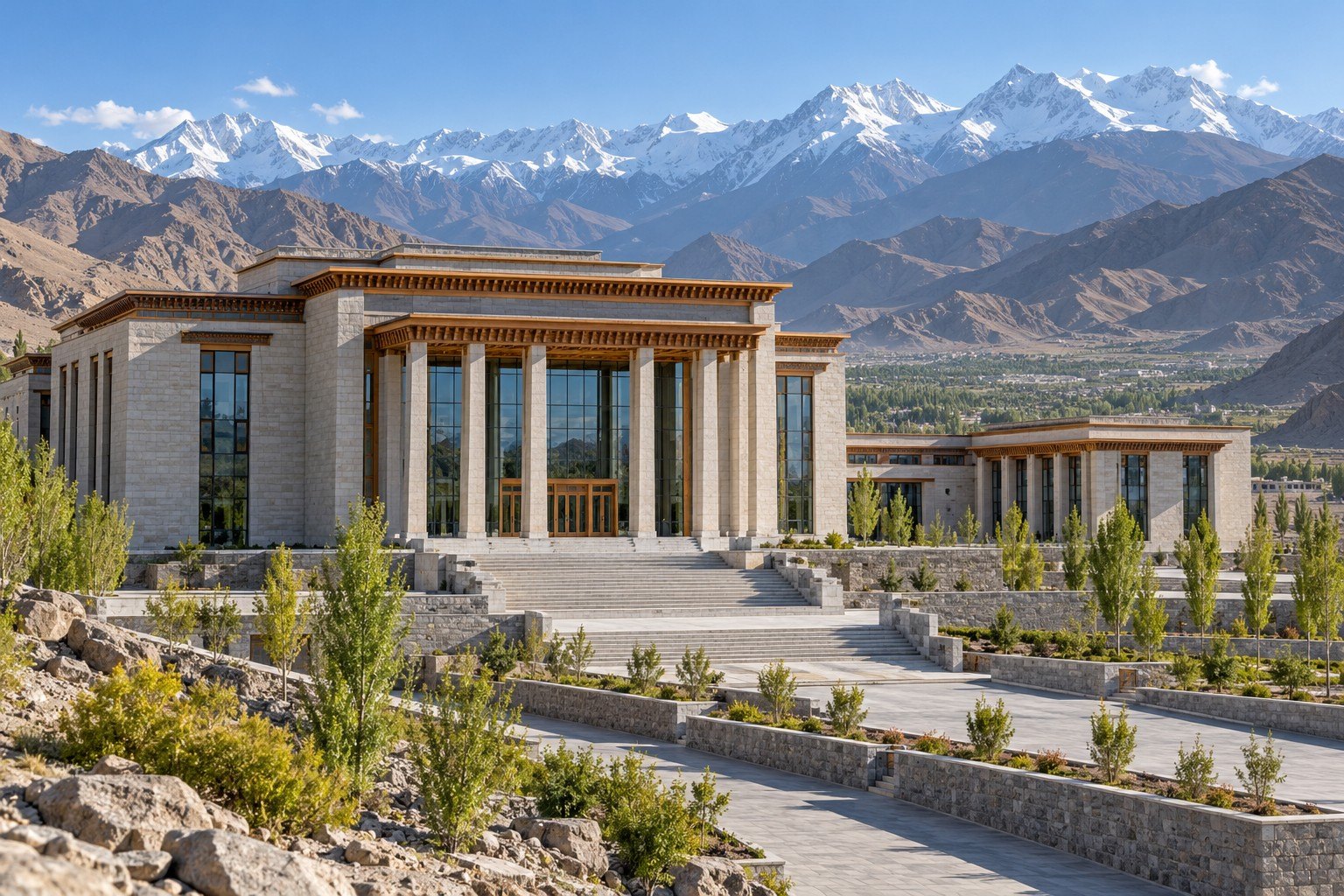
A common High Court serves more than one State or Union territory. Section 75 of the Jammu and Kashmir Reorganisation Act, 2019 made the High Court of Jammu and Kashmir common to the Union territories of Jammu and Kashmir and Ladakh. Under a President's Article 240 regulation, its Ladakh Bench opened at Leh on 18 October 2026.
Syllabus: GS2 · Constitution; GS2 · Federalism & Local Government; Prelims · Polity & Governance
Why this matters for UPSC
GS2 polity and judiciary: Prelims can ask what Article 230, Article 231, Article 240 and Article 241 provide and what section 75 of the Reorganisation Act did; Mains, about access to justice and courts for Union territories.
In short
A common High Court is one High Court serving more than one State or Union territory; since 2019 the High Court of Jammu and Kashmir serves two Union territories.
A bench gives Ladakh a High Court within reach; permanent premises, Kargil's access and legal aid will decide whether that access lasts.
Why it matters
Until now a person in Kargil or Leh with a case in the High Court had to travel out of Ladakh to a court that, the Chief Justice of India said, was reachable in winter only by air. That cost time and money, and for many it meant not going to court at all. A bench inside the territory brings hearings close to the people who need them, and video links to the Supreme Court may let local lawyers argue there without leaving home. The larger issue is access to justice in remote regions: a right that exists on paper only helps when a court, a lawyer and legal aid are within reach.
Prelims pointers
- Article 215 makes every High Court a court of record, with all such powers including the power to punish for contempt of itself.
- Article 231 lets Parliament by law establish a common High Court for two or more States, or for two or more States and a Union territory.
- Article 230: where a State's High Court covers a Union territory, the State Legislature cannot increase, restrict or abolish that jurisdiction.
- Article 241(4) keeps Parliament's power to extend or exclude a State High Court's jurisdiction to or from any Union territory.
- Article 240(1) names Andaman and Nicobar Islands, Lakshadweep, Dadra and Nagar Haveli and Daman and Diu, and Puducherry (barring periods with a functioning legislature).
- Under section 58 of the 2019 Act, the President administers Ladakh through a Lieutenant Governor appointed under Article 239.
- Under section 76 of the 2019 Act, both Union territories share one Bar Council of Jammu and Kashmir; and Ladakh under the Advocates Act, 1961.
Practise a UPSC-style question
With reference to High Courts under the Constitution of India, consider the following statements:
1. Article 231 empowers Parliament to establish a common High Court for two or more States and a Union territory.
2. Article 215 makes every High Court a court of record with the power to punish for contempt of itself.
3. Under Article 230, the President may by order extend the jurisdiction of a High Court to a Union territory.
Which of the statements given above is/are correct?
- (a) 1 and 2 only
- (b) 2 and 3 only
- (c) 1 and 3 only
- (d) 1, 2 and 3
Show the answer
Answer: (a) 1 and 2 only
Answer: (a) 1 and 2 only. Articles 231 and 215 are stated rightly; Article 230 gives the power to Parliament, not the President.
Statement 1: correct. Article 231(1) lets Parliament by law establish a common High Court for two or more States, or for two or more States and a Union territory.
Statement 2: correct. Article 215 says every High Court is a court of record with all its powers, including the power to punish for contempt of itself.
Statement 3: incorrect. Article 230(1) says Parliament may by law extend or exclude a High Court's jurisdiction over a Union territory; no presidential order is involved.
Eliminate: statement 3 names the President in place of Parliament, so it is wrong. Out: (b), (c), (d).
Trap: Swapped attribution. The President does act for Union territories under Articles 239 and 240, so pinning Article 230's power on the President sounds natural, but that power is Parliament's, by law.
Remember: High Court jurisdiction over a Union territory is changed by Parliament by law (Articles 230, 241), never by order.
More Explainers
- State Legislative Councils: Articles 168-172 and the graduates' and teachers' seats Polity
- Whales and dolphins in Indian waters: legal protection, IUCN status and strandings Environment
- The Aligarh Movement, AMU and the Article 30 minority test Polity
- Environmental clearance by States: SEIAA, SEAC and the EIA Notification, 2006 Environment
- Software vulnerabilities: CVE, CVSS, coordinated disclosure and CERT-In's role Sci-Tech
- Drug trafficking law in India: NDPS Act, PIT-NDPS, NCB and NCORD National
- Choosing the UN Secretary-General: Article 97, UNSC veto and straw polls World & IR
- UN Convention against Torture, and why India has not ratified it Polity
- NavIC: why India's navigation constellation cannot give a standalone position Sci-Tech
- International Energy Agency: membership, 90-day oil stocks and India's status World & IR
- PM Surya Ghar: Muft Bijli Yojana and the rooftop solar subsidy Economy
- HFSS foods: FSSAI's draft limits and front-of-pack warning labels National