
PM GatiShakti National Master Plan and the National Logistics Policy
Why in news: PIB issued an explainer and a backgrounder on 12 October 2026 marking five years of PM GatiShakti, launched on 13 October 2021.
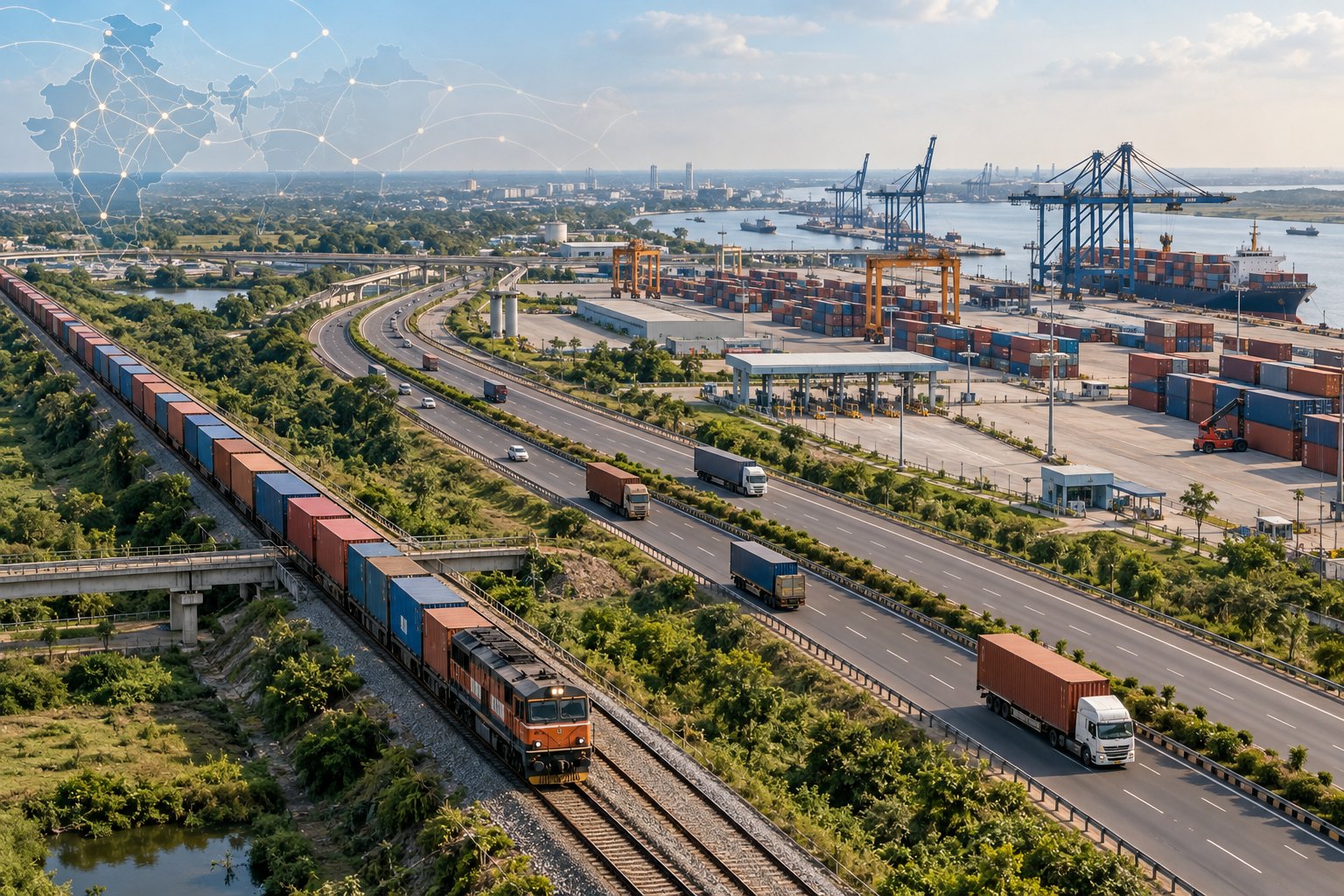
Launched on 13 October 2021, the PM GatiShakti National Master Plan puts infrastructure data of Ministries, States and Union Territories on one GIS-based platform, so that roads, railways, ports and other networks are planned together. PIB says it now covers 58 Central Ministries and Departments and all 36 States and UTs. PIB marked its fifth year on 12 October 2026.
Syllabus: GS3 · Indian Economy & Growth; Prelims · Current Affairs & IR; GS3 · Infrastructure
In short
Launched on 13 October 2021, the PM GatiShakti National Master Plan puts Ministries', States' and UTs' infrastructure data on one GIS platform, to end planning in silos.
GatiShakti gives India one planning map; it cuts logistics costs only if States keep data live, clearances move faster and services reform keeps pace.
Why it matters
A truck carrying textiles from a Bihar cluster to a port pays for every missing road link, every rail line that stops short and every week a project waits for a forest clearance. Logistics cost is a hidden tax on farmers, MSMEs and exporters. When ministries plan on one map, a highway avoids a forest early, as the Pune–Bengaluru Expressway did by cutting its forest-land overlap by 19%, per PIB, instead of being redesigned after work starts. The National Logistics Policy adds faster paperwork, digital tracking and skilled workers. Together they test whether India can move goods as cheaply as its trade rivals, and whether Centre and States can plan as one.
Prelims pointers
- Empowered Group of Secretaries (EGoS): chaired by the Cabinet Secretary; oversees PM GatiShakti and approves changes in the Master Plan; also monitors the National Logistics Policy.
- Network Planning Group (NPG): heads of network planning divisions of infrastructure Ministries; examines proposals for unified, integrated and optimised planning.
- Technical Support Unit (TSU): domain experts who assist the Logistics Division, the PM GatiShakti Secretariat.
- Services Improvement Group (SIG): set up by the EGoS under the National Logistics Policy, on the NPG's pattern, for process, regulatory and digital improvements.
- National Logistics Policy targets for 2030: logistics cost comparable to global benchmarks; a place among the top 25 countries in the Logistics Performance Index.
- Logistics Performance Index: published by the World Bank; it measures how efficiently countries move goods across borders.
- Unified Logistics Interface Platform (ULIP): API-based integration of government logistics systems; launched with the National Logistics Policy.
- Logistics Data Bank (LDB): real-time tracking of EXIM container movement.
Practise a UPSC-style question
With reference to the PM GatiShakti National Master Plan, consider the following statements:
1. Its seven engines are roads, railways, ports, waterways, airports, mass transport and logistics infrastructure.
2. It puts infrastructure and geospatial data of Ministries and States on a common GIS-based platform.
3. Minimised clearances and reduced ecological impact are among the principles that guide it.
How many of the above statements are correct?
- (a) Only one
- (b) Only two
- (c) All three
- (d) None
Show the answer
Answer: (c) All three
1 is correct: these seven are the core sectors, or engines, of the plan. 2 is correct: the plan brings Ministries', States' and UTs' data onto one GIS-based platform for integrated planning. 3 is correct: its six principles include last-mile connectivity, expedited land acquisition, minimised clearances and reduced ecological impact.
More Explainers
- State Legislative Councils: Articles 168-172 and the graduates' and teachers' seats Polity
- Whales and dolphins in Indian waters: legal protection, IUCN status and strandings Environment
- The Aligarh Movement, AMU and the Article 30 minority test Polity
- Environmental clearance by States: SEIAA, SEAC and the EIA Notification, 2006 Environment
- Software vulnerabilities: CVE, CVSS, coordinated disclosure and CERT-In's role Sci-Tech
- Drug trafficking law in India: NDPS Act, PIT-NDPS, NCB and NCORD National
- Choosing the UN Secretary-General: Article 97, UNSC veto and straw polls World & IR
- UN Convention against Torture, and why India has not ratified it Polity
- NavIC: why India's navigation constellation cannot give a standalone position Sci-Tech
- International Energy Agency: membership, 90-day oil stocks and India's status World & IR
- PM Surya Ghar: Muft Bijli Yojana and the rooftop solar subsidy Economy
- HFSS foods: FSSAI's draft limits and front-of-pack warning labels National